What Do Deep-Sea Marine Biologists Believe?

UNDERSTANDING, NOT ENDORSEMENT — This article presents a group's beliefs as they see them. Presenting these views does not mean GroundTruthCentral agrees with or endorses them. We believe understanding different worldviews — even deeply troubling ones — is essential to informed citizenship.
When researchers witness sperm whales cooperatively assisting during births—forming protective circles around laboring mothers in the deep ocean—many marine biologists experience something beyond scientific excitement: a profound recognition of alien intelligence that most humans will never comprehend. This moment captures the worldview of deep-sea marine biologists, a community whose beliefs about ocean consciousness, human responsibility, and the nature of intelligence itself often clash with mainstream society.
To understand what deep-sea marine biologists truly believe, we must dive into their world—where the ocean's depths hold secrets that challenge our most basic assumptions about life and consciousness. Their beliefs may seem radical to those who view the sea as humanity's resource. But for these scientists, the deep ocean represents something far more profound: a parallel universe of intelligence that demands not just respect, but complete reconceptualization of what it means to be alive on this planet.
The Ocean as Sacred Space
Many deep-sea marine biologists don't just study the ocean—they revere it. The deep sea represents Earth's last truly wild frontier, where life has evolved in ways so extraordinary that it shatters every assumption about biological possibility. The ocean's depths contain the largest living space on our planet, yet we've explored less than 5% of it.[1]
This reverence transcends scientific curiosity. Deep-sea biologists speak of the ocean with language typically reserved for religious experiences. They believe the deep sea hosts forms of consciousness and intelligence operating on timescales completely foreign to terrestrial life. When they witness sperm whale birth assistance, they're not just observing animal behavior—they're witnessing what they consider sacred acts of intelligence.
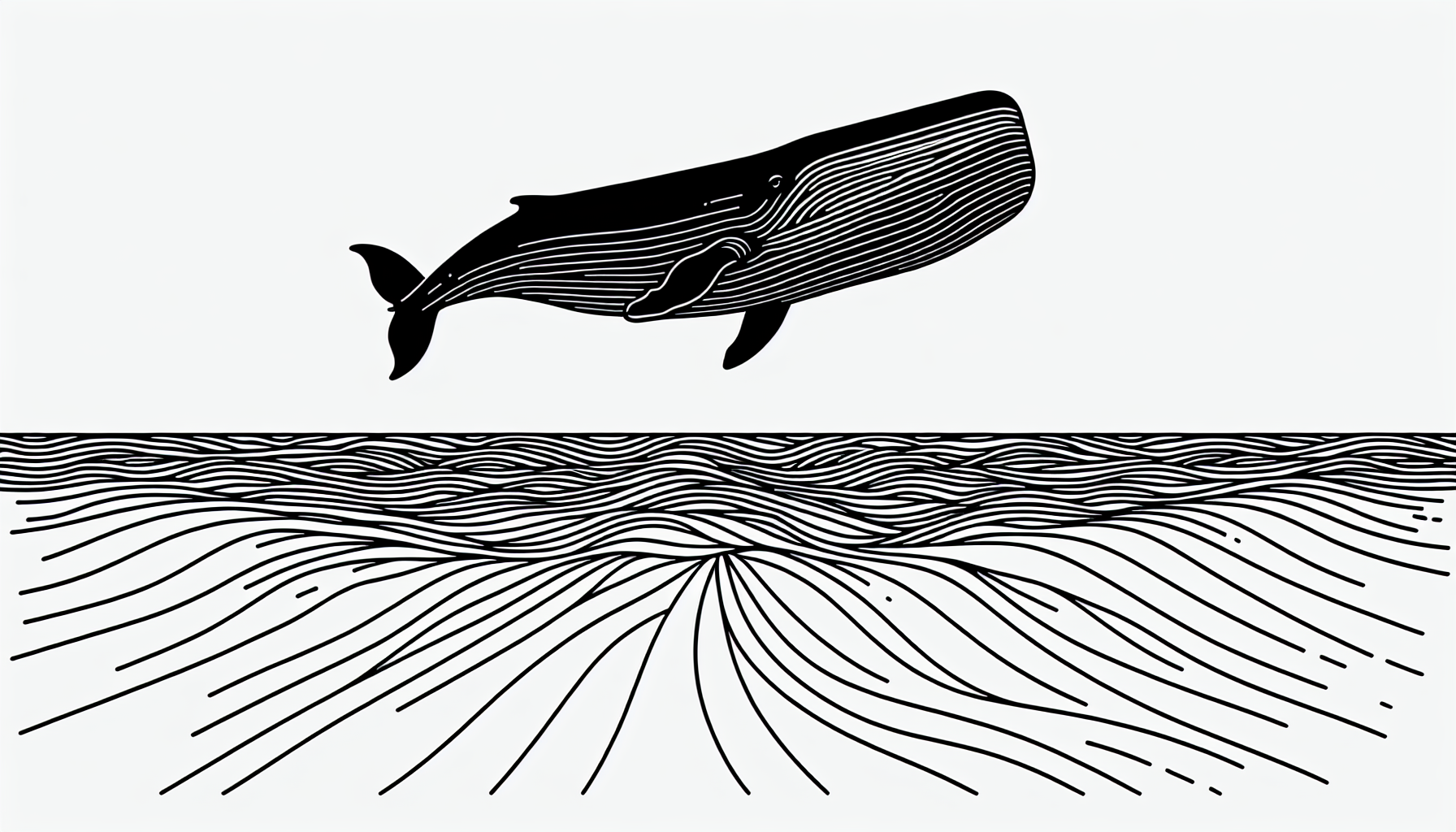
Sperm whales hold special significance in their worldview. These creatures possess Earth's largest brains and complex social structures spanning generations. Many deep-sea biologists believe sperm whales maintain cultural traditions, pass knowledge through matrilineal lines, and communicate with sophistication that humans have barely begun to understand.[2]
Intelligence Beyond Human Understanding
The most radical aspect of this worldview concerns intelligence itself. These researchers reject the anthropocentric view that human intelligence represents consciousness's pinnacle. Instead, they argue the deep ocean hosts intelligence operating on completely different principles—collective consciousness, chemical communication, and sensory systems humans cannot imagine.
Dr. Carl Safina argues that many marine animals possess "beyond words" intelligence—forms of cognition that don't translate to human language but represent sophisticated problem-solving, emotional complexity, and social awareness.[3] When deep-sea biologists observe sperm whale birth assistance, they see evidence of planning, cooperation, and cultural transmission rivaling human society.
They point to sperm whales' ability to dive over 3,000 feet, navigate complete darkness using echolocation more sophisticated than human technology, and maintain social bonds across ocean basins for decades. To them, this represents not just impressive biology, but intelligence humans are only beginning to recognize.
The Trauma of Witnessing Destruction
Many deep-sea marine biologists' worldview has been shaped by unique trauma: they're among the few humans witnessing firsthand the systematic destruction of ocean ecosystems. They've watched coral reefs bleach and die, observed fish population collapses, and documented human waste accumulation in the deepest trenches.
This trauma manifests as "solastalgia"—distress caused by environmental change in one's home environment. For deep-sea biologists, the entire ocean is home. Dr. Sylvia Earle describes the ocean's decline as watching "the heart of the planet" slowly stop beating.[4]
This witnessing creates urgency bordering on desperation. They believe they're documenting species and behaviors that may disappear within their lifetimes. Every discovery, like cooperative whale behaviors, carries the weight of potential loss. They're not just studying life—they're creating records of what existed before humanity destroyed it.
Humanity as Invasive Species
Many deep-sea marine biologists hold an uncomfortable belief: they increasingly view humanity as an invasive species disrupting ocean ecosystems in potentially irreversible ways. This stems from direct observations of human impact, from microplastics in the deepest trenches to seawater acidification from carbon emissions.
They argue humans have fundamentally altered ocean chemistry, temperature, and noise levels, disrupting marine life's most basic biological processes. The ocean's acoustic environment, crucial for whale communication and navigation, has been polluted by ship traffic, military sonar, and industrial activity. They believe this acoustic pollution contributes to whale strandings, disrupted migrations, and breakdown of social structures existing for millions of years.
When witnessing cooperative whale births, they're acutely aware such scenes are becoming rare. They see themselves as witnesses to an era's end—the last generation observing truly wild ocean behavior before human influence makes it impossible.
The Urgency of Conservation
This worldview creates missionary-like dedication to conservation. Deep-sea marine biologists don't just advocate for marine protection—they see it as humanity's moral imperative for survival. They believe ocean health directly links to planetary stability, and protecting marine ecosystems is literally life-or-death for human civilization.
Their conservation approach is often radical by mainstream standards. They advocate for vast marine protected areas, restrictions on fishing and shipping, and fundamental changes to human-ocean interaction. Some support concepts like E.O. Wilson's "half-earth" proposal—protecting 50% of the planet's surface, including large ocean portions, from human development.[5]
They argue current conservation efforts are inadequate because they fail to recognize marine ecosystem complexity and interconnectedness. Protecting individual species isn't enough—they believe we need to protect entire ocean systems, including deep-sea environments most humans never consider.
Technology as Double-Edged Sword
Many deep-sea marine biologists have complex relationships with technology. Technological advances made their work possible—submersibles, underwater cameras, and sophisticated tracking devices revealed previously invisible ocean behaviors. Videos of whale birth assistance exist only because of advanced underwater filming technology.
But they also see technology as ocean destruction's primary driver. Industrial fishing, deep-sea mining, offshore drilling, and climate change from industrial activity represent existential threats to marine ecosystems. They often describe feeling caught between using technology to study the ocean and watching technology destroy what they're trying to understand.
Many advocate for "appropriate technology"—tools allowing observation without disrupting natural behaviors. They're often critical of invasive research methods and argue for passive observation techniques minimizing human impact on studied animals.
Responding to Skepticism
When criticized for anthropomorphizing marine animals or exaggerating threats to ocean ecosystems, many deep-sea marine biologists respond with data and direct observation. They argue skeptics haven't witnessed what they've seen—marine behavioral complexity, rapid ecosystem collapse pace, and sophisticated ocean creature intelligence.
To accusations they're "anti-human" or their conservation proposals economically unrealistic, they respond that the current economic system is unrealistic. They argue an economy based on depleting ocean resources is ultimately suicidal, and radical conservation measures are practical necessities for long-term human survival.
When challenged about the scientific validity of attributing complex emotions or intelligence to marine animals, they point to mounting evidence of sophisticated cognition in whales, dolphins, octopi, and other marine creatures. They argue the burden of proof should be on those claiming these animals lack complex inner lives, not on those recognizing consciousness and intelligence evidence.
The Fear of Silence
Perhaps the deepest fear among deep-sea marine biologists is ocean silence—a future where the complex acoustic environment of whale songs, dolphin clicks, and myriad marine life sounds are replaced by mechanical human noise or, worse, silence itself.
They describe the ocean's soundscape as a symphony playing for millions of years, with each species contributing its voice to an acoustic ecosystem of incredible complexity. The cooperative behaviors they observe, like whale birth assistance, are often accompanied by vocalizations they believe represent celebration, instruction, and social bonding humans are only beginning to understand.
The thought of this symphony ending—whales having no calves to teach, coral reefs falling silent as they die, the deep sea becoming biological desert—drives their urgent ocean protection advocacy. They see themselves fighting not just for species survival, but for preserving an entire world of consciousness and intelligence.
Hope in the Depths
Despite often grim ocean health assessments, many deep-sea marine biologists maintain profound hope rooted in marine life's resilience and adaptability. They've witnessed ecosystem recovery from damage, observed species adapting to changing conditions, and discovered new life forms in unlikely places.
The cooperative whale behaviors inspiring this exploration represent, to them, proof that natural intelligence and social cooperation can persist under pressure. They see such behaviors as evidence that marine ecosystems retain recovery capacity if given the chance.
Their hope also grounds in growing public ocean awareness and marine science's increasing sophistication. They believe as more people witness marine life intelligence and beauty—through whale behavior videos, virtual reality experiences, and improved science communication—support for ocean conservation will grow.
Some marine biologists argue that characterizing humans as an "invasive species" oversimplifies our relationship with ocean ecosystems and ignores humanity's potential for adaptive management. They point to emerging technologies like precision aquaculture, marine restoration techniques, and sustainable fishing innovations as evidence that humans can evolve from disruptors to stewards, much like how other species have historically adapted to environmental changes.
While complex behaviors in deep-sea creatures are well-documented, some researchers caution against anthropomorphizing these responses or assuming they indicate consciousness comparable to human experience. These scientists argue that sophisticated behavioral patterns could result from millions of years of evolutionary programming rather than conscious decision-making, suggesting we may be projecting terrestrial concepts of intelligence onto fundamentally different biological systems.
Key Takeaways
- Many deep-sea marine biologists view the ocean as sacred space hosting intelligence that challenges human-centered concepts of consciousness
- Their worldview is shaped by witnessing both extraordinary marine intelligence and systematic ecosystem destruction
- Some increasingly view humanity as an invasive species whose activities threaten complex marine societies' survival
- Their conservation advocacy stems from belief that ocean health is essential for planetary and human survival
- Despite witnessing environmental decline, they maintain hope in marine life's resilience and growing public awareness
- They see cooperative behaviors like whale birth assistance as evidence of sophisticated intelligence worthy of protection
- Their deepest fear is ocean "silence"—the end of millions of years of marine acoustic and social complexity
References
- Widder, Edith. "The weird, wonderful world of bioluminescence." TED Talk, 2011.
- Whitehead, Hal. Sperm Whales: Social Evolution in the Ocean. University of Chicago Press, 2003.
- Safina, Carl. Beyond Words: What Animals Think and Feel. Henry Holt and Company, 2015.
- Earle, Sylvia. The World Is Blue: How Our Fate and the Ocean's Are One. National Geographic, 2009.
- Wilson, Edward O. Half-Earth: Our Planet's Fight for Life. Liveright Publishing, 2016.