Why does the government shutting down make airport lines longer?

When the United States government shuts down, one of the most visible impacts on everyday Americans occurs at airports nationwide. Long security lines snake through terminals, flight delays mount, and frustrated travelers find themselves caught in the crossfire of political dysfunction. The culprit? A perfect storm of federal employment rules that force essential workers to show up without getting paid.
The Essential Worker Paradox
A federal government shutdown occurs when Congress fails to pass appropriations bills or continuing resolutions to fund government operations[1]. During these periods, only "essential" government functions continue operating, while "non-essential" services are suspended. The Transportation Security Administration (TSA), created in 2001 following the September 11 attacks, is classified as essential because aviation security is considered critical to national security[2].
Here's the catch: while TSA employees are required to work during shutdowns, they don't get paid until the government reopens and Congress authorizes back pay. This creates the perfect conditions for the operational chaos that manifests as longer airport lines.
The Human Cost of Working Without Pay
TSA employs approximately 60,000 workers nationwide, with about 47,000 serving as Transportation Security Officers (TSOs) who staff airport checkpoints[3]. These frontline workers earn modest wages, with starting salaries typically ranging from $30,000 to $40,000 annually. For many TSA employees, missing even a single paycheck creates serious financial hardship.
The numbers tell the story. During the 2018-2019 government shutdown—which lasted 35 days and became the longest in U.S. history—TSA reported that employee absence rates more than doubled from typical levels[4]. At major airports like Atlanta's Hartsfield-Jackson and Miami International, absence rates reached 10% or higher during peak shutdown periods. When security checkpoints are understaffed, the remaining officers must process the same volume of passengers with fewer resources, inevitably creating longer wait times.
When Checkpoints Become Bottlenecks
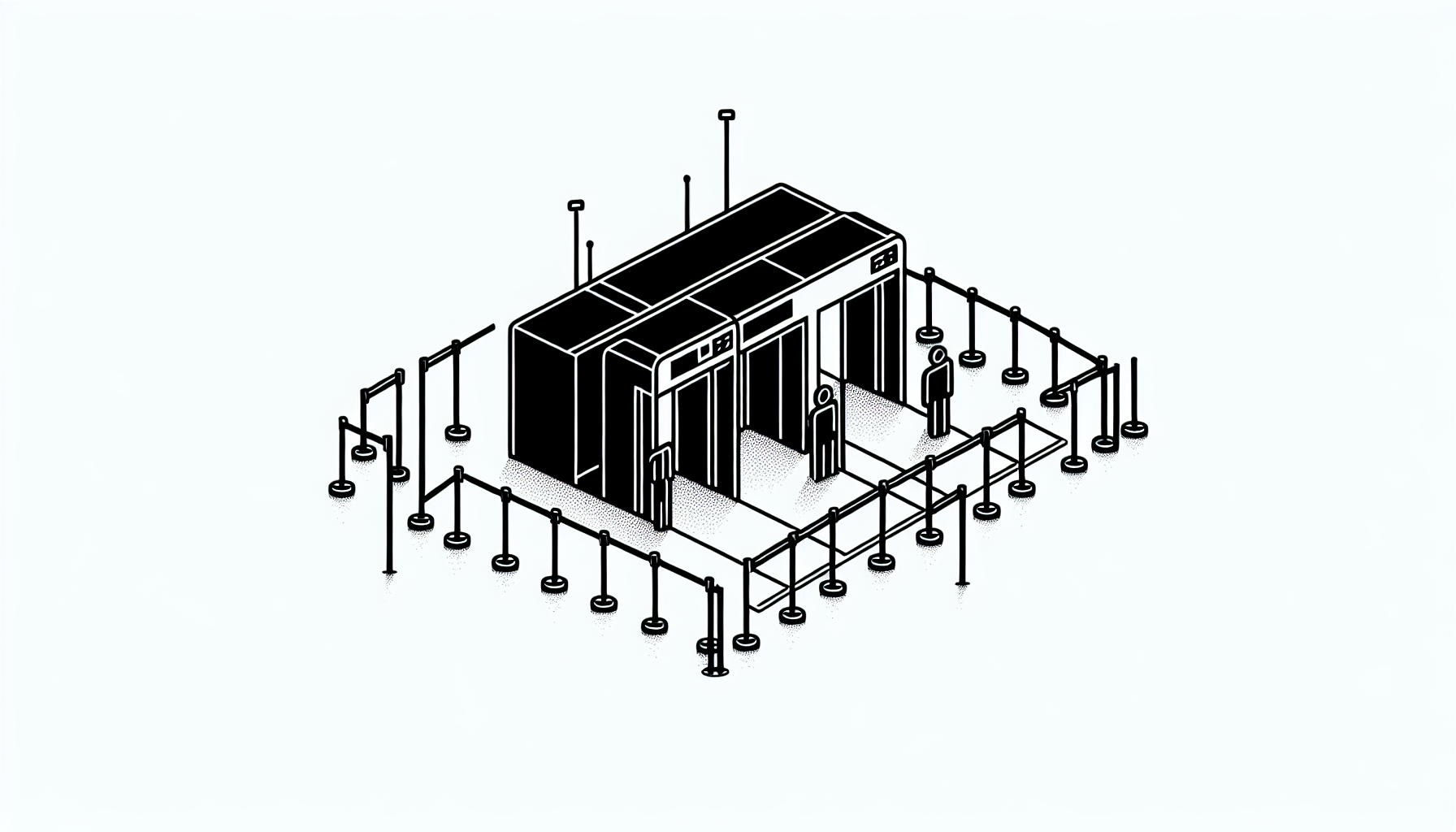
Staffing shortages during shutdowns create a domino effect throughout airport operations. With fewer TSA officers available, airports must consolidate security checkpoints, reducing the number of lanes available for passenger screening. This bottleneck effect hits hardest during peak travel periods—early morning and evening hours when business travelers and commuters are most active.
Some airports have been forced to close entire terminals temporarily or redirect passengers to alternate checkpoints, creating confusion and additional delays. The ripple effects extend beyond security screening: longer TSA lines cause passengers to miss flights, leading to rebooking complications, gate changes, and further operational disruptions for airlines.
During the 2018-2019 shutdown, major airports reported security wait times exceeding two hours during peak periods, compared to typical wait times of 15-30 minutes[5]. The situation became so severe that Miami International temporarily closed concourses due to staffing shortages.
The Impossible Choice
The financial strain on TSA employees during shutdowns cannot be overstated. Unlike some federal workers who may have savings or alternative income sources, many TSA employees live paycheck to paycheck. The agency has historically struggled with high turnover rates, partly due to relatively low wages and challenging working conditions.
During shutdowns, TSA workers face an impossible choice: continue working without pay to maintain essential security functions, or seek temporary employment elsewhere to support their families. Some employees have reported taking jobs with ride-sharing services, food delivery companies, or retail establishments during shutdown periods, which affects their availability for TSA shifts.
The psychological toll of working without pay also impacts job performance and morale. Stressed, financially pressured employees are more likely to call in sick or may not perform at optimal levels, further contributing to operational inefficiencies.
A Pattern of Disruption
The relationship between government shutdowns and airport delays has been documented across multiple shutdown events. During the 2013 government shutdown, which lasted 16 days, airports reported increased wait times and staffing challenges, though the impact was less severe than the 2018-2019 shutdown due to its shorter duration[6].
The 2018-2019 shutdown provided the most comprehensive data on how extended funding lapses affect airport operations. As the shutdown stretched into its second month, the situation became increasingly dire. Some TSA employees began seeking other employment, and union representatives warned that the agency was approaching a "breaking point" in maintaining adequate security coverage.
Limited Options for Relief
During shutdowns, TSA and airport authorities implement various strategies to minimize disruptions, but these measures have limited effectiveness. Airports may adjust operations by opening fewer checkpoints during off-peak hours and concentrating resources during busy periods. Some facilities have experimented with modified screening procedures or temporary staffing adjustments.
However, these mitigation efforts cannot fully compensate for significant staffing shortages. TSA's essential personnel designation means the agency cannot simply furlough workers and close operations, nor can it easily bring in temporary workers due to security clearance requirements and specialized training needs.
Airlines and airport authorities have little recourse during these situations, as they depend entirely on TSA for security screening. While private security screening exists at a small number of airports under TSA oversight, the vast majority of U.S. airports rely directly on federal TSA personnel.
The Broader Economic Ripple Effect
Airport delays caused by government shutdowns highlight the vulnerability of the U.S. aviation system to political dysfunction. Air travel is critical infrastructure that supports business operations, tourism, and personal mobility across the country. When political disagreements in Washington translate into operational disruptions at airports, the economic costs extend far beyond the federal workforce.
Airlines face increased costs due to delayed flights, passenger rebooking, and operational adjustments. Business travelers may alter their schedules or choose alternative transportation methods. The tourism industry suffers when potential visitors encounter reports of severe airport delays.
These broader economic impacts create additional pressure on policymakers to resolve shutdown situations quickly, though the immediate effects on air travelers often serve as the most visible reminder of the consequences of federal funding lapses.
The correlation between government shutdowns and longer airport lines may be more complex than simple staffing shortages suggest. Recent shutdowns have coincided with peak holiday travel periods, when airports naturally experience their highest passenger volumes and longest wait times regardless of TSA staffing levels. Media attention during politically charged shutdowns may also amplify awareness of wait times that passengers might otherwise accept as normal seasonal inconvenience.
Alternatively, TSA's ability to maintain airport operations throughout even the longest government shutdown in U.S. history could demonstrate remarkable system resilience rather than vulnerability. While some employees called in sick, the vast majority continued working without pay, and no major security incidents occurred during the shutdown period. This suggests that the airport security system, while strained, may be more robust than critics claim when facing operational challenges.
Key Takeaways
- TSA employees are classified as "essential" personnel who must work during government shutdowns but don't receive pay until the government reopens
- Financial hardship leads to increased absenteeism among TSA workers, reducing staffing at security checkpoints
- Understaffed checkpoints create bottlenecks that significantly increase passenger wait times, sometimes exceeding two hours
- The 2018-2019 shutdown demonstrated how extended funding lapses can push airport operations to a breaking point
- Airport delays during shutdowns have broader economic impacts on airlines, businesses, and the tourism industry
- Limited mitigation options exist due to security requirements and the specialized nature of TSA work
References
- "Government shutdown in the United States." Wikipedia, https://en.wikipedia.org/wiki/Government_shutdown_in_the_United_States
- "Transportation Security Administration." Wikipedia, https://en.wikipedia.org/wiki/Transportation_Security_Administration
- Transportation Security Administration. "TSA by the Numbers." TSA.gov, 2023.
- Stelloh, Tim. "TSA sick calls double amid government shutdown, causing longer airport security lines." NBC News, January 15, 2019.
- Freed, Jamie. "U.S. airport security wait times grow as government shutdown drags on." Reuters, January 14, 2019.
- Mayerowitz, Scott. "Government shutdown's effect on air travel." ABC News, October 4, 2013.