25-Year Trends in Children's Digital Privacy and Online Safety Regulations

How Did 25 Years of Digital Evolution Transform Child Safety From Wild West to Walled Garden?
The Wild West Era (1998-2003): First Steps Toward Digital Child Protection
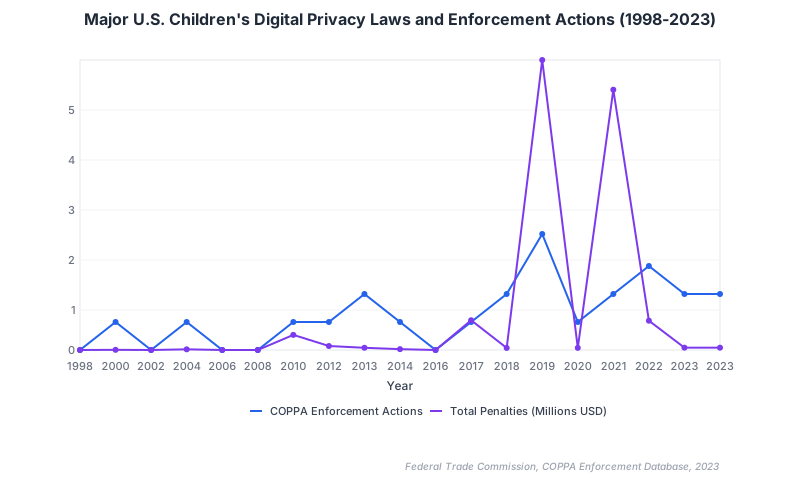
The late 1990s marked the beginning of widespread household internet adoption, but child safety remained an afterthought. The Children's Online Privacy Protection Act (COPPA), passed in 1998 and implemented in 2000, represented the first major attempt to regulate children's online experiences[1]. The law required websites to obtain parental consent before collecting personal information from children under 13, establishing the now-familiar age threshold that continues to define digital childhood. During this era, internet penetration in American households grew substantially, with various surveys showing significant increases in connectivity[2]. The primary concerns centered around stranger danger and inappropriate content exposure, reflecting offline safety paradigms applied to the new digital frontier. Early protective measures were largely technical: parental control software like Net Nanny and CyberPatrol promised to filter harmful content, while internet service providers began offering family-friendly packages. The cultural context was crucial. The Columbine shooting in 1999 had heightened parental anxiety about youth culture and media influence, while high-profile cases like the 2002 kidnapping of Alicia Kozakiewicz by an online predator she had met in a chat room demonstrated the real-world dangers of unmonitored internet use[3]. These incidents shaped public perception and policy discussions around online child safety for years to come. Technology companies during this period operated with minimal oversight. Early social platforms like Friendster (2002) and MySpace (2003) implemented basic age restrictions primarily to comply with COPPA, but enforcement was largely honor-system based. The focus remained on preventing the collection of personal information rather than examining the broader implications of children's online participation.The Social Media Awakening (2004-2009): New Platforms, New Concerns
The launch of Facebook in 2004 marked a paradigm shift in how young people interacted online. Initially restricted to college students, Facebook's expansion to high schools in 2005 and general public access in 2006 created the first mass social networking experience for teenagers[4]. By 2009, social networking had become widespread among teenagers, fundamentally altering the landscape of digital childhood[5]. This period saw the emergence of cyberbullying as a recognized phenomenon. High-profile cases like the 2006 death of Megan Meier, a teenager who had experienced harassment through MySpace, brought national attention to the psychological risks of social media participation[6]. The incident prompted the first state cyberbullying laws and forced platforms to consider their role in user safety beyond simple age verification. The regulatory response remained fragmented. While COPPA continued to govern data collection from children under 13, teenagers aged 13-17 existed in a legal gray area with few specific protections. The European Union began developing more comprehensive approaches with early discussions of what would eventually become the General Data Protection Regulation (GDPR), though implementation remained years away. Cultural attitudes during this era reflected a generational divide. Digital natives—children who had grown up with the internet—demonstrated sophisticated online behaviors that often outpaced their parents' understanding. This created a unique dynamic where the protected population possessed greater technical literacy than their protectors, complicating traditional approaches to child safety. Platform responses evolved gradually. MySpace introduced enhanced privacy settings in 2006, while Facebook began developing safety tools and educational resources. However, these measures were largely reactive, implemented in response to specific incidents rather than proactive safety design. The concept of "safety by design" remained nascent, with most platforms prioritizing growth and engagement over user protection.The Mobile Revolution and Regulatory Awakening (2010-2015): Smartphones Change Everything
The introduction of the iPhone in 2007 and subsequent smartphone adoption fundamentally altered children's internet access patterns. Smartphone ownership among teens increased dramatically during this period[7]. This shift from supervised computer use to constant mobile connectivity created new challenges for both parents and regulators. Instagram's launch in 2010 and rapid adoption among teenagers highlighted the visual nature of emerging social media. The platform's focus on photo sharing introduced new privacy concerns around image permanence and location data. Meanwhile, the rise of anonymous platforms like Ask.fm and Omegle created spaces where traditional identification-based safety measures proved ineffective. Regulatory momentum began building during this period. The Federal Trade Commission (FTC) updated COPPA rules in 2013, expanding the definition of personal information to include photos, videos, and geolocation data[8]. The updates reflected growing understanding that digital privacy extended beyond traditional personally identifiable information to include behavioral and biometric data. International coordination increased significantly. The EU's Article 29 Working Party issued guidance on children's privacy rights, while the UK began developing age-appropriate design principles that would later influence global standards. These efforts recognized that effective child protection required coordinated international action given the global nature of digital platforms. The period also saw the emergence of digital wellness as a concept. Research began documenting connections between excessive social media use and mental health issues among teenagers, though causal relationships remained debated. Platforms started introducing basic time management tools, though comprehensive digital wellness features remained years away. Cultural shifts were evident in parenting approaches. The rise of "helicopter parenting" extended into digital spaces, with monitoring software becoming more sophisticated and widely adopted. Simultaneously, advocacy groups like Common Sense Media gained prominence, providing parents with resources for navigating children's digital lives.The Techlash Era (2016-2020): Scandals, Studies, and Stricter Standards
The 2016 U.S. presidential election and subsequent revelations about social media manipulation marked a turning point in public perception of technology companies. The Cambridge Analytica scandal in 2018 revealed how personal data could be harvested and weaponized, intensifying focus on platform accountability and user privacy[9]. Research during this period provided increasingly sophisticated evidence of social media's impact on young people. Studies linked heavy social media use to increased rates of depression and anxiety among teenagers, while research on "social comparison" and "fear of missing out" (FOMO) provided psychological frameworks for understanding digital harm[10]. The American Academy of Pediatrics updated its screen time guidelines multiple times, reflecting evolving understanding of digital media's effects on child development. Regulatory responses accelerated dramatically. The EU's General Data Protection Regulation (GDPR), implemented in 2018, included specific protections for children and established 16 as the age of digital consent (with member states able to lower it to 13)[11]. California's Consumer Privacy Act (CCPA) followed in 2020, creating the first comprehensive state-level privacy law in the United States. The UK emerged as a global leader in child-specific digital regulation. The Information Commissioner's Office published the Age Appropriate Design Code in 2020, establishing 15 standards for how services likely to be accessed by children should protect young users[12]. The code required privacy-by-default settings, prohibited the use of nudge techniques to encourage children to provide unnecessary personal data, and mandated regular data protection impact assessments. Platform responses became more proactive during this era. Instagram introduced time limits and usage dashboards in 2018, while YouTube created YouTube Kids as a separate, curated platform for children. Facebook (now Meta) began developing more sophisticated age verification systems and expanded its safety teams significantly. However, these measures often followed rather than preceded regulatory pressure. The period also saw increased focus on algorithmic transparency and recommendation systems. Concerns grew about how platforms' engagement-optimizing algorithms might expose children to harmful content or create addictive usage patterns. While full algorithmic auditing remained limited, platforms began providing more transparency about their content moderation practices.The Comprehensive Protection Era (2021-Present): Global Standards and Systemic Reform
The current era is characterized by comprehensive, systemic approaches to child digital safety that go beyond simple age verification or content filtering. Multiple jurisdictions have implemented or proposed sweeping reforms that treat child protection as a fundamental design principle rather than an add-on feature. The UK's Online Safety Act, passed in 2023, represents the most comprehensive approach to date. The legislation requires platforms to conduct regular risk assessments, implement age verification systems, and demonstrate they have taken reasonable steps to protect children from harmful content[13]. Violations can result in significant financial penalties, creating unprecedented financial incentives for compliance. Similar momentum has built globally. The EU's Digital Services Act, adopted in 2022 and fully applicable to large platforms since August 2023, includes specific provisions for protecting minors online and requires large platforms to assess and mitigate systemic risks to children[14]. Australia has proposed social media age verification requirements, while several U.S. states have passed or considered comprehensive child digital privacy laws. The current regulatory approach reflects sophisticated understanding of digital harms. Rather than focusing solely on stranger danger or inappropriate content, modern frameworks address algorithmic amplification, addictive design features, and the psychological impacts of social comparison. This represents a fundamental shift from protecting children from the internet to protecting them from exploitative design practices within digital services. Platform responses have become increasingly sophisticated. TikTok has implemented enhanced privacy settings for teenage users, including making accounts private by default for younger users. Instagram has tested hiding like counts and implemented break reminders, while Snapchat has developed family safety tools that allow parents to see who their teens are messaging without accessing message content. Age verification technology has advanced significantly, moving beyond simple self-declaration to more sophisticated methods including facial recognition, document verification, and behavioral analysis. However, these technologies raise their own privacy concerns, creating tension between protection and surveillance. The current era also reflects growing understanding of intersectional harms. Research has documented how algorithmic systems can amplify risks for marginalized youth, leading to more nuanced approaches that consider how gender, race, sexuality, and other factors influence online experiences. This has prompted calls for more inclusive safety design that protects vulnerable populations without restricting access to supportive communities.Emerging Trends and Future Directions: What's Next for Digital Childhood
Current trends suggest several directions for the evolution of child digital safety regulation. Artificial intelligence and machine learning are increasingly central to both safety solutions and regulatory concerns. While AI enables more sophisticated content moderation and risk detection, it also raises questions about automated decision-making affecting children and the potential for algorithmic bias. The metaverse and virtual reality represent emerging frontiers for child safety regulation. As immersive technologies become more accessible to young users, regulators are grappling with how to extend existing protections to virtual environments where traditional content moderation approaches may prove inadequate. International coordination continues to strengthen, with organizations like the Global Partnership for End Violence Against Children facilitating knowledge sharing and standard development across jurisdictions. This coordination is essential given the global nature of digital platforms and the need for consistent protection standards. The concept of "digital rights" for children is gaining traction, moving beyond protection to include positive rights to digital literacy, access, and participation. This approach recognizes that exclusion from digital spaces can itself harm children's development and social participation in an increasingly connected world. Economic models are also evolving. Some jurisdictions are exploring restrictions on behavioral advertising to children, while others are considering whether certain business models are inherently incompatible with child safety. These discussions reflect growing recognition that sustainable child protection may require fundamental changes to how digital services generate revenue.However, critics argue that the regulatory trajectory described may represent a series of moral panics rather than evidence-based policy evolution. The pattern of adult anxiety about new technologies—from comic books to television to social media—suggests that current digital privacy concerns may reflect generational fear more than genuine risk assessment, potentially leading to overregulation that stifles beneficial innovation and excludes vulnerable youth from supportive online communities.
An alternative interpretation suggests that platform safety improvements may constitute "compliance theater" designed to avoid regulation rather than genuine child protection measures. The timing of major platform announcements often coincides with regulatory pressure rather than safety incidents, raising questions about whether these changes meaningfully improve outcomes or simply create the appearance of corporate responsibility while fundamental business models remain unchanged.
Key Takeaways
- Child digital safety regulation has evolved from simple age verification (COPPA 1998) to comprehensive systemic protections addressing algorithmic harms and addictive design
- The shift from desktop to mobile internet access fundamentally changed the nature of children's online experiences and regulatory challenges
- International coordination has increased dramatically, with the UK, EU, and other jurisdictions developing sophisticated frameworks that influence global standards
- Platform responses have moved from reactive compliance to proactive safety design, though often following rather than preceding regulatory pressure
- Modern approaches recognize that effective child protection requires addressing business models and design practices, not just content filtering
- Future trends point toward AI-enabled safety solutions, metaverse regulation, and expanded concepts of children's digital rights
- The evolution reflects broader cultural shifts in understanding childhood, technology's role in development, and the balance between protection and participation
References
- Federal Trade Commission. "Children's Online Privacy Protection Rule." 16 CFR Part 312, 2000.
- U.S. Census Bureau. "Computer and Internet Use in the United States: 2003." Current Population Survey, 2005.
- Wolak, Janis, et al. "Online Predators and their Victims." American Psychologist, 2008.
- Boyd, Danah. It's Complicated: The Social Lives of Networked Teens. Yale University Press, 2014.
- Lenhart, Amanda. "Teens and Social Media." Pew Internet & American Life Project, 2009.
- Kowalski, Robin M., et al. "Bullying in the Digital Age: A Critical Review and Meta-Analysis of Cyberbullying Research among Youth." Psychological Bulletin, 2014.
- Lenhart, Amanda. "Teens, Social Media & Technology Overview 2015." Pew Research Center, 2015.
- Federal Trade Commission. "Children's Online Privacy Protection Rule: A Six-Step Compliance Plan for Your Business." 2013.
- Cadwalladr, Carole. "The Great Hack: How Facebook and Cambridge Analytica Harvested Millions of Facebook Profiles." The Guardian, 2018.
- Twenge, Jean M., et al. "Increases in Depressive Symptoms, Suicide-Related Outcomes, and Suicide Rates Among U.S. Adolescents After 2010." Clinical Psychological Science, 2018.
- European Union. "General Data Protection Regulation." Regulation (EU) 2016/679, 2018.
- UK Information Commissioner's Office. "Age Appropriate Design: A Code of Practice for Online Services." 2020.
- UK Parliament. "Online Safety Act 2023." Chapter 50, 2023.
- European Union. "Digital Services Act." Regulation (EU) 2022/2065, 2022.