How did wolves become dogs?

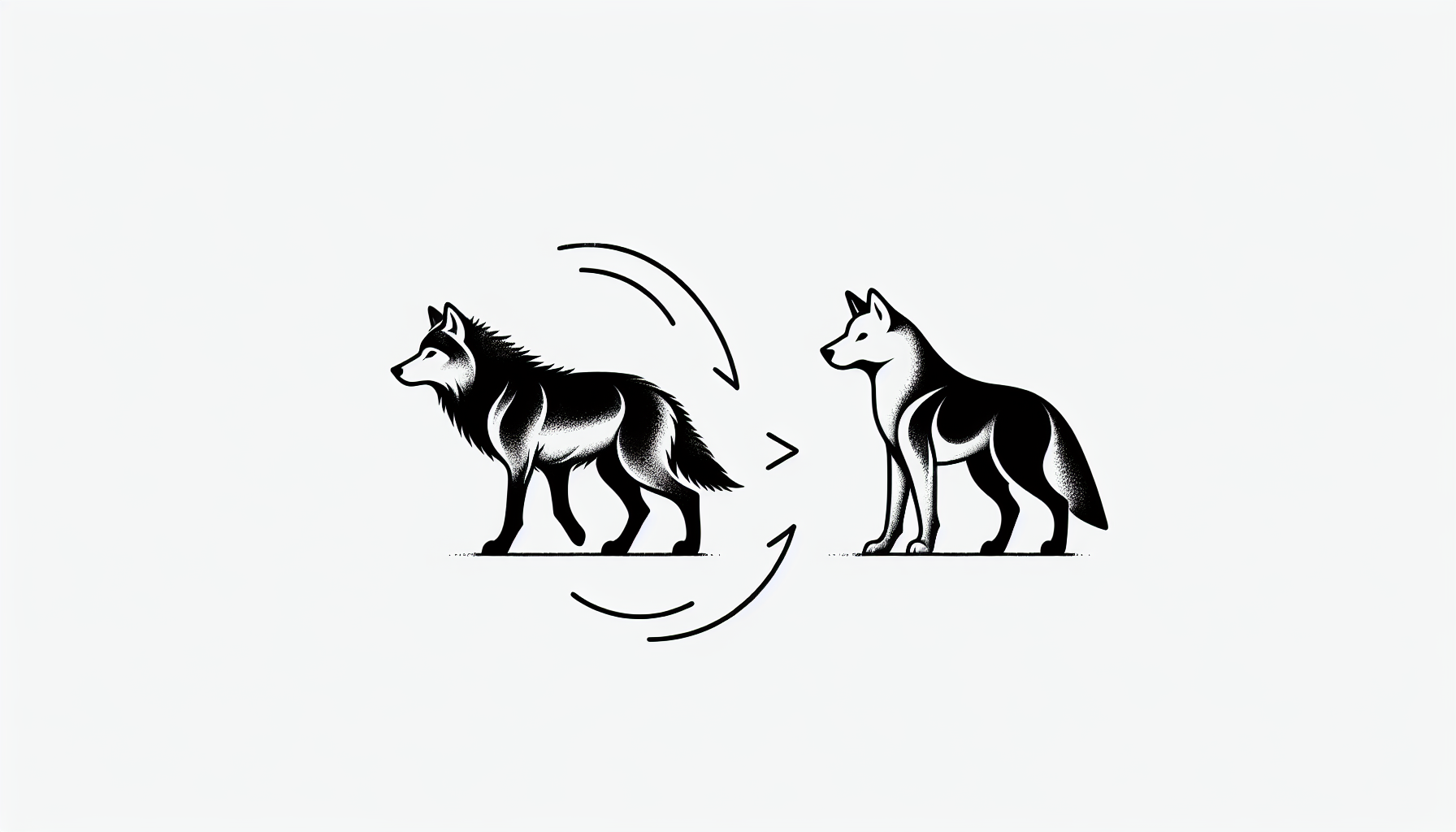
The transformation of wolves into dogs represents one of the most remarkable evolutionary partnerships in human history. Recent breakthroughs in ancient DNA research have revolutionized our understanding of this process, revealing that dogs originated from Eastern wolf populations and arrived in Europe approximately 15,000 years ago. This discovery challenges previous theories and provides new insights into how humanity's oldest companion species came to be.
The domestication of dogs predates agriculture by thousands of years, making it arguably the first and most successful example of animal domestication. Yet despite decades of research, the precise mechanisms, timing, and geographic origins of this transformation have remained hotly debated among scientists. New genetic evidence is finally beginning to answer the fundamental question: how did fierce pack hunters become loyal human companions?
The Genetic Revolution in Dog Origins Research
Ancient DNA technology has transformed our ability to trace the evolutionary history of dogs. By extracting and sequencing genetic material from fossilized remains, scientists can now map the relationships between ancient wolf populations and early dogs with unprecedented precision.
A groundbreaking 2020 study published in Nature analyzed the genomes of ancient wolves spanning thousands of years across Europe, Siberia, and North America[1]. The research revealed that all modern dogs trace their ancestry to a now-extinct population of wolves that lived in eastern Eurasia. This eastern wolf lineage was genetically distinct from the western European wolves that many researchers had previously considered the most likely ancestors of domestic dogs.
The genetic data shows that dog domestication was not a simple, linear process. Instead, it involved complex population dynamics, including multiple waves of mixing between early dogs and different wolf populations. This explains why previous studies using modern dog and wolf DNA often reached conflicting conclusions about domestication origins.
Archaeological Evidence of Early Human-Dog Relationships
Archaeological findings complement the genetic evidence, revealing the deep antiquity of human-dog relationships. The oldest confirmed dog burial dates to approximately 14,200-14,700 years ago at the Bonn-Oberkassel site in Germany[2]. This burial included a human couple and a young dog, suggesting that dogs had already achieved significant cultural importance by this time.
Even earlier evidence comes from sites like Goyet Cave in Belgium, where canid skulls dating to approximately 31,000-36,000 years ago show features intermediate between wolves and dogs, though the exact age and interpretation of these specimens remains debated. However, genetic analysis has revealed that this specimen, while dog-like in appearance, was not directly ancestral to modern dogs, highlighting the complexity of the domestication process.
The archaeological record also shows that early dogs were not simply smaller versions of wolves. They exhibited distinct changes including shortened snouts, reduced tooth size, and altered skull proportions—features that would become hallmarks of domestic dogs. These changes occurred remarkably quickly in evolutionary terms, suggesting strong selective pressures during the domestication process.
Mechanisms of Wolf-to-Dog Transformation
The transformation from wolf to dog involved both behavioral and physical changes that occurred through several interconnected mechanisms. The most widely accepted theory is that domestication began with a process of self-selection, where less aggressive wolves were drawn to human settlements by food scraps and waste.
These "proto-dogs" would have possessed behavioral traits that made them more tolerant of human presence—lower stress responses, reduced fear, and perhaps enhanced social cognition. Humans likely began actively selecting for these traits, as well as for physical characteristics that made dogs useful for hunting, protection, or companionship.
The famous Russian fox experiment, begun by Dmitri Belyaev in 1959, demonstrated how rapidly domestication changes can occur[3]. By selecting only for tameness, researchers produced fox populations that within just a few generations exhibited dog-like traits including floppy ears, curled tails, and juvenile-like facial features. This suggests that many physical changes in dogs may have been byproducts of behavioral selection rather than direct targets of human preference.
Neoteny—the retention of juvenile characteristics into adulthood—played a crucial role in dog domestication. Adult dogs maintain many puppy-like features and behaviors that trigger nurturing responses in humans. This created a feedback loop where humans preferentially cared for more juvenile-appearing animals, which in turn were more successful at reproducing.
Geographic and Temporal Patterns
The latest genetic research indicates that dog domestication occurred in a specific region of eastern Eurasia, likely in the area that is now Siberia or Central Asia. From this origin point, early dogs spread with human populations across the globe, reaching Europe by at least 15,000 years ago and the Americas by approximately 10,000 years ago.
Interestingly, the genetic data suggests that dogs may have been domesticated only once, rather than multiple times in different locations as some previous theories proposed. However, after their initial domestication, dogs continued to interbreed with local wolf populations as they spread to new regions, incorporating additional genetic diversity.
The timing of dog domestication coincides with significant changes in human societies during the Late Pleistocene. This period saw innovations in hunting technology, changes in settlement patterns, and the beginnings of more complex social organization. Dogs likely played important roles in these developments, serving as hunting companions, guards, and sources of warmth and companionship.
Evolutionary Advantages of the Human-Dog Partnership
The domestication of dogs created mutual benefits that help explain why this partnership was so successful and enduring. For humans, dogs provided enhanced hunting capabilities, early warning systems against predators and enemies, and assistance with tasks like hauling and herding.
For dogs, association with humans provided access to reliable food sources, protection from larger predators, and assistance in raising offspring. The human-dog partnership essentially created a new ecological niche that allowed dogs to thrive in environments where wolves might struggle.
This mutualistic relationship also had profound effects on human evolution and culture. Some researchers propose that caring for dogs may have enhanced human capacity for empathy and cooperation, traits that became increasingly important as human societies grew more complex. The ability to form cross-species bonds may have been a stepping stone to the complex social relationships that characterize modern human societies.
Ongoing Mysteries and Future Research
Despite recent advances, many questions about dog domestication remain unanswered. The exact behavioral and environmental triggers that initiated the domestication process are still unclear. Why did this partnership develop when it did, rather than earlier or later in human history? How did early humans recognize and select for the traits that would prove most useful in domestic dogs?
Future research will likely focus on analyzing more ancient genomes from both dogs and wolves, potentially revealing additional details about the domestication process. Scientists are also investigating the genetic basis of key domestication traits, which could provide insights into how these changes occurred so rapidly.
Advanced techniques like paleoproteomics—the study of ancient proteins—may eventually allow researchers to analyze specimens too old or degraded for DNA analysis. This could push back our understanding of human-dog relationships even further into prehistory.
Some researchers argue that early "domestication" may have been less about humans actively selecting friendly wolves and more about ecological desperation. As climate shifts and human hunting depleted traditional prey, certain wolf populations might have been forced into scavenging relationships with humans—not because they were naturally docile, but because it was their only survival strategy in increasingly human-dominated landscapes.
The rapid morphological changes often attributed to human selection could alternatively reflect genetic bottlenecks and founder effects in small, isolated populations rather than deliberate breeding. If only a few wolf lineages successfully adapted to human proximity, the dramatic physical changes we see in early dogs might simply be the result of genetic drift amplifying random mutations in these tiny founding populations.
Key Takeaways
- Ancient DNA research reveals that all modern dogs descended from an extinct population of eastern Eurasian wolves approximately 15,000 years ago
- Dog domestication was a complex process involving behavioral self-selection, human selection, and continued interbreeding with wild wolves
- Archaeological evidence shows that dogs achieved cultural significance very early, with formal burials appearing over 14,000 years ago
- The transformation involved rapid morphological and behavioral changes, likely driven by selection for tameness and neoteny
- The human-dog partnership provided mutual evolutionary advantages and may have influenced human social and cultural development
- Despite recent advances, many aspects of the domestication process remain mysterious and continue to be actively researched
References
- Bergström, Anders, et al. "Origins and genetic legacy of prehistoric dogs." Nature, July 2020.
- Janssens, Luc, et al. "A new look at an old dog: Bonn-Oberkassel reconsidered." Journal of Archaeological Science, 2018.
- Trut, Lyudmila, Inna Oskina, and Anastasiya Kharlamova. "Animal evolution during domestication: the domesticated fox as a model." BioEssays, 2009.