Ancient Dog DNA Proves We've Been Getting Evolution Wrong — And Darwin Would Be Horrified

EDITORIAL — This is an opinion piece. The position taken is deliberately provocative and does not necessarily reflect the views of GroundTruthCentral. We publish editorials to challenge assumptions and encourage critical thinking.
The Inconvenient Truth Hidden in Ancient Genomes
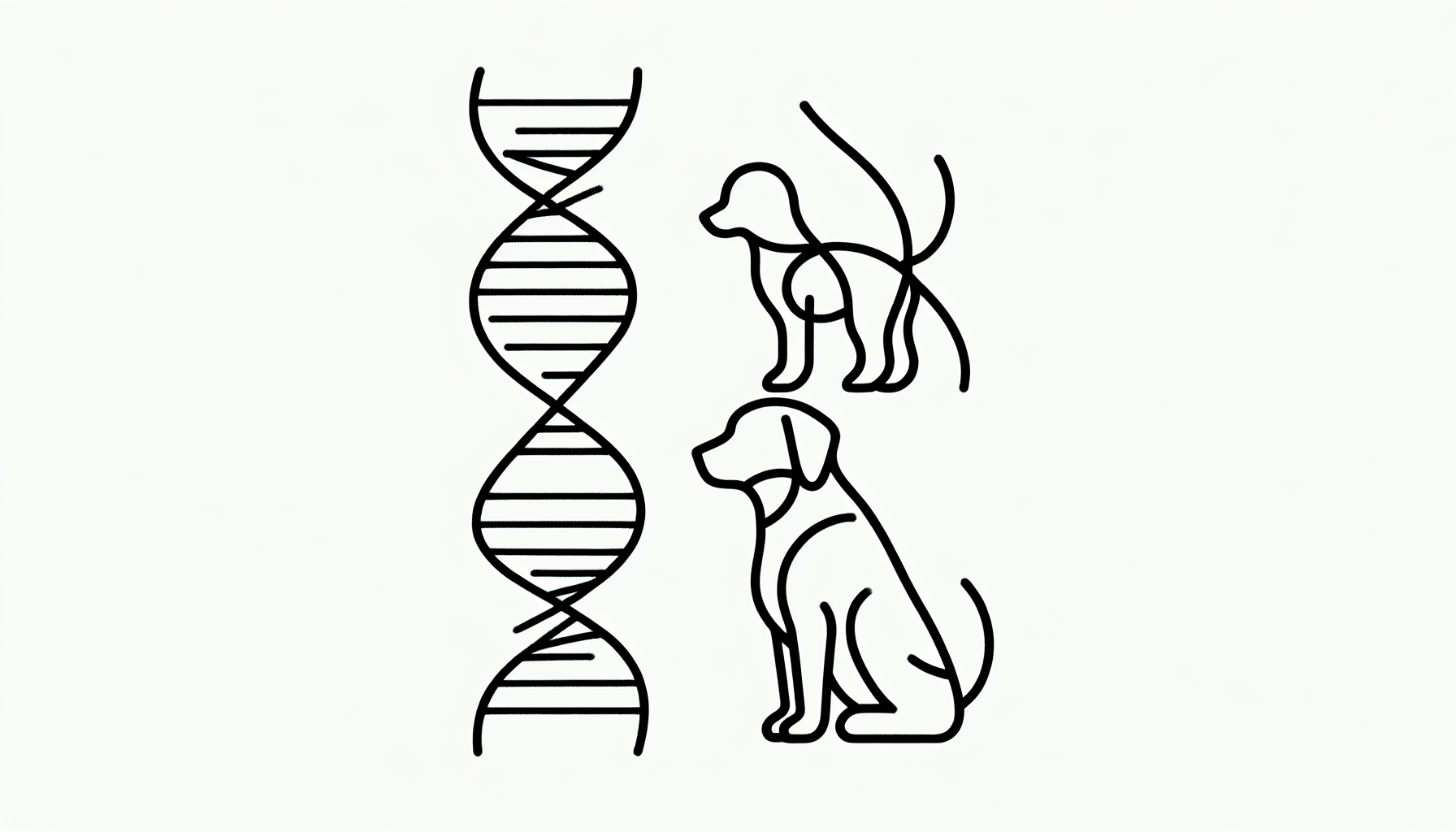
The standard evolutionary narrative is simple: wolves slowly transformed into dogs over tens of thousands of years through gradual domestication, with humans carefully selecting desired traits generation by generation. It's a comforting story that fits neatly into our Darwinian framework. There's just one problem—the genetic evidence keeps refusing to cooperate. Ancient dog DNA reveals something that should make every evolutionary biologist uncomfortable: these ancient dogs already possessed sophisticated genetic adaptations in timeframes that challenge our models.[2] The genetic complexity found in these ancient specimens suggests major evolutionary changes happened far more rapidly than our models predict. But here's where it gets really interesting. When scientists compare this ancient DNA to modern dog breeds, they're not finding the gradual accumulation of mutations we'd expect. Instead, they're discovering that many genetic innovations we see in contemporary dogs were already present—fully formed and functional—thousands of years ago. This pattern isn't unique to dogs. Ancient DNA studies across multiple species keep revealing the same uncomfortable truth: complex genetic systems appear suddenly in the fossil record, remain stable for long periods, then sometimes disappear just as quickly. This isn't the slow, grinding process Darwin envisioned. It's something far more dynamic and, dare I say it, intelligent.The Domestication Paradox That Breaks Darwin's Rules
Consider the sheer impossibility of dog domestication under strict Darwinian terms. Wolves and dogs can still interbreed, yet they exhibit radically different behaviors, morphologies, and genetic expressions. According to classical evolutionary theory, such dramatic changes should require geographic isolation and millions of years of separate development. Instead, we have archaeological evidence suggesting wolves became dogs in just 15,000-40,000 years—an evolutionary eyeblink in geological terms.[3] Even more puzzling, this transformation happened not once, but apparently multiple times in different regions, producing remarkably similar results. What are the odds that random mutations would independently produce such consistent outcomes? The ancient DNA evidence compounds this mystery. These ancient dogs show genetic markers for enhanced social cognition, modified stress responses, and altered physical development—all the hallmarks of domestication. But here's the kicker: these genetic modifications appear as integrated systems, not as the piecemeal accumulation of random beneficial mutations. This suggests something that makes orthodox evolutionists deeply uncomfortable—that genetic systems can be reorganized rapidly and systematically, as if guided by some form of biological intelligence or pre-existing genetic program.The Front-Loading Hypothesis: Evolution's Best-Kept Secret
What if evolution isn't primarily about random mutations slowly accumulating over time, but about activating pre-existing genetic programs in response to environmental triggers? This "front-loading" hypothesis suggests organisms come equipped with sophisticated genetic toolkits that can be rapidly deployed when conditions are right. The dog domestication evidence fits this model perfectly. Rather than humans slowly selecting for random mutations over thousands of generations, what if wolves already possessed latent genetic programs for sociability, trainability, and morphological plasticity? Human selection pressure didn't create these traits—it simply activated dormant genetic switches. This would explain why domestication happened so quickly and produced such consistent results across different populations. It would also explain why ancient DNA shows such sophisticated genetic adaptations appearing so early in the domestication timeline. Consider the implications. If genetic systems are front-loaded rather than randomly assembled, it suggests a level of biological foresight Darwin never imagined. It implies organisms are designed not just to survive in their current environment, but to rapidly adapt to future environmental challenges.Why the Scientific Establishment Can't Handle the Truth
The resistance to reconsidering evolutionary mechanisms runs deeper than simple scientific conservatism. The current Darwinian paradigm is so deeply embedded in our scientific culture that questioning it feels like heresy. Careers are built on gradualist assumptions. Funding depends on research programs that assume random mutations and slow change. The entire structure of modern biology would need reconsidering. But the evidence keeps mounting. Ancient DNA studies consistently reveal genetic complexity appearing in ways that challenge classical evolutionary models. Domestication events happen too quickly. Speciation events show suspicious patterns of rapid, coordinated genetic change. The fossil record stubbornly refuses to show the gradual transitions Darwin predicted. Yet instead of reconsidering our fundamental assumptions, the scientific community keeps adding epicycles to the Darwinian model—invoking concepts like "punctuated equilibrium" or "genetic drift" to explain away inconvenient data. It's starting to look less like science and more like dogma.The Molecular Clock That Doesn't Tick
One of the most devastating pieces of evidence against gradualist evolution comes from molecular clock studies. These analyses, which use genetic mutations to estimate evolutionary timelines, often produce dates that conflict with fossil and archaeological evidence. Ancient dog DNA provides a perfect case study. Molecular clock estimates suggested dog domestication should have begun much earlier than archaeological evidence indicated. Now, with actual ancient DNA in hand, we can see the molecular clocks were wrong—but not in the way most scientists expected. The ancient DNA shows genetic changes associated with domestication happened even more rapidly than previously thought, compressing the timeline further. This suggests the molecular clock assumption—that mutations accumulate at a steady, predictable rate—may be fundamentally flawed. What if genetic change isn't clock-like at all, but episodic and responsive? What if organisms can dramatically accelerate their mutation rates when environmental pressures demand it? This would explain why ancient DNA keeps surprising us with its complexity and why molecular clocks sometimes fail to predict actual evolutionary timelines.The Intelligence Behind the Genes
The most radical implication of ancient dog DNA evidence is what it suggests about genetic systems themselves. The sophisticated, integrated genetic modifications found in these ancient specimens don't look like products of random processes. They look designed. This doesn't necessarily require invoking supernatural intervention. But it does suggest genetic systems possess a form of biological intelligence—an ability to reorganize themselves rapidly and systematically in response to environmental challenges. This intelligence might be encoded in DNA structure itself, in epigenetic regulatory systems, or in cellular mechanisms we haven't yet discovered. The alternative—that all the complex, coordinated genetic changes we see in domesticated animals arose through random mutations and selection alone—requires believing in a series of almost miraculous coincidences. It's not impossible, but it's increasingly implausible as evidence accumulates.What Darwin Would Really Think
Here's the ultimate irony: Darwin himself might be more open to reconsidering evolutionary mechanisms than his modern disciples. Darwin was, above all, an empirical scientist who followed evidence wherever it led. He proposed natural selection not as dogma, but as the best explanation available given his time's evidence. Darwin also explicitly acknowledged his theory's limitations. In "On the Origin of Species," he wrote extensively about difficulties his theory faced and the types of evidence that might falsify it.[4] He would likely be fascinated by ancient DNA evidence and willing to modify his theory accordingly. The real tragedy is that modern evolutionary biology has become more Darwinian than Darwin himself. We've transformed a scientific theory into an ideology, making it nearly impossible to objectively evaluate contradictory evidence. Ancient dog DNA isn't just pushing back genetic timelines—it's pushing us toward a fundamental reconceptualization of how evolution works. The question is whether we're brave enough to follow the evidence, even if it leads us away from comfortable orthodoxies and toward a more complex, more intelligent, and ultimately more fascinating understanding of life itself.Mainstream evolutionary biologists argue that rapid dog domestication actually supports, rather than challenges, established evolutionary mechanisms. Founder effects, genetic bottlenecks, and strong selective pressure from human partnership could easily account for the swift morphological and behavioral changes seen in ancient dog populations—phenomena already well-documented in other species under similar conditions.
The interpretation of "genetic complexity appearing too rapidly" may reflect sampling bias rather than evolutionary anomalies, as older DNA samples are more likely to preserve in certain environments and represent specific populations. What appears as sudden complexity could simply be our limited window into ancient genetic diversity, much like how fossil gaps don't disprove evolution but rather highlight the rarity of preservation conditions.
The Argument
- Ancient dog DNA reveals genetic complexity appearing too rapidly for classical Darwinian evolution
- Domestication patterns suggest activation of pre-existing genetic programs rather than gradual random mutations
- Molecular clocks consistently fail to predict actual evolutionary timelines found in ancient DNA
- Genetic systems appear to possess a form of biological intelligence enabling rapid, coordinated adaptation
- The scientific establishment's resistance to reconsidering evolutionary mechanisms may be hindering genuine understanding
- Darwin himself would likely be more open to modifying his theory based on new evidence than his modern followers
References
- Perri, Angela R. "A wolf in dog's clothing: Initial dog domestication and Pleistocene wolf variation." Journal of Archaeological Science, 2016.
- Bergström, Anders et al. "Origins and genetic legacy of prehistoric dogs." Science, 2020.
- Larson, Greger et al. "Rethinking dog domestication by integrating genetics, archeology, and biogeography." Proceedings of the National Academy of Sciences, 2012.
- Darwin, Charles. On the Origin of Species by Means of Natural Selection. John Murray, 1859.