Why do celebrities keep getting into single-car crashes?

When Tiger Woods crashed his SUV on a winding California road in 2021, it wasn't just another traffic accident—it was the latest chapter in a troubling pattern. From Princess Diana's fatal crash in Paris to countless other high-profile incidents, celebrities seem unusually prone to single-vehicle accidents. These crashes capture public attention not just because of the fame involved, but because they reveal uncomfortable truths about celebrity culture, lifestyle pressures, and the hidden costs of extraordinary wealth and visibility.
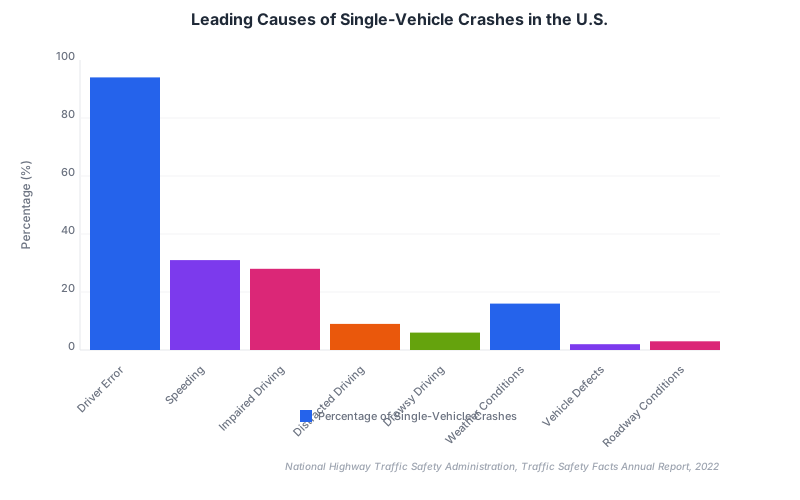
Single-car crashes—accidents involving only one vehicle with no collision with another car—represent a significant portion of traffic fatalities, accounting for approximately 57% of all fatal crashes according to the National Highway Traffic Safety Administration. But when celebrities are involved, these incidents often reveal a complex web of factors that extend far beyond simple driver error or mechanical failure.
The Statistical Reality of Celebrity Car Crashes
While comprehensive data specifically tracking celebrity vehicle accidents doesn't exist, anecdotal evidence suggests a pattern worth examining. Tiger Woods alone has been involved in multiple single-car incidents, including his 2009 crash outside his Florida home and his 2021 rollover in California[1]. Other high-profile cases include Lindsay Lohan's numerous traffic incidents, Paul Walker's fatal crash, and countless other examples spanning decades of celebrity culture.
The visibility of celebrity crashes creates a perception bias—we hear about every incident involving a famous person, while similar crashes involving ordinary citizens rarely make headlines. However, this visibility also allows us to identify patterns that might otherwise go unnoticed in aggregate traffic data.
Lifestyle Factors and Risk Amplification
Celebrity lifestyles involve several factors that significantly increase crash risk. The demanding nature of entertainment industry schedules frequently leads to severe sleep deprivation. A 2017 study by the AAA Foundation for Traffic Safety found that drivers who slept less than five hours in the previous 24 hours had crash rates similar to drunk drivers[2]. For celebrities juggling filming schedules, touring, and promotional obligations across multiple time zones, chronic fatigue becomes a serious safety hazard.
Substance use represents another significant risk factor. The entertainment industry's well-documented relationship with alcohol and drugs creates additional dangers behind the wheel. While not all celebrity crashes involve impairment, higher rates of substance abuse in entertainment communities compared to the general population suggest this factor plays a role in some incidents.
The psychological pressure of constant public scrutiny also contributes to risky behavior. Paparazzi pursuit has been linked to several high-profile crashes, most notably Princess Diana's death in 1997[3]. Even when photographers aren't directly involved, the stress of living under constant observation can lead to impaired decision-making and dangerous risk-taking.
High-Performance Vehicles and Inexperience
Wealth allows celebrities to purchase high-performance vehicles that require skill and experience to operate safely. Sports cars and luxury vehicles often have significantly different handling characteristics than typical passenger cars, with higher power-to-weight ratios and more sensitive steering and braking systems. The Insurance Institute for Highway Safety has consistently found that sports cars and luxury vehicles are overrepresented in fatal single-vehicle crashes[4].
Many celebrities acquire these vehicles without corresponding driving experience or training. Unlike professional race car drivers who undergo extensive training to handle high-performance vehicles, celebrities often purchase cars with capabilities far exceeding their driving skills. This mismatch between vehicle capability and driver experience creates dangerous situations, particularly in emergencies where split-second reactions determine outcomes.
Privacy Seeking and Isolated Driving
The desire for privacy often leads celebrities to drive alone, particularly late at night or on isolated roads where they're less likely to encounter fans or photographers. This privacy-seeking behavior increases crash risk in several ways. Night driving inherently carries higher risks due to reduced visibility and increased likelihood of encountering impaired drivers. Isolated roads often lack safety features of major highways, such as barriers, lighting, and quick emergency response access.
Additionally, driving alone eliminates the safety benefit of passengers who might notice signs of impairment or fatigue and intervene. Studies show that having alert passengers reduces crash risk by providing additional awareness and potential intervention capabilities.
Mental Health and Emotional Distress
The mental health challenges associated with celebrity life—including depression, anxiety, and the pressure of public expectations—can significantly impact driving safety. Emotional distress impairs cognitive function, reaction time, and decision-making abilities. Several high-profile celebrity crashes have occurred during periods of personal crisis or intense media scrutiny.
The stigma surrounding mental health treatment, particularly in image-conscious industries like entertainment, may prevent celebrities from seeking help for conditions that could affect their driving safety. The fear that mental health treatment could damage career prospects creates a dangerous cycle where underlying issues remain unaddressed.
Technology and Distraction Factors
Celebrities often maintain complex communication networks requiring constant connectivity. The pressure to remain available to agents, managers, publicists, and family members can lead to dangerous multitasking while driving. While hands-free technology has improved, the cognitive load of managing multiple communications streams while driving remains significant.
Social media presence requirements add another layer of distraction. The pressure to maintain constant engagement with fans through various platforms can create temptation to use devices while driving, despite well-documented risks associated with distracted driving.
Prevention and Intervention Strategies
Several strategies could help reduce celebrity crash risk. Professional driving instruction specifically focused on high-performance vehicles could help celebrities safely operate their cars. Some luxury car manufacturers now offer specialized training programs for owners of high-performance models.
Enhanced support systems within the entertainment industry could address underlying mental health and substance abuse issues that contribute to risky driving behaviors. Industry organizations could implement programs similar to those used in professional sports to monitor and support performer well-being.
Technology solutions, including advanced driver assistance systems and vehicle monitoring capabilities, could provide additional safety nets. Some fleet management companies now offer services specifically designed for high-net-worth individuals that include real-time monitoring and intervention capabilities.
The apparent frequency of celebrity single-car crashes may be largely an illusion created by media amplification rather than statistical reality. While millions of ordinary drivers crash daily without making headlines, every celebrity incident receives extensive coverage, creating a false impression that famous individuals are uniquely prone to accidents when they may simply be driving under the same microscope of public scrutiny.
Wealth and celebrity status might actually provide significant protective factors that offset commonly cited risk factors like high-performance vehicles and stressful lifestyles. Many celebrities have access to professional drivers, cutting-edge vehicle safety technology, superior emergency response times, and may actually spend less time behind the wheel than average drivers—suggesting their crash rates could be lower than the general population despite the dramatic headlines.
Key Takeaways
- Celebrity single-car crashes result from a combination of lifestyle factors including sleep deprivation, substance use, and psychological pressure from constant scrutiny
- High-performance vehicles require specialized skills that many celebrity owners lack, creating dangerous mismatches between vehicle capability and driver experience
- Privacy-seeking behaviors often lead celebrities to drive alone on isolated roads, increasing crash risk and reducing emergency response access
- Mental health challenges associated with celebrity life can impair driving safety but often go untreated due to career concerns and industry stigma
- Prevention strategies should focus on specialized driver education, mental health support, and technology-assisted safety systems
- While media attention creates perception bias about celebrity crash frequency, the unique risk factors in celebrity lifestyles warrant serious attention and targeted interventions
References
- Associated Press. "Tiger Woods injured in car crash in California." ESPN, February 23, 2021.
- AAA Foundation for Traffic Safety. "Acute Sleep Deprivation and Risk of Motor Vehicle Crash Involvement." AAA Foundation Research Report, 2016.
- Sancton, Thomas. "Death of a Princess." Time Magazine, September 8, 1997.
- Insurance Institute for Highway Safety. "Fatality Facts: Passenger Vehicles." IIHS Status Report, 2023.