A Day in the Life of an AI Music Producer in Berlin's Underground Scene

COMPOSITE CHARACTER — The person described in this article is fictional, created as a composite based on published reporting, interviews, and research about real people in this role. Details are illustrative, not documentary.
Morning Rituals and Digital Communion
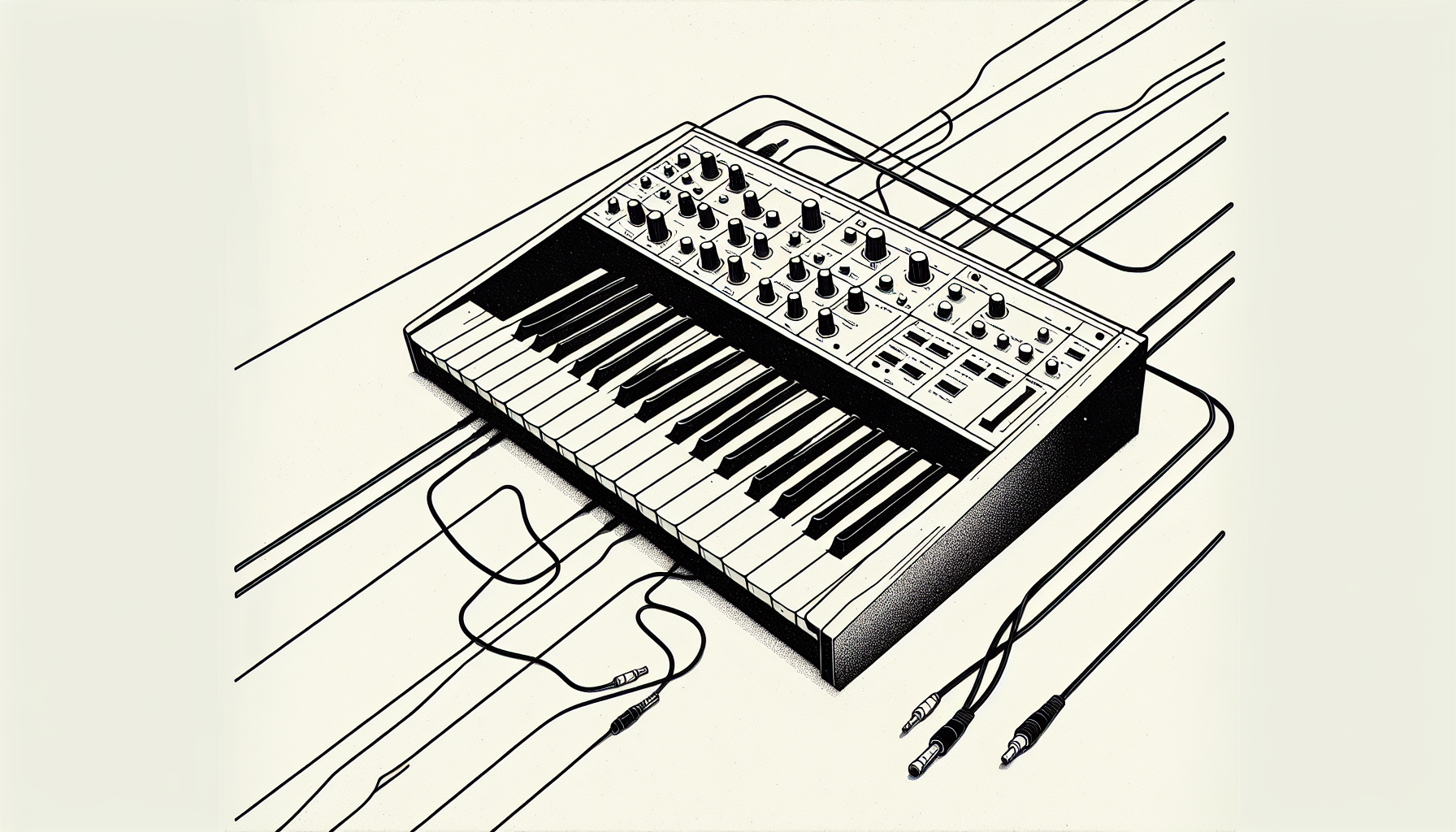
The first sound Zara makes isn't quite human—it's a vocal warm-up she'll later feed into her neural network models. "Ah-ee-oh-mm-tsss," she hums, her voice crackling with sleep. She's trained her AI to recognize emotional content in these morning vocalizations, using them as seed material for the day's work. The habit is so ingrained that she once caught herself doing it in a friend's shower, much to their confusion. Coffee first, always coffee. Her machine is a €50 secondhand thing that sounds like it's dying, but the ritual matters more than quality. While it gurgles to life, she checks overnight renders on her main workstation—a Frankenstein assembly of hardware built over three years of residency fees and small grants from Berlin's cultural funding programs[2]. Three tracks finished processing while she slept. She listens to each with the focused attention of a wine taster. The first is too aggressive—the AI interpreted yesterday's frustration with her landlord and translated it into harsh, metallic percussion. The second captures something interesting: melancholy that reminds her of walking through Görlitzer Park in November rain. The third makes her smile involuntarily. She doesn't know why, which is exactly why she keeps working with machines. "Guten Morgen, beautiful disasters," she says to the tracks, saving two and deleting one.The Commute to Nowhere
Zara's commute is fifteen steps from bed to desk, but she's learned that leaving and returning helps her brain shift gears. She puts on yesterday's clothes—black jeans, a Tresor t-shirt from 2019, and a jacket that's more holes than fabric—and walks to the corner bakery. Herr Özkan, the owner, nods at her. They've never exchanged more than pleasantries, but he always saves her a pretzel from the morning batch. Today he looks tired, and she notices his radio is playing generic pop instead of the Turkish folk music he usually prefers. "Everything okay?" she asks in her still-imperfect German. "Ach, my son wants me to use some computer program to make music for the bakery. Says it will bring in younger customers." He shrugs. "I don't understand these things." Zara almost laughs but catches herself. The irony isn't lost—she's part of the wave of technology making traditional musicians anxious, yet here she is, buying bread from a man whose son wants to automate the very human experience of choosing what music accompanies your morning pretzel[3].The Laboratory
Back home, Zara begins what she calls "feeding the beast." Her AI models require constant input—not just audio, but emotional context, cultural references, and what she terms "Berlin data." She spends an hour each morning training her system on new material: field recordings from the city, U-Bahn conversations, construction sounds (always construction) outside her window. Today's input includes a recording from last night at ://about blank, a club built in a former industrial complex. She'd held her phone discretely near the speakers during a set by a DJ whose name she never learned, capturing not just music but crowd response—breathing, shuffling, the moment when 200 people moved as one organism to a devastating drop. Her AI doesn't just analyze audio frequencies; it maps dancefloor social dynamics. This separates her work from commercial AI music flooding Spotify—she's teaching machines to understand electronic music's communal experience, not just its mathematical patterns[4]. "Okay, Mädchen," she says to her computer, using the pet name she's developed for her main AI model. "What did you learn from last night?" The response comes as a visual: a complex web showing how crowd energy influenced the DJ's track selection, which affected room acoustics, which fed back into crowd movement. It's beautiful and slightly terrifying—like seeing a collective organism's nervous system.Collaboration Across Time Zones
At 11 AM Berlin time, Zara joins a video call with collaborators. Maya in Tokyo is ending her day, exhausted but excited as she shares a track blending traditional Japanese instruments with AI-generated percussion. Detroit Mike is starting his morning, coffee mug visible, explaining his experiments feeding his AI model 1960s Motown session recordings. "The machine keeps trying to add strings," Mike says, laughing. "It thinks everything needs orchestration." "That's not wrong," Maya responds. "Maybe we let it. See what happens when AI tries to be romantic." Zara shares her screen, showing the visualization from last night's club recording. "I want to try something. What if we feed all our AIs the same emotional prompt but from different cultural contexts? See how Berlin sadness differs from Tokyo sadness differs from Detroit sadness?" They spend twenty minutes defining the prompt: walking home alone after a perfect night, when music still echoes in your body but the city is empty and quiet. It's a feeling electronic music has always tried to capture—the beautiful melancholy of the comedown. "Okay, everyone render and we'll compare tomorrow," Zara says before signing off.The Afternoon Slump
By 2 PM, Zara hits the wall every creative knows. Morning inspiration has evaporated, leaving her staring at waveforms that look like abstract art but sound like homework. She makes the mistake of checking social media and immediately regrets it. A viral post from a famous DJ complains about "soulless AI music flooding the scene." The comments are a battlefield between purists and technologists. Someone has tagged her—not by name, but with a screenshot of her SoundCloud page and the caption "This is what's wrong with music today." "Fuck," she says to her empty apartment. She's been through this before. The electronic music community has always been suspicious of new technology, even while embracing it. Kraftwerk were called soulless in the 1970s. Drum machines would kill real drummers. Digital audio workstations would make everyone a producer. Now AI is the latest threat to authenticity[5]. The criticism stings because part of her agrees. Some days, working with AI feels like cheating. Other days, it feels like the most honest thing she's ever done—admitting that creativity is partly algorithmic, that inspiration follows patterns, that even human intuition can be mapped and modeled. She closes her laptop and decides to walk.Street Symphony
Kreuzberg in the afternoon is its own music. Construction crews provide percussion, the U-Bahn adds bass, conversations in a dozen languages create melody. Zara has trained herself to hear the city as composition, partly for work, mostly because it makes grocery shopping feel like performance art. She stops at a corner where someone has set up a small speaker playing what sounds like AI-generated ambient music. A small sign asks for donations. The music is generic, pleasant, forgettable—exactly what critics fear AI music will become. But people are stopping, listening, dropping coins. A mother with a stroller sways to the rhythm. Two teenagers pause their conversation to identify the sound source. Even mediocre music creates moments of human connection. Maybe that's enough. At the Turkish market, she buys vegetables she probably won't cook and chats with Ayşe, who runs a stall and always asks about her music. Today, Ayşe mentions her daughter is learning to DJ. "She uses computer programs," Ayşe says, with the tone she might use for quantum physics. "Makes music without instruments. I don't understand, but she's happy." "What kind of music?" Zara asks. "Techno, I think? Very loud. But also..." Ayşe pauses, searching for words. "It makes you feel something. Like being in a big room with many people, all feeling the same thing." Zara smiles. "That's exactly what it's supposed to do."Evening Sessions
By 6 PM, Zara is back at her desk, but something has shifted. Afternoon doubts have crystallized into determination. She opens a new project and begins with something radical for her: no AI, just her voice and a simple drum machine. She sings—not words, just sounds. Vowels that stretch and bend, consonants that click and hiss. It's the most human thing she can do, and she records it all. Then, slowly, she feeds these recordings to her AI, not as training data but as a conversation partner. The machine responds with complementary sounds—not mimicking her voice, but harmonizing in unexpected ways. It adds percussion following her breathing, bass lines mirroring her heartbeat. The collaboration feels organic, like jamming with a musician who never gets tired and never judges. Hours pass unnoticed. The track grows into something that sounds like neither human nor machine, but some new hybrid. It's the sound of 3 AM in Berlin, when the city belongs to insomniacs and artists and anyone brave enough to be awake when the world feels most honest.Night Shift
At 11 PM, Zara's phone buzzes with messages from friends heading to clubs. Part of her wants to join—the social part that remembers why she fell in love with electronic music. But tonight she's deep in the flow state every producer knows and treasures. She compromises: opening her windows wide, letting the city's night sounds filter into her apartment and, inevitably, her recordings. Berlin at night becomes part of the track—distant sirens, street laughter, late tram rumbles. Her neighbor's music has started again, the same repetitive techno loop that woke her this morning. Instead of annoyance, she samples it, feeding it into her AI with a prompt about urban loneliness and shared walls. The machine transforms the annoying loop into something beautiful—a meditation on proximity and isolation, on how we're all making music together whether we mean to or not. By 2 AM, she has something complete. Not finished—tracks are never really finished—but complete enough to share. She uploads it to SoundCloud with a simple title: "Kreuzberg_Nocturne_AI-Human_Collab_021224."Digital Dreams
Zara finally shuts down her computers at 3:17 AM. Her apartment falls into relative quiet, though the city never really sleeps. She lies in bed, still wearing headphones, listening to the track she just created. It sounds like Berlin. It sounds like her. It sounds like the future and past having a conversation. Most importantly, it sounds like something that could make people dance, which ultimately matters in electronic music—not the tools you use, but whether you can make strangers move together in the dark[6]. Her phone shows three new messages from collaborators. Maya has sent her track—gorgeous, full of space and silence. Mike's contribution is rougher, more industrial, but with unexpected moments of tenderness. Tomorrow they'll combine all three, seeing how AI interprets sadness across cultures. As she drifts toward sleep, Zara thinks about Herr Özkan's son, about Ayşe's daughter, about all the people trying to make sense of technology and art and their intersections. Electronic music has always been about the future—imagining new sounds, new ways of moving, new forms of collective experience. AI is just the latest tool in that ongoing project. The last thing she hears before sleep is her neighbor's music, still playing through the walls. Tomorrow she'll probably sample that too. In Berlin, everything is raw material, and every sound has the potential to become a song. She closes her eyes and dreams of dancefloors where humans and machines move together, creating something neither could make alone.While Zara's AI learns from "Berlin data" to create authentic local sounds, critics argue this approach fundamentally misunderstands how cultural authenticity emerges from lived experience and community relationships rather than pattern recognition. The risk is not just homogenization, but the reduction of Berlin's rich underground culture to algorithmic outputs that simulate authenticity without embodying the social struggles and collective experiences that originally gave the scene its meaning.
The economic implications of AI music production remain largely unexamined in Berlin's scene, where many traditional producers and DJs already struggle with streaming economics and venue closures. As AI tools become more sophisticated and accessible, established artists worry about a race to the bottom where human creativity becomes economically unviable, potentially transforming Berlin's celebrated underground culture into a playground for those who can afford the latest AI technology rather than a space for authentic artistic expression.
Key Takeaways
- AI music producers in Berlin's underground scene blend cutting-edge technology with the city's rich electronic music culture
- The creative process involves training AI models on cultural and emotional context, not just musical patterns
- Artists face ongoing debates about authenticity and technology in electronic music, echoing historical tensions around new musical tools
- International collaboration through AI enables new forms of cross-cultural musical exchange
- The work combines highly technical skills with deeply human elements like community connection and emotional expression
- Berlin's unique urban environment and music scene provide both inspiration and raw material for AI-assisted composition
References
- Rietveld, Hillegonda. "This Is Our House: House Music, Cultural Spaces and Technologies." Popular Music, 1998.
- Berlin Senate Department for Culture and Europe. Cultural funding programs support various digital arts initiatives across the city.
- Holm-Hudson, Kevin. "Come on Feel the Noise: Technology, Popular Music, and Cultural Change." Journal of Popular Music Studies, 2002.
- Collins, Nick. "Towards Autonomous Agents for Live Computer Music: Realtime Machine Listening and Interactive Music Systems." PhD Thesis, University of Cambridge, 2006.
- Reynolds, Simon. Energy Flash: A Journey Through Rave Music and Dance Culture. Faber & Faber, 2013.
- Garcia, Luis-Manuel. "On and On: The Liminal Sensibilities of House Music." Popular Music, 2005.