How to Build a Career in the $2.8B Outdoor Recreation Industry: From Wilderness Guide to Movement Coach
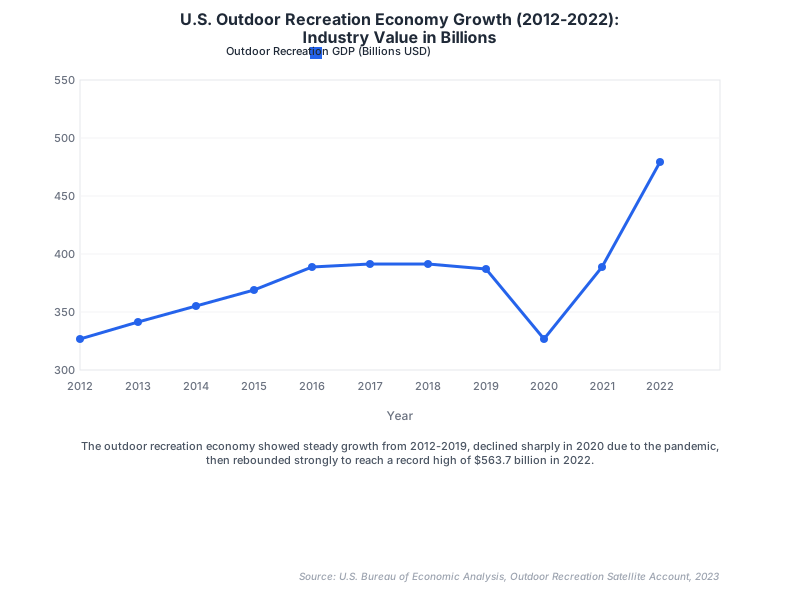
The outdoor recreation industry has exploded into a $2.8 billion economic powerhouse, creating diverse career opportunities that blend passion for nature with sustainable livelihoods. From traditional wilderness guiding to emerging fields like primal movement coaching and barefoot hiking instruction, professionals can now build meaningful careers that connect people with their natural movement patterns while exploring the great outdoors.
The convergence of wellness trends, environmental consciousness, and adventure tourism has created unprecedented opportunities for outdoor professionals. Specialized niches like movement coaching and barefoot hiking instruction are experiencing rapid growth as consumers seek authentic outdoor experiences that go beyond traditional recreation.
Traditional Wilderness Guiding: The Foundation Career Path
Wilderness guiding remains the cornerstone of outdoor recreation careers, with clear certification pathways and established earning potential. Wilderness guides across the United States earn median salaries ranging from $28,000 to $65,000 annually, depending on specialization and location.
Essential certifications begin with Wilderness First Responder (WFR) training through organizations like the National Outdoor Leadership School (NOLS) or Wilderness Medical Associates International (WMAI). The 80-hour WFR course costs approximately $650-$850 and provides the medical foundation required by most employers. Advanced guides often pursue Wilderness First Responder Instructor certification, which can increase earning potential by 20-30%.
The American Mountain Guides Association (AMGA) offers the gold standard for technical guiding certifications. Their Rock Guide certification requires 70+ days of training and assessment over 2-4 years, costing $8,000-$12,000 total. However, AMGA-certified guides command premium rates of $400-$800 per day for private guiding.
Regional variations significantly impact earning potential. Colorado-based guides working with established companies report average annual earnings of $45,000-$75,000, while Alaska wilderness guides can earn $35,000-$55,000 during the compressed summer season. California guides serving the Sierra Nevada and coastal ranges typically earn $40,000-$70,000 annually.
Key employers include established outfitters like REI Adventures, Backroads, and Austin Adventures, which actively recruit through platforms like CoolJobs.com and BackcountryJobs.com. Seasonal positions often provide housing and meals, effectively increasing compensation by $8,000-$15,000 annually.
Emerging Primal Movement Coaching Specializations
Primal movement coaching represents one of the fastest-growing segments within outdoor recreation, driven by increasing interest in natural movement patterns. Specialized movement coaches now command hourly rates of $75-$150 for private sessions and $40-$80 for group classes.
MovNat, founded by Erwan Le Corre, offers the most recognized certification pathway for natural movement coaching. Their Level 1 Certification costs $1,295 for a three-day workshop, while Level 2 requires additional investment of $1,595. Certified MovNat instructors report average annual earnings of $35,000-$85,000, with top practitioners earning six-figure incomes through workshops, retreats, and online programming.
Animal Flow, developed by Mike Fitch, provides another specialized certification track focusing on quadrupedal movement patterns. The Level 1 workshop costs $497, with Level 2 at $697. Certified Animal Flow instructors typically earn $50-$100 per group class and $80-$120 for private sessions.
The Functional Range Conditioning (FRC) system, developed by Dr. Andreo Spina, bridges movement coaching with clinical applications. FRC certification costs $1,500-$2,500 depending on the module, but certified practitioners can charge therapeutic rates of $100-$175 per session. This certification proves particularly valuable for coaches working with clients recovering from injuries or seeking performance enhancement.
Barefoot Hiking Instruction and Foot Health Specialization
Barefoot hiking instruction has emerged as a distinct specialization following research from Harvard's Daniel Lieberman on natural foot strike patterns. Specialized barefoot hiking guides now charge premium rates of $200-$400 per day for private instruction and $75-$125 per person for small group sessions.
While formal certification programs for barefoot hiking instruction are still developing, practitioners often combine existing wilderness guide credentials with specialized foot health training. Many instructors report average earnings of $25,000-$55,000 annually, often combining barefoot instruction with traditional guiding services.
Complementary certifications enhance earning potential significantly. The Foot Health Practitioner certification through established organizations costs $2,500-$3,500 and allows practitioners to provide foot assessments and corrective exercises. This clinical component enables barefoot hiking instructors to charge $100-$150 for initial foot health consultations plus ongoing coaching fees.
Successful barefoot hiking instructors often develop signature programs combining multiple elements. Some practitioners integrate barefoot running technique with hiking instruction, commanding $150-$300 per participant for weekend intensives.
Digital Platform Development and Online Revenue Streams
The COVID-19 pandemic accelerated the development of digital revenue streams within the outdoor recreation industry. Successful outdoor professionals now typically generate 30-60% of their income through digital platforms and online programming.
Teachable and Thinkific represent the primary platforms for course creation, with successful outdoor professionals earning $5,000-$50,000 monthly through comprehensive online programs. YouTube monetization provides additional revenue streams, with channels focused on movement coaching and barefoot hiking typically earning $2-$5 per 1,000 views through ad revenue.
Patreon subscriptions offer recurring revenue for outdoor professionals providing ongoing content and community access. Successful movement coaches typically charge $15-$50 monthly for premium content, with top creators earning substantial monthly income through subscriber support.
Instagram and TikTok influencer partnerships provide additional income streams for outdoor professionals with strong social media presence. Micro-influencers (10,000-100,000 followers) typically earn $100-$500 per sponsored post, while macro-influencers (100,000+ followers) command $500-$5,000 per post depending on engagement rates and niche specificity.
Retreat and Workshop Leadership
Retreat leadership represents one of the higher-earning segments of the outdoor recreation industry, with successful retreat leaders earning $100,000-$300,000 annually through premium programming. Movement and barefoot hiking retreats typically charge $1,500-$5,000 per participant for 3-7 day experiences, with profit margins of 40-60% after expenses.
Successful retreat development requires strategic location selection, comprehensive programming, and strong marketing execution. Popular retreat destinations include Costa Rica, Bali, and domestic locations like Sedona, Arizona, and the Blue Ridge Mountains. Venue costs typically range from $75-$200 per person per night, including meals and accommodation.
Insurance requirements for retreat leadership include professional liability coverage ($1-2 million recommended) and international coverage for overseas programs. Annual premiums range from $1,500-$5,000 depending on activities and group sizes.
Marketing successful retreats requires building email lists and maintaining active social media presence. Retreat leaders typically invest 20-30% of gross revenue in marketing activities. Early bird pricing strategies (30-40% discounts for bookings 6+ months in advance) help ensure minimum participant numbers while improving cash flow.
Corporate Wellness and Team Building Specializations
Corporate wellness represents a rapidly expanding market for outdoor recreation professionals. Specialized outdoor team building facilitators earn $150-$500 per hour, with full-day corporate programs commanding $2,500-$8,000 depending on group size and complexity.
Essential certifications for corporate work include Project Adventure's Challenge Course Practitioner certification ($1,295) and the Association for Challenge Course Technology (ACCT) Practitioner Level 1 certification ($695). These credentials demonstrate competency in group facilitation, risk management, and experiential learning methodologies required for corporate environments.
Companies like Google, Microsoft, and Salesforce regularly contract outdoor professionals for employee wellness programs and leadership development initiatives. Booking these contracts typically requires professional liability insurance ($2-5 million coverage), background checks, and detailed safety protocols.
Virtual corporate programming expanded significantly during the pandemic and remains a growing revenue stream. Online team building sessions typically charge $75-$200 per participant for 90-minute programs, with successful facilitators conducting 15-25 sessions monthly.
Gear Testing and Brand Partnership Opportunities
Product testing and brand partnerships provide additional revenue streams for established outdoor professionals, particularly those with specialized expertise in barefoot hiking and natural movement. Professional gear testers earn $50-$200 per product review, with comprehensive testing programs providing additional annual income.
Vibram FiveFingers maintains an active ambassador program seeking barefoot hiking specialists and movement coaches. Ambassadors receive free product, testing opportunities, and commission-based sales incentives ranging from 5-15% of referred sales.
Smaller specialized brands often provide more lucrative partnership opportunities for niche experts. Companies like Xero Shoes, Earth Runners, and Skinners actively seek barefoot hiking specialists for product development consultation, paying $100-$300 per hour for expertise. These relationships often evolve into ongoing advisory positions worth $5,000-$20,000 annually.
Geographic Markets and Regional Opportunities
Geographic location significantly impacts earning potential and career opportunities within the outdoor recreation industry. Colorado, California, Utah, and Washington represent higher-paying markets for outdoor professionals, with salaries often 15-30% above national averages.
Colorado's outdoor recreation economy supports numerous jobs across the state. Denver-Boulder metro area offers a high concentration of corporate wellness opportunities, with movement coaches earning $60-$120 per session. Mountain communities like Aspen, Vail, and Steamboat Springs command premium rates for private guiding ($300-$600 per day) but offer limited year-round opportunities.
California's diverse geography creates multiple market segments, from Sierra Nevada wilderness guiding to coastal movement coaching. San Francisco Bay Area movement coaches charge $100-$175 per private session, while Los Angeles market rates range from $75-$150.
Emerging markets include North Carolina's Research Triangle, Austin, Texas, and Portland, Oregon. These areas offer lower cost of living combined with growing outdoor recreation economies and tech sector presence supporting corporate wellness programs. Movement coaches in these markets typically earn 15-25% less than coastal markets but enjoy significantly lower living expenses.
While the outdoor recreation industry shows robust opportunity, much of the revenue may flow to equipment manufacturers and large outdoor retailers rather than individual practitioners. The proliferation of certification programs could indicate market oversaturation rather than genuine demand, with training organizations profiting from hopeful career-changers who may struggle to find sustainable work in an increasingly crowded field.
The pandemic-driven surge in outdoor interest that fueled recent industry growth may prove temporary as consumers return to pre-2020 habits and face economic pressures. Many outdoor recreation careers require significant geographic mobility to follow seasonal work, substantial upfront investment in certifications, and the physical capacity to perform demanding work well into middle age—barriers that may exclude many potential career-changers while concentrating opportunities among those with existing financial resources.
Key Takeaways
- Traditional wilderness guiding provides foundation careers earning $28,000-$65,000 annually, with AMGA certification enabling premium rates of $400-$800 per day
- Primal movement coaching represents a growing segment, with MovNat and Animal Flow certifications leading to $35,000-$85,000 annual earnings
- Barefoot hiking instruction commands premium rates of $200-$400 per day, enhanced by complementary foot health certifications
- Digital platforms enable 30-60% of income through online courses, with successful professionals earning $5,000-$50,000 monthly
- Retreat leadership offers high earning potential at $100,000-$300,000 annually, requiring strategic location selection and strong marketing execution
- Corporate wellness programs pay $150-$500 per hour, with full-day programs commanding $2,500-$8,000
- Geographic location significantly impacts earning potential, with Colorado, California, Utah, and Washington offering 15-30% higher rates