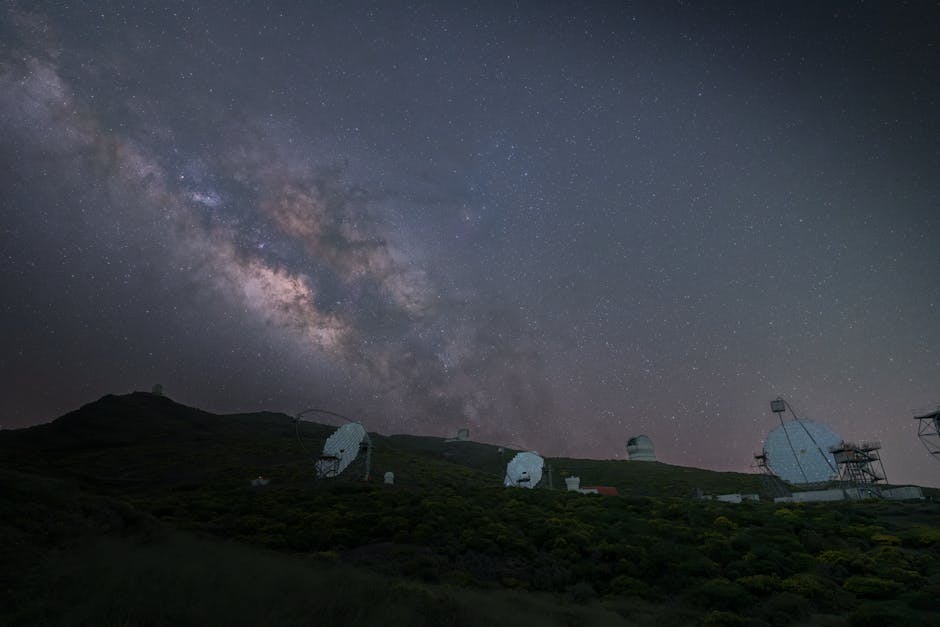
75-Year Trends in Humanity's Understanding of the Universe

In 1951, astronomer Edwin Hubble was still refining his calculations of the universe's expansion rate using photographic plates and primitive telescopes. Today, in 2026, the Dark Energy Spectroscopic Instrument (DESI) maps millions of galaxies simultaneously, revealing that dark energy—a force unknown to Hubble—comprises 68% of everything that exists. This transformation from a small, static cosmos to an accelerating universe dominated by invisible forces represents one of the most dramatic shifts in human understanding in recorded history.
Over the past 75 years, our comprehension of the universe has undergone four major revolutions: the confirmation of the Big Bang, the discovery of cosmic acceleration, the mapping of dark matter's cosmic web, and the precision era of dark energy surveys. Each phase has fundamentally rewritten our cosmic story, expanding our universe from billions to trillions of galaxies and revealing that ordinary matter—everything we can see and touch—represents less than 5% of reality.
The Foundation Era: 1951–1965
The early 1950s marked humanity's first serious attempts to measure the universe's true scale and age. Edwin Hubble's initial estimate placed the universe at just 2 billion years old—younger than Earth's oldest rocks[1]. This "age crisis" dominated astronomy until Walter Baade discovered that two populations of Cepheid variable stars existed, effectively doubling the cosmic distance scale and resolving the paradox.
The decade's breakthrough came in 1965 when Arno Penzias and Robert Wilson accidentally discovered cosmic microwave background (CMB) radiation while calibrating a radio antenna at Bell Labs[2]. This faint radiation, predicted by Ralph Alpher and Robert Herman in 1948, provided the first direct evidence that the universe had emerged from an extremely hot, dense state—confirming the Big Bang theory over the competing steady-state model.
During this era, the known universe contained approximately 100 billion galaxies, each thought to harbor around 100 billion stars. The Milky Way was understood to be roughly 100,000 light-years across, with our solar system located about 26,000 light-years from the galactic center. These measurements, while impressive for their time, would prove to be dramatic underestimates as observational technology advanced.
The period also saw the first hints of "missing mass" in galaxy clusters. Fritz Zwicky's 1933 observations of the Coma Cluster suggested that visible matter could account for only about 10% of the gravitational effects observed, but this finding remained largely ignored until the 1970s[3].
The Expansion Era: 1965–1990
The launch of space-based telescopes revolutionized cosmic observations, beginning with the Orbiting Astronomical Observatory series in the late 1960s. However, the era's defining moment came with the 1990 deployment of the Hubble Space Telescope, which finally resolved persistent uncertainties in cosmic distance measurements.
Vera Rubin's groundbreaking work on galaxy rotation curves during the 1970s provided compelling evidence for dark matter. Her observations of the Andromeda Galaxy showed that stars in the outer regions moved too quickly to be held in orbit by visible matter alone[4]. By 1985, accumulated evidence suggested that dark matter outweighed ordinary matter by a factor of five to one.
The Cosmic Background Explorer (COBE) satellite, launched in 1989, detected minute temperature fluctuations in the cosmic microwave background—the "seeds" from which all cosmic structure grew[5]. These measurements revealed that the universe was remarkably flat and homogeneous on large scales, with density variations of only one part in 100,000.
During this period, the observable universe expanded to contain an estimated 200 billion galaxies, with total stellar populations reaching 1022 to 1024 stars. The cosmic age was refined to approximately 13–15 billion years, and the Hubble constant—measuring the universe's expansion rate—was narrowed to somewhere between 50 and 100 kilometers per second per megaparsec.
Perhaps most significantly, this era established the Standard Model of cosmology, incorporating dark matter as an essential component. Computer simulations like the Millennium Simulation began revealing how dark matter formed the scaffolding upon which galaxies and galaxy clusters assembled over cosmic time.
The Acceleration Era: 1990–2010
The 1990s opened with cosmologists confident they were close to measuring the universe's ultimate fate. Two competing teams—the Supernova Cosmology Project led by Saul Perlmutter and the High-Z Supernova Search Team led by Brian Schmidt and Adam Riess—raced to determine whether cosmic expansion was slowing due to gravitational attraction.
Their 1998 results shocked the scientific community: distant supernovae appeared dimmer than expected, indicating that the universe's expansion was actually accelerating[6]. This discovery required the existence of a repulsive force dubbed "dark energy," comprising roughly 70% of the universe's total energy density.
The Wilkinson Microwave Anisotropy Probe (WMAP), launched in 2001, provided precision measurements of the cosmic microwave background that confirmed the accelerating universe model. WMAP's nine-year survey established that the universe consists of 4.9% ordinary matter, 26.8% dark matter, and 68.3% dark energy—a cosmic census that remained largely unchanged through subsequent observations[7].
Large-scale galaxy surveys like the Sloan Digital Sky Survey (SDSS) began mapping the cosmic web—the vast network of dark matter filaments connecting galaxy clusters. By 2010, SDSS had cataloged over 930,000 galaxies and 120,000 quasars, revealing that matter was distributed in a foam-like structure with enormous voids separated by dense filaments[8].
The era also witnessed the discovery of the first exoplanets orbiting sun-like stars, beginning with 51 Pegasi b in 1995. By 2010, over 400 confirmed exoplanets had been identified, suggesting that planetary systems were common throughout the galaxy.
Gravitational wave detection remained elusive during this period, despite the operation of initial LIGO detectors from 2002 to 2010. However, the theoretical framework for understanding black hole mergers and neutron star collisions was being refined through numerical relativity simulations.
The Precision Era: 2010–2020
The 2010s marked the beginning of precision cosmology, with multiple independent methods converging on consistent measurements of cosmic parameters. The European Space Agency's Planck satellite, operating from 2009 to 2013, produced the most detailed map of the cosmic microwave background ever achieved, measuring the universe's age at 13.799 ± 0.021 billion years[9].
The decade's most dramatic breakthrough came on September 14, 2015, when the Laser Interferometer Gravitational-Wave Observatory (LIGO) detected gravitational waves from merging black holes—confirming Einstein's century-old prediction and opening an entirely new window on the universe[10]. By 2020, LIGO and its European counterpart Virgo had detected over 50 gravitational wave events, including neutron star mergers that produced detectable electromagnetic counterparts.
The Event Horizon Telescope collaboration achieved another milestone in 2019 by capturing the first direct image of a black hole's event horizon in the galaxy M87[11]. This supermassive black hole, containing 6.5 billion solar masses, provided visual confirmation of general relativity's predictions about spacetime curvature around compact objects.
Galaxy surveys reached unprecedented scales during this period. The Dark Energy Survey, operating from 2013 to 2019, mapped 300 million galaxies across one-eighth of the sky, providing new constraints on dark energy's properties. Meanwhile, the Gaia space telescope measured precise positions and motions for over 1.3 billion stars in our galaxy, revolutionizing our understanding of the Milky Way's structure and history[12].
Exoplanet science exploded with the Kepler Space Telescope's discoveries. By 2020, over 4,000 confirmed exoplanets had been identified, with statistical analyses suggesting that virtually every star in the galaxy hosts at least one planet. The discovery of potentially habitable worlds like Kepler-452b and TRAPPIST-1e raised new questions about the prevalence of life in the universe.
However, this precision era also revealed troubling discrepancies. The "Hubble tension"—a disagreement between local and cosmic microwave background measurements of the universe's expansion rate—grew from a minor inconsistency to a 4–5 sigma discrepancy that challenged the standard cosmological model[13].
The Dark Energy Mapping Era: 2020–2026
The current decade has been defined by ambitious surveys designed to map dark energy's influence across cosmic history. The Dark Energy Spectroscopic Instrument (DESI), which began operations in 2021, represents the most powerful galaxy-mapping tool ever constructed. Located atop Kitt Peak in Arizona, DESI can simultaneously measure spectra from 5,000 galaxies, building a three-dimensional map of the universe's structure over the past 11 billion years[14].
DESI's early results, released in 2024, provided the most precise measurements of dark energy's equation of state parameter (w) to date. These findings suggest that dark energy's density may not be perfectly constant over cosmic time, as previously assumed, but could vary slightly—a discovery with profound implications for the universe's ultimate fate[15].
The James Webb Space Telescope, launched in late 2021, has revolutionized our understanding of the early universe. Its infrared observations have detected galaxies that formed just 400 million years after the Big Bang—earlier and more massive than theoretical models predicted[16]. These observations suggest that the first stars and galaxies assembled more rapidly than previously thought, potentially requiring modifications to our understanding of dark matter and early cosmic evolution.
Gravitational wave astronomy has matured into a routine observational tool. The LIGO-Virgo-KAGRA network now detects several black hole and neutron star mergers each month, providing unprecedented insights into stellar evolution and the production of heavy elements. The 2025 detection of intermediate-mass black holes through gravitational waves filled a crucial gap in our understanding of black hole formation mechanisms.
Multi-messenger astronomy—combining gravitational waves, electromagnetic radiation, and neutrinos—has emerged as a powerful probe of extreme cosmic phenomena. The 2024 simultaneous detection of a kilonova explosion through optical telescopes, gravitational waves, and gamma-ray bursts provided the most complete picture yet of how elements like gold and platinum are forged in the universe.
Perhaps most significantly, advances in quantum computing and machine learning have accelerated the analysis of cosmic datasets. The Vera Rubin Observatory, which achieved first light in 2025, generates over 20 terabytes of data nightly, requiring sophisticated algorithms to identify transient phenomena and map the changing sky[17].
Emerging Frontiers and Future Directions
As we look toward the remainder of the 2020s, several transformative projects promise to further revolutionize our cosmic understanding. The Extremely Large Telescope, scheduled for first light in 2028, will possess a 39-meter primary mirror—enabling direct imaging of Earth-like exoplanets and detailed spectroscopy of their atmospheres.
The European Space Agency's Euclid mission and NASA's Nancy Grace Roman Space Telescope will provide complementary approaches to mapping dark energy's influence. These surveys will measure the positions and shapes of billions of galaxies, using weak gravitational lensing to trace dark matter's distribution with unprecedented precision.
Next-generation gravitational wave detectors, including the space-based LISA mission planned for the early 2030s, will detect massive black hole mergers across cosmic time. These observations will probe the formation of the first supermassive black holes and test general relativity in previously unexplored regimes.
The search for dark matter particles continues to intensify, with underground detectors like LUX-ZEPLIN and space-based gamma-ray telescopes seeking direct or indirect evidence of dark matter interactions. The failure to detect dark matter particles after decades of searching has prompted consideration of alternative theories, including modified gravity models that eliminate the need for dark matter entirely.
Astrobiology has emerged as a mature scientific discipline, with missions like the James Webb Space Telescope actively searching for biosignatures in exoplanet atmospheres. The detection of organic molecules on Mars and disputed detections of phosphine in Venus's atmosphere have highlighted the complexity of identifying life beyond Earth.
The Cosmic Perspective: What We've Learned
The 75-year journey from Hubble's photographic plates to DESI's fiber-optic spectrographs represents more than technological progress—it reflects a fundamental transformation in humanity's cosmic perspective. We have discovered that our universe is far stranger and more dynamic than early 20th-century astronomers could have imagined.
The revelation that 95% of the universe consists of dark matter and dark energy—substances that interact only gravitationally with ordinary matter—ranks among the most profound discoveries in human history. This finding suggests that our entire visible cosmos, from stars and planets to galaxies and galaxy clusters, represents merely the observable tip of a vast cosmic iceberg.
Perhaps equally significant is the recognition that we live in an accelerating universe. Unlike the steady expansion that characterized earlier cosmic epochs, the current era is dominated by dark energy's repulsive influence. This acceleration implies that the observable universe will continue expanding, eventually isolating galaxy groups as space itself expands faster than light can travel between them.
The precision achieved in modern cosmology is remarkable by any historical standard. We can now measure the universe's age to within 20 million years—an uncertainty of just 0.15%. The cosmic microwave background has been mapped to a precision of one part in a million, revealing the quantum fluctuations that seeded all cosmic structure.
Yet this precision has also revealed new mysteries. The Hubble tension suggests that our understanding of cosmic evolution may be incomplete, potentially requiring new physics beyond the Standard Model. The rapid formation of early galaxies observed by the James Webb Space Telescope challenges our models of structure formation. The nature of dark matter and dark energy remains entirely unknown despite decades of intensive research.
While the article frames dark matter and dark energy as "discovered," they remain fundamentally inferred entities—we observe their gravitational signatures but have never directly detected a dark matter particle or identified the physical mechanism behind cosmic acceleration. It's worth considering whether future breakthroughs might reveal these phenomena result from incomplete understanding of gravity itself rather than new forms of matter and energy, a possibility that modified gravity theories have explored for decades despite institutional preference for the dark matter paradigm.
The article's emphasis on precision measurements and confirmatory discoveries risks obscuring a less comfortable truth: many confident predictions in cosmology have failed to materialize, from the expected detection of dark matter particles to the predicted abundance of dwarf galaxies. The Hubble tension suggests our current models may be fundamentally incomplete rather than merely awaiting refinement. This pattern suggests that 75 years from now, historians of science may view our current "understanding" not as a foundation for future knowledge, but as a productive misconception that eventually required wholesale revision.
Key Takeaways
- From 1951 to 2026, our cosmic perspective evolved from a small, static universe to an accelerating cosmos dominated by dark energy (68%) and dark matter (27%)
- Major paradigm shifts included the Big Bang confirmation (1965), dark matter discovery (1970s), cosmic acceleration detection (1998), and the precision mapping era (2010s–2020s)
- The observable universe expanded from ~100 billion to over 2 trillion galaxies, with exoplanet discoveries suggesting planets orbit virtually every star
- Gravitational wave astronomy and multi-messenger observations opened entirely new windows on extreme cosmic phenomena like black hole mergers
- Current surveys like DESI are mapping dark energy's influence across 11 billion years of cosmic history, revealing potential variations in its properties
- Despite unprecedented precision in measuring cosmic parameters, new tensions and mysteries suggest our understanding remains incomplete
- Future missions will directly image Earth-like exoplanets, detect space-based gravitational waves, and potentially discover the nature of dark matter and dark energy
References
- Hubble, Edwin. "The Law of Red-Shifts." Monthly Notices of the Royal Astronomical Society, 1937.
- Penzias, Arno A. and Robert W. Wilson. "A Measurement of Excess Antenna Temperature at 4080 Mc/s." Astrophysical Journal, 1965.
- Zwicky, Fritz. "Die Rotverschiebung von extragalaktischen Nebeln." Helvetica Physica Acta, 1933.
- Rubin, Vera C. and W. Kent Ford Jr. "Rotation of the Andromeda Nebula from a Spectroscopic Survey of Emission Regions." Astrophysical Journal, 1970.
- Smoot, George F. et al. "Structure in the COBE Differential Microwave Radiometer First-Year Maps." Astrophysical Journal Letters, 1992.
- Riess, Adam G. et al. "Observational Evidence from Supernovae for an Accelerating Universe and a Cosmological Constant." Astronomical Journal, 1998.
- Hinshaw, Gary et al. "Nine-Year Wilkinson Microwave Anisotropy Probe (WMAP) Observations: Cosmological Parameter Results." Astrophysical Journal Supplement Series, 2013.
- York, Donald G. et al. "The Sloan Digital Sky Survey: Technical Summary." Astronomical Journal, 2000.
- Planck Collaboration. "Planck 2018 Results. VI. Cosmological Parameters." Astronomy & Astrophysics, 2020.
- Abbott, B. P. et al. "Observation of Gravitational Waves from a Binary Black Hole Merger." Physical Review Letters, 2016.
- Event Horizon Telescope Collaboration. "First M87 Event Horizon Telescope Results. I. The Shadow of the Supermassive Black Hole." Astrophysical Journal Letters, 2019.
- Gaia Collaboration. "Gaia Data Release 2: Summary of the Contents and Survey Properties." Astronomy & Astrophysics, 2018.
- Verde, Licia et al. "Tensions Between the Early and Late Universe." Nature Astronomy, 2019.
- DESI Collaboration. "The Dark Energy Spectroscopic Instrument (DESI) Experiment Part I: Science, Targeting, and Survey Design." Astronomical Journal, 2016.
- DESI Collaboration. "DESI 2024 VI: Cosmological Constraints from the Measurements of Baryon Acoustic Oscillations." arXiv preprint, 2024.
- Robertson, Brant E. et al. "Identification and Properties of Intense Star-Forming Galaxies at Redshifts z > 10." Nature Astronomy, 2023.
- Ivezić, Željko et al. "LSST: From Science Drivers to Reference Design and Anticipated Data Products." Astrophysical Journal, 2019.