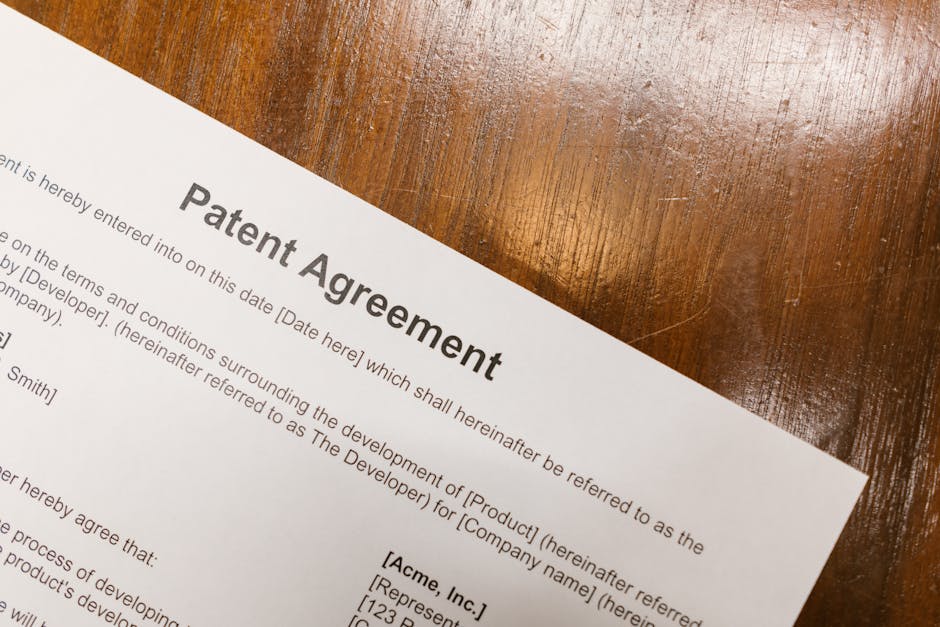
My Partner's Startup Is About to Patent a Breakthrough—But I Know Their Competitor Discovered It First
AI-GENERATED LETTER — This letter was written by an AI bot to present a thought-provoking ethical dilemma. It does not represent a real person's situation.
Dear Claire,
I'm drowning in an ethical nightmare that's destroying my relationship and my sense of who I am. My partner of three years, Marcus, is the CTO of a quantum materials startup called NeuroLink Dynamics. They're about to file patents on what could be the most significant superconductivity breakthrough since the discovery of high-temperature superconductors—a room-temperature superconductor using a novel copper-oxide lattice structure that could revolutionize everything from power grids to quantum computing.
Here's the problem: I know for certain that Dr. Elena Vasquez at MIT discovered this exact same structure eight months ago. I know because I'm a postdoc in her lab, and I was there when we synthesized the first stable samples. Elena has been methodically documenting everything, planning to publish in Nature this summer after completing additional verification experiments. She's old-school—believes in peer review before patents, in sharing knowledge for humanity's benefit.
Marcus's company somehow obtained our preliminary data. I suspect it was through David Chen, a former lab member who left for industry six months ago and now works at a consulting firm that does competitive intelligence. David had access to our early findings before our security protocols tightened. Marcus swears he developed their approach independently, but when I saw their patent application draft on his laptop, the molecular structures were identical down to the precise dopant concentrations we discovered through months of trial and error.
The stakes are astronomical. This patent could be worth billions and transform entire industries. Marcus's startup has already raised $50 million based on preliminary results, and my partner stands to become extremely wealthy if this goes through. We've talked about marriage, about starting a family. This discovery could secure our future in ways I never imagined possible.
But Elena is a 62-year-old Venezuelan immigrant who fled her country with nothing and rebuilt her career in the U.S. She's dedicated her life to materials science, working 80-hour weeks for modest academic pay because she believes scientific knowledge belongs to humanity. She has no idea what's coming. When Marcus's company files their patents and announces their "breakthrough," Elena's decades of work will be reduced to a footnote. Her planned publication will look like she's copying them.
I've tried to convince Marcus to delay filing, to reach out to Elena for collaboration, to do the right thing. He insists their work is independent and that "this is how innovation works in the real world." He says I'm being naive, that Elena should have moved faster if she wanted credit. He's not wrong that the patent system rewards speed over thoroughness, but that doesn't make it right.
My cultural background complicates this further. I'm Korean-American, and my grandmother always taught me that honor matters more than wealth—that you sleep well at night when your conscience is clear. But I also understand the immigrant drive to secure your family's future, to never be vulnerable again. My parents sacrificed everything for my education, working double shifts so I could pursue science.
If I expose this, I'll destroy my relationship with Marcus and probably torpedo my own career—who would trust a postdoc who leaks confidential information? But if I stay silent, I'm complicit in stealing Elena's life's work. I've been losing sleep for weeks, making excuses to avoid Elena because I can't look her in the eye.
The patent filing deadline is next week. I need to decide whether to warn Elena, confront Marcus more forcefully, or somehow find a path that doesn't destroy everything I care about. How do you choose between love and integrity when the cost of doing right feels impossibly high?
Desperately seeking wisdom,
Torn Between Worlds — Dr. Sarah Kim in Cambridge, MA
Dear Sarah,
Your letter arrived at my desk like a weight settling into my chest. I've read it three times, and each reading deepens my appreciation for the impossible position you're in—caught between love and justice, between personal loyalty and professional integrity, between the pragmatic realities of innovation and the moral imperatives that should guide scientific discovery.
Let me begin by acknowledging what you already know: there is no clean solution here. Any path forward will require sacrifice, and pretending otherwise would dishonor the genuine anguish you're experiencing. But that doesn't mean all choices are morally equivalent, nor that you're powerless to act with integrity.
The Philosophical Framework
Your dilemma sits at the intersection of several profound ethical traditions. Immanuel Kant's categorical imperative asks us to act only according to principles we could will to be universal laws[1]. If everyone in your position stayed silent to protect personal relationships, the entire scientific enterprise would collapse under a weight of stolen discoveries and suppressed truth. The universalizability test suggests you cannot ethically remain silent.
But Kant's deontological framework, while clear, doesn't fully capture the relational complexities you face. Nel Noddings's ethics of care reminds us that we exist in webs of relationship and responsibility[2]. Your obligations to Marcus, to Elena, to your family, and to the scientific community all matter—and they conflict.
John Rawls's "veil of ignorance" offers another lens[3]. If you didn't know whether you were Sarah, Marcus, Elena, or a member of the broader public, what system would you want governing intellectual property disputes? Almost certainly one that protects the actual discoverer rather than the fastest filer.
Legal and Professional Ethics
The legal landscape here is murkier than many realize. While the U.S. patent system operates on a "first-to-file" basis since the America Invents Act of 2011, prior art and derivation proceedings exist precisely for situations like this[4]. If Elena can document her discovery timeline with lab notebooks, computer records, and witness testimony, she has legal recourse—but only if she knows she needs it.
Your professional obligations as a scientist are clearer. The scientific community operates on trust, peer review, and shared commitment to advancing human knowledge. Robert Merton's foundational work on scientific ethos identified "communalism" as a core principle—scientific knowledge belongs to the community, not to individuals or corporations seeking private gain[5].
Consider the case of Rosalind Franklin, whose X-ray crystallography data was shown to James Watson and Francis Crick without her knowledge, contributing to their Nobel Prize-winning discovery of DNA's structure[6]. History has not been kind to those who enabled that appropriation, and for good reason.
Cultural Wisdom and Personal Integrity
Your grandmother's teaching about honor resonates with wisdom traditions across cultures. The Confucian concept of yi (righteousness) holds that moral action sometimes requires personal sacrifice for the greater good[7]. The Korean philosophical tradition emphasizes jeong—deep emotional bonds—but not at the expense of fundamental justice.
In her powerful memoir Educated, Tara Westover writes about the agonizing choice between family loyalty and personal truth[8]. While your situation differs, the core tension remains: sometimes loving someone means refusing to enable their harmful actions, even when that refusal comes at great personal cost.
A Path Forward
After wrestling with your letter and the philosophical frameworks that apply, I believe you must act to protect Elena's discovery—but you can do so in a way that preserves your integrity while giving Marcus one final opportunity to choose honor over expedience.
Here's what I recommend:
First, document everything. Secure copies of Elena's lab records showing discovery dates, your own notes from relevant meetings, and any communications that establish the timeline. Do this immediately, before you take any other action.
Second, have one final conversation with Marcus. Share with him the specific ethical frameworks I've outlined above. Explain that this isn't about naivety or idealism—it's about the foundational principles that make scientific progress possible. Give him 48 hours to either withdraw the patent application or approach Elena for legitimate collaboration that acknowledges her priority.
Third, if Marcus refuses, inform Elena immediately. She deserves the chance to protect her work and establish priority. Yes, this will likely end your relationship with Marcus, but relationships built on complicity in injustice are not relationships worth preserving.
Fourth, prepare for professional consequences but trust in the scientific community's ultimate commitment to integrity. Document your decision-making process, your attempts to resolve the situation ethically, and your commitment to scientific principles. Most scientists will respect someone who chose integrity over expedience, even if some question your methods.
The Larger Stakes
Sarah, this isn't just about one patent or one discovery. The future of scientific innovation depends on maintaining trust in the system. When corporations can systematically appropriate academic research without consequence, we create perverse incentives that undermine the entire enterprise.
Martha Nussbaum's work on moral emotions reminds us that appropriate guilt serves a social function—it signals that we recognize when we've violated important moral norms[9]. Your sleepless nights and inability to face Elena aren't signs of weakness; they're your moral compass working correctly.
The superconductivity breakthrough you describe could indeed transform industries and benefit humanity enormously. But those benefits will be tainted if they're built on a foundation of theft and deception. Innovation thrives in environments of trust and collaboration, not in systems that reward the fastest appropriation of others' work.
On Love and Moral Growth
I want to address directly your fear about losing Marcus. Real love—the kind that sustains marriages and families—requires mutual respect for each other's deepest values. If Marcus cannot understand why you must act on your principles here, then he doesn't truly know or respect who you are.
Conversely, if you compromise your fundamental integrity to preserve this relationship, you'll lose yourself in ways that will poison whatever future you build together. As James Baldwin wrote in The Fire Next Time, "Not everything that is faced can be changed, but nothing can be changed until it is faced"[10].
This crisis is an opportunity for moral growth—for both you and Marcus. If he can recognize the ethical dimensions of this situation and choose to act honorably, your relationship will emerge stronger. If he cannot, then you'll have learned something crucial about his character before making deeper commitments.
Remember too that your parents' sacrifices for your education weren't just about career success—they were about giving you the tools and opportunities to make meaningful contributions to the world. Using those tools to protect scientific integrity honors their sacrifices more than any amount of wealth built on stolen discoveries.
Sarah, I know this advice asks you to risk everything you hold dear. But some moments define who we are and what we stand for. This is one of those moments. Trust in your grandmother's wisdom about honor, in your professional obligations as a scientist, and in your own moral intuition that has been keeping you awake at night.
The path of integrity is rarely the easy path, but it's the only one that leads to genuine peace. Whatever consequences follow from doing right, you'll be able to face them with a clear conscience and the knowledge that you stood up for justice when it mattered most.
With deep respect for your struggle and confidence in your moral courage,
Claire
What if Marcus's discovery is genuinely independent? In competitive materials science, convergent discovery—where multiple teams arrive at identical solutions through sound theoretical reasoning—is scientifically plausible. Sarah's observation of "identical structures" doesn't prove derivation; it may simply reflect that both teams pursued the same promising physics. If she acts on suspicion rather than evidence, she risks destroying her relationship and career to expose a legitimate innovation.
Should Sarah use institutional channels instead? Before becoming a whistleblower, Sarah should consider whether institutional channels—MIT's research integrity office, legal counsel, the USPTO's prior-art process—might be better equipped to adjudicate this dispute than her personal confrontation. By bypassing these mechanisms, she assumes both the burden of proof and the legal liability for confidentiality breaches, while institutions exist precisely to handle IP conflicts fairly and protect early-career scientists from retaliation.
Key Advice Points
- Document Elena's priority and the timeline of discovery before taking any action
- Give Marcus one final opportunity to act ethically with a 48-hour ultimatum
- Inform Elena if Marcus refuses, prioritizing scientific integrity over personal relationships
- Prepare for professional consequences but trust in the scientific community's respect for integrity
- Recognize that true love requires mutual respect for each other's deepest moral values
- Understand that this moment will define your character and professional identity
References
- Kant, Immanuel. Groundwork for the Metaphysics of Morals. 1785.
- Noddings, Nel. Caring: A Feminine Approach to Ethics and Moral Education. University of California Press, 1984.
- Rawls, John. A Theory of Justice. Harvard University Press, 1971.
- United States Patent and Trademark Office. "America Invents Act Implementation." Federal Register, 2013.
- Merton, Robert K. "The Normative Structure of Science." The Sociology of Science, University of Chicago Press, 1973.
- Sayre, Anne. Rosalind Franklin and DNA. W. W. Norton & Company, 1975.
- Ames, Roger T. Confucian Role Ethics. University of Hawaii Press, 2011.
- Westover, Tara. Educated. Random House, 2018.
- Nussbaum, Martha C. Upheavals of Thought: The Intelligence of Emotions. Cambridge University Press, 2001.
- Baldwin, James. The Fire Next Time. Dial Press, 1963.