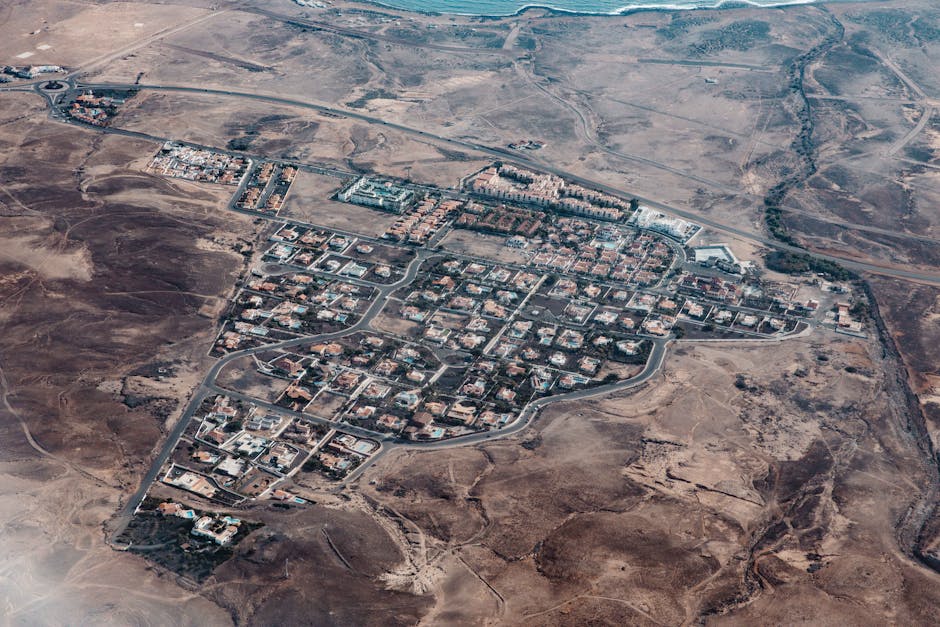
Why do we keep building cities in places that can't feed themselves?

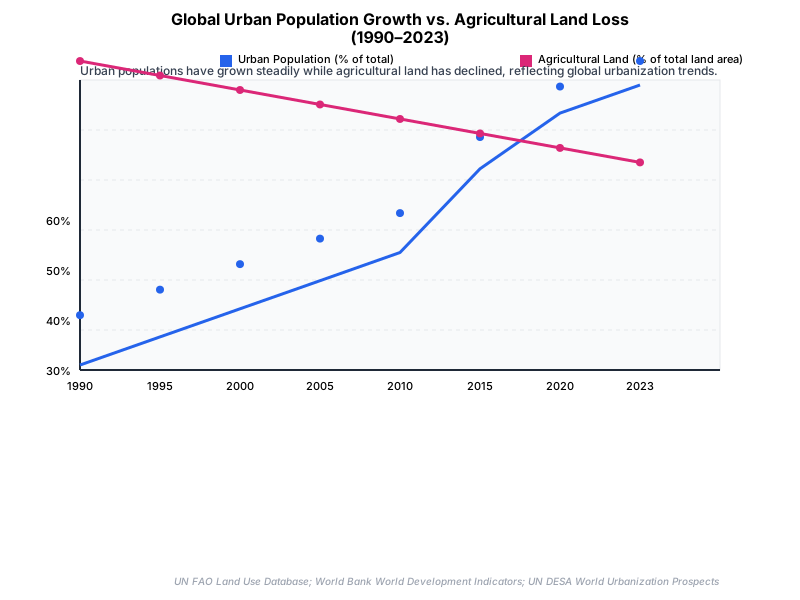
In April 2026, as climate change and extreme weather threaten global food production, a fundamental question emerges: why do we keep building megacities in places that cannot feed themselves? Singapore imports 90% of its food. Phoenix sprawls across the Sonoran Desert. Yet these cities thrive—at least for now. This paradox becomes urgent as supply chains that have enabled urban concentration for centuries face unprecedented stress from climate disruption.
The answer lies in a complex web of economic forces, historical precedent, technological capability, and evolving definitions of sustainability. Understanding these dynamics is crucial as we confront a future where food security and urban planning must be fundamentally reconsidered.
The Historical Precedent: Cities Beyond Agricultural Limits
Cities that cannot feed themselves are not new. Ancient Rome, at its peak around 100 CE, housed over one million residents while producing virtually no food within its boundaries[1]. The city survived through an elaborate supply network bringing grain from Egypt, North Africa, and Sicily via sophisticated maritime trade. When this supply chain collapsed during the Gothic Wars of the 6th century, Rome's population crashed from over 500,000 to fewer than 50,000[2].
Medieval Venice followed a similar pattern, building a maritime empire on trade rather than agriculture. The city imported food from across the Mediterranean while exporting manufactured goods and financial services, reaching a population of around 180,000 in the 16th century despite having virtually no arable land[3]. These examples established a template: cities could thrive by specializing in non-agricultural activities while importing food through trade networks.
The Industrial Revolution accelerated this pattern. Manchester grew from 75,000 residents in 1801 to 645,000 by 1901, becoming the world's first industrial city while producing no significant food[4]. Its textile mills generated enough wealth to import food from across Britain and Ireland, establishing the modern model of industrial cities that trade manufactured goods for agricultural products.
Economic Specialization and Comparative Advantage
Modern economic theory explains why cities continue developing in agriculturally unsuitable locations. David Ricardo's principle of comparative advantage, formulated in 1817, demonstrates that regions benefit from specializing in activities where they have relative efficiency advantages, even without absolute advantages in food production[5].
Singapore exemplifies this principle. Despite importing 90% of its food, the city-state has built a $372 billion economy based on financial services, shipping, and technology[6]. The Port of Singapore handles over 37 million twenty-foot equivalent units annually, making it the world's second-busiest container port[7]. This maritime infrastructure generates sufficient wealth to secure food imports from over 170 countries, creating food security through economic rather than agricultural means.
Dubai transformed from a small fishing village to a metropolis of 3.5 million residents in the Arabian Desert by specializing in trade, tourism, and financial services[8]. The city imports 85% of its food while generating $108 billion annually through its strategic position as a hub between Asia, Europe, and Africa[9]. Dubai International Airport handled 87 million passengers in 2023, making it the world's busiest international airport[10].
The technology sector has created new forms of comparative advantage entirely disconnected from agricultural potential. The San Francisco Bay Area, despite water scarcity and limited arable land, houses the headquarters of Apple, Google, Meta, and hundreds of other technology companies collectively employing over 400,000 people in high-paying jobs[11]. These companies generate sufficient revenue to import food from California's Central Valley while exporting digital products globally.
Transportation Revolution and Supply Chain Networks
Modern transportation infrastructure has fundamentally altered the relationship between cities and their food sources. The transcontinental railroad, completed in 1869, allowed cities like San Francisco to grow rapidly by accessing agricultural products from across North America[12]. Refrigerated shipping, developed in the 1880s, enabled cities to import perishable goods from thousands of miles away.
Modern container shipping has reduced transportation costs to unprecedented levels. Moving a container from Shanghai to Los Angeles costs approximately $1,500, or about $0.06 per pound for a fully loaded container[13]. This cost structure makes importing food from distant locations economically viable, even when local production might be technically feasible.
Air freight networks have further expanded urban food possibilities. Miami International Airport processes over 2.3 million tons of cargo annually, much of it fresh produce from Latin America destined for North American cities[14]. This infrastructure allows cities like New York to access fresh flowers from Colombia, avocados from Mexico, and seafood from Chile within 24-48 hours of harvest.
Cold chain logistics have been particularly transformative. Walmart operates over 150 temperature-controlled distribution centers across the United States, maintaining products at specific temperatures from farm to retail shelf[15]. This infrastructure enables cities in food deserts to access fresh produce year-round, decoupling food availability from local climate.
Resource Substitution and Technological Solutions
Cities in agriculturally challenging environments have developed sophisticated technologies to substitute for natural resources. Israel's development of drip irrigation, desalination, and greenhouse agriculture has allowed cities like Tel Aviv to thrive in the Negev Desert while exporting agricultural technology globally[16]. Israel now produces 95% of its food domestically despite 60% of its territory being desert[17].
Desalination technology has removed water constraints for many coastal cities. The Carlsbad Desalination Plant in California produces 50 million gallons of fresh water daily, enough to supply 400,000 residents[18]. Similar facilities in Perth and Almería have enabled urban growth in water-scarce regions by creating artificial water supplies.
Vertical farming is beginning to change urban food production capabilities. AeroFarms operates a 69,000-square-foot vertical farm in Newark, New Jersey, producing 2 million pounds of leafy greens annually using 95% less water than traditional agriculture[19]. While still limited in scope, these technologies demonstrate how cities might reduce dependence on distant agricultural regions.
Renewable energy infrastructure is also enabling urban development in previously unsuitable locations. The Noor Ouarzazate Solar Complex in Morocco generates 580 megawatts of power from desert sunlight, enough to power a city of 1.1 million residents[20]. This demonstrates how abundant renewable resources can substitute for traditional location advantages.
Climate Change and Shifting Agricultural Zones
Climate change is fundamentally altering the relationship between cities and agricultural regions. The Intergovernmental Panel on Climate Change projects that global crop yields could decline by 10-25% by 2050 due to rising temperatures, changing precipitation patterns, and extreme weather[21].
Some traditionally productive agricultural regions are becoming less viable. California's Central Valley, which produces 25% of America's food, has experienced severe drought in 8 of the last 15 years[22]. Groundwater levels have dropped over 100 feet in some areas, forcing farmers to abandon previously productive land[23]. This threatens the food security of cities like Los Angeles and San Francisco.
Conversely, climate change is opening new agricultural possibilities in previously unsuitable regions. Canada's Prairie provinces are experiencing longer growing seasons and increased precipitation, potentially expanding agricultural capacity by 20-30% over the next three decades[24]. Parts of Siberia and northern Scandinavia may become agriculturally viable as permafrost thaws and temperatures rise.
These shifts create new opportunities for northern cities while threatening those dependent on traditional agricultural zones. Cities like Winnipeg, Edmonton, and Anchorage may gain improved access to local food production, while those dependent on Mediterranean and subtropical agriculture face increasing uncertainty.
Urban Heat Islands and Local Food Production
The urban heat island effect, where cities experience temperatures 2-5°C higher than surrounding rural areas, presents both challenges and opportunities for local food production[25]. While this effect can stress traditional crops, it extends growing seasons and enables cultivation of warm-season crops in otherwise marginal climates.
New York City's urban heat island allows rooftop gardens to grow tomatoes, peppers, and herbs well into November, extending the growing season by 4-6 weeks compared to rural areas at the same latitude[26]. The Brooklyn Grange operates over 5.6 acres of rooftop farms across New York City, producing 80,000 pounds of organic produce annually[27].
However, extreme heat events are making some cities increasingly hostile to both human habitation and local food production. Phoenix experienced 31 consecutive days above 110°F (43°C) in summer 2023, creating conditions where even heat-adapted crops struggle[28]. The city's continued growth to 1.7 million residents represents a bet that air conditioning and imported food can overcome these environmental constraints.
Water Security and Urban Agriculture
Water availability is becoming the primary constraint for both urban development and local food production in many regions. Cape Town's "Day Zero" water crisis in 2018, when the city nearly exhausted its water supply, demonstrated how quickly water constraints can threaten urban viability[29]. The crisis was averted only through extreme conservation and emergency imports.
Cities are responding with increasingly sophisticated water management strategies. Singapore has developed a "Four Taps" strategy combining local catchment, imported water, recycled water, and desalinated water to achieve water independence by 2061[30]. The city's NEWater program recycles 40% of its water supply through advanced membrane technology, while desalination provides an additional 25%.
Las Vegas has achieved remarkable water efficiency despite being located in the Mojave Desert. The city's population grew from 165,000 in 1980 to 650,000 in 2025, while total water consumption decreased by 23% through conservation and recycling[31]. The city now recycles 99% of indoor water use and has banned ornamental grass in favor of drought-resistant landscaping.
These examples demonstrate how technological solutions can overcome natural water constraints, enabling urban development in arid regions. However, these solutions require significant energy inputs and ongoing maintenance, making cities more dependent on external resources rather than local natural systems.
Economic Agglomeration Effects
Cities continue growing in agriculturally unsuitable locations because of powerful economic agglomeration effects that make urban concentration increasingly valuable despite resource constraints. The productivity benefits of urban density often outweigh the costs of importing food and resources from distant locations.
Research by economist Edward Glaeser demonstrates that workers in cities with populations over 1 million earn wages 33% higher than those in smaller cities, even after adjusting for cost of living[32]. This productivity premium reflects knowledge spillovers, specialized labor markets, and reduced transaction costs from business and worker concentration.
The technology sector exemplifies these agglomeration effects. Despite high real estate costs and resource constraints, companies cluster in Silicon Valley because the concentration of talent, venture capital, and specialized services creates innovation advantages that outweigh location disadvantages. The region's 3.3 million residents generate $1.1 trillion in annual economic output, more than most countries[33].
Financial services show similar clustering patterns. London's Square Mile employs over 500,000 people in financial services despite the United Kingdom's limited agricultural capacity[34]. The concentration of banks, insurance companies, and trading firms creates network effects that make London more valuable as a financial center than geographically dispersed alternatives.
These agglomeration benefits explain why cities like Hong Kong, with virtually no arable land, continue attracting businesses and residents. The city's role as a gateway to China and Asian financial hub generates sufficient economic value to support 7.5 million residents through food imports and resource substitution.
Political and Institutional Factors
Government policies and institutional arrangements often encourage urban development in resource-poor locations. Subsidies for transportation infrastructure, water projects, and energy systems can make otherwise unviable locations economically attractive.
Las Vegas's development was enabled by massive federal investments in water infrastructure, including the Hoover Dam and the Colorado River Compact, which allocated water rights regardless of local availability[35]. Federal highway and airport investments made the city accessible to tourists and businesses despite its desert location.
Agricultural subsidies create artificial price signals that encourage urban development on productive farmland while making food imports artificially cheap. The European Union's Common Agricultural Policy provides €50 billion annually in agricultural subsidies, much of which supports inefficient production while allowing cities to import food at below-market prices[36].
Zoning laws and urban planning regulations often prioritize economic development over food security. Cities rarely require assessments of long-term food security when approving development projects, focusing instead on short-term economic benefits and tax revenue.
International trade agreements have reduced barriers to food imports, making cities less dependent on local agricultural capacity. The World Trade Organization's Agreement on Agriculture has reduced average agricultural tariffs from 40% in 1995 to 15% in 2025, making imported food more competitive with local production[37].
Cultural and Social Drivers
Cultural preferences and social trends continue driving urban development in resource-poor locations. The appeal of coastal cities, mountain resorts, and desert communities often outweighs practical considerations about resource availability and food security.
Miami's growth to 2.7 million residents in the metropolitan area reflects cultural preferences for warm weather, beaches, and international connectivity despite vulnerability to hurricanes, sea-level rise, and complete dependence on food imports[38]. The city's appeal as a gateway to Latin America continues driving population growth despite increasing climate risks.
Mountain resort towns like Aspen, Colorado, and Park City, Utah, have grown rapidly despite extreme limitations on local food production due to altitude, short growing seasons, and limited arable land. These communities command premium real estate prices that enable them to import food and necessities from distant locations.
The rise of remote work has accelerated migration to locations chosen for lifestyle rather than economic necessity. The COVID-19 pandemic demonstrated that many knowledge workers can be productive regardless of location, leading to population shifts toward cities with attractive natural amenities rather than agricultural capacity or resource abundance.
Future Scenarios and Adaptation Strategies
As climate change intensifies and global food systems face increasing stress, cities that cannot feed themselves are developing various adaptation strategies. These approaches range from technological solutions to fundamental changes in urban design and resource management.
Vertical farming and controlled environment agriculture are scaling rapidly in space-constrained cities. Plenty operates a 95,000-square-foot vertical farm in Compton, California, producing strawberries year-round using 95% less land and 97% less water than traditional agriculture[39]. While currently limited to high-value crops, these technologies may eventually enable cities to produce significant portions of their food supply locally.
Cellular agriculture and alternative protein production are emerging as potential solutions for urban food security. Perfect Day produces dairy proteins through fermentation in urban facilities, while companies like Memphis Meats are developing cultured meat production that could be located in cities rather than rural areas[40]. These technologies could reduce cities' dependence on distant agricultural regions.
Some cities are developing regional food security partnerships to reduce vulnerability to supply chain disruptions. The C40 Cities Food Systems Network includes 20 major cities working to develop more resilient food supply chains through regional cooperation and sustainable agriculture initiatives[41].
However, the fundamental tension between urban concentration and resource constraints may force difficult choices in coming decades. Cities that cannot adapt to reduced resource availability or develop alternative supply sources may face population decline or economic contraction, similar to Detroit's experience after the collapse of the automobile industry.
The article assumes that technological solutions like vertical farming and desalination will remain economically viable indefinitely, but this overlooks a fundamental vulnerability: these systems are energy-intensive substitutes for what agriculture once provided freely through sunlight and rainfall. If energy costs spike due to resource constraints or geopolitical disruption—or if the renewable energy transition stalls—these technological fixes could become unaffordable precisely when cities need them most, leaving megacities in resource-poor regions suddenly unable to feed their populations.
Rather than asking why we keep building cities in places that can't feed themselves, we might ask why wealthy nations have the luxury of externalizing their food security costs onto global supply chains while developing-world megacities like Lagos and Cairo, which lack capital for desalination or imports, are forced into the same model without the safety net. The current system doesn't represent inevitable economic logic so much as a distribution of risk that favors the already-rich, and it may prove unsustainable once climate disruptions make supply chains unreliable for everyone simultaneously.
Key Takeaways
- Cities have historically thrived without local food production by specializing in trade, manufacturing, and services that generate wealth to import necessities from distant regions
- Economic agglomeration effects create productivity benefits that often outweigh the costs of importing food and resources, making urban concentration economically rational despite resource constraints
- Modern transportation and logistics networks have dramatically reduced the cost of moving food globally, enabling cities to access diverse food supplies regardless of local agricultural capacity
- Technological solutions including desalination, vertical farming, and renewable energy are beginning to substitute for natural resource constraints, though at significant energy and capital costs
- Climate change is reshuffling global agricultural zones, potentially making some traditionally productive regions less viable while opening new possibilities in northern latitudes
- Government policies and subsidies often encourage urban development in resource-poor locations through infrastructure investments and trade agreements that externalize food security costs
- Future urban viability will depend on successful adaptation through technology, regional cooperation, or fundamental changes in settlement patterns as resource constraints intensify
References
- Ward-Perkins, Bryan. The Fall of Rome and the End of Civilization. Oxford University Press, 2006.
- Krautheimer, Richard. Rome: Profile of a City, 312-1308. Princeton University Press, 2000.
- Lane, Frederic C. Venice: A Maritime Republic. Johns Hopkins University Press, 1973.
- Kidd, Alan J. Manchester. Edinburgh University Press, 2002.
- Ricardo, David. On the Principles of Political Economy and Taxation. John Murray, 1817.
- Singapore Department of Statistics. "Singapore Economy." Yearbook of Statistics Singapore 2025, 2025.
- Maritime and Port Authority of Singapore. "Port Statistics 2025." Annual Report, 2025.
- Dubai Statistics Center. "Population Estimates 2025." Statistical Yearbook, 2025.
- Dubai Chamber of Commerce. "Economic Impact Report 2025." Annual Review, 2025.
- Dubai Airports. "Annual Traffic Report 2023." Operations Summary, 2024.
- Bay Area Council Economic Institute. "Technology Sector Employment Report 2025." Regional Analysis, 2025.
- Ambrose, Stephen. Nothing Like It in the World: The Men Who Built the Transcontinental Railroad. Simon & Schuster, 2000.
- Drewry Maritime Research. "Container Freight Rate Insight 2025." Market Analysis, 2025.
- Miami International Airport. "Cargo Statistics 2025." Annual Report, 2025.
- Walmart Inc. "Supply Chain Operations Report 2025." Corporate Sustainability Report, 2025.
- Israeli Ministry of Agriculture. "Agricultural Innovation Report 2025." Annual Review, 2025.
- Central Bureau of Statistics Israel. "Agricultural Production Statistics 2025." Statistical Abstract, 2025.
- Poseidon Water. "Carlsbad Desalination Plant Operations Report 2025." Technical Summary, 2025.
- AeroFarms. "Production Metrics and Sustainability Report 2025." Corporate Report, 2025.
- Moroccan Agency for Sustainable Energy. "Noor Ouarzazate Solar Complex Performance Report 2025." Technical Analysis, 2025.
- Intergovernmental Panel on Climate Change. "Climate Change and Food Security." Sixth Assessment Report, 2023.
- California Department of Water Resources. "Drought Conditions Report 2025." State Water Plan Update, 2025.
- U.S. Geological Survey. "Central Valley Groundwater Study 2025." Water Resources Report, 2025.
- Agriculture and Agri-Food Canada. "Climate Change Impact Assessment 2025." Policy Research Report, 2025.
- Environmental Protection Agency. "Urban Heat Island Effect Study 2025." Climate Research Report, 2025.
- New York City Department of Environmental Protection. "Urban Agriculture Assessment 2025." Sustainability Report, 2025.
- Brooklyn Grange. "Annual Production Report 2025." Operations Summary, 2025.
- National Weather Service Phoenix. "Extreme Heat Events 2023." Climate Summary, 2024.
- City of Cape Town. "Day Zero Water Crisis Report." Municipal Analysis, 2018.
- Public Utilities Board Singapore. "Water Security Strategy 2061." Long-term Planning Report, 2025.
- Southern Nevada Water Authority. "Water Conservation Report 2025." Annual Review, 2025.
- Glaeser, Edward L. Triumph of the City. Penguin Press, 2011.
- Silicon Valley Institute for Regional Studies. "Economic Impact Analysis 2025." Regional Report, 2025.
- City of London Corporation. "Financial Services Employment Report 2025." Economic Analysis, 2025.
- Hundley, Norris Jr. Water and the West: The Colorado River Compact and the Politics of Water in the American West. University of California Press, 2009.
- European Commission. "Common Agricultural Policy Report 2025." Agricultural Statistics, 2025.
- World Trade Organization. "Agricultural Trade Liberalization Report 2025." Trade Statistics, 2025.
- U.S. Census Bureau. "Miami Metropolitan Statistical Area Population Estimates 2025." Population Reports, 2025.
- Plenty Inc. "Vertical Farming Operations Report 2025." Production Analysis, 2025.
- Good Food Institute. "Alternative Protein Industry Report 2025." Market Analysis, 2025.
- C40 Cities. "Food Systems Network Progress Report 2025." Network Analysis, 2025.