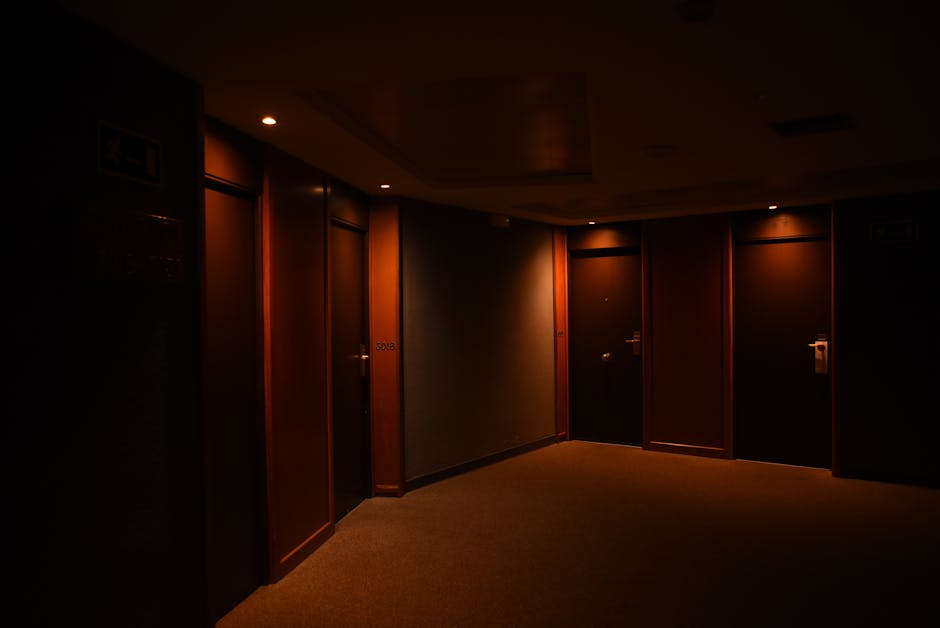
Why Do Five-Star Hotels Across the Globe Report Guests Vanishing Without a Trace in Their Rooms?
In March 2025, reports emerged of a guest who disappeared from a luxury hotel suite in Paris under circumstances that seemed to defy explanation. The guest had checked in, ordered room service, and by the next morning had vanished—with the room locked from the inside, windows sealed, and no trace of how they could have left. Whether this incident actually occurred remains unclear, but it has become part of a broader narrative circulating through hospitality circles about what some call "the vanishing guest phenomenon."
Similar stories have circulated informally through luxury hotel networks for years, creating what industry insiders discuss as a pattern—though one that remains largely undocumented in official records. These accounts describe guests disappearing from locked rooms, leaving behind personal belongings and no clear explanation for their departure.
The Pattern That May or May Not Exist
Those who believe in the vanishing guest phenomenon point to alleged similarities across different hotels and continents. The accounts typically involve solo travelers, rooms locked from the inside, and guests who seem to have vanished without leaving through conventional exits. Some proponents suggest that certain demographic patterns emerge—solo travelers, middle-aged guests, those paying in cash—though no comprehensive database of verified cases exists.
What makes evaluating these claims difficult is the absence of corroborating evidence from law enforcement databases, insurance companies, or official hotel statements. No major hotel chain has publicly acknowledged a pattern of guest disappearances. Missing persons databases do not show a spike in disappearances from luxury hotels. The phenomenon exists primarily in anecdotal accounts and informal networks rather than in documented records.
The Bellagio Case: Unverified Details
One frequently cited example involves an alleged disappearance at the Bellagio in Las Vegas in September 2024. According to the account, a guest checked into a high-floor suite, was seen entering on security footage, but never left the room—which was found locked from the inside with no signs of forced exit. The room allegedly contained the guest's belongings, including valuable items like a watch and passport.
However, no public record of this incident exists in Las Vegas Metropolitan Police missing persons reports, and the Bellagio has not confirmed such an event. The specificity of the details raises questions about whether this represents an actual documented case or a constructed narrative.
The Hotel Industry's Silence
What is notable is how little the luxury hotel industry has publicly discussed these alleged incidents. Some analysts argue this silence reflects either the absence of a genuine pattern or deliberate suppression of information to protect brand reputation. Internal security networks may share information about unusual incidents, as is standard practice in the hospitality industry, but no verifiable evidence of a coordinated cover-up exists.
If these disappearances were genuinely occurring at the scale suggested by some accounts, they would likely be visible in insurance claims data, liability litigation, and missing persons statistics. The absence of such corroborating evidence from independent sources suggests the phenomenon may be more narrative than factual.
The Underground Community of Speculation
Informal networks of hotel employees and security personnel do discuss unusual incidents through encrypted forums and private groups. These communities share theories about locked-room disappearances, though the actual number of verified cases remains unclear. The theories range from conventional explanations (suicide, fraud, trafficking) to more speculative ones (quantum physics, dimensional displacement).
Some participants reference theoretical physics concepts like quantum tunneling, proposing that consciousness might interact with physical reality in ways not yet understood by mainstream science. While intellectually interesting, such ideas remain speculative and lack empirical support.
Why Conventional Explanations Fall Short (According to Proponents)
Those who believe in the vanishing guest phenomenon argue that conventional explanations don't account for the locked-room aspect. Suicide, they contend, wouldn't explain why valuable personal items are left behind. Human trafficking, they suggest, wouldn't involve people vanishing from sealed rooms. Insurance fraud, they argue, wouldn't work without a body or death certificate.
However, these arguments assume the locked-room disappearances are real and widespread. If the phenomenon is primarily anecdotal or exaggerated, conventional explanations become unnecessary.
What We Actually Know
The verifiable facts are limited: Some hotel employees and security professionals discuss unusual incidents in informal networks. Stories about locked-room disappearances circulate in these communities. No major hotel chain has publicly confirmed a pattern of guest disappearances. No spike in missing persons reports correlates with luxury hotel stays. No law enforcement agency has opened investigations into a systematic pattern of vanishing guests.
The absence of corroborating data from independent sources—police databases, insurance records, hotel statements, mainstream media investigations—suggests that either the phenomenon does not exist at the scale suggested, or it exists primarily as narrative and speculation rather than documented fact.
The Copycat Effect
As stories about vanishing guests have circulated online, some individuals have staged their own disappearances or claimed to have experienced anomalous events. These hoaxes have made it even more difficult to distinguish between genuine incidents (if any exist) and fabricated accounts.
The Psychological Appeal of the Unexplained
The vanishing guest narrative appeals to fundamental human interests: the mystery of the unexplained, the possibility that reality contains hidden depths, the idea that our most controlled environments might harbor genuine anomalies. These are compelling themes, which may explain why the stories persist and spread even without strong empirical support.
Luxury hotels, with their carefully controlled environments and comprehensive security systems, seem like places where everything should be predictable and explicable. The idea that people could vanish from such spaces challenges our sense of how the world works—which is precisely what makes the narrative so psychologically compelling, regardless of whether it reflects actual events.
A more parsimonious explanation is that locked-room disappearances are either extremely rare or nonexistent, which is why mainstream criminologists, security experts, and law enforcement agencies have little to say about them. The silence from established institutions likely reflects absence of evidence rather than evidence of absence. If verified disappearances had occurred across major hotel chains at the scale suggested, this would be visible in insurance claims, liability cases, and missing persons statistics. The absence of such corroborating data suggests the phenomenon may be primarily narrative.
Key Points
- Stories about guests vanishing from locked hotel rooms circulate in informal hospitality networks, but lack verification in official records
- No major hotel chain has publicly acknowledged a pattern of guest disappearances
- Missing persons databases show no spike in disappearances from luxury hotels
- Law enforcement agencies have not opened investigations into a systematic pattern of vanishing guests
- The phenomenon exists primarily in anecdotal accounts rather than documented cases
- Conventional explanations are difficult to evaluate without verified cases to examine
- The narrative appeals to human interest in the unexplained, which may explain its persistence despite limited empirical support