The Case For Letting the Strait of Hormuz Become a War Zone: Why Western Intervention Makes Everything Worse

EDITORIAL — This is an opinion piece. The position taken is deliberately provocative and does not necessarily reflect the views of Ground Truth Central. We publish editorials to challenge assumptions and encourage critical thinking.
The Western world's reflexive urge to "secure" the Strait of Hormuz is not just misguided—it's actively counterproductive. For decades, we've operated under the assumption that any threat to this narrow waterway requires immediate military intervention to protect global commerce. But what if this entire framework is wrong? What if the constant Western naval presence in the Persian Gulf actually escalates tensions, prolongs conflicts, and ultimately makes the world less stable? It's time to consider a radical alternative: let regional powers sort out the Strait of Hormuz themselves, even if that means temporary disruption to global shipping.
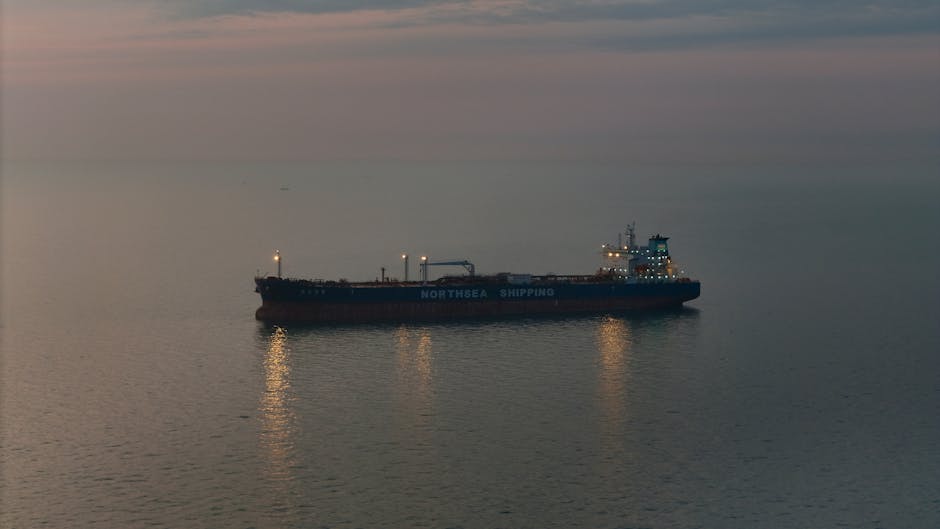
The conventional wisdom holds that the Strait of Hormuz—through which roughly one-third of global petroleum passes—is too critical to leave unguarded. This 21-mile-wide chokepoint between Iran and Oman has become the focal point of endless military posturing, with the U.S. Fifth Fleet maintaining a permanent presence and European naval forces conducting regular patrols. But this very presence has turned what should be a manageable regional dispute into a perpetual powder keg.
The Intervention Trap: How Western Presence Escalates Everything
Every major Strait of Hormuz crisis of the past four decades has followed the same pattern: regional tensions emerge, Western powers rush in naval assets, Iran responds with increasingly aggressive rhetoric and actions, and what began as a localized dispute transforms into an international standoff. The 1987-1988 Tanker War saw significant U.S. Navy involvement after Operation Earnest Will brought American warships to escort Kuwaiti tankers. The 2019 seizure of the British-flagged Stena Imperio occurred amid broader tensions, including Britain's detention of an Iranian tanker at Gibraltar.
The fundamental problem is that Western naval presence transforms every regional dispute into a matter of national prestige for Iran. When Iranian Revolutionary Guard speedboats harass commercial shipping, they're not just targeting individual vessels—they're challenging the entire Western security architecture in the Gulf. This dynamic virtually guarantees escalation, as backing down becomes politically impossible for Iranian leadership.
Consider the alternative: without permanent Western naval forces in the region, Iran's primary leverage would be against its immediate neighbors—Saudi Arabia, the UAE, and other Gulf states. These are countries that Iran must continue living and trading with long after any particular crisis passes. The incentive structure would favor negotiation and de-escalation rather than the current pattern of brinksmanship.
The Myth of Indispensable Western Security
The standard argument for Western naval intervention rests on the premise that regional powers cannot or will not secure their own shipping lanes. This assumption reveals a profound misunderstanding of both regional capabilities and incentives. Saudi Arabia operates a capable naval force with modern vessels suited to Gulf operations. The UAE has invested substantially in naval capabilities, including corvettes designed for regional patrol and interdiction.
More importantly, these regional powers have far stronger incentives than Western nations to maintain open shipping lanes. For Gulf Arab states, oil exports aren't just economic policy—they're existential necessity. These countries would move heaven and earth to keep the strait open, with or without Western assistance.
The notion that Iran would permanently close the Strait of Hormuz—thereby cutting off its own oil exports and those of its regional trading partners—reflects a fundamental misunderstanding of Iranian strategic thinking. Iran's threats to close Hormuz are better understood as bargaining tactics rather than genuine strategic objectives.
Regional Solutions: The Track Record of Success
History provides evidence that regional powers can effectively manage Hormuz without Western intervention. During the 1980s Tanker War, Gulf Cooperation Council states developed their own security arrangements and shipping protection schemes. Kuwait's decision to reflag its tankers under American protection was one response, but regional states also pursued independent diplomatic and security measures.
When Iranian forces seized British tankers in 2019, regional diplomatic intervention played a significant role in their eventual release. Oman, with its historically neutral position and geographic location, engaged in mediation efforts. This diplomatic resolution demonstrates how regional powers can manage their own security relationships.
The UAE's normalization of relations with Iran in 2023, including the restoration of diplomatic ties and expanded trade cooperation, shows how regional powers can manage their own relationships when pursuing pragmatic accommodation.
The Economic Case: Markets Adapt, Interventions Don't
Critics of regional self-reliance inevitably point to the potential economic costs of temporary shipping disruptions. But this argument fundamentally misunderstands how global energy markets actually function. Oil prices already incorporate risk premiums for potential Hormuz disruptions. This premium exists precisely because markets recognize the instability created by the current Western intervention model.
More importantly, the global energy system has become far more resilient to temporary supply disruptions than conventional analysis suggests. The United States has transformed from a major oil importer to a net exporter, fundamentally altering the strategic calculus around Gulf security. The energy landscape has diversified in ways that reduce dependence on any single chokepoint.
The temporary price spikes that would accompany a brief Hormuz closure would create powerful market incentives for rapid resolution—incentives that would operate on all parties, including Iran. Unlike the current system, where Western intervention allows regional powers to externalize the costs of their disputes, a purely regional framework would force all parties to internalize the full economic consequences of their actions.
The China Factor: Why Western Withdrawal Makes Strategic Sense
Perhaps the most compelling argument for Western withdrawal from Hormuz comes from the changing global balance of power. China has become a major importer of Gulf oil, yet Western naval forces continue to bear the primary burden of securing shipping lanes that increasingly serve Chinese economic interests.
This arrangement represents a significant subsidy to Chinese economic growth, allowing Beijing to free-ride on Western security provision while simultaneously challenging Western influence in other regions. A withdrawal of Western naval forces would force China to either negotiate directly with regional powers for shipping security or establish its own naval presence—both outcomes that would better align costs with benefits.
Moreover, China's economic relationship with Iran creates a natural check on Iranian aggression in the strait. Beijing has leverage over Iranian decision-making and strong incentives to use that leverage to maintain open shipping lanes.
The Democratic Accountability Problem
Western intervention in the Strait of Hormuz suffers from a fundamental democratic deficit. American, British, and European taxpayers spend billions annually maintaining naval forces in the Persian Gulf, yet they receive no direct benefit from this expenditure. The primary beneficiaries are multinational energy companies and Asian importers, while the costs—both financial and in terms of military risk—are borne by Western publics who have no meaningful voice in these deployments.
U.S. naval operations in the Gulf consume substantial resources that could be deployed protecting other interests. British Royal Navy operations consume resources that could be deployed protecting British fishing waters or conducting search-and-rescue operations in home waters. These opportunity costs are rarely factored into discussions of Gulf security, but they represent real trade-offs that democratic societies should be making explicitly rather than by default.
Addressing the Strongest Objections
The most serious objection to Western withdrawal is the possibility of a genuine, prolonged closure of the Strait of Hormuz that could trigger a global economic crisis. This scenario deserves serious consideration, but it rests on several questionable assumptions. First, it assumes that regional powers would be unable or unwilling to reopen the strait through their own military action—an assumption contradicted by their substantial naval capabilities and overwhelming economic incentives. Second, it assumes that Iran would actually benefit from a prolonged closure, despite the devastating impact on its own economy and its relationships with key trading partners.
Most importantly, this objection ignores the possibility that Western withdrawal might actually reduce the likelihood of such a closure by eliminating the prestige dynamics that currently drive escalation. Without Western naval forces to challenge, Iranian threats to close Hormuz would lose much of their symbolic power and strategic logic.
Another common objection points to the broader regional security architecture, arguing that Western withdrawal from Hormuz would signal broader American retreat from the Middle East. But this conflates tactical flexibility with strategic abandonment. The United States and its allies could maintain robust diplomatic engagement, intelligence sharing, and over-the-horizon military capabilities while withdrawing from routine patrol duties that serve primarily to escalate tensions.
The Path Forward: Managed Withdrawal and Regional Empowerment
Implementing this approach would require careful coordination and clear communication of Western intentions. Rather than an abrupt withdrawal, Western powers should announce a phased reduction in naval presence coupled with enhanced support for regional maritime security cooperation. This could include intelligence sharing, joint training exercises, and diplomatic facilitation of Gulf Arab-Iranian dialogue.
The goal should be to create space for regional powers to develop their own security arrangements while maintaining the capability to intervene in truly catastrophic scenarios. This approach would test the hypothesis that regional self-reliance produces better outcomes than perpetual Western intervention, while preserving options if that hypothesis proves wrong.
Critics will argue that this approach is naive or dangerous, but the current system has produced four decades of recurring crises, massive military expenditures, and persistent instability. At what point do we acknowledge that the intervention model has failed on its own terms? The definition of insanity, as the saying goes, is doing the same thing repeatedly while expecting different results.
The article's confidence that regional powers will rationally prioritize economic self-interest over political survival may underestimate how leaders use external threats to consolidate domestic legitimacy. Iran's continued aggression during the 1980s war despite economic devastation suggests that ideological commitment and regime security can override market logic. Removing Western forces might actually remove a useful external constraint that allows regional leaders to appear strong without escalating further. If Iran feels genuinely unconstrained, it may face domestic pressure to prove its power through action rather than rhetoric.
The argument that Saudi Arabia and the UAE can defend themselves against Iranian threats glosses over a fundamental asymmetry: Iran controls the chokepoint and can threaten closure; the Gulf Arab states cannot. This military imbalance means Western presence may function as a stabilizing counterweight precisely because it reassures weaker regional powers that they won't face Iranian coercion alone. Withdrawal might paradoxically accelerate regional nuclear proliferation and arms races as Gulf states seek to independently match Iranian capabilities—potentially creating more instability, not less.
If Western naval withdrawal from Hormuz is justified because "regional powers can handle their own security," the same logic should apply to NATO, South Korea, and Taiwan—yet the article doesn't address whether selective withdrawal is credible or whether it signals to allies worldwide that American security commitments are transactional and contingent on direct economic benefit. The precedent cost of appearing to abandon a commitment based on cost-benefit analysis might ultimately undermine American influence more than the expense of maintaining it.

The Argument
- Western naval intervention in the Strait of Hormuz escalates rather than prevents regional conflicts by transforming local disputes into international confrontations
- Regional powers possess both the military capabilities and economic incentives necessary to secure their own shipping lanes without Western assistance
- Historical examples suggest that diplomatic solutions and regional cooperation can be effective in resolving Hormuz crises
- The changing global energy landscape creates natural market incentives for keeping the strait open
- Western withdrawal would force all parties to internalize the costs of their actions while eliminating the prestige dynamics that drive current escalation cycles
- Democratic accountability requires that Western publics have a voice in expensive military commitments that primarily benefit multinational corporations and Asian importers