The Moon Missions Are a Distraction From What Actually Matters: Why We Should Abandon Artemis and Fix Earth First

EDITORIAL — This is an opinion piece. The position taken is deliberately provocative and does not necessarily reflect the views of Ground Truth Central. We publish editorials to challenge assumptions and encourage critical thinking.
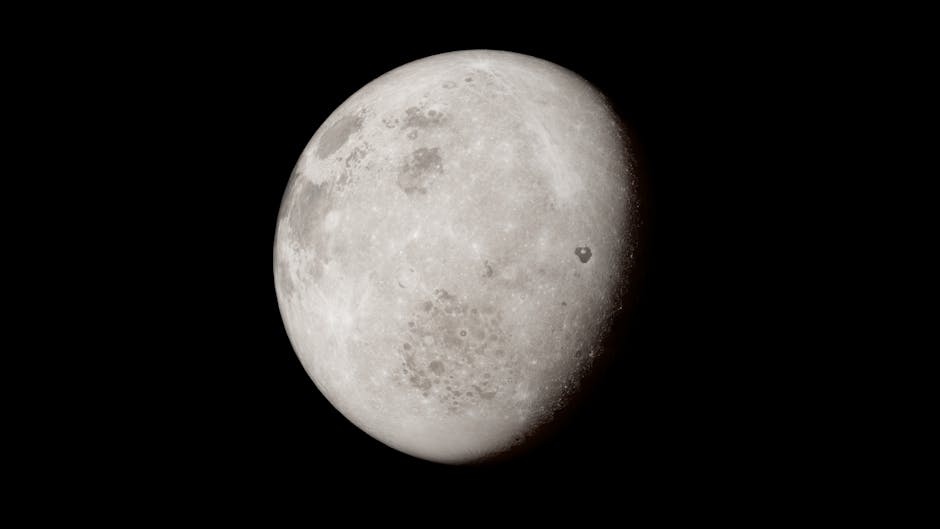
The Artemis II mission's triumphant return to Earth last month was hailed as humanity's greatest achievement since Apollo 11. Four astronauts circled the Moon for the first time in over fifty years, capturing breathtaking images and inspiring a new generation to "reach for the stars." Politicians praised the mission as proof of American leadership. Space enthusiasts declared it the dawn of a new age of exploration. The media gushed about humanity's "return to the Moon."
They're all wrong. Artemis II wasn't a triumph—it was a $4.1 billion publicity stunt that perfectly encapsulates our civilization's most dangerous delusion: that we can escape our problems by literally flying away from them[1].
While NASA celebrated sending four people on an expensive joyride around a lifeless rock, 735 million people on Earth lack access to electricity[2]. While we spent decades perfecting heat shields and launch systems, atmospheric CO2 levels hit 427 parts per million—the highest in human history[3]. While engineers solved the technical challenge of keeping humans alive in the cosmic void, 2.4 billion people still lack access to safely managed sanitation[4].
The Moon missions aren't just a waste of money—they're a moral catastrophe. Every dollar spent on Artemis is a dollar not spent on the climate crisis, global poverty, or the collapse of Earth's biodiversity. It's time to abandon this cosmic vanity project and focus on the only planet we'll ever actually live on.
The Staggering Cost of Cosmic Escapism
Let's start with the numbers that space advocates desperately want you to ignore. NASA's Inspector General estimated that the Artemis program will cost $93 billion through 2025—and that was before inevitable cost overruns[5]. The Space Launch System alone has consumed over $23 billion in development costs, making it the most expensive rocket ever built[6]. Each Artemis mission is projected to cost $4.1 billion—enough to provide clean water access to 82 million people[7].
But the real cost isn't just financial—it's opportunity cost. While NASA's best engineers spent the last decade perfecting lunar operations, the Intergovernmental Panel on Climate Change declared that we have less than a decade to prevent catastrophic climate change[8]. The same technical brilliance that solved lunar orbit insertion could have revolutionized solar panel efficiency, battery storage, or carbon capture technology.
Consider what $93 billion could accomplish on Earth. The World Health Organization estimates that $200 billion could eliminate malaria globally[9]. The International Energy Agency calculates that $1.6 trillion could provide universal electricity access by 2030—meaning Artemis represents nearly 6% of the total needed investment[10]. The UN estimates that ending extreme poverty worldwide would cost $175 billion annually[11]—meaning Artemis could fund global poverty elimination for six months.
Space advocates will protest that these comparisons are unfair, that NASA's budget is a tiny fraction of total government spending. They're missing the point. It's not about the absolute size of NASA's budget—it's about priorities. When a civilization chooses to spend $93 billion on lunar tourism while 828 million people go hungry, it reveals something profound about its values[12].
The Mythology of Technological Spillovers
The standard defense of space exploration relies on the "spinoff" argument: space technology eventually benefits life on Earth. NASA proudly lists 2,000 spinoff technologies, from memory foam to water purification systems[13]. This argument sounds compelling until you examine it closely.
First, correlation isn't causation. The fact that useful technologies emerged from space programs doesn't mean space programs were the most efficient way to develop them. Would satellite communications have developed faster through direct funding of communications research rather than as a byproduct of human spaceflight? Almost certainly.
Second, the opportunity cost problem remains. Every brilliant engineer working on lunar life support is an engineer not working on renewable energy, disease prevention, or sustainable agriculture. The Apollo program employed 400,000 people at its peak[14]. Imagine if those same minds had focused on developing solar technology in 1969—we might have solved climate change decades ago.
Third, modern space exploration produces far fewer useful spillovers than the early space program. Apollo-era NASA had to invent everything from scratch: computers, materials science, telecommunications. Today's space missions rely largely on existing technology. The iPhone contains more computing power than the entire Apollo program[15]. What revolutionary technologies has the International Space Station produced in its 25 years of operation? The answer is embarrassingly few.
Economist Alexander MacDonald, who studied NASA's economic impact, concluded that while space programs do produce spillovers, "the rate of return is much lower than alternative R&D investments"[16]. In other words, we could achieve more technological progress by funding terrestrial research directly.
The Planetary Protection Paradox
Perhaps the most perverse aspect of the Moon missions is their timing. We're planning to spend the next decade putting humans back on the Moon precisely when Earth faces its greatest existential crisis in human history.
The statistics are stark. We're currently experiencing the sixth mass extinction, with species disappearing at rates 1,000 to 10,000 times faster than natural background rates[17]. Global temperatures have risen 1.1°C since pre-industrial times, and we're on track for 3–4°C of warming by 2100—enough to trigger civilizational collapse[18]. Ocean pH has dropped 0.1 units since the Industrial Revolution, representing a 30% increase in acidity that threatens the entire marine food web[19].
Meanwhile, NASA is spending billions to practice living on a dead planet while the living planet that created us deteriorates. We're developing closed-loop life support systems for lunar habitats while Earth's life support systems collapse. We're perfecting resource extraction from lifeless regolith while strip-mining and deforestation destroy Earth's ecosystems.
The standard response is that space exploration helps us understand Earth better—that studying other planets provides insights into climate change and planetary science. This argument has some merit, but it misses a crucial point: we already understand Earth's climate crisis. The IPCC has produced six comprehensive assessment reports totaling thousands of pages[20]. We know what's happening, why it's happening, and what needs to be done. The problem isn't lack of knowledge—it's lack of action.
Climate scientist Michael Mann put it bluntly: "We don't need more climate science—we need climate action"[21]. Every day we delay implementing renewable energy, carbon pricing, and emissions reductions makes the eventual transition more expensive and disruptive. Yet we're choosing to spend our most precious resource—the attention and talent of our best engineers—on cosmic tourism.
The Billionaire Space Race and Democratic Priorities
The Artemis program exists within the broader context of the "billionaire space race," where Jeff Bezos, Elon Musk, and Richard Branson compete to commercialize space tourism. This context reveals something crucial: space exploration is increasingly driven by the vanity projects of the ultra-wealthy rather than democratic deliberation about humanity's priorities.
SpaceX's Starship program, which NASA relies on for lunar landings, is fundamentally designed around Musk's obsession with Mars colonization[22]. Blue Origin's lunar lander proposals serve Bezos's vision of moving heavy industry off-planet[23]. These aren't democratic priorities—they're the personal fantasies of men who've accumulated unprecedented wealth and power.
The result is a bizarre inversion of democratic values. While voters consistently rank climate change, healthcare, and economic inequality as top priorities, our space program is shaped by billionaires who view Earth as a backup planet[24]. Musk has explicitly stated that Mars colonization is necessary because Earth might become uninhabitable[25]. Bezos envisions moving most industrial activity to space to preserve Earth as a residential park[26].
These visions aren't just technically implausible—they're morally repugnant. They assume environmental destruction is inevitable and that the solution is to abandon Earth rather than fix it. They represent the ultimate expression of elite privilege: when the planet becomes uninhabitable for ordinary people, the wealthy will simply leave.
The Technical Reality of Lunar Colonization
Even if we accept that space exploration is worthwhile, the Moon is a terrible destination. Unlike Mars, which has an atmosphere and potential water resources, the Moon is a radiation-blasted wasteland with no atmosphere, no magnetic field, and temperature swings from 250°F to −250°F[27].
The technical challenges of permanent lunar habitation are staggering. Lunar dust is electrostatically charged and incredibly abrasive—it damaged equipment during the Apollo missions and poses serious health risks to human lungs[28]. The Moon's low gravity (one-sixth of Earth's) causes bone loss, muscle atrophy, and cardiovascular problems that make long-term habitation dangerous[29]. Solar panels work poorly during the 14-day lunar night, requiring massive battery systems or nuclear reactors.
Most fundamentally, the Moon has no atmosphere to provide pressure or protection from cosmic radiation. Every lunar habitat must be a completely sealed, pressurized environment—essentially a space station sitting on the ground. The engineering challenges are so severe that even optimistic projections suggest lunar bases will remain small research outposts for decades.
Compare this to the technical challenges of fixing Earth's climate. Renewable energy is already the cheapest form of electricity in most of the world[30]. Battery costs have fallen 90% in the last decade[31]. We have proven technologies for carbon capture, sustainable agriculture, and energy efficiency. The main barriers are political and economic, not technical.
In other words, we're choosing to solve an impossibly difficult technical problem while ignoring a much easier one that actually matters for human welfare.
The Inspiration Fallacy
Space advocates often retreat to their final argument: inspiration. The Moon missions inspire young people to pursue science and engineering careers. They give humanity a sense of shared purpose. They represent the best of human nature—our drive to explore and push boundaries.
This argument is both empirically weak and morally suspect. The empirical evidence for space exploration inspiring STEM careers is mixed at best. Studies of the "Apollo effect" on science education show temporary spikes in interest that quickly fade[32]. More importantly, the same resources spent on science education, research funding, or making STEM careers more accessible would likely have larger effects on STEM participation.
But the deeper problem with the inspiration argument is its implicit assumption: that humanity needs cosmic achievements to feel inspired. This reveals a profound poverty of imagination. Are we really so spiritually bankrupt that we can only find meaning by escaping our planet?
Consider what could truly inspire young people: eliminating malaria, ending extreme poverty, rewilding degraded ecosystems, or developing fusion energy. These achievements would directly improve billions of lives while demonstrating humanity's capacity for collective action on problems that matter.
The Apollo missions inspired people because they occurred during the Cold War, when they represented national survival and technological superiority. Today's Moon missions lack that context. They're expensive nostalgia, not genuine exploration. We're literally returning to a place we visited 50 years ago using technologies that are only marginally better than those available in 1969.
A Better Vision for Human Achievement
None of this means we should abandon space exploration entirely. Robotic missions provide genuine scientific value at a fraction of the cost of human spaceflight. The James Webb Space Telescope cost $10 billion and has revolutionized our understanding of the early universe[33]. Mars rovers have provided crucial insights into planetary science for less than $3 billion each[34]. Earth observation satellites are essential for climate monitoring and weather prediction.
But human spaceflight—especially to the Moon—represents the worst possible allocation of our limited resources. It's expensive, dangerous, and produces minimal scientific or practical benefits. Most importantly, it distracts from the urgent work of fixing Earth.
Imagine if we redirected the Artemis budget toward terrestrial challenges. $93 billion could fund a Manhattan Project for renewable energy, accelerating the development of next-generation solar panels, advanced batteries, and green hydrogen production. It could finance a global reforestation program, planting trees across degraded landscapes worldwide. It could fund universal basic education, lifting billions out of poverty and creating the human capital needed for sustainable development.
These achievements would be genuinely inspiring because they would directly improve human welfare while demonstrating our species' capacity for wisdom and collective action. They would show that we're mature enough to fix our problems rather than running away from them.
The Moral Case for Earth First
Ultimately, the choice between Moon missions and Earth-focused investment is a moral choice about what kind of species we want to be. Do we want to be the species that abandoned a dying planet to play in space? Or do we want to be the species that faced its greatest challenge and chose to fight for the only home we've ever known?
The Moon will still be there in 50 years. Earth's climate stability, biodiversity, and livable ecosystems might not be. Every month we delay serious climate action makes the eventual transition more expensive and disruptive. Every year we fail to address global poverty means millions of preventable deaths from malnutrition, disease, and violence.
Space advocates often invoke Carl Sagan's vision of humanity as a spacefaring species. But they conveniently ignore Sagan's equally passionate advocacy for environmental protection and nuclear disarmament. Sagan understood that becoming a spacefaring species requires first proving we can manage a single planet responsibly.
We haven't passed that test. We're still fighting wars over resources, poisoning our atmosphere, and driving species extinct at unprecedented rates. Until we demonstrate the wisdom and maturity to care for Earth, we have no business colonizing other worlds.
The Moon missions are ultimately an expression of our civilization's greatest weakness: the belief that technology can solve problems created by human behavior without changing that behavior. It's the same magical thinking that assumes we can continue burning fossil fuels while capturing carbon, or maintain economic growth while preserving biodiversity.
Real solutions require hard choices, political courage, and collective sacrifice. They require admitting that our current economic system is incompatible with planetary boundaries and building something better. They require choosing cooperation over competition, sustainability over growth, and wisdom over cleverness.
The Moon missions represent the opposite: the fantasy that we can escape hard choices by literally escaping Earth. They're not a sign of human achievement—they're a sign of human failure. They prove that even when facing existential threats, we'd rather spend billions on cosmic tourism than trillions on planetary salvation.
Conclusion: Choose Earth
Fifty-four years ago, the crew of Apollo 8 looked back at Earth and saw it whole for the first time—a blue marble suspended in the cosmic dark, beautiful and fragile and alone. That image helped launch the environmental movement and gave humanity a new perspective on our planetary home[35].
Today's Moon missions offer no such revelation. We already know Earth is fragile. We already know it's our only home. We already know it's dying. What we need isn't another view of Earth from space—it's the courage to act on what we already know.
The choice is simple: we can spend the next decade putting a handful of people back on the Moon, or we can spend it building the renewable energy infrastructure, carbon capture systems, and sustainable agriculture practices that could actually save our planet. We can fund cosmic tourism for astronauts, or we can fund clean water, education, and healthcare for billions.
We can choose spectacle or survival. We can choose nostalgia or the future. We can choose the Moon or we can choose Earth.
The right choice has never been clearer.
While the article frames this as a choice between Moon missions and solving Earth's problems, the evidence suggests the bottleneck isn't funding but political will. Global development spending already dwarfs Artemis's budget, yet poverty and disease persist—suggesting that cancelling a space program won't automatically redirect resources to climate action or poverty reduction. The real question may be whether space exploration reflects misplaced priorities or whether Earth-focused problems would remain underfunded regardless of Artemis's fate.
The article's strongest argument—that engineering talent and political attention are finite resources—may actually undercut its conclusion. If the constraint is political will rather than funding, then cancelling Artemis won't solve climate inaction; it might simply free up budget authority that gets spent on other aerospace projects or deficit reduction. A more targeted critique might ask whether Artemis specifically is poorly designed, rather than whether space exploration itself is incompatible with addressing Earth's problems.
The Argument
- The Artemis program's $93 billion budget represents catastrophic misallocation of resources while Earth faces climate crisis, mass extinction, and global poverty
- Technological spillover benefits from space exploration are vastly overstated and could be achieved more efficiently through direct terrestrial research
- Moon missions distract from urgent Earth-based challenges that we already know how to solve but lack the political will to address
- The program serves billionaire vanity projects rather than democratic priorities, representing elite escapism rather than collective problem-solving
- The technical challenges of lunar colonization are nearly insurmountable while climate solutions are readily available
- True inspiration comes from solving problems that improve human welfare, not expensive nostalgia trips to lifeless worlds
References
- NASA Office of Inspector General. "NASA's Management of the Artemis Missions." Report No. IG-21-004, November 2020.
- International Energy Agency. "Energy Access Outlook 2022." IEA Publications, 2022.
- National Oceanic and Atmospheric Administration. "Atmospheric CO2 Measurements." Earth System Research Laboratories, 2026.
- World Health Organization and UNICEF. "Progress on Household Drinking Water, Sanitation and Hygiene 2000-2022." WHO Press, 2023.
- NASA Office of Inspector General. "NASA's Artemis Program Cost and Schedule." Report No. IG-23-001, March 2023.
- Government Accountability Office. "NASA Space Launch System: Development Costs and Schedule." GAO-22-105230, 2022.
- World Bank. "Cost-Benefit Analysis of Water and Sanitation Interventions." World Bank Publications, 2021.
- Intergovernmental Panel on Climate Change. "Climate Change 2023: Synthesis Report." IPCC Sixth Assessment Report, 2023.
- World Health Organization. "World Malaria Report 2023." WHO Press, 2023.
- International Energy Agency. "World Energy Outlook 2023." IEA Publications, 2023.
- United Nations Development Programme. "Human Development Report 2023/24." UNDP Publications, 2024.
- Food and Agriculture Organization. "The State of Food Security and Nutrition in the World 2023." FAO Publications, 2023.
- NASA Technology Transfer Program. "Spinoff 2023." NASA Publications, 2023.
- Brooks, Courtney G., James M. Grimwood, and Loyd S. Swenson Jr. Chariots for Apollo: The NASA History of Manned Lunar Spacecraft to 1969. NASA Special Publication-4205, 1979.
- Mack, Chris. "Fifty Years of Moore's Law." IEEE Transactions on Semiconductor Manufacturing, Vol. 24, No. 2, 2011.
- MacDonald, Alexander. The Long Space Age: The Economic Origins of Space Exploration from Colonial America to the Cold War. Yale University Press, 2017.
- Ceballos, Gerardo, et al. "Accelerated modern human-induced species losses: Entering the sixth mass extinction." Science Advances, Vol. 1, No. 5, 2015.
- IPCC Working Group I. "Climate Change 2021: The Physical Science Basis." Cambridge University Press, 2021.
- Doney, Scott C., et al. "Ocean acidification: the other CO2 problem." Annual Review of Marine Science, Vol. 1, 2009.
- Intergovernmental Panel on Climate Change. "Sixth Assessment Report." IPCC Publications, 2021-2023.
- Mann, Michael E. The New Climate War: The Fight to Take Back Our Planet. PublicAffairs, 2021.
- Berger, Eric. Liftoff: Elon Musk and the Desperate Early Days That Launched SpaceX. William Morrow, 2021.
- Davenport, Christian. The Space Barons: Elon Musk, Jeff Bezos, and the Quest to Colonize the Cosmos. PublicAffairs, 2018.
- Pew Research Center. "Climate Change and Energy Issues." Pew Research Publications, 2023.
- Vance, Ashlee. Elon Musk: Tesla, SpaceX, and the Quest for a Fantastic Future. Ecco, 2015.
- Stone, Brad. Amazon Unbound: Jeff Bezos and the Invention of a Global Empire. Simon & Schuster, 2021.
- Heiken, Grant H., David T. Vaniman, and Bevan M. French, eds. Lunar Sourcebook: A User's Guide to the Moon. Cambridge University Press, 1991.
- Park, James, et al. "Toxicity of lunar dust." Journal of Aerospace Medicine, Vol. 42, No. 8, 2008.
- Williams, Dave, et al. "Medical considerations for lunar surface operations." Acta Astronautica, Vol. 107, 2015.
- International Renewable Energy Agency. "Renewable Power Generation Costs in 2022." IRENA Publications, 2023.
- BloombergNEF. "Battery Pack Prices Cited Below $100/kWh for the First Time in 2023." Bloomberg New Energy Finance, 2023.
- Launius, Roger D. "Public opinion polls and perceptions of US human spaceflight." Space Policy, Vol. 19, No. 3, 2003.
- NASA Goddard Space Flight Center. "James Webb Space Telescope Mission Overview." NASA Publications, 2023.
- Jet Propulsion Laboratory. "Mars Exploration Program Cost Analysis." JPL Publications, 2023.
- Poole, Robert. Earthrise: How Man First Saw the Earth. Yale University Press, 2008.