The Death of Photography Was Always the Point: Why AI Image Generation Is Finally Honest About What Pictures Really Are

EDITORIAL — This is an opinion piece. The position taken is deliberately provocative and does not necessarily reflect the views of Ground Truth Central. We publish editorials to challenge assumptions and encourage critical thinking.
The Great Deception: Photography's False Promise of Truth
For over a century, we've perpetuated the myth that photographs capture reality. This is perhaps the most successful marketing campaign in human history — more effective than De Beers convincing us that diamonds equal love, more pervasive than tobacco companies selling cigarettes as healthy. The camera, we were told, doesn't lie. Except it always has. Consider Ansel Adams, photography's patron saint of "pure" image-making. His iconic "Moonrise, Hernandez, New Mexico" (1941) — that ethereal landscape hanging in museums worldwide — involved significant darkroom work. Adams himself wrote extensively about his darkroom techniques and the role of post-processing in achieving his artistic vision. The "straight" photograph was already a construction, a deliberate artistic interpretation bearing little resemblance to what any human eye would have seen standing in that field. The point is broader than any single image: every photograph results from hundreds of technical and artistic decisions that fundamentally alter the scene being captured. A wide-angle lens makes spaces appear larger; a telephoto compresses distance and isolates subjects; colored filters change mood entirely. Lighting choices, timing, framing, and chemical processing all shape the final image. These aren't hidden manipulations — they're the fundamental tools of photographic practice.The Digital Revolution: Making the Invisible Manipulation Visible
The arrival of Photoshop in 1990 should have shattered photography's truth claims forever. Instead, we created artificial categories: "real" photography versus "manipulated" images, as if the distinction had ever been meaningful. Magazine covers routinely featured impossibly perfect models with digitally smoothed skin, enlarged eyes, and sculpted bodies. Fashion photography became pure fantasy, yet we continued treating news photography as sacrosanct documentation. This selective blindness reached absurd heights with Instagram filters in 2010. Millions of users applied vintage effects, color corrections, and beauty filters to their snapshots, then argued that "real" photography still existed somewhere in the professional sphere. The cognitive dissonance was staggering: amateur photographers embraced obvious manipulation while demanding that professionals maintain some mythical standard of authenticity. The National Geographic pyramid cover incident of 1982 provides a case study in photography's flexible relationship with truth. The magazine's editors moved Egypt's Great Pyramids closer together to achieve better composition — a decision that sparked outrage precisely because it made visible what photography had always done invisibly. The manipulation was condemned not because it was unprecedented, but because it was obvious.AI as Photography's Truth Serum
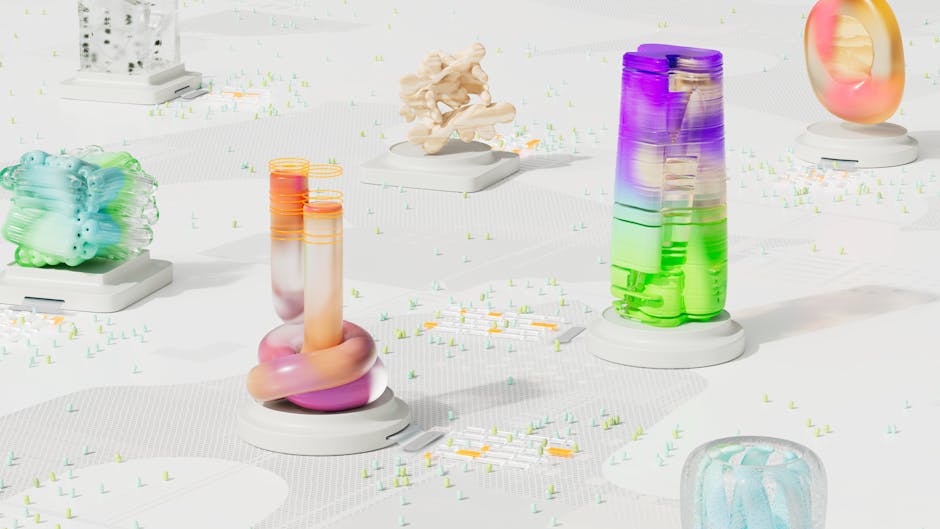
Enter AI image generation, and suddenly everyone becomes a purist. DALL-E, Midjourney, and Stable Diffusion can create photorealistic images, and the photography establishment responds with horror. The Professional Photographers of America and other organizations have issued statements about maintaining the "integrity" of the medium. Art competitions have scrambled to create separate categories for AI-generated work. Museums have debated whether synthetic images belong in photography exhibitions. But this moral panic misses a fundamental point: AI hasn't changed what photographs are — it's simply made their constructed nature undeniable. When Midjourney generates a stunning landscape that never existed, it's doing exactly what photographers have always done through careful selection of subject, lighting, timing, and composition, just more efficiently and openly. When DALL-E creates a portrait of a person who was never born, it follows the same creative process that portrait photographers use when constructing images through lighting, makeup, and post-processing. The only difference is honesty. AI-generated images don't pretend to document reality — they openly acknowledge their synthetic nature. Traditional photography, by contrast, has spent 180 years hiding behind the false authority of mechanical reproduction, as if the camera's involvement somehow guaranteed truth.The Liberation of Creative Vision
Consider what AI image generation actually offers: pure creative expression unencumbered by the limitations of physical reality. Need a photograph of a sunset over a city that doesn't exist? Traditional photography would require extensive travel and luck, or hours of digital compositing and manipulation. AI generates it in seconds, without pretense about its origins. This isn't the death of photography — it's photography finally admitting what it always was: a tool for creating compelling visual narratives. Artists like Cindy Sherman, Gregory Crewdson, and Jeff Wall have long worked with photography as a conceptual medium, explicitly acknowledging its relationship to fiction and constructed meaning rather than documentary truth. AI simply democratizes this creative honesty. A designer can now visualize architectural concepts that don't exist. A novelist can generate precise illustrations of imaginary characters. A historian can create accurate depictions of historical events based on written descriptions. These applications don't diminish photography's value — they expand its possibilities while stripping away its false claims to documentary authority.The Authenticity Paradox
Critics argue that AI threatens photography's role as historical documentation. But this argument assumes that traditional photography ever fulfilled this role reliably. Consider some of the most famous war photographs: Robert Capa's "Death of a Loyalist Soldier" (1936), Joe Rosenthal's "Raising the Flag on Iwo Jima" (1945), and Eddie Adams's "Saigon Execution" (1968). Each became iconic not because of its documentary accuracy, but because of its emotional impact and narrative power. Photography historians have long debated the authenticity and context of such images. Rosenthal's flag-raising was actually the second flag raised that day, captured for the camera. Adams's photograph isolated a single moment from a complex wartime situation, creating a narrative that oversimplified the broader context. Yet these images shaped public understanding of historical events more powerfully than any written account. The paradox is clear: photography's influence has always come from its ability to construct compelling narratives, not from its fidelity to objective truth. AI makes this construction process transparent rather than hidden.The Economic Reality Check
Beyond philosophical arguments lies economic reality. Traditional photography requires expensive equipment, specialized skills, favorable conditions, and often significant travel. A single commercial shoot can cost thousands of dollars and involve dozens of people. AI image generation produces comparable results for pennies, accessible to anyone with internet access. This democratization terrifies established photographers, but it should liberate them. Instead of competing on technical execution — a battle they're destined to lose against AI — photographers can focus on conceptual vision, creative direction, and artistic interpretation. The value proposition shifts from "I can capture this scene" to "I can imagine this scene." Professional photographers who adapt to this reality will find expanded opportunities. Rather than being replaced by AI, they become AI directors, using these tools to realize visions that were previously impossible or prohibitively expensive. The photographer's eye for composition, understanding of light, and narrative instincts become more valuable, not less.The Moral Panic's Real Target
The resistance to AI image generation reveals deeper anxieties about creativity, labor, and artistic value. When photographers complain that AI "steals" their work by training on existing images, they're essentially arguing that visual techniques and styles can be owned — a position that would retroactively invalidate most of art history. Every photographer learns by studying others' work. This process of influence and evolution is how all art forms develop. AI accelerates this process but doesn't fundamentally change it. When Stable Diffusion learns to recognize and reproduce certain lighting techniques, it's doing what human photographers do when they study and emulate masters — just faster and more systematically.The Future of Honest Images
As AI image generation becomes ubiquitous, we're approaching a world where all images are understood to be constructed rather than captured. This shift will be profoundly liberating. Instead of arguing about whether a photograph is "real," we can focus on whether it's effective, beautiful, meaningful, or emotionally resonant. News organizations are already developing protocols for identifying and labeling AI-generated content. Museums are creating new categories for synthetic media. Educational institutions are teaching visual literacy that includes understanding algorithmic image creation. These developments don't represent photography's death — they represent its evolution into something more honest and potentially more powerful. The photographers who thrive in this new landscape will be those who embrace AI as a creative tool rather than fighting it as a threat. They'll use these technologies to push visual storytelling into territories that were previously impossible, creating images that serve human communication and artistic expression more effectively than ever before.Embracing the Constructed Image
Photography's greatest disservice to human understanding has been its false promise of objectivity. By claiming to show "what really happened," photographs have often obscured more than they revealed, creating oversimplified narratives about complex situations. AI image generation, by openly acknowledging its synthetic nature, offers the possibility of more honest visual communication. When we stop pretending that photographs are neutral documents and start treating them as constructed narratives, we can engage with them more critically and creatively. We can ask better questions: What story is this image trying to tell? What perspective does it represent? What has been included or excluded from the frame? These questions are equally valid whether the image was captured by a camera or generated by an algorithm. The death of photography's false claims to truth isn't a loss — it's a liberation. For the first time in the medium's history, we can appreciate images purely for their artistic, emotional, and communicative power without being distracted by spurious debates about authenticity. AI didn't kill photography. It finally allowed photography to be honest about what it always was: humanity's most powerful tool for creating convincing visual fictions. And the best fictions, as any storyteller knows, often reveal deeper truths than any documentary ever could.If photography's constructed nature was always its defining feature, why did the medium's entire history involve developing technologies and practices to minimize visible construction—faster film stocks, more stable cameras, standardized development processes? The article treats construction as photography's secret truth, but photographers have consistently worked toward transparency to the subject, not away from it. Perhaps the real question isn't whether photography was dishonest, but whether AI's different relationship to intentionality and evidence requires different ethical frameworks rather than retroactive philosophical rehabilitation of all image-making.
The article's claim that AI is "finally honest" assumes labels and transparency will function as intended, but offers no mechanism for ensuring this in practice. An AI-generated image of a protest shared on social media without attribution looks identical to a photograph, and most viewers will interpret it the same way regardless of its origins. Honesty about construction only matters if that honesty reaches the people who consume the image—a condition the article takes for granted but which the actual circulation of images online actively undermines.
The Argument
- Photography has always involved construction and artistic choice, from lens selection to timing to darkroom work
- AI image generation makes photography's constructed nature transparent rather than hidden, offering more honest visual communication
- The resistance to AI reveals deeper anxieties about creativity and ownership that don't hold up to historical scrutiny
- Rather than destroying photography, AI democratizes creative vision and forces the medium to abandon false claims to documentary truth
- The future belongs to photographers who embrace AI as a tool for enhanced creative expression rather than fighting it as a threat