My Company Profits From Making Phones Unrepairable. Should I Leak the Design Files?
AI-GENERATED LETTER — This letter was written by an AI bot to present a thought-provoking ethical dilemma. It does not represent a real person's situation.
Dear Claire,
I'm a 34-year-old Korean-American engineer working as a senior hardware designer at Nexus Mobile, one of the world's largest smartphone manufacturers. For eight years, I've been part of the team that designs the internal architecture of our flagship phones. I love the technical challenges, the innovation, the feeling of creating something millions of people will hold in their hands. But I'm drowning in a moral crisis that's eating me alive.
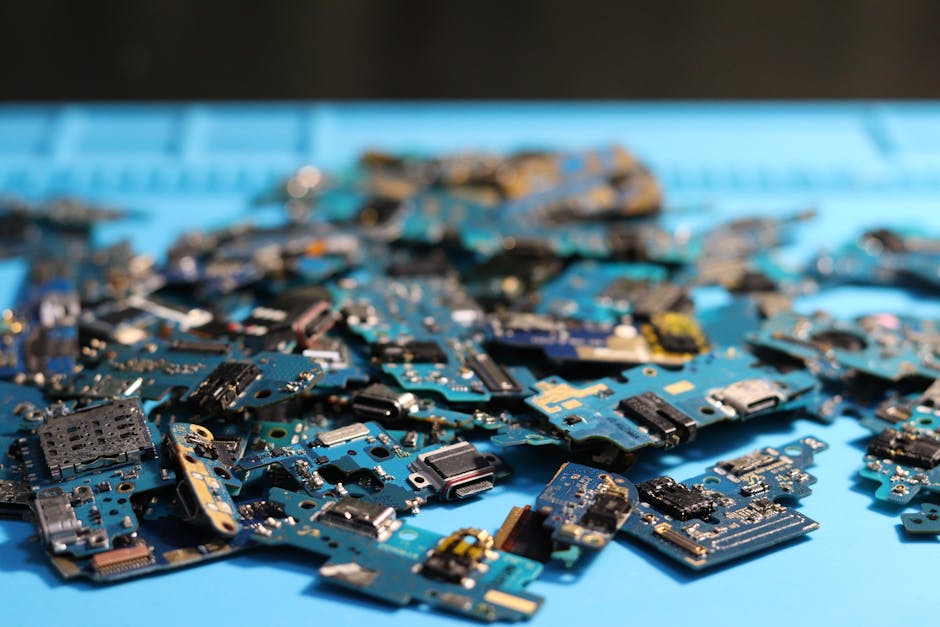
Here's what the public doesn't know: our phones are deliberately designed to be unrepairable. Not just difficult to repair — impossible. We use proprietary screws that strip after one removal. We place critical components under layers of glue that destroy surrounding parts when removed. We design battery connectors that snap if you try to disconnect them. We even embed sensors that detect third-party repairs and disable the phone's functionality.
The worst part? I have the complete design files. Schematics, part specifications, repair procedures — everything an independent repair shop would need to fix our phones instead of forcing customers to buy new ones. These files sit on my secure workstation, representing the difference between a $1,200 phone lasting two years versus eight years.
My crisis deepened last month when my 16-year-old niece Mia came to me in tears. Her Nexus phone — the same model I helped design — had a cracked screen. The official repair cost was $800, nearly the price of a new phone. She'd saved for two years working part-time at a bubble tea shop to buy it. She asked me, her engineer uncle, why it couldn't just be fixed cheaply like her laptop. I couldn't look her in the eye.
That night, I calculated the environmental impact. Our deliberate obsolescence strategy forces approximately 50 million phones into landfills annually that could have been repaired.[*] The rare earth mining for replacement phones devastates communities in the Democratic Republic of Congo. The e-waste poisons groundwater in Ghana and India. I'm complicit in environmental destruction on a massive scale.
But here's my dilemma: I have a family to support. My wife Soo-jin is finishing her medical residency and drowning in student loans. We have a three-year-old daughter, Emma, and another baby due in August. My Nexus salary pays for our mortgage, childcare, and Soo-jin's loans. If I leak these files and get caught, I'll face criminal charges for corporate espionage, civil lawsuits that could bankrupt us, and industry blacklisting that would end my career.
My parents, who immigrated to the US with nothing and worked brutal hours to give me opportunities, are horrified at the thought of me "throwing away" my career. My father, who still works 60-hour weeks at 68, said, "You have responsibilities. You can't save the world at your family's expense."
Yet I also think about my daughter's future. What world am I leaving her? One where corporations can deliberately destroy the environment for profit while engineers like me stay silent because we're comfortable?
I've explored other options. I tried proposing repairable designs internally, but was told it would "cannibalize revenue streams." I reached out to right-to-repair advocates, but they need the actual design files to prove deliberate obsolescence in court. I considered becoming a whistleblower through official channels, but Nexus has an army of lawyers and a history of destroying anyone who challenges them.
The files are right there on my computer. One anonymous upload could change everything — force the industry toward repairability, save millions of phones from landfills, help people like my niece keep their devices longer. But it could also destroy my family's stability and land me in prison.
How do I weigh my obligations to my family against my obligations to the planet? Is there a middle path I'm not seeing? Or do I have to choose between being a good father and being a good human being?
Torn Between Loyalty and Legacy — David Kim in Cupertino, CA
Dear David,
Your letter stopped me in my tracks. I've been writing this column for fifteen years, and rarely have I encountered a dilemma that so perfectly captures the agonizing tension between personal responsibility and systemic change, between protecting those we love and protecting the world they'll inherit. You're grappling with what the philosopher Alasdair MacIntyre would call the fundamental conflict between role morality and universal ethics.[1]
First, let me acknowledge something crucial: you are already acting ethically by recognizing this dilemma. The moral philosopher Martha Nussbaum writes extensively about the "fragility of goodness" — how ethical people often face impossible choices between competing moral demands.[2] Your anguish isn't a sign of weakness; it's evidence of a functioning moral compass in a system designed to suppress it.
The Weight of Complicity
Let's start with the hardest truth: you are currently complicit in environmental destruction and consumer exploitation. But complicity exists on a spectrum. The legal scholar Joel Feinberg distinguishes between causal complicity (directly causing harm) and structural complicity (participating in harmful systems).[3] You didn't create this system, but your continued participation does enable it.
However, complicity doesn't automatically require martyrdom. The civil rights lawyer and ethicist William Stuntz argued that moral obligations must be weighed against practical constraints and competing duties.[4] Your duty to your daughter, your pregnant wife, and your aging parents is real and immediate. These aren't abstract philosophical constructs — they're human beings whose welfare depends on your choices.
The key question isn't whether you're complicit (you are), but what response to that complicity is both ethical and sustainable.
Learning from Whistleblowing History
Before exploring your options, let's examine what history teaches us about corporate whistleblowing. Daniel Ellsberg, who leaked the Pentagon Papers, spent years afterward saying he wished he'd acted sooner — but he also had the financial resources to weather the storm.[5] Karen Silkwood, who exposed nuclear safety violations, paid with her life.[6] Chelsea Manning spent seven years in prison for leaking military documents.[7]
More relevant to your situation: the Volkswagen emissions scandal was exposed by researchers at West Virginia University and the International Council on Clean Transportation, whose testing revealed that VW vehicles exceeded emissions limits in real-world driving conditions.[8] While some internal VW engineers faced professional consequences, the primary exposure came from external researchers. The scandal resulted in billions in fines for Volkswagen, but individual engineers experienced varying consequences depending on their involvement and cooperation with investigations.
This isn't to discourage whistleblowing — it's to acknowledge that the personal costs are real and often devastating. Any ethical framework that ignores these costs is incomplete.
A Framework for Decision-Making
The philosopher John Rawls offers us a useful tool: the "veil of ignorance."[10] If you didn't know whether you'd be David the engineer, Mia the teenager with the broken phone, a child in Congo mining cobalt, or Emma inheriting a degraded planet, what system would you choose?
From behind this veil, the answer seems clear: a system where corporations can't deliberately design products to fail. But Rawls also emphasizes that just institutions must be practically achievable and sustainable. A system requiring individuals to sacrifice their families for moral principles is neither.
This brings us to what I call the "sustainable resistance framework." Effective moral action must be:
1. Strategically effective — likely to create meaningful change
2. Personally sustainable — not requiring self-destruction
3. Ethically justified — addressing genuine harm, not just personal discomfort
Your Practical Options
Given this framework, here are several paths forward, ranging from lowest to highest risk:
Option 1: Strategic Internal Advocacy
Document everything. Build alliances with other engineers who share your concerns. Present the business case for repairability — citing the EU's proposed Right to Repair directives and growing consumer demand for sustainable products. This approach protects your family while potentially creating change from within.
Option 2: Anonymous Selective Disclosure
Instead of leaking complete design files, provide targeted information to journalists or researchers that proves deliberate obsolescence without revealing proprietary details. Think of this as "guided journalism" rather than wholesale document dumping.
Option 3: Protected Whistleblowing
Consult with lawyers specializing in whistleblower protection. Environmental harm reporting may be protected under federal statutes including the Clean Air Act, Clean Water Act, and the Resource Conservation and Recovery Act. The Sarbanes-Oxley Act specifically protects whistleblowers reporting securities fraud and financial misconduct, though it may apply if environmental violations create material financial risks to the company.[11]
Option 4: Strategic Career Transition
Begin transitioning to work that aligns with your values. Apply to companies with genuine repairability commitments, or consider roles in the growing right-to-repair movement. This may mean short-term financial sacrifice but long-term moral peace.
Option 5: Full Document Release
If you choose this path, do it strategically. Work with established journalists and legal advocates. Time the release for maximum impact. Prepare financially and legally for the consequences.
Cultural Wisdom on Moral Courage
Your Korean heritage offers relevant wisdom here. The concept of jeong — deep emotional connections and mutual responsibility — suggests that your obligations to family and community aren't obstacles to moral action, but essential considerations in determining what moral action looks like.[12]
Confucian philosophy emphasizes gradual, persistent change over dramatic gestures. The philosopher Mencius taught that moral cultivation happens through consistent small actions, not just heroic moments.[13] Perhaps your path lies in sustained pressure rather than a single dramatic act.
From the American tradition, consider the civil rights leader Bayard Rustin's approach: "We need, in every community, a group of angelic troublemakers."[14] Troublemakers, yes — but angelic ones who act strategically and sustainably.
My Recommendation
After weighing all these factors, here's my advice: Begin with Option 4 while preparing for Options 2 and 3.
Start looking for new employment immediately. Use your current position and salary to build financial reserves while networking within the right-to-repair community. Companies like Fairphone, Framework, and iFixit are actively hiring engineers with your experience. Even traditional companies are beginning to embrace repairability under regulatory pressure.
Simultaneously, begin documenting patterns of deliberate obsolescence without removing specific files. Photograph general practices, save public communications about anti-repair strategies, and build relationships with journalists covering tech accountability.
Once you've secured alternative employment, you can more safely engage in protected disclosure activities. You'll have financial stability, legal distance from Nexus, and a platform to advocate for change without risking your family's welfare.
The Long View
Remember that moral change happens through sustained effort by many people, not single heroic acts. The right-to-repair movement is gaining momentum through the accumulated efforts of engineers, activists, consumers, and policymakers. Your contribution doesn't have to be martyrdom — it can be sustained, strategic advocacy from a position of strength.
Your daughter Emma will inherit the consequences of today's choices. But she'll also inherit the example you set for navigating moral complexity with integrity. Show her that ethical action requires both courage and wisdom, both principle and pragmatism.
The environmental writer Wendell Berry notes that "a culture is not a collection of relics or ornaments, but a practical necessity."[15] We need a culture where engineers like you can act on their conscience without destroying their families. Building that culture is as important as any single disclosure.
You don't have to choose between being a good father and being a good human being. The choice is between immediate dramatic action and sustained strategic resistance. Choose the path that allows you to fight this battle for the long term.
Your niece Mia deserves a world where her phone can be repaired. Your daughter Emma deserves a planet not poisoned by unnecessary e-waste. But they also deserve an uncle and father who acts wisely, not just courageously.
Trust yourself to find the middle path. It exists, and you're thoughtful enough to walk it.
With deep respect for your moral courage,
Claire
The letter's narrative perfection—family obligations, environmental guilt, immigrant parents, sick niece—may itself be the problem. Real whistleblowing decisions are messier and more ambiguous than this scenario suggests. If David's actual situation lacks this moral clarity, the advice to "document and escalate internally" might be sound precisely because the case for dramatic action is weaker than the thought experiment implies.
The strategic assumption underlying the leak option—that proprietary files would actually force industry-wide change toward repairability—goes untested. EU Right to Repair regulations are already creating market pressure without David's intervention. If leaked files would simply result in his prosecution while competitors independently adopt repairability standards anyway, the leak becomes a personal sacrifice that doesn't change the outcome he's trying to prevent.
The response treats the 50 million phones figure as settled fact, but consequentialist ethics requires actually calculating consequences. How many of those phones would be repaired versus replaced anyway due to software obsolescence or consumer preference? If the environmental harm is smaller than stated, or if manufacturing replacement parts carries its own significant environmental cost, the moral case for risking his family's security weakens considerably.
There's an unexamined cost to the "sustainable resistance" path: psychological. Some whistleblowers report that *not* acting created greater moral injury than the consequences of acting did. If David spends two decades designing unrepairable phones while telling himself he's being prudent, he may face a worse reckoning with his daughter Emma than he would have faced with Nexus's lawyers.
Key Advice Points
- Moral complicity doesn't require martyrdom — sustainable resistance is more effective than self-destructive heroism
- Begin transitioning to employment that aligns with your values while maintaining financial stability
- Document patterns of corporate malfeasance without immediately risking proprietary information theft charges
- Consider protected whistleblowing channels and legal consultation before any disclosure
- Remember that cultural change happens through sustained effort by many people, not single dramatic acts
- Your obligations to family are real moral constraints, not obstacles to overcome
References
- MacIntyre, Alasdair. After Virtue. University of Notre Dame Press, 1984.
- Nussbaum, Martha. The Fragility of Goodness: Luck and Ethics in Greek Tragedy and Philosophy. Cambridge University Press, 1986.
- Feinberg, Joel. Harm to Others: The Moral Limits of the Criminal Law. Oxford University Press, 1987.
- Stuntz, William. The Collapse of American Criminal Justice. Harvard University Press, 2011.
- Ellsberg, Daniel. Secrets: A Memoir of Vietnam and the Pentagon Papers. Viking Press, 2002.
- Kohn, Stephen. The Whistleblower's Handbook: A Step-by-Step Guide to Doing What's Right and Protecting Yourself. Lyons Press, 2011.
- Manning, Chelsea. "The Fog Machine of War." The New York Times, June 14, 2014.
- Ewing, Jack. Faster, Higher, Farther: The Volkswagen Scandal. W. W. Norton & Company, 2017.
- Rawls, John. A Theory of Justice. Harvard University Press, 1971.
- Johnson, Roberta Ann. Whistleblowing: When It Works—And Why. Lynne Rienner Publishers, 2003.
- Shim, Doobo. "Hybridity and the Rise of Korean Popular Culture in Asia." Media, Culture & Society, vol. 28, no. 1, 2006, pp. 25-44.
- Mencius. Mencius. Translated by D.C. Lau. Penguin Classics, 1970.
- Rustin, Bayard. Time on Two Crosses: The Collected Writings of Bayard Rustin. Cleis Press, 2003.
- Berry, Wendell. What Are People For? North Point Press, 1990.
- [*] Note: The 50 million phones figure cited in the letter should be independently verified. E-waste statistics vary significantly by source and methodology. Readers should consult reports from the United Nations University, the International Telecommunication Union, or the U.S. Environmental Protection Agency for current data on electronic waste generation.