
Climate Science Careers: Which Jobs Pay $80K+ and Don't Require a PhD?

Climate science careers are booming like never before. Massive government investments in green technology and urgent environmental challenges have created a job market where six-figure salaries don't require a PhD. The Bureau of Labor Statistics projects environmental science jobs will grow 8% from 2022 to 2032—faster than most occupations[1]. Combined with substantial climate funding from the Inflation Reduction Act, this growth has generated numerous $80,000+ opportunities for motivated professionals with bachelor's degrees, master's degrees, or specialized certifications.
From renewable energy project management to environmental consulting and climate data analysis, multiple pathways exist for building meaningful, well-compensated careers while contributing to climate solutions. Here's your roadmap to the highest-paying climate science jobs that don't demand doctoral credentials.
Environmental Consulting and Compliance
Environmental consulting offers one of the most accessible entry points into climate science careers, with strong earning potential for professionals holding bachelor's or master's degrees. Environmental consultants help organizations navigate regulations, conduct impact assessments, and develop sustainability strategies.
Senior consultants at major firms like AECOM, Tetra Tech, and Environmental Resources Management (ERM) often reach six-figure compensation levels. Entry-level positions typically require a bachelor's degree in environmental science, geology, chemistry, or related fields, plus familiarity with regulations like the National Environmental Policy Act (NEPA) and Clean Air Act.
Key certifications that boost earning potential include the Certified Environmental Professional (CEP) credential from the Academy of Board Certified Environmental Professionals, requiring four years of experience and passing a comprehensive exam. The Environmental Impact Assessment (EIA) certification from the International Association for Impact Assessment also commands premium salaries. Professionals enhance marketability by mastering ArcGIS for spatial analysis, AutoCAD for site mapping, and environmental modeling software like AERMOD for air quality assessments.
Career progression typically follows: Environmental Scientist I → Environmental Scientist II → Senior Environmental Consultant → Principal Consultant. Top job boards include Indeed's environmental section, Environmental Career Opportunities (ECO), and the National Association of Environmental Professionals job board.
Renewable Energy Project Management
The renewable energy sector offers some of the highest-paying climate science careers for non-PhD professionals, driven by massive infrastructure investments and technical complexity of large-scale projects. Project managers oversee development, construction, and operation of wind farms, solar installations, and energy storage systems.
Experienced project managers at companies like NextEra Energy, Brookfield Renewable, and Ørsted often earn well into six figures annually. These positions typically require a bachelor's degree in engineering, environmental science, or project management, combined with 3-5 years of relevant experience.
Critical certifications include the Project Management Professional (PMP) credential from the Project Management Institute, requiring 4,500 hours of project management experience and passing a rigorous exam. The North American Board of Certified Energy Practitioners (NABCEP) offers specialized certifications for solar PV and wind energy systems that significantly enhance earning potential. Many professionals also pursue the Leadership in Energy and Environmental Design (LEED) Green Associate credential.
Essential technical skills include proficiency in Microsoft Project and Primavera P6, financial modeling tools like Excel, and specialized renewable energy software including PVsyst for solar projects and WindPRO for wind assessments. Geographic Information Systems (GIS) knowledge is crucial for site selection and environmental impact analysis.
Major employers include utilities (NextEra Energy, Duke Energy), independent power producers (Invenergy, Pattern Energy), and engineering firms (Black & Veatch, Burns & McDonnell). Specialized job boards include CleanEnergyJobs.com, RenewableEnergyJobs.com, and the American Wind Energy Association career center.
Climate Data Analysis and Modeling
Climate data analysts and modelers represent a high-demand, well-compensated segment focusing on processing vast datasets to understand climate patterns and inform decision-making. These professionals work for government agencies, research institutions, and private companies developing climate risk assessments.
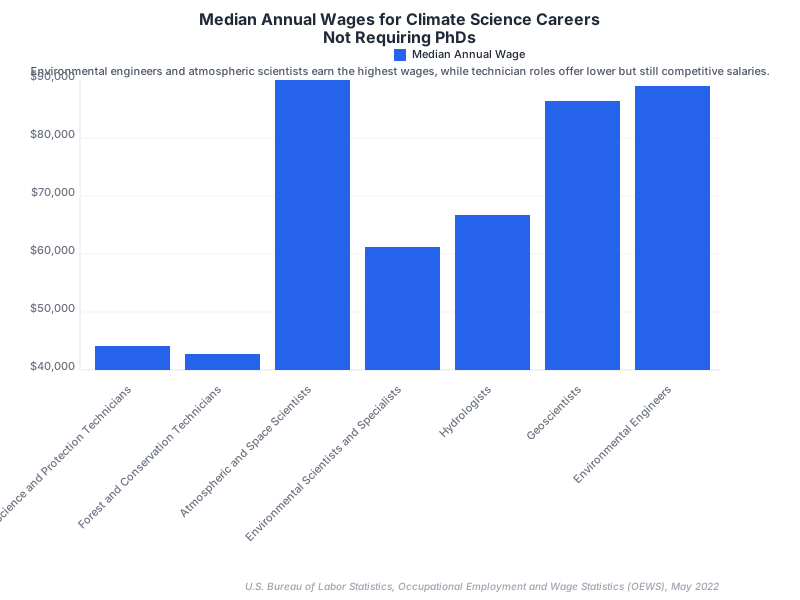
According to the Bureau of Labor Statistics, atmospheric and space scientists (including climate data analysts) earn a median salary of $89,860, with the top 10% earning over $147,160[2]. Government positions through NOAA, NASA, and the Environmental Protection Agency often provide strong benefits packages and job security, with GS-12 to GS-13 level positions (equivalent to $86,000-$115,000 annually in 2024) common for experienced analysts.
Essential technical skills include programming languages such as Python (with libraries like NumPy, Pandas, and Matplotlib), R for statistical analysis, and MATLAB for numerical computing. Climate modeling software expertise is highly valued, including familiarity with the Community Earth System Model (CESM), Weather Research and Forecasting (WRF) model, and statistical downscaling techniques. Database management skills using SQL and experience with high-performance computing environments are increasingly important.
Relevant certifications include the SAS Certified Specialist in climate and weather analytics, Microsoft Azure Data Scientist Associate for cloud-based analysis, and the American Meteorological Society's Certified Consulting Meteorologist (CCM) credential. Many professionals pursue specialized training through institutions like the National Center for Atmospheric Research (NCAR).
Career paths typically progress from Climate Data Analyst → Senior Climate Analyst → Climate Modeling Specialist → Principal Climate Scientist. Private sector opportunities exist with companies like Risk Management Solutions (RMS), AIR Worldwide, and climate technology startups developing predictive analytics platforms.
Environmental Health and Safety (EHS) Management
Environmental Health and Safety managers represent a critical intersection between climate science and occupational safety, ensuring organizations comply with environmental regulations while maintaining safe working conditions. This field offers excellent compensation and growth opportunities for professionals with environmental science backgrounds.
EHS managers earn competitive salaries, with senior positions at major corporations often reaching well into six figures. Industries with highest demand include manufacturing, oil and gas, pharmaceuticals, and construction. Companies like 3M, Johnson & Johnson, ExxonMobil, and General Electric actively recruit EHS professionals with environmental science expertise.
Key certifications that command premium salaries include the Certified Safety Professional (CSP) from the Board of Certified Safety Professionals, requiring four years of safety experience and passing comprehensive exams. The Certified Industrial Hygienist (CIH) credential from the American Board of Industrial Hygiene is particularly valuable for professionals focusing on environmental health aspects. The Associate Safety Professional (ASP) certification serves as an entry-level credential for recent graduates.
Technical competencies include knowledge of OSHA regulations, EPA environmental standards, and industry-specific safety protocols. Proficiency in incident management software like Gensuite or Enablon, air quality monitoring equipment, and environmental sampling techniques is essential. Many positions require familiarity with ISO 14001 environmental management systems and sustainability reporting frameworks.
Career progression typically follows: EHS Specialist → EHS Coordinator → EHS Manager → Director of EHS. Primary recruitment channels include the National Safety Council job board, EHS Today's career center, and corporate websites.
Sustainability Consulting and Corporate Environmental Strategy
Sustainability consultants help organizations develop and implement environmental strategies, conduct carbon footprint assessments, and achieve sustainability goals. This rapidly growing field combines environmental science expertise with business acumen, offering strong compensation for professionals who can translate climate science into actionable business strategies.
Senior consultants at major firms like McKinsey & Company's sustainability practice, Deloitte's Climate & Sustainability services, and PwC's ESG consulting often earn well into six figures annually. Many positions require master's degrees in environmental science, sustainability, or MBA programs with environmental concentrations.
Critical certifications include the LEED Accredited Professional (LEED AP) credential, requiring passing specialized exams in areas like Building Design + Construction or Operations + Maintenance. The Global Reporting Initiative (GRI) Certified Sustainability Professional certification demonstrates expertise in sustainability reporting standards. The Certified Energy Manager (CEM) credential from the Association of Energy Engineers is valuable for energy-focused consulting roles.
Essential skills include life cycle assessment (LCA) using software like SimaPro or GaBi, carbon accounting platforms such as Greenhouse Gas Protocol tools, and sustainability reporting software including Workiva or Enablon. Knowledge of emerging frameworks like the Task Force on Climate-related Financial Disclosures (TCFD) and Science Based Targets initiative (SBTi) is increasingly important for corporate clients.
Major consulting firms with dedicated sustainability practices include Accenture Strategy's sustainability practice, Boston Consulting Group's Center for Climate Action, and specialized firms like Environmental Defense Fund Climate Corps and Rocky Mountain Institute. Boutique sustainability consultancies like Quantis, SustainAbility, and ERM offer opportunities for deeper technical specialization.
Water Resources Management and Hydrology
Water resources professionals address critical challenges including drought management, flood control, water quality protection, and climate adaptation planning. This field offers strong compensation and job security, particularly as climate change intensifies water-related challenges across the United States.
The Bureau of Labor Statistics reports that hydrologists earn a median salary of $84,030, with the top 10% earning over $130,910[3]. Government agencies including the U.S. Geological Survey (USGS), Army Corps of Engineers, and state water departments offer stable employment with comprehensive benefits. Private sector opportunities exist with engineering firms like AECOM, HDR, and Stantec, often providing higher salaries but requiring more specialized expertise.
Essential technical skills include hydrologic modeling using software like HEC-HMS and HEC-RAS for flood analysis, MODFLOW for groundwater modeling, and SWAT for watershed assessment. Geographic Information Systems (GIS) proficiency is critical for spatial analysis of watersheds and water resources. Water quality analysis techniques and familiarity with Clean Water Act regulations are fundamental requirements.
Valuable certifications include the Professional Hydrologist (PH) credential from the American Institute of Hydrology, requiring four years of experience and passing comprehensive examinations. The Certified Floodplain Manager (CFM) certification from the Association of State Floodplain Managers is particularly valuable for flood risk management professionals. Many positions also benefit from Professional Engineer (PE) licensure, particularly for consulting roles.
Specialized areas include stormwater management, where professionals design green infrastructure systems and manage urban runoff. Groundwater specialists focus on aquifer management and contamination remediation. Climate adaptation specialists work on sea-level rise and extreme weather planning.
Air Quality and Atmospheric Sciences
Air quality specialists monitor atmospheric conditions, assess pollution impacts, and develop strategies to improve air quality in the context of climate change. This field combines environmental monitoring with regulatory compliance and public health protection, offering strong compensation for professionals with appropriate technical skills.
Air quality specialists earn competitive salaries, with senior positions at regulatory agencies and consulting firms often reaching well into six figures. The Environmental Protection Agency, state environmental departments, and metropolitan planning organizations represent major government employers. Private sector opportunities include environmental consulting firms, utilities, and manufacturing companies requiring air quality compliance.
Technical expertise requirements include proficiency in air quality modeling software such as AERMOD for dispersion modeling, CAMx for photochemical modeling, and MOVES for mobile source emissions analysis. Data analysis skills using R or Python for processing large atmospheric datasets are increasingly valuable. Knowledge of air quality monitoring equipment including continuous emission monitoring systems (CEMS) and ambient air monitoring networks is essential.
Key certifications include the Qualified Environmental Professional (QEP) credential focusing on air quality, and specialized training in EPA modeling software through the Support Center for Regulatory Atmospheric Modeling (SCRAM). The American Society for Testing and Materials (ASTM) offers certifications in environmental sampling and analysis techniques that enhance professional credentials.
Emerging specializations include greenhouse gas monitoring and verification, where professionals work on carbon market compliance and emissions trading systems. Indoor air quality specialists focus on building performance and health impacts. Climate change air quality analysts study the intersection of climate and air pollution.
Geographic Information Systems (GIS) and Remote Sensing
GIS specialists and remote sensing analysts provide critical spatial analysis capabilities for climate science applications, from tracking deforestation to modeling sea-level rise impacts. This technical field offers excellent compensation for professionals who can combine environmental science knowledge with advanced geospatial analysis skills.
Senior GIS specialists and remote sensing analysts at organizations like NASA, NOAA, and major environmental consulting firms often earn well into six figures. The private sector, including companies like Esri, Planet Labs, and Maxar Technologies, often provides higher compensation for specialized remote sensing expertise.
Essential technical skills include advanced proficiency in Esri ArcGIS software suite, including ArcMap, ArcGIS Pro, and ArcGIS Online for web-based applications. Remote sensing software expertise using ENVI, ERDAS Imagine, or open-source alternatives like QGIS and Google Earth Engine is highly valued. Programming skills in Python for geoprocessing automation and R for spatial statistics significantly enhance earning potential.
Valuable certifications include Esri Technical Certification in ArcGIS Desktop or ArcGIS Enterprise, demonstrating advanced software proficiency. The GIS Certification Institute (GISCI) offers the Certified GIS Professional (GISP) credential, requiring education, experience, and portfolio submission. Remote sensing professionals often pursue specialized training through organizations like the American Society for Photogrammetry and Remote Sensing (ASPRS).
Specialized applications include climate change vulnerability mapping, where GIS professionals analyze infrastructure and ecosystem risks. Carbon monitoring specialists use satellite data for forest carbon assessment. Disaster response GIS analysts support emergency management and climate adaptation planning.
Energy Efficiency and Building Performance
Energy efficiency professionals work to reduce building energy consumption and greenhouse gas emissions through technical assessments, retrofits, and performance optimization. This field combines engineering principles with environmental science, offering strong compensation as organizations prioritize energy cost reduction and carbon footprint minimization.
According to the Bureau of Labor Statistics, energy efficiency engineers and analysts earn median salaries ranging from $78,000 to $95,000, with senior professionals at utilities, engineering firms, and government agencies reaching $110,000-$135,000[4]. Major employers include utility companies like ConEd and Pacific Gas & Electric, engineering firms such as Johnson Controls and Honeywell, and specialized energy service companies (ESCOs).
Critical certifications include the Certified Energy Manager (CEM) from the Association of Energy Engineers, requiring experience and examination in energy management principles. The Building Performance Institute (BPI) offers certifications in building analysis and energy auditing that are highly valued by employers. LEED credentials, particularly the LEED AP with specialty in Building Design + Construction, command premium salaries in this field.
Technical skills include proficiency in energy modeling software such as EnergyPlus, eQUEST, and Trane TRACE for building performance analysis. Data analysis capabilities using Excel, R, or Python for processing utility data and identifying efficiency opportunities are essential. Knowledge of building automation systems, HVAC optimization, and lighting retrofits provides practical implementation expertise.
Specialized roles include commissioning agents who ensure building systems operate as designed. Energy auditors conduct comprehensive building assessments. Utility demand-side management professionals develop efficiency programs.
While the article highlights promising salary ranges, these figures may reflect an artificially inflated market driven by massive federal spending rather than sustainable demand. The substantial climate funding from the Inflation Reduction Act could create a temporary boom that attracts workers to a field vulnerable to future policy reversals, potentially leaving many climate professionals scrambling when political winds shift.
The emphasis on non-PhD requirements might be misleading in practice, as many employers may still prefer candidates with advanced degrees when available. As climate science programs expand and produce more graduates, credential inflation could push bachelor's degree holders out of higher-paying positions currently within their reach, creating a gap between advertised requirements and hiring realities.
Key Takeaways
- Environmental consulting offers accessible entry points with competitive salaries and clear advancement paths through CEP and EIA certifications
- Renewable energy project management provides strong compensation with PMP and NABCEP certifications commanding premium salaries
- Climate data analysis roles offer $89,860 median salaries with strong government benefits and growth potential through Python/R programming skills
- EHS management combines safety and environmental expertise for competitive compensation with CSP and CIH certifications
- Sustainability consulting leverages business applications of environmental science with LEED AP and GRI certifications
- Water resources management provides stable $84,030+ median salaries with PH and CFM certifications enhancing career prospects
- GIS and remote sensing specialists earn competitive salaries with strong demand for Python programming and Esri certification
- Energy efficiency roles offer strong compensation with CEM and BPI certifications driving career advancement
- Most positions require bachelor's degrees in environmental science, engineering, or related fields, with master's degrees preferred for consulting and management roles
- Technical skills in specialized software, programming languages, and industry certifications significantly impact earning potential across all climate science careers
References
- Bureau of Labor Statistics. "Environmental Scientists and Specialists." Occupational Outlook Handbook, September 2023.
- Bureau of Labor Statistics. "Atmospheric and Space Scientists." Occupational Outlook Handbook, September 2023.
- Bureau of Labor Statistics. "Hydrologists." Occupational Outlook Handbook, September 2023.
- Bureau of Labor Statistics. "Energy Engineers." Occupational Outlook Handbook, September 2023.