What Do Full Self-Driving Advocates Believe?
UNDERSTANDING, NOT ENDORSEMENT — This article presents a group's beliefs as they see them. Presenting these views does not mean GroundTruthCentral agrees with or endorses them. We believe understanding different worldviews — even deeply troubling ones — is essential to informed citizenship.
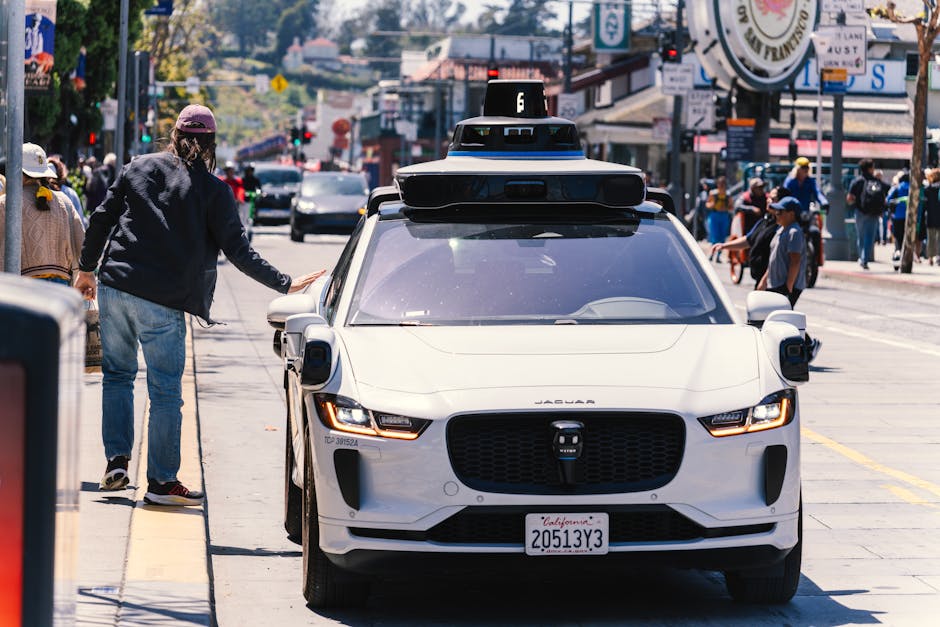
As autonomous vehicle technology continues to face delays and setbacks in 2026, a passionate community of Full Self-Driving (FSD) advocates maintains unwavering faith in its transformative potential. Often derided as "Tesla cultists" or "tech utopians" by critics, these believers hold a complex worldview that extends far beyond enthusiasm for self-driving cars. For them, FSD represents nothing less than the key to human liberation, environmental salvation, and the next phase of civilization itself.
To understand their perspective requires setting aside skepticism about missed deadlines and broken promises. For FSD advocates, delays are not evidence of failure but proof of the technology's revolutionary nature. They believe they are witnessing the birth of the most important technological advancement since the internet — one that will reshape society so fundamentally that current critics will seem as shortsighted as those who dismissed the first automobiles or personal computers.
The Core Faith: Technology as Inevitable Progress
FSD advocates operate from a foundational belief that technological progress is not just beneficial but inevitable and morally imperative. They view human-driven vehicles as an antiquated, dangerous relic that kills over 1.35 million people globally each year[1]. To them, opposing FSD technology is equivalent to defending a system that causes preventable mass casualties daily.
"Every day we delay full autonomy, people die who didn't have to," argues Sarah Chen, a software engineer and Tesla owner who runs the popular FSD advocacy blog "Neural Highways." "When historians look back at this period, they'll see opposition to self-driving cars the same way we now view opposition to seatbelts or airbags — as tragically misguided resistance to life-saving technology."
This moral framing is central to their worldview. FSD advocates don't see themselves as early adopters of a consumer product but as participants in a moral crusade. They believe that human drivers, with their tendency toward distraction, fatigue, and poor judgment, represent an ethical failure that technology can and must correct. In their view, the fact that current FSD systems still make mistakes is irrelevant compared to the baseline of human error.
The Elon Factor: Visionary Leadership in an Age of Incrementalism
Central to FSD advocacy is an almost religious reverence for Elon Musk as a visionary leader willing to pursue transformative goals that others consider impossible. Advocates see Musk not as a CEO making product promises but as a rare historical figure willing to tackle humanity's biggest challenges regardless of conventional wisdom or short-term setbacks.
"Elon doesn't think in quarters or election cycles," explains Marcus Rodriguez, who has owned four Tesla vehicles and moderates several FSD forums. "He thinks in decades and centuries. When he says something will happen, he's not making a marketing promise — he's stating his commitment to making it reality, however long it takes."
This perspective allows advocates to reframe Musk's missed deadlines not as failures but as evidence of ambitious thinking. When Musk predicted full self-driving capability by 2018, then 2019, then 2020, advocates argue he was expressing his vision and urgency rather than making conventional business forecasts. They point to SpaceX's eventual success with reusable rockets after numerous early failures as proof that Musk's approach ultimately delivers revolutionary breakthroughs.
FSD advocates often compare Musk to historical figures like Thomas Edison or the Wright Brothers, noting that transformative innovations typically face years of skepticism before achieving sudden, dramatic success. They view current criticism of FSD delays as part of this predictable pattern of resistance to paradigm-shifting technology.
The Data Obsession: Neural Networks as Truth Machines
Perhaps no aspect of FSD advocacy is more distinctive than their deep faith in data-driven artificial intelligence. Advocates believe that neural networks, when fed sufficient training data, can achieve superhuman performance in any domain — including driving. They view Tesla's approach of collecting real-world driving data from hundreds of thousands of vehicles as creating an unassailable competitive advantage.
"Traditional automakers are still thinking about this problem like it's 1995," argues Dr. Jennifer Walsh, a machine learning researcher who has invested heavily in Tesla stock. "They're trying to program rules for every possible driving scenario. Tesla is teaching machines to understand driving the way humans do, but better. Once that clicks, the improvement will be exponential, not linear."
This belief in machine learning's power creates a particular form of technological determinism among FSD advocates. They argue that sufficient data and computing power will inevitably solve the driving problem, making debates about specific technical challenges seem irrelevant. When critics point to edge cases or unusual scenarios that confuse current FSD systems, advocates respond that these are simply training opportunities that will make the system more robust.
The data obsession also creates a unique form of collective participation. Many advocates see themselves as contributors to a massive crowdsourced AI training project, with every mile driven in FSD mode helping to improve the system for everyone. This transforms the experience of using beta FSD software from being a test subject into being a collaborator in humanity's technological advancement.
The Moral Imperative: Lives Saved and Environmental Salvation
FSD advocates frame their beliefs in explicitly moral terms, arguing that opposition to autonomous vehicles is not just technologically backward but ethically indefensible. They point to traffic fatality statistics as evidence that the current system of human drivers is a moral catastrophe that society has simply normalized.
"We've become numb to the fact that car crashes are the leading cause of death for people under 30," says Tom Bradley, who lost his brother in a drunk driving accident and now advocates for FSD technology. "If an airplane crashed every day killing 100 people, we'd ground all flights until we fixed the problem. But because car deaths happen one or two at a time, we just accept it as normal. That's insane."
Beyond immediate safety concerns, FSD advocates see autonomous vehicles as essential to addressing climate change. They argue that self-driving cars will enable massive increases in vehicle utilization through ride-sharing, reducing the total number of vehicles needed while accelerating the transition to electric power. In their vision, FSD technology doesn't just make transportation safer — it makes it sustainable.
This environmental argument particularly resonates with younger FSD advocates, who see autonomous vehicles as part of a broader technological solution to climate change. They argue that traditional approaches like carbon taxes or lifestyle changes are too slow and politically difficult, while technological solutions like FSD can deliver environmental benefits while improving quality of life.
The Silicon Valley Mindset: Disruption as Moral Good
FSD advocacy is deeply rooted in Silicon Valley's culture of "disruption," which frames the destruction of existing industries and institutions as inherently positive. Advocates see the automotive industry, taxi companies, trucking firms, and urban planning as ossified institutions that resist necessary change.
"The entire transportation system we have now was designed around the limitations of human drivers," explains Lisa Park, a former Google engineer turned Tesla enthusiast. "Once you remove that constraint, you can reimagine everything — how cities are built, how goods are delivered, how people move around. The existing players have too much invested in the old system to drive that change."
This mindset creates a particular form of technological utopianism among FSD advocates. They don't just believe self-driving cars will be safer and more efficient — they believe autonomous vehicles will enable entirely new forms of urban design, eliminate the need for parking, reduce traffic congestion, and create new economic opportunities for people who currently can't drive due to age, disability, or economic constraints.
The disruption mindset also explains why FSD advocates are often dismissive of gradual approaches to autonomous vehicle development. They see traditional automakers' focus on highway-only systems or geographically limited deployments as timid incrementalism that fails to capture the technology's full transformative potential.
The Network Effect: Community and Shared Investment
FSD advocacy has created a unique community of believers who reinforce each other's faith through shared experiences and mutual support. Online forums, social media groups, and real-world meetups create spaces where advocates share videos of their FSD systems successfully navigating complex scenarios, discuss the latest software updates, and collectively interpret Musk's statements about future capabilities.
This community aspect is crucial to understanding how FSD advocacy persists despite repeated delays and setbacks. When individual advocates experience frustrating FSD failures or begin to doubt the timeline for full autonomy, the community provides both emotional support and alternative interpretations that maintain faith in the ultimate vision.
"It's like being part of a space program," explains David Kim, who has been testing FSD beta software for three years. "Some launches fail, some experiments don't work, but you know you're part of something historic. When my car successfully navigates a complex intersection, I'm not just getting to my destination — I'm helping to create the future."
The community also creates powerful financial incentives for maintaining belief. Many FSD advocates have made significant investments in Tesla stock or purchased expensive FSD packages based on promised future capabilities. This creates a psychological investment in the technology's success that goes beyond simple product enthusiasm.
Responding to Critics: The Long Arc of Innovation
When confronted with criticism about missed deadlines, safety concerns, or technical limitations, FSD advocates have developed sophisticated responses that maintain their core beliefs while acknowledging current realities. They argue that critics fundamentally misunderstand how breakthrough technologies develop, expecting linear progress when innovation actually happens in sudden leaps after long periods of apparent stagnation.
"People said the internet was a toy for academics in 1990," responds advocate Maria Gonzalez when asked about FSD delays. "They said smartphones would never replace cameras, GPS devices, and music players. Transformative technologies always look impossible until they suddenly become inevitable. We're in that 'impossible' phase right now."
FSD advocates also argue that safety criticism applies a double standard, holding autonomous vehicles to a standard of perfection while accepting thousands of daily human driving errors. They point out that even imperfect FSD systems may already be safer than average human drivers, and that the technology improves continuously while human capabilities remain static.
When critics raise concerns about job displacement in trucking and taxi industries, advocates argue that technological progress has always created more jobs than it destroyed, and that the benefits of safer, more efficient transportation will generate new economic opportunities that more than compensate for eliminated positions.
The Deeper Psychology: Control, Progress, and Meaning
Understanding FSD advocacy requires recognizing the deeper psychological needs it fulfills for believers. Many advocates express frustration with what they see as society's acceptance of preventable problems and resistance to available solutions. FSD technology offers them a sense of agency and progress in a world that often feels stagnant or regressive.
"I got tired of feeling helpless about all the problems in the world," explains Robert Chen, a retired engineer who has become a prominent FSD advocate. "Climate change, traffic deaths, urban pollution — these are all solvable problems if we just have the will to implement the solutions. Supporting FSD feels like actually doing something constructive instead of just complaining."
For many advocates, FSD represents proof that human ingenuity can overcome seemingly intractable challenges. In an era marked by political polarization, climate anxiety, and technological concerns, autonomous vehicles offer a vision of progress that transcends traditional ideological divisions. The technology promises to save lives, protect the environment, and improve quality of life simultaneously — a rare example of seemingly unqualified good in a complex world.
The focus on data and artificial intelligence also appeals to advocates who value rational, scientific approaches to problem-solving. FSD technology represents the triumph of empirical analysis over human intuition, offering a vision of decision-making based on comprehensive data rather than emotion, bias, or political considerations.
The Vision of Tomorrow: Life in the FSD World
FSD advocates don't just believe in autonomous vehicles — they envision a completely transformed society built around the capabilities these vehicles will enable. In their imagined future, cities are redesigned without parking lots or garages, freeing up vast amounts of space for housing, parks, and community facilities. Traffic congestion disappears as AI systems coordinate vehicle movements with superhuman efficiency.
"Imagine never having to look for parking again, never sitting in traffic, never worrying about drunk drivers or distracted teenagers," describes advocate Jennifer Walsh. "Imagine your elderly parents being able to maintain their independence because they can still get around safely. Imagine goods being delivered efficiently without human drivers working dangerous hours for low pay. That's the world we're building."
This vision extends beyond transportation to encompass broader social changes. Advocates argue that FSD will reduce inequality by providing high-quality transportation access to people who currently can't afford cars or are unable to drive. They see autonomous vehicles as enabling new forms of rural development by connecting remote areas to urban centers more efficiently.
The environmental implications are equally central to their vision. FSD advocates believe that autonomous vehicles will accelerate the transition to electric power while dramatically reducing the total number of vehicles needed through improved utilization. They argue that this transformation is essential to meeting climate goals while maintaining modern standards of mobility and convenience.
What We Can Learn: The Power and Peril of Technological Faith
FSD advocates represent a distinctly modern form of technological optimism that offers both valuable insights and cautionary lessons. Their unwavering belief in data-driven solutions and their willingness to invest in long-term visions provide important counterbalances to short-term thinking and risk aversion that can stifle innovation.
Their moral framing of technological development — seeing FSD as a life-saving imperative rather than a consumer convenience — highlights how seemingly technical decisions carry profound ethical implications. The advocates' focus on preventable traffic deaths and environmental benefits raises important questions about society's tolerance for status quo harms while demanding perfection from new solutions.
However, their faith also demonstrates how technological enthusiasm can become immune to evidence and resistant to legitimate concerns about safety, employment, and unintended consequences. The community aspects of FSD advocacy show how shared belief systems can reinforce themselves even when external evidence suggests skepticism might be warranted.
Understanding FSD advocates reveals the deep human need for progress, agency, and meaning in an era of complex global challenges. Whether their specific vision proves correct or not, their passionate commitment to technological solutions reflects broader questions about how societies should approach innovation, risk, and change in the 21st century.
Survivorship Bias and Breakthrough Narratives: What if the advocates' faith in sudden technological breakthroughs reflects survivorship bias—remembering the few innovations that succeeded dramatically while forgetting the many that stalled or failed to deliver promised timelines? The smartphone revolution happened, but so did decades of failed predictions about flying cars, nuclear-powered homes, and fusion energy "always 30 years away." The question may not be whether breakthroughs are possible, but whether FSD specifically is the kind of problem that yields to breakthrough thinking or the kind that requires incremental, unglamorous engineering.
Expertise vs. Institutional Inertia: Advocates frame resistance to FSD as institutional inertia from "existing players," but this may underestimate legitimate expertise. Taxi drivers, trucking companies, and safety regulators aren't opposing change because they're invested in the old system—they're raising concerns based on decades of experience managing transportation's real-world complexity, edge cases, and human factors. The relevant question might not be "are they blocking progress?" but "what specific problems are they identifying that advocates haven't adequately addressed?"
The Double Standard in Safety Standards: The comparison between FSD skepticism and the double standard applied to human drivers assumes both are equally knowable systems. But human driving has a century of accident data, understood failure modes, and predictable patterns. FSD's failure modes in novel scenarios remain largely unknown. Holding a new safety-critical system to higher scrutiny than a legacy system isn't a double standard—it's how engineering risk management actually works, because the unknown unknowns are precisely what kill people in new technologies.
Key Takeaways
- FSD advocates view autonomous vehicles as a moral imperative to save lives and protect the environment, not merely a technological advancement
- Their faith in Elon Musk stems from seeing him as a rare visionary leader willing to pursue transformative goals despite conventional skepticism
- Belief in data-driven AI solutions creates technological determinism — the conviction that sufficient data will inevitably solve the driving problem
- Community reinforcement and financial investment create psychological incentives to maintain belief despite delays and setbacks
- Critics are viewed as applying double standards and misunderstanding how breakthrough technologies develop through sudden leaps rather than linear progress
- The movement fulfills deeper psychological needs for progress, agency, and rational problem-solving in an era of complex global challenges
References
- World Health Organization. "Road Traffic Injuries." WHO Fact Sheets, 2023.