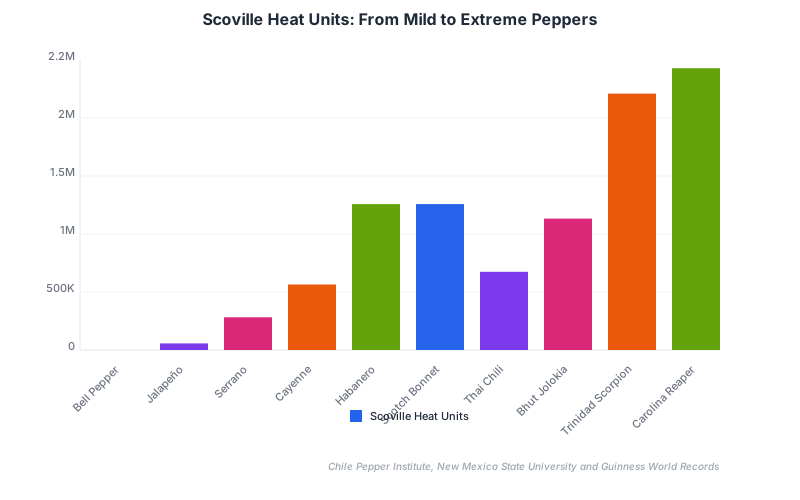
The scene has become a social media staple: someone bites into a Carolina Reaper pepper—officially the world's hottest chili at 1.6 million Scoville Heat Units—and immediately writhes in agony, tears streaming, desperately gulping milk. Yet millions voluntarily subject themselves to this torment, from casual hot sauce fans to competitive pepper eaters livestreaming their suffering for entertainment. This raises a fascinating question: why do we willingly inflict capsaicin-induced pain when our bodies scream danger?
The answer lies at the intersection of neuroscience, psychology, and culture. Understanding our pursuit of extreme spice reveals how humans process pain, seek thrills, build social bonds, and find meaning in seemingly masochistic activities.
Your Brain on Fire: The Neuroscience of Capsaicin
When capsaicin—the compound that makes peppers hot—hits your tongue, it binds to TRPV1 receptors designed to detect dangerous heat and tissue damage[1]. These receptors send pain signals to your brain, triggering the same response as actual burning.
But your brain's response involves more than just pain. The perceived threat releases endorphins—natural painkillers that create euphoria once the initial agony subsides. This endorphin rush is a primary reason people return for more punishment despite the discomfort.
Capsaicin also triggers dopamine release in the brain's reward pathways, similar to other pleasurable activities. This creates potential for habituation—even mild addiction—to spicy foods. Regular consumption leads to desensitization, requiring increasingly hot peppers to achieve the same physiological high.
The Psychology of "Benign Masochism"
Psychologist Paul Rozin coined the term "benign masochism" to describe our tendency to enjoy negative sensations when we know we're safe[3]. This explains not just extreme pepper consumption, but our love of horror movies, roller coasters, and other simulated dangers.
Eating a Carolina Reaper provides what researchers call a "constrained risk" experience. The pepper causes genuine discomfort and triggers real danger signals, but your conscious mind knows no permanent harm will result. This creates a unique state where you experience intense physiological arousal while maintaining cognitive control.
People with higher sensation-seeking personality traits are more likely to engage in extreme pepper consumption. These individuals have greater tolerance for intense experiences and may require more extreme stimuli to achieve satisfaction.
Social Media and Cultural Performance
Extreme pepper consumption can't be understood through individual psychology alone—cultural and social factors are crucial. In many cultures, spice tolerance signals toughness, masculinity, or authenticity, creating social pressure to demonstrate heat tolerance.
Social media has amplified these dynamics by turning pepper consumption into performance art. YouTube channels dedicated to hot sauce reviews have millions of subscribers, making painful food consumption potentially lucrative content. Shows like "Hot Ones" have further normalized and glamorized extreme spice tolerance.
Group dynamics matter too. Eating extremely hot peppers often occurs socially, where peer pressure, camaraderie, and shared suffering create bonding experiences. Communal pain endurance strengthens relationships and creates memorable shared experiences.
The Competitive Edge
Competitive pepper eating has evolved into a legitimate subculture with organized events, rankings, and celebrity participants. Guinness World Records regularly updates pepper consumption records, and competitive eaters train specifically for these events. This framework transforms potential self-harm into skill-based achievement with clear success metrics.
Competition provides external validation and goals that justify temporary suffering. Winners gain recognition, prizes, and community status—external rewards powerful enough to motivate pushing through extreme discomfort.
Evolutionary Paradox
From an evolutionary perspective, human capsaicin consumption presents an interesting paradox. Most mammals avoid capsaicin-containing plants, as the compound evolved to deter mammalian consumption while allowing birds (which can't taste capsaicin) to disperse seeds over longer distances[4].
Yet humans haven't just overcome this natural deterrent—we've actively cultivated increasingly hot varieties. This behavior may offer adaptive benefits, including capsaicin's antimicrobial properties, appetite regulation, and social bonding through shared food experiences.
The ability to override natural pain responses may represent broader human capacity for delayed gratification and goal-oriented behavior—crucial traits that serve us in contexts from exercise to career development.
Individual Differences: Why Some Love the Burn
Not everyone responds to superhot peppers identically. Genetic variations affect both the number and sensitivity of TRPV1 receptors, meaning some people literally experience less pain from identical capsaicin amounts.
Personality factors also matter significantly. Research shows correlations between extreme spice tolerance and traits including sensation-seeking, openness to experience, and pain tolerance. Individuals with higher baseline levels are more likely to voluntarily consume superhot peppers and continue despite negative experiences.
Some may use extreme pepper consumption for emotional regulation or stress relief. Intense physical sensation can distract from psychological distress, while subsequent endorphin release provides temporary mood improvement.
Building Tolerance: The Adaptation Process
Regular spicy food consumption leads to both physiological and psychological adaptation. Physiologically, repeated capsaicin exposure reduces TRPV1 receptor sensitivity and affects substance P—a neuropeptide involved in pain signaling. This creates tolerance, requiring increasingly hot peppers for the same sensation.
Psychologically, individuals develop coping strategies and mental frameworks for managing pain. Experienced pepper eaters learn to "breathe through" discomfort, focus on flavor rather than heat, or reframe pain as positive challenge rather than something to endure.
Rather than seeking pain or thrills, extreme pepper enthusiasts may be pursuing sophisticated flavor experiences that require high heat tolerance to access. Many superhot peppers offer complex fruity, smoky, or floral notes that only become apparent once the initial burn subsides—suggesting these eaters are developing their palates rather than simply enduring suffering for social media content.
The framing of spicy food consumption as unusual behavior requiring psychological explanation may reflect Western cultural biases rather than universal human experience. For billions worldwide, eating very hot peppers is simply normal cuisine, raising questions about whether extreme pepper challenges represent cultural appropriation of traditional food practices repackaged as novelty entertainment.
Key Takeaways
- Extreme pepper consumption triggers endorphin and dopamine release, creating a natural "high" that becomes psychologically rewarding
- The behavior represents "benign masochism"—enjoying negative sensations when we know we're safe—similar to horror movies or roller coasters
- Social media, peer pressure, and cultural associations with toughness significantly drive the behavior beyond individual psychology
- Competitive frameworks transform pepper eating from potential self-harm into legitimate skill-based achievement with external rewards
- Individual differences in genetics, personality traits, and pain tolerance explain why some become enthusiasts while others avoid spicy foods
- Regular consumption creates both physiological tolerance and psychological adaptation, requiring increasingly hot peppers for the same effects
References
- Caterina, Michael J., et al. "The capsaicin receptor: a heat-activated ion channel in the pain pathway." Nature, 1997.
- Craft, Roberta M. "Sex differences in opioid analgesia." Clinical Journal of Pain, 2003.
- Rozin, Paul. "Getting to like the burn of chili pepper." Chemical Senses, 1982.
- Tewksbury, Joshua J. "Evolutionary ecology of pungency in wild chilies." Proceedings of the National Academy of Sciences, 2008.