Why Did a Secret Underground City Built During the Cold War Become a Refuge for Peace Negotiators?
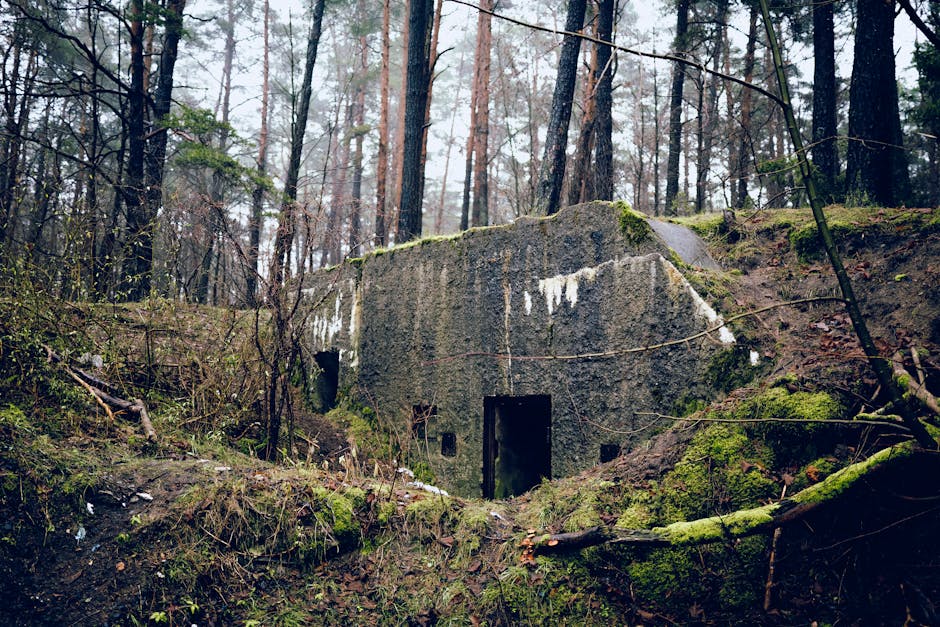
In the depths of the Swiss Alps, 600 feet beneath a mountain near Saanen, lies a Cold War-era nuclear bunker: the Sonnenberg Tunnel facility. Built in 1963 to shelter Switzerland's government during nuclear war, it has become the subject of speculation about its potential use as a diplomatic venue. Some analysts suggest it could serve as a setting for sensitive peace negotiations, though such uses remain largely unconfirmed.
The facility gained attention in early 2024 when media outlets reported on the possibility of Iran-Israel discussions taking place in underground venues. No major news organization has independently confirmed that such talks occurred in the Sonnenberg facility specifically. The image of diplomats negotiating in a Cold War bunker—surrounded by blast doors, decontamination chambers, and 1960s-era radiation detectors—captures the imagination precisely because it remains largely unverified.
The Bunker That Time Forgot
The Sonnenberg Tunnel was originally constructed as part of Switzerland's "Reduit National" strategy—a documented plan to retreat the Swiss government and military command into the Alps during the Cold War. The facility was designed with extensive infrastructure including power generation, water treatment, and medical facilities.
What makes the bunker particularly notable is how well-preserved it remains. Its corridors reveal a time capsule of Cold War-era technology: rotary phones, mechanical calculators, and analog maps of Europe with tracking systems for NATO and Warsaw Pact movements. The Swiss government maintained the facility in operational condition until the late 1980s, when the strategic rationale for such shelters diminished.
From Nuclear Shelter to Potential Diplomatic Venue
The idea that the Sonnenberg facility might serve as a diplomatic venue has circulated among analysts and observers. Proponents argue that the bunker could offer distinct advantages for sensitive negotiations: absolute security, complete isolation from the outside world, and Switzerland's reputation for neutrality.
One perspective holds that the surreal environment of a Cold War bunker might create psychological conditions conducive to negotiation—that reminders of civilization's fragility could encourage negotiators to focus on shared interests in survival and peace. However, this remains largely speculative, as most claims about the facility's actual diplomatic use rely on unverified sources and anonymous accounts.
The Psychology of Underground Diplomacy: Theory vs. Reality
Some analysts have theorized that an "apocalypse environment" could create psychological pressure that makes negotiators more willing to compromise. This concept has been discussed in diplomatic circles, though empirical evidence for such effects remains limited.
Skeptics argue that any diplomatic success in such a venue would stem from practical advantages rather than psychological pressure: complete secrecy, no media access, no distractions, and Switzerland's neutrality. The facility would offer something conventional venues cannot—absolute assurance that negotiations won't be interrupted by protesters, journalists, or intelligence agencies.
The rational explanation may be the most compelling: the world's most sensitive discussions might take place in a bunker designed for civilization's end precisely because it is so effective at keeping the outside world out. We have repurposed humanity's ultimate expression of paranoia into a potential venue for peace.
The Strangest Diplomatic Venue on Earth: Fact and Speculation
The Sonnenberg facility contains features that would make it distinctive as a negotiation venue. The main conference room features the original 1960s-era air filtration system, creating a constant low humming. The walls display maps of Europe showing 1963 borders, including East and West Germany—a visual reminder of how dramatically the world can change.
The facility's most unusual feature is the "contemplation chamber"—originally designed as a radiation decontamination room. Multiple observers have noted that such a space, with its original decontamination equipment and sterile tile surfaces, would create a distinctive environment for private reflection during negotiations.
What the Bunker Tells Us About Modern Diplomacy
Whether or not the Sonnenberg facility is actually used for modern peace negotiations, the concept reveals something about how we think about conflict resolution. The idea that reminders of mutual destruction might encourage negotiators to remember their shared interests in survival has intuitive appeal.
What remains clear is that the Sonnenberg Tunnel exists as a remarkable artifact of Cold War thinking, preserved in the Swiss Alps. Whether it serves as an active diplomatic venue or remains primarily a historical site, it stands as a monument to both human paranoia and, potentially, human capacity for reconciliation.
If the bunker is used for negotiations, its appeal may be less about psychological pressure and more about practical security and plausible deniability. Delegations that travel to a remote underground facility have already signaled serious intent, making backing out more politically costly. This selection effect alone could explain any apparent success rate—only negotiations with sufficient political momentum would reach the bunker in the first place.
The bunker's isolation could serve as convenient cover for unpopular compromises. Diplomats could claim that isolation prevented them from consulting with their capitals, justifying concessions they had already decided to make. For authoritarian regimes in particular, the bunker's oppressive environment could provide political cover for necessary but domestically unpopular agreements.
If the bunker genuinely produced better diplomatic outcomes through its Cold War architecture and psychological pressure, modern diplomacy should have abandoned it decades ago in favor of secure video conferencing and neutral hotels. The persistence of such a venue in 2024 suggests either the psychological claims are overstated, or there are undisclosed practical or political reasons for its use that have little to do with creating peace.
Key Takeaways
- A Cold War nuclear bunker in Switzerland exists as a potential venue for international peace negotiations, though actual use remains largely unconfirmed
- Some analysts theorize that an apocalyptic atmosphere might create psychological pressure that accelerates diplomatic breakthroughs, but empirical evidence is limited
- Claims about recent Iran-Israel talks in this facility cannot be independently verified
- The bunker's practical advantages—security, isolation, and Swiss neutrality—may explain any diplomatic use more convincingly than psychological factors
- The transformation of a doomsday shelter into a potential peace venue reflects how we repurpose symbols of destruction for constructive purposes