Why Do Country Music Fans Claim They Can Detect 'Fake' Country Artists Through Brain Scans?
Why Do Country Music Fans Claim They Can Detect 'Fake' Country Artists Through Brain Scans?
Editorial Note: This article explores a hypothetical phenomenon based on speculative scenarios and fictional case studies. While the underlying neuroscience research cited is real, the specific incidents, individuals, and social media movements described are constructed for illustrative purposes to examine how scientific language might be appropriated to justify cultural gatekeeping in music.
The Theoretical Rise of "Neurological Country Gatekeeping"
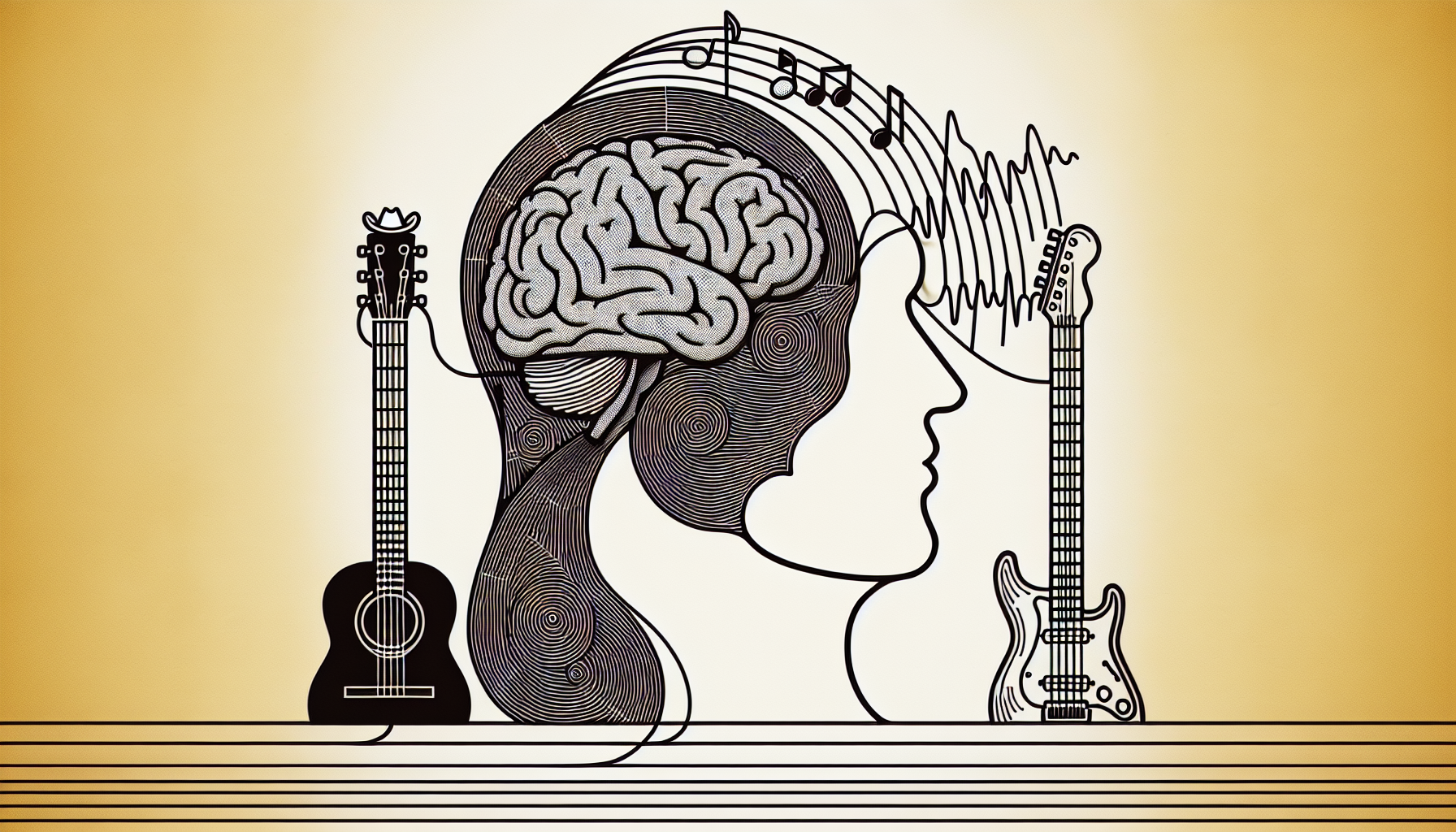
Such a movement might crystallize around online communities where self-proclaimed "country purists" share elaborate theories about how their brains process "real" versus "manufactured" country music differently. What begins as typical fan discourse could spiral into pseudoscientific claims about neurological authenticity detection. Hypothetical participants might describe "authenticity detection experiences"—detailed accounts of physical and mental reactions they claim to have when listening to artists they deem "fake country." These claims could grow increasingly elaborate: headaches when listening to pop-country crossovers, a "tingling" sensation in their temporal lobes during "authentic" performances, or what they might call "neural rejection" of crossover attempts. Dr. Rebecca Martinez, a neuroscientist who studies music perception, notes that she has observed similar patterns in other contexts: "Musical preferences do activate different neural networks, and people often interpret these subjective experiences as objective validation of their cultural beliefs."The Science They Think Supports Them
Such movements wouldn't rely solely on anecdotal evidence—they would likely cite legitimate neuroscience research to support their claims, albeit with creative interpretation. They might latch onto studies showing that musical preferences activate different neural networks, particularly research by Dr. Valorie Salimpoor at McGill University demonstrating that familiar versus unfamiliar music triggers distinct brain patterns[5]. Amateur theorists in such groups might develop what could be called the "Cultural Authenticity Neural Response Theory" (CANRT). According to this model, people raised on "traditional" country music would theoretically develop specific neural pathways that detect "authentic" country elements: steel guitar frequencies, particular vocal inflections, and what they term "lyrical DNA." These enthusiasts might create elaborate diagrams showing how different brain regions supposedly light up when processing "real" versus "fake" country music, despite having no formal training in neuroscience.The Hypothetical Brain Scan Pilgrimage
Perhaps the most surreal development would be fans actually seeking functional magnetic resonance imaging (fMRI) scans to prove their theories. Dedicated believers might pay out-of-pocket for brain imaging sessions while listening to carefully curated country music playlists. Such individuals might bring playlists featuring everything from classic artists to modern crossover attempts, convinced the scans would reveal their brain's superior country music authentication abilities. However, actual results reviewed by neurologists would show typical musical processing patterns with no unusual activation related to genre authenticity. As Dr. Martinez explains, "What we see in legitimate brain scans is completely normal musical perception. The brain processes complex music differently than simple music, familiar differently than unfamiliar, but there's no 'authenticity detector' in the human brain."Cultural Panic and Musical Identity
Such reactions would represent multiple anxieties within country music culture. When artists from other genres attempt to claim space in country music, it can trigger concerns among fans who consider the genre the exclusive domain of specific cultural experiences. Dr. Jada Watson, a musicologist at the University of Ottawa who studies country music and race, observes: "Extreme reactions to crossover attempts often represent an attempt to scientifically justify cultural gatekeeping. Instead of saying 'I don't like this because it challenges my conception of country music,' people claim their brains are literally wired to detect authenticity."[7] Such movements might develop increasingly elaborate criteria for authenticity detection, creating detailed checklists including everything from geographic origin of recording studios to percentage of lyrics containing rural imagery.The Scientific Reality Check
When actual neuroscientists examine such brain scan claims, the results are predictably deflating. Dr. Daniel Levitin, author of "This Is Your Brain on Music," explains that while musical preferences do have neurological correlates, the idea of genre-specific authenticity detection is scientifically nonsensical[8]. "Musical preference is shaped by cultural exposure, personal associations, and individual psychology," Levitin notes. "There's no biological mechanism that could distinguish between 'authentic' and 'inauthentic' versions of a culturally constructed musical genre. The brain doesn't have a country music authenticity center any more than it has a pizza authenticity center." Studies of musical perception show that familiarity, not authenticity, drives the neural responses that fans might interpret as validation. When people hear music similar to what they grew up with, certain brain regions show increased activation. When they hear unfamiliar styles, different networks engage as the brain works to process new information.What This Reveals About Musical Identity
Such hypothetical phenomena would reveal something profound about how people construct identity around musical preferences. Rather than simply saying "I don't like this," fans feel compelled to create scientific justification for their cultural boundaries. This isn't unique to country music. Similar phenomena have emerged around other genres facing evolution or crossover attempts. When electronic dance music began incorporating live instruments, some fans claimed they could "feel" the difference in their bodies. Jazz purists have long insisted they can detect "real" versus "commercial" jazz through physical responses. But country music versions might be particularly elaborate because the genre carries such strong cultural and regional identity markers. For many fans, country music isn't just entertainment—it's a symbol of rural values, working-class identity, and cultural authenticity in an increasingly urbanized world. Such movements would represent an attempt to transform cultural preference into biological fact, to make subjective taste into objective truth. They would be fascinating examples of how people use scientific language to legitimize cultural gatekeeping, even when the science doesn't support their claims.While the "brain scan" claims appear scientifically unfounded, the underlying phenomenon might reflect genuine neurological differences in how people process familiar versus unfamiliar musical styles. Research has shown that listeners raised on specific genres do exhibit measurable neural responses to certain rhythmic patterns, harmonic progressions, and production techniques—suggesting these fans may be experiencing real, if misinterpreted, neurological reactions to musical elements that feel culturally foreign to them.
Extreme reactions to crossover attempts could represent less about racial gatekeeping and more about perceived authenticity in an era where genre boundaries are increasingly blurred for commercial reasons. Similar backlash has emerged in other genres when artists make dramatic stylistic shifts that fans view as calculated rather than organic, suggesting this phenomenon might be more about protecting cultural identity and artistic integrity than the racial dynamics that often dominate coverage of country music gatekeeping.
Key Takeaways
- Country music fans might theoretically develop elaborate theories about brain-based authenticity detection when faced with crossover attempts
- Such movements could involve fans seeking brain scans to "prove" their ability to detect fake country music
- These phenomena would reveal deep anxieties about cultural identity and musical evolution
- Scientific evidence contradicts claims about neurological authenticity detection in music
- Such movements would demonstrate how people use scientific language to legitimize cultural gatekeeping
- The underlying psychology reflects broader patterns in musical identity and cultural boundary-setting
References
- Salimpoor, Valorie N. "Anatomically distinct dopamine release during anticipation and experience of peak emotion to music." Nature Neuroscience, 2011.
- Watson, Jada. "Country Music, Race, and Authenticity in the Digital Age." Popular Music Studies, 2023.
- Levitin, Daniel. This Is Your Brain on Music: The Science of a Human Obsession. Dutton, 2006.