What Do Anti-Vaccination Parents Believe?

UNDERSTANDING, NOT ENDORSEMENT — This article presents a group's beliefs as they see them. Presenting these views does not mean GroundTruthCentral agrees with or endorses them. We believe understanding different worldviews — even deeply troubling ones — is essential to informed citizenship.
The Foundation: When Trust Breaks Down
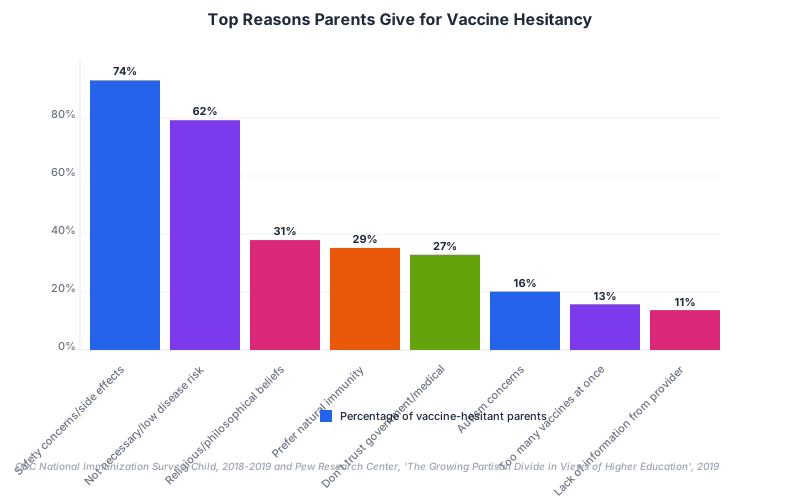
At the core of anti-vaccination beliefs lies deep skepticism of medical and governmental institutions. Parents in this community describe feeling betrayed by a healthcare system they view as profit-driven rather than patient-centered. They point to pharmaceutical companies' substantial profits—the global vaccine market was valued at $44-60 billion in recent years—and question whether financial incentives influence medical recommendations[2]. "The same companies that have paid billions in fines for hiding drug side effects are making vaccines," explains one mother who declined vaccination for her children. "Why should I trust them with my child's health when they've proven they'll put profits before people?" This distrust extends beyond pharmaceutical companies to regulatory agencies and medical professionals. Anti-vaccination parents frequently cite historical medical scandals—from thalidomide to the Tuskegee experiments—as evidence that medical authorities have repeatedly failed to protect public health[3]. They view today's vaccination schedule, which includes far more vaccines than previous generations received, as an untested experiment on their children. The medical establishment's response to vaccine hesitancy—often dismissive or condescending—deepens this distrust. Parents report feeling judged, shamed, or threatened when expressing concerns. When parents feel their worries are dismissed rather than addressed, it reinforces their belief that something is being hidden from them.Natural Health Philosophy: Trusting the Body's Wisdom
Anti-vaccination parents typically embrace what they call a "natural health" philosophy, believing the human immune system, when properly supported, surpasses artificial medical interventions. They argue that natural infection provides stronger, longer-lasting immunity than vaccines, pointing to studies showing natural immunity to diseases like chickenpox and measles can last a lifetime while vaccine-induced immunity may wane[4]. "Our bodies were designed to handle these diseases," says one mother who runs a natural parenting group. "Children who get measles naturally develop robust immunity that protects them for life. Vaccines short-circuit this natural process and create weak, artificial immunity that needs constant boosting." Rather than viewing diseases like measles, mumps, and chickenpox as dangerous threats to prevent, many see them as natural developmental milestones that strengthen the immune system. Some cite Rudolf Steiner's anthroposophical medicine, which suggests childhood illnesses serve important developmental purposes—though this lacks scientific evidence and isn't accepted by mainstream medicine[5]. They emphasize nutrition, exercise, breastfeeding, and avoiding environmental toxins as the best disease prevention. Many follow specific dietary protocols, use herbal remedies, and seek care from naturopaths, homeopaths, or chiropractors who share their philosophy.Safety Fears: A Different Risk Calculation
Perhaps the most emotionally charged aspect centers on safety concerns. These parents genuinely believe vaccines pose greater risks to their children than the diseases vaccines prevent. Their risk assessment fundamentally differs from public health officials'. The autism connection, while scientifically debunked, remains powerful for many parents. They cite personal observations of children who seemed to develop normally until receiving vaccines, then exhibited signs of autism or developmental delays. "I don't care what the studies say," states one mother whose son was diagnosed with autism after his 18-month vaccinations. "I saw my happy, babbling baby disappear after his shots. No study will convince me that was coincidence." Beyond autism, they express concerns about autoimmune disorders, allergies, ADHD, learning disabilities, and sudden infant death syndrome. They point to the Vaccine Adverse Event Reporting System (VAERS) database and argue that vaccine injuries are significantly underreported[6]. They also question vaccine safety testing, noting most vaccines aren't tested against true placebos but against other vaccines or adjuvants. "How can we know vaccines are safe if they're never compared to completely unvaccinated children?" asks one parent who runs a vaccine safety advocacy group.The Sacred Right of Parental Choice
Central to anti-vaccination beliefs is the principle of informed consent and parental rights. These parents view vaccination decisions as fundamentally personal medical choices that should remain with parents, not be mandated by government authorities. "I'm not anti-vaccine, I'm pro-choice," explains one mother whose children attend a Waldorf school. "I should have the right to make medical decisions for my children based on my assessment of risks and benefits. The government has no business forcing medical interventions on healthy children." This perspective often stems from broader libertarian or conservative political philosophies emphasizing individual freedom and limited government intervention. They view vaccine mandates as government overreach violating fundamental rights of bodily autonomy and religious freedom. Many cite religious or philosophical exemptions, arguing mandatory vaccination violates deeply held beliefs about natural health, bodily integrity, or divine providence. They see the gradual elimination of exemptions as evidence of increasing authoritarianism.Finding Their Tribe: Community and Support
Anti-vaccination beliefs are reinforced through tight-knit communities of like-minded parents who provide emotional support and share information. These communities, both online and offline, serve crucial psychological functions for parents who often feel isolated and judged. "Finding other parents who understood my concerns was life-changing," says one mother who homeschools her unvaccinated children. "Finally, I wasn't the crazy one. I was surrounded by intelligent, caring parents who had done their research and made the same difficult decision." These communities share natural health resources, recommend sympathetic healthcare providers, and provide practical support for navigating a world designed around vaccination compliance. They organize social gatherings, educational events, and even "pox parties" where children can be deliberately exposed to diseases like chickenpox. The shared experience of making an unpopular parenting choice creates strong bonds. Parents often describe feeling like they're protecting not just their own children but fighting for all children's rights against a system they view as corrupt and harmful.Looking Backward: Historical Justification
Anti-vaccination parents often ground their beliefs in historical context, arguing that vaccine-preventable diseases were already declining due to improved sanitation, nutrition, and living conditions before vaccines were introduced. They cite data showing mortality from diseases like measles and whooping cough had dropped dramatically in developed countries by the time vaccines became widely available—though this conflates mortality decline with overall disease burden. While deaths decreased, serious complications and morbidity remained high until vaccines were introduced[7]. "My grandmother raised five healthy children without any vaccines," notes one mother. "She used common sense, good nutrition, and natural remedies. Somehow we've been convinced that children today are more fragile and need dozens of vaccines to survive." This generational perspective is particularly strong among parents who were raised with fewer vaccines or have elderly relatives who lived through the pre-vaccine era without serious consequences. They question whether modern children are actually healthier, pointing to rising rates of allergies, asthma, ADHD, and autism as evidence that current medical practices may cause more harm than good.Turning Criticism Around
When confronted with criticism or public health messaging, anti-vaccination parents have developed sophisticated responses that maintain their worldview's internal consistency. They often turn criticism back on critics, questioning the motivations and funding sources of pro-vaccination advocates. To charges that they're endangering public health, they respond that truly effective vaccines should protect vaccinated individuals regardless of others' vaccination status. "If vaccines work so well, why are vaccinated people afraid of my unvaccinated child?" asks one father whose family was asked to leave their pediatric practice. They challenge the concept of herd immunity, arguing it was originally based on natural infection, not vaccination, and that vaccine-induced immunity may not provide the same community protection. Some point to outbreaks in highly vaccinated populations as evidence that vaccines don't provide reliable herd immunity—though breakthrough infections are expected and don't negate vaccine effectiveness. They typically occur among the small percentage for whom vaccines don't provide immunity and demonstrate the importance of high vaccination rates to protect vulnerable individuals[8].The Protective Parent's Deepest Fears
Understanding anti-vaccination parents requires recognizing that their primary motivation is protecting their children. They genuinely believe vaccination poses a greater threat than the diseases vaccines prevent. This belief is often reinforced by personal experiences or stories from their communities about vaccine-injured children. "Every night I thank God that I trusted my instincts and didn't vaccinate," says one mother whose neighbor's child developed seizures after vaccination. "I couldn't live with myself if I had allowed something to harm my baby when I had the power to protect her." These parents express deep anxiety about vaccines' long-term effects on their children's health and development. They fear vaccines might cause subtle damage that won't become apparent for years or decades. This fear is particularly acute regarding newer vaccines that haven't been in use long enough to assess long-term effects. They also worry about their children's ability to have healthy children of their own, questioning whether vaccines might affect fertility or cause genetic damage passed to future generations. These concerns, while not supported by mainstream science, feel very real and urgent to parents operating within this worldview.The Educated Skeptic
Contrary to stereotypes portraying them as uneducated or ignorant, many anti-vaccination parents are highly educated and spend considerable time researching vaccination issues. They read medical literature, attend conferences, and follow alternative health practitioners who share their concerns. "I have a master's degree in biology," explains one research scientist who chose not to vaccinate her children. "I know how to read scientific papers and evaluate evidence. The more I researched vaccines, the more concerned I became about their safety and necessity." These parents often become extremely knowledgeable about vaccine ingredients, manufacturing processes, and adverse event reporting systems. They can cite studies, statistics, and historical examples to support their positions. Many become advocates within their communities, sharing information and supporting other questioning parents.Envisioning a Different Future
Anti-vaccination parents envision a future where medical freedom is protected, where parents have the right to make informed decisions about their children's healthcare without coercion or discrimination. They advocate for true safety studies comparing vaccinated and unvaccinated populations, independent vaccine safety research, and transparency in vaccine policy-making. Many support developing safer vaccines without ingredients they consider harmful, such as aluminum adjuvants, formaldehyde, or fetal cell lines. They advocate for individualized vaccination schedules that consider each child's unique health status and risk factors rather than one-size-fits-all approaches. They also envision broader healthcare changes emphasizing prevention through nutrition, lifestyle, and environmental health rather than intervention through pharmaceuticals. Many support integrative medicine approaches combining the best of conventional and alternative healthcare.What This Reveals About Trust and Communication
Understanding the anti-vaccination worldview, even while disagreeing with it, offers important insights into broader issues of trust, communication, and healthcare decision-making in modern society. These parents' concerns about institutional transparency, corporate influence, and individual rights reflect legitimate issues extending far beyond vaccination. Their emphasis on natural health and disease prevention highlights the importance of addressing root causes of illness rather than simply treating symptoms. While their specific conclusions about vaccines may be disputed, their focus on nutrition, environmental health, and supporting natural immunity offers valuable perspectives on comprehensive health promotion. Most importantly, their experiences reveal the critical importance of respectful, empathetic communication between healthcare providers and parents. When parents feel heard, respected, and truly informed about medical decisions, they're more likely to maintain trust in healthcare institutions and make decisions that protect both individual and public health. The anti-vaccination movement ultimately reflects deeper anxieties about autonomy, trust, and the pace of medical and social change. Understanding these underlying concerns—rather than simply dismissing the surface beliefs—is essential for anyone seeking to bridge the growing divide between different approaches to health and medicine in contemporary society.While understanding anti-vaccination beliefs may improve public health communication, critics argue that presenting these views without sufficient scientific context risks creating false equivalence between evidence-based medicine and beliefs that contradict overwhelming research. Some public health experts worry that empathetic portrayals of vaccine hesitancy, however well-intentioned, may inadvertently legitimize positions that have measurable consequences for community health and vulnerable populations who depend on herd immunity.
The focus on educated, well-intentioned anti-vaccination parents may obscure the broader ecosystem of misinformation that influences vaccine hesitancy, including social media algorithms, celebrity endorsements, and coordinated disinformation campaigns. Missing from this narrative are the voices of parents in developing countries who desperately seek vaccine access, or families who have experienced the devastating effects of vaccine-preventable diseases—perspectives that might reframe the discussion around global health equity rather than individual choice.
Key Takeaways
- Anti-vaccination parents operate within a coherent worldview centered on institutional distrust, natural health philosophy, and parental rights
- Their primary motivation is protecting their children from what they perceive as vaccine-related harm
- They embrace alternative risk assessments that prioritize natural immunity over vaccine-induced immunity
- Strong community bonds reinforce their beliefs and provide support for making unpopular parenting choices
- Many are highly educated and spend considerable time researching vaccination issues from alternative perspectives
- Their concerns reflect broader issues of medical freedom, corporate influence, and institutional transparency
- Understanding their worldview is essential for improving healthcare communication and addressing vaccine hesitancy
References
- Larson, Heidi J. "Vaccine hesitancy: best practice guidance from the Advisory Committee on Immunization Practices." American Journal of Preventive Medicine, 2021.
- Global Market Insights. "Vaccine Market Size By Product, By Technology, By Disease Indication." Market Research Report, 2023.
- Reverby, Susan M. Examining Tuskegee: The Infamous Syphilis Study and Its Legacy. University of North Carolina Press, 2009.
- Amanna, Ian J. "Duration of humoral immunity to common viral and vaccine antigens." New England Journal of Medicine, 2007.
- Steiner, Rudolf. Curative Education: Twelve Lectures. Rudolf Steiner Press, 1972.
- Chen, Robert T. "Vaccine adverse event reporting system (VAERS)." Vaccine, 1994.
- McKeown, Thomas. The Role of Medicine: Dream, Mirage, or Nemesis? Princeton University Press, 1979.
- Plans-Rubió, Pedro. "Evaluation of the establishment of herd immunity in the population by means of serological surveys and vaccination coverage." Human Vaccines & Immunotherapeutics, 2012.