
How Do Global Trade Routes and Geopolitical Tensions Shape the Music Industry's Supply Chain?
The global music industry operates on a vast network of interconnected supply chains that most listeners never consider when streaming their favorite songs or purchasing vinyl records. Yet beneath the surface of every musical experience lies a complex web of manufacturing, shipping, and distribution that spans continents and relies heavily on the world's most critical trade routes. When geopolitical tensions flare in regions like the Strait of Hormuz, the South China Sea, or the Suez Canal, the reverberations are felt not just in oil markets and shipping costs, but in recording studios, manufacturing plants, and music venues worldwide.
The intersection of global trade and music reveals a fascinating paradox of our digital age: while streaming has made music more accessible than ever, the physical infrastructure supporting the industry remains deeply vulnerable to the same geopolitical forces that have shaped commerce for centuries. From the rare earth minerals needed for audio equipment to the petroleum-based materials in vinyl records, the music industry's supply chain tells a story of global interdependence that few artists or fans fully grasp.
The Physical Foundation of Digital Music
Despite the dominance of streaming platforms like Spotify and Apple Music, the music industry still relies heavily on physical manufacturing and global supply chains. The production of musical instruments, audio equipment, and physical media requires materials sourced from around the world, many of which must pass through geopolitically sensitive regions.
Consider the electric guitar, an instrument central to genres from blues to metal. Rare earth elements needed for pickups and electronics are sourced from mines in China and the Democratic Republic of Congo. The wood for guitar bodies may come from forests in Honduras or Indonesia, while the steel for strings could originate from mills in Germany or Japan. A single Fender Stratocaster represents a global supply chain spanning four continents and multiple critical shipping routes.
The semiconductor shortage that began in 2021 and continued through 2024 demonstrated how quickly geopolitical tensions can disrupt music production. When trade disputes between the United States and China intensified, manufacturers like Roland and Yamaha faced significant delays in producing digital audio workstations and synthesizers. The shortage particularly impacted DJ equipment production, with reports of extended delivery delays for some models during this period.
Vinyl production presents another case study in supply chain vulnerability. Vinyl sales have grown significantly in recent years, creating increased demand for PVC pellets and specialized pressing equipment. Most vinyl records are pressed using PVC sourced from petrochemical plants in the Gulf Coast region, making the industry sensitive to disruptions in oil shipping routes. Geopolitical tensions affecting oil markets directly influence the cost of raw materials for vinyl production.
Critical Chokepoints in Music's Global Network
The music industry's supply chain depends on several critical maritime passages that have become flashpoints for geopolitical tension. The Strait of Hormuz, through which a significant portion of global petroleum passes, affects not only shipping costs but also the price of petroleum-based products essential to music production.
The Suez Canal serves as another crucial artery for music industry logistics. When the Ever Given container ship blocked the canal for six days in March 2021, it caused massive disruptions to global shipping, including shipments of musical instruments and equipment. The blockage delayed shipments to European markets, forcing companies to adjust production schedules and manage customer expectations.
The South China Sea represents perhaps the most complex geopolitical challenge for the music industry. A substantial portion of global trade passes through these waters, including significant shipments of audio equipment manufactured in China, South Korea, and Japan. Tensions between China and neighboring countries have led to increased military activity in the region, raising insurance costs for shipping companies and creating uncertainty for manufacturers planning production schedules.
K-pop's global expansion illustrates how geopolitical tensions can impact cultural exports. When diplomatic relations between South Korea and China soured in 2017 over the THAAD missile defense system, Chinese authorities restricted Korean cultural content, affecting the K-pop industry's access to one of the world's largest markets. While groups like BTS and BLACKPINK have since found success in other markets, the incident highlighted how quickly political tensions can disrupt musical commerce.
Manufacturing Hubs and Regional Dependencies
The concentration of musical instrument manufacturing in specific regions creates significant vulnerabilities when geopolitical tensions arise. China is a major producer of the world's musical instruments, with factories in Guangdong and Jiangsu provinces serving as primary suppliers for major brands. Companies like Fender, Gibson, and Yamaha maintain significant manufacturing operations in China, making them vulnerable to trade disputes and shipping disruptions.
The COVID-19 pandemic and subsequent lockdowns in Chinese manufacturing centers provided a preview of how quickly supply chains can collapse. When factories in major manufacturing centers shut down in early 2022, production of various instruments was disrupted, leading to shortages that persisted through 2023. Independent guitar makers and component suppliers were forced to adapt to available materials and adjust their production plans.
Japan's role as a hub for high-end audio equipment adds another layer of complexity. Companies like Sony, Panasonic, and Audio-Technica produce professional audio gear that forms the backbone of recording studios worldwide. When Japan imposed export controls on semiconductor materials in 2019, it created ripple effects throughout the audio equipment industry, as many components rely on materials from multiple countries.
The European Union's position as a major market for musical instruments and equipment means that disruptions to Atlantic shipping routes can have significant impacts. When tensions between Russia and NATO countries escalated following events in Ukraine, shipping companies began avoiding certain northern routes, adding to delivery times and increasing costs for European music retailers.
Energy Costs and Transportation Economics
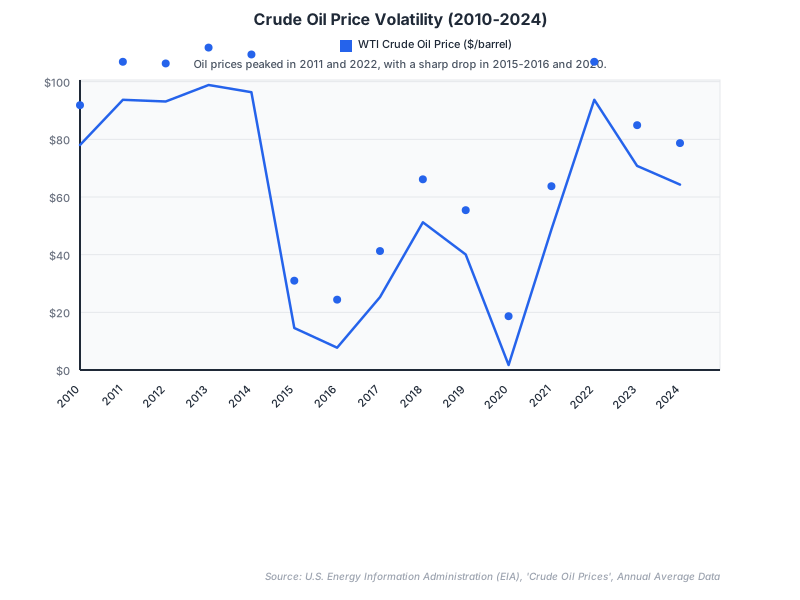
The music industry's dependence on global shipping makes it particularly vulnerable to energy price fluctuations caused by geopolitical tensions. When oil prices rise due to Middle East tensions or other geopolitical events, shipping costs for musical equipment increase accordingly. These costs ultimately impact everyone from major record labels shipping physical media to independent artists trying to tour internationally with their equipment.
Touring generates substantial income for most artists and faces unique challenges related to geopolitical tensions and trade routes. When artists plan global tours, they must navigate complex logistics involving the shipment of stage productions across multiple continents. Geopolitical tensions can force last-minute route changes that add significant costs to tour budgets.
The cancellation of Russian airspace access for Western airlines following geopolitical tensions in 2022 significantly impacted tour routing for major artists. Flights from North America to Asia began taking longer southern routes, adding to travel times and increasing fuel costs. Artists were forced to restructure their tour dates to account for increased travel time and expenses.
Freight costs for shipping band equipment have become a significant factor in tour planning. When container shipping rates increased substantially during the peak of supply chain disruptions in 2021–2022, many mid-level artists found international touring more financially challenging. Indie rock bands that previously could afford to ship their equipment to European festivals began renting gear locally, fundamentally changing the economics of international touring.
Digital Infrastructure and Submarine Cables
While streaming has reduced the music industry's dependence on physical shipping for content distribution, it has created new vulnerabilities related to digital infrastructure. The global network of submarine cables that carry internet traffic passes through many of the same geopolitically sensitive regions that affect physical trade routes.
International data travels through submarine cables, many of which pass through regions where geopolitical tensions run high. The Red Sea, for example, serves as a critical passage for submarine cables connecting Europe, Asia, and Africa while also functioning as a vital shipping lane. When tensions in the region escalate, both physical shipping and digital connectivity face potential disruption.
Streaming platforms like Spotify and Apple Music rely on content delivery networks with servers distributed globally to ensure fast, reliable service. When geopolitical tensions lead to internet restrictions or infrastructure damage, these services can experience significant disruptions. The blocking of various international services in certain regions during political tensions has demonstrated how quickly digital music distribution can be affected by geopolitical events.
The rise of Chinese streaming platforms like NetEase Cloud Music and QQ Music has created new dependencies and vulnerabilities. As these platforms expand globally, they rely on the same international cable networks that face geopolitical pressures. The potential for technology decoupling between major powers could force the music industry to navigate multiple, incompatible digital ecosystems.
Resource Scarcity and Strategic Materials
The music industry's dependence on rare earth elements and other strategic materials creates additional vulnerabilities to geopolitical tensions. China controls a substantial portion of global rare earth processing, making the industry vulnerable to export restrictions or trade disputes. These materials are essential for manufacturing everything from guitar pickups to high-end audio equipment.
Lithium, crucial for the batteries in wireless audio equipment and portable devices, comes primarily from mines in Chile, Argentina, and Australia. As demand for electric vehicles has increased lithium prices, the cost of manufacturing wireless headphones and portable speakers has risen significantly. When trade tensions affect lithium shipping routes, manufacturers face difficult decisions about pricing and production volumes.
Cobalt used in high-performance audio equipment batteries presents both ethical and geopolitical challenges. A significant portion of global cobalt comes from the Democratic Republic of Congo, a region plagued by political instability and human rights concerns. Companies producing audio equipment have faced pressure to source cobalt responsibly while navigating complex geopolitical realities.
Wood remains a critical material for acoustic instruments, and geopolitical tensions can affect access to traditional tonewoods. When trade disputes led to restrictions on Brazilian rosewood imports, guitar manufacturers were forced to find alternative materials or redesign classic models. International trade agreements have created additional complexities for instrument makers trying to source traditional materials while complying with international regulations.
Regional Market Access and Cultural Diplomacy
Geopolitical tensions often manifest in restrictions on cultural exports, directly impacting artists' ability to reach global audiences. The music industry has become a form of soft power, with governments sometimes using access to their markets as diplomatic leverage.
China's periodic restrictions on foreign cultural content have significantly impacted international artists' ability to tour and distribute music in the world's second-largest economy. When tensions with South Korea led to restrictions on K-pop content, it demonstrated how quickly political disputes can affect cultural commerce. Similarly, restrictions on American artists during various diplomatic tensions have affected the industry's revenue potential.
The European Union's Digital Services Act and similar regulations in other regions have created new compliance requirements for streaming platforms and digital music services. As geopolitical tensions lead to more fragmented regulatory environments, companies like Spotify and YouTube Music must navigate increasingly complex requirements for operating in different markets.
Sanctions and trade restrictions can have immediate impacts on touring artists. When various countries implemented sanctions following geopolitical events, international artists faced difficult decisions about performing in certain markets. Some artists chose to cancel tours entirely rather than navigate complex compliance requirements, while others found their equipment and crew subject to additional scrutiny at borders.
Industry Adaptation and Resilience Strategies
The music industry has begun developing strategies to mitigate supply chain vulnerabilities caused by geopolitical tensions. Diversification of manufacturing locations has become a priority for major instrument manufacturers, with companies establishing production facilities in multiple countries to reduce dependence on any single region.
Nearshoring and reshoring initiatives have gained momentum as companies seek to reduce their exposure to long-distance shipping routes. Some manufacturers have expanded their manufacturing capacity in multiple regions, while others have increased production at Southeast Asian facilities to serve regional markets without relying entirely on Chinese manufacturing.
Strategic inventory management has become more sophisticated as companies try to balance carrying costs with the risk of supply chain disruptions. Music retailers now maintain larger safety stocks of popular items, while manufacturers have extended their planning horizons to account for potential shipping delays.
The development of alternative materials and production methods offers long-term solutions to resource dependencies. Companies are investing in research into synthetic alternatives to rare earth elements and sustainable alternatives to traditional tonewoods. Some manufacturers have begun using advanced manufacturing techniques for certain components, reducing dependence on complex international supply chains.
Digital-first strategies have accelerated as companies recognize the vulnerabilities in physical distribution. While vinyl and physical merchandise remain important revenue streams, labels are investing more heavily in digital marketing and distribution to reduce their exposure to shipping disruptions.
While geopolitical tensions dominate headlines, the music industry's supply chain vulnerabilities may be overstated relative to their actual impact. The resilience demonstrated during COVID-19—when vinyl sales grew despite manufacturing shutdowns and shipping delays—suggests the industry has greater adaptive capacity than crisis narratives imply, and that consumer demand for music remains relatively inelastic even when disruptions spike costs.
The concentration of instrument manufacturing in China, often framed as a critical weakness, may actually represent a competitive advantage the industry is reluctant to abandon. Nearshoring and diversification carry hidden costs in quality control, economies of scale, and consumer prices that could outweigh geopolitical risks, meaning companies may rationally choose vulnerability over the higher expenses of supply chain decentralization.
Market access restrictions (like China's K-pop bans) and physical supply chain disruptions are fundamentally different problems requiring different solutions, yet the article conflates them as evidence of a single integrated vulnerability. This framing may obscure the fact that streaming-era music companies face greater risk from regulatory and market closure than from the physical logistics that constrained previous generations of musicians.
The absence of documented cases where geopolitical disruptions actually canceled major tours or significantly reduced artist income suggests the industry has successfully priced these risks into operations without material harm to creators. The theoretical vulnerabilities may be real, but the practical consequences remain small enough that neither artists nor companies have fundamentally restructured their business models in response.
Key Takeaways
- The music industry's global supply chain depends heavily on geopolitically sensitive shipping routes, making it vulnerable to international tensions and trade disruptions
- Manufacturing concentration in China and other specific regions creates single points of failure that can affect instrument and equipment availability worldwide
- Rising energy costs from geopolitical tensions directly impact touring economics and shipping costs, affecting both major labels and independent artists
- Digital music infrastructure relies on submarine cables that pass through contested regions alongside physical trade routes
- Rare earth elements and strategic materials essential for audio equipment are controlled by a small number of countries, creating additional vulnerabilities
- The industry is adapting through diversification, nearshoring, and development of alternative materials, but remains fundamentally dependent on stable global trade