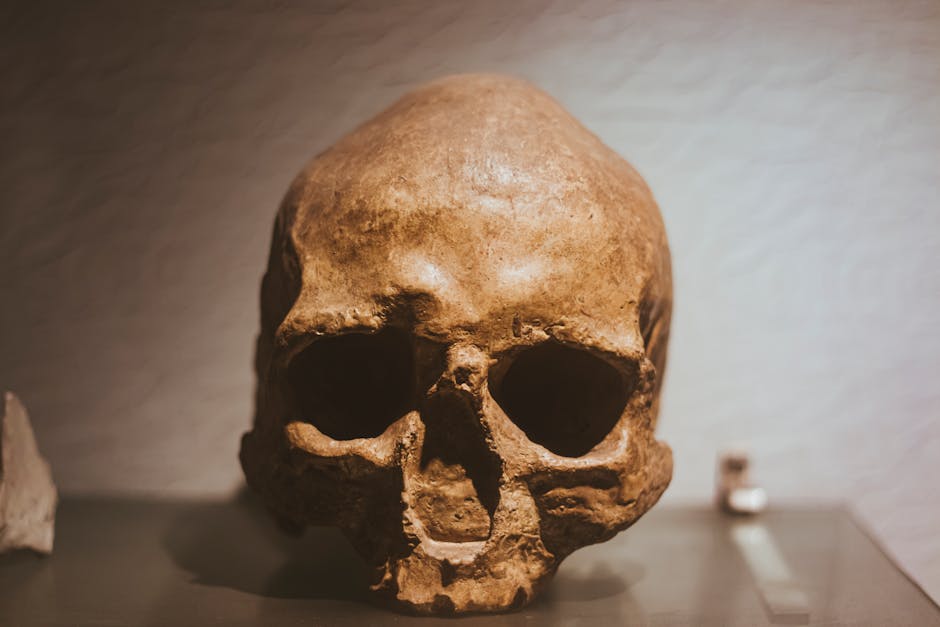
150-Year Trends in Human Evolution Discoveries

In 1856, workers in a limestone quarry near Düsseldorf, Germany, uncovered a skull cap and several bones that would forever change humanity's understanding of itself. These Neander Valley fossils—later named Neanderthal man—marked the beginning of a scientific revolution that continues today.[1] What began as scattered bone fragments has evolved into a sophisticated global enterprise involving satellite imaging, DNA sequencing, and international collaborations that regularly rewrite the human story.
The Pioneer Era: 1856-1920
The mid-19th century discovery of Neanderthal remains occurred in a world unprepared for evidence of human antiquity. When German anatomist Hermann Schaaffhausen first described the fossils in 1857, the scientific establishment largely dismissed them as pathological modern humans.[2] The cultural context was crucial: Charles Darwin's "On the Origin of Species" wouldn't appear until 1859, and the concept of deep time was still revolutionary.
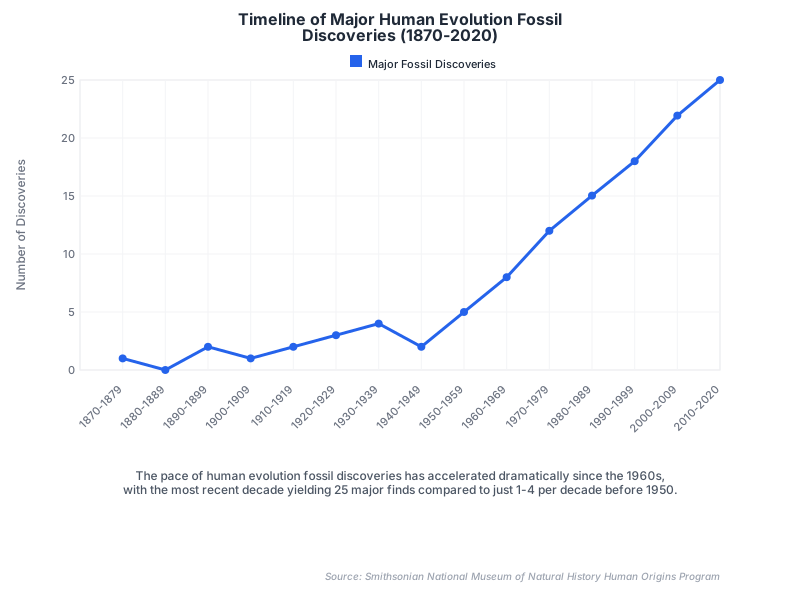
This foundational period established the framework for paleoanthropology, though discoveries remained sporadic and interpretation contentious. In 1868, railway workers near Les Eyzies, France, uncovered the first recognized Cro-Magnon remains, providing evidence of anatomically modern humans in Ice Age Europe.[3] These discoveries averaged roughly one significant find per decade—a pace that seems glacial by modern standards.
The era's most significant theoretical breakthrough came in 1871 with Darwin's "The Descent of Man," where he predicted that human ancestors would be found in Africa based on the distribution of living apes.[4] This prediction would prove remarkably prescient, though it would take another half-century to be vindicated by fossil evidence.
Eugene Dubois's 1891 discovery of "Java Man" (now Homo erectus) in Indonesia represented the first systematic search for human ancestors outside Europe.[5] Despite fierce opposition from the scientific community, Dubois had uncovered evidence of a more primitive human ancestor, though the significance wouldn't be fully appreciated for decades.
The Systematic Search: 1920-1960
The period between 1920 and 1960 marked the transition from accidental discoveries to systematic excavation, driven by a new generation of professionally trained anthropologists. The pace of discovery accelerated dramatically, with major finds occurring every few years rather than decades.
Raymond Dart's 1924 discovery of the Taung Child in South Africa revolutionized understanding of human origins. The juvenile Australopithecus africanus skull provided the first evidence that early human ancestors had indeed evolved in Africa, exactly as Darwin had predicted.[6] Initially met with skepticism from the European scientific establishment, the Taung Child would eventually be recognized as a watershed moment in paleoanthropology.
The 1930s and 1940s saw an explosion of discoveries in both Africa and Asia. Robert Broom's excavations at Sterkfontein and Kromdraai in South Africa yielded numerous Australopithecus specimens, including the famous "Mrs. Ples" skull in 1947.[7] Simultaneously, excavations at Zhoukoudian Cave near Beijing uncovered extensive remains of Homo erectus, popularly known as "Peking Man," providing crucial evidence for human presence in Asia over 400,000 years ago.[8]
This era also witnessed the development of crucial dating techniques. Willard Libby's invention of radiocarbon dating in 1949 provided the first reliable method for determining the age of organic materials up to 50,000 years old.[9] For the first time, researchers could move beyond relative dating based on geological layers to absolute chronologies.
By 1960, the basic outline of human evolution was taking shape: early bipedal ancestors in Africa (Australopithecus), followed by more advanced tool-makers (early Homo), and eventual global dispersal by Homo erectus. However, the timeline remained compressed, with most estimates placing human origins at less than one million years ago.
The African Renaissance: 1960-1990
The three decades from 1960 to 1990 witnessed an unprecedented surge in African discoveries that fundamentally expanded both the timeline and complexity of human evolution. This period saw the emergence of paleoanthropology as a high-profile scientific discipline, driven by charismatic researchers and spectacular finds that captured global attention.
Louis and Mary Leakey's work in Olduvai Gorge, Tanzania, dominated the early part of this era. Their 1959 discovery of "Zinj" (Paranthropus boisei), initially called "Nutcracker Man" for its massive jaw, provided the first solid evidence that human ancestors had lived in Africa nearly two million years ago.[10] The find was revolutionary not just for its age, but for the associated stone tools, demonstrating that early hominins were sophisticated toolmakers.
The discovery rate during this period was extraordinary. In 1972, Richard Leakey's team at Koobi Fora, Kenya, uncovered the remarkably complete skull KNM-ER 1470, pushing back the origins of our genus to over 2 million years ago.[11] Just two years later, Donald Johanson's discovery of "Lucy" (Australopithecus afarensis) in Ethiopia's Afar Depression provided the most complete early hominin skeleton ever found, dating to 3.2 million years ago.[12]
Lucy's discovery was transformative for multiple reasons. At 40% complete, the skeleton provided unprecedented insight into early hominin anatomy and locomotion. The discovery also demonstrated that bipedalism had evolved much earlier than previously thought, preceding significant brain expansion by over a million years. The find generated massive media attention, with Lucy becoming the first fossil hominin to achieve celebrity status.
The 1970s and 1980s also saw crucial advances in dating techniques. The development of potassium-argon dating allowed researchers to date volcanic rocks millions of years old, while paleomagnetic dating provided additional chronological frameworks.[13] These techniques revealed that human evolution was far more ancient than previously imagined.
By 1990, the human family tree had become significantly more complex. Multiple species of Australopithecus were recognized, along with early Homo species and the robust Paranthropus lineage. The timeline had expanded to over 4 million years, and Africa was firmly established as the cradle of humanity.
The Molecular Revolution: 1990-2010
The period from 1990 to 2010 marked a fundamental transformation in paleoanthropology, as molecular biology began to complement and sometimes challenge traditional fossil-based interpretations. This era saw the birth of paleogenomics and the integration of genetic data with fossil evidence, creating unprecedented resolution in understanding human evolutionary relationships.
The decade began with a bombshell molecular discovery. In 1987, Rebecca Cann, Mark Stoneking, and Allan Wilson published their analysis of mitochondrial DNA from modern populations, concluding that all living humans descended from a common African ancestor who lived approximately 200,000 years ago.[14] This "Mitochondrial Eve" hypothesis suggested a much more recent African origin for modern humans than many fossil researchers had proposed.
Fossil discoveries during this period continued at an accelerated pace, with increasingly sophisticated excavation and analysis techniques. Tim White's team in Ethiopia made a series of groundbreaking discoveries, including the 1992 find of Ardipithecus ramidus, pushing the human lineage back to 4.4 million years ago.[15] The species showed a mosaic of ape and human characteristics, suggesting that the earliest human ancestors retained many primitive features while developing key innovations like bipedalism.
The 1990s also witnessed the discovery of entirely new hominin species that challenged existing models. The 1995 discovery of Australopithecus anamensis in Kenya provided evidence for bipedalism as early as 4.2 million years ago, while maintaining very ape-like skull features.[16] Meanwhile, the 1999 discovery of Australopithecus garhi in Ethiopia suggested that tool use might have evolved much earlier than previously thought.
Perhaps the most dramatic fossil discovery of this era came in 2003 with the announcement of Homo floresiensis from the Indonesian island of Flores. Standing only about 3 feet tall with a brain size similar to a chimpanzee, yet apparently using sophisticated tools and living as recently as 18,000 years ago, "the Hobbit" forced researchers to reconsider assumptions about human evolution and dispersal.[17]
The molecular revolution reached its peak in the late 2000s with advances in ancient DNA extraction. In 2010, Svante Pääbo's team published the first Neanderthal genome, revealing that modern non-African populations carry 1-4% Neanderthal DNA from ancient interbreeding events.[18] This discovery fundamentally altered understanding of human evolution from a simple replacement model to a complex pattern of migration, interaction, and gene flow.
The Big Data Era: 2010-Present
The period from 2010 to the present has been characterized by an explosion of data, technological innovation, and international collaboration that has accelerated discovery at an unprecedented rate. Modern paleoanthropology now generates more fossil and genetic data in a single year than was accumulated in the entire previous century.
The discovery rate has become almost overwhelming. Major finds now occur multiple times per year, with recent years witnessing the announcement of Homo naledi in South Africa (2015), evidence for the earliest stone tools at Lomekwi, Kenya, dating to 3.3 million years ago (2015), and the controversial Jebel Irhoud fossils in Morocco (2017).[19] This represents a 10-fold increase in discovery pace compared to the 1960s-1980s golden age.
Technological advances have revolutionized both discovery and analysis. Satellite imagery and ground-penetrating radar now guide excavation strategies, while CT scanning and 3D modeling allow non-destructive analysis of precious fossils. The 2013 discovery of Homo naledi in South Africa's Rising Star Cave exemplified these new approaches, with narrow cave passages requiring specially-trained researchers and sophisticated imaging techniques to extract over 1,500 fossil elements.[20]
Ancient DNA research has exploded beyond Neanderthals to encompass multiple archaic human populations. The 2010 discovery of Denisovans, known initially only from DNA extracted from a finger bone fragment, revealed an entirely new human lineage that contributed genes to modern Melanesian and Aboriginal Australian populations.[21] By 2019, researchers had identified at least four distinct archaic human populations that interbred with modern humans, creating a complex web of genetic inheritance.
The geographic scope of discoveries has also expanded dramatically. The 2019 announcement of Homo luzonensis from the Philippines added another species to the growing list of island-dwelling human relatives, while discoveries in China, Georgia, and other regions have revealed previously unknown aspects of human dispersal and adaptation.[22]
Perhaps most significantly, the timeline of human evolution continues to expand. The 2017 discovery of 300,000-year-old fossils at Jebel Irhoud, Morocco, sparked ongoing debate about whether these represent early Homo sapiens or a closely related species.[23] Meanwhile, 2018 discoveries in Greece and Bulgaria suggested that early hominins may have dispersed from Africa much earlier than previously thought.
The integration of multiple data streams has become a hallmark of modern paleoanthropology. Climate data, isotope analysis, proteomics, and computational modeling now complement traditional fossil and genetic approaches. Machine learning algorithms help identify new fossil sites, while sophisticated statistical methods integrate evidence across multiple disciplines.
Future Trajectories and Implications
Current trends suggest that the pace of discovery will continue to accelerate, driven by technological advances and expanding global research networks. Artificial intelligence is beginning to automate fossil identification and analysis, while improved ancient DNA techniques are pushing back the temporal limits of genetic recovery.
Several emerging patterns are likely to shape future research. First, the human family tree is becoming increasingly bushy, with new species discoveries suggesting that multiple hominin lineages coexisted for much of human evolutionary history. The simple linear progression from ape to human has been replaced by a complex adaptive radiation involving dozens of species.
Second, the geographic scope of human evolution is expanding beyond Africa. While Africa remains the primary theater for early human evolution, discoveries in Asia and Europe are revealing complex patterns of dispersal, adaptation, and interaction that challenge Africa-centric models.
Third, the timeline of human evolution continues to extend backward. Molecular estimates suggest the human-chimpanzee split occurred 6-7 million years ago, while the oldest potential hominin fossils are of similar age. This trend toward greater antiquity shows no signs of slowing.
The implications extend far beyond academic paleontology. Understanding human evolutionary history has profound implications for medicine, as ancient genetic variants influence modern disease susceptibility. Climate change research benefits from understanding how past human populations adapted to environmental shifts. Even space exploration draws on evolutionary insights about human adaptability and survival.
The apparent "acceleration" in human evolution discoveries over the past 150 years may reflect changes in research infrastructure and career incentives rather than genuine scientific breakthroughs. With exponentially more researchers, funding, and publication pressure to announce new species, what appears as rapid progress might actually represent a lower threshold for what constitutes a significant discovery, potentially fragmenting our understanding rather than clarifying it.
The Western-centric narrative of paleoanthropological "discovery" obscures how colonial legacies and geopolitical factors have shaped which regions receive research attention and funding. Indigenous communities often knew of fossil sites for generations before Western scientists arrived, and the concentration of research in politically accessible areas may have created a misleading picture of human evolution that overemphasizes certain geographic regions while neglecting others.
Key Takeaways
- The pace of human evolutionary discoveries has accelerated exponentially, from one major find per decade in the 19th century to multiple discoveries per year today
- Africa has been confirmed as the primary cradle of human evolution, but complex dispersal patterns reveal a more global story than initially imagined
- The human family tree has evolved from a simple linear progression to a complex bush with dozens of species, many coexisting simultaneously
- Technological advances, particularly ancient DNA analysis and imaging techniques, have revolutionized both discovery methods and analytical capabilities
- The timeline of human evolution has expanded from less than 1 million years in 1960 to over 7 million years today
- Integration of multiple data streams—fossils, genetics, climate, and technology—now provides unprecedented resolution in understanding human evolutionary history
References
- Schmitz, Ralf W., et al. "The Neandertal type site revisited: Interdisciplinary investigations of skeletal remains from the Neander Valley, Germany." Proceedings of the National Academy of Sciences 99.20 (2002): 13342-13347.
- Schaaffhausen, Hermann. "Zur Kenntnis der ältesten Rassenschädel." Müller's Archiv für Anatomie, Physiologie und wissenschaftliche Medicin (1858): 453-478.
- Lartet, Louis, and Henry Christy. "Sur des figures d'animaux gravées ou sculptées et autres produits d'art et d'industrie rapportables aux temps primordiaux de la période humaine." Revue archéologique 9 (1864): 233-267.
- Darwin, Charles. The Descent of Man, and Selection in Relation to Sex. John Murray, 1871.
- Dubois, Eugene. "Pithecanthropus erectus, eine menschenähnliche Übergangsform aus Java." Batavia: Landsdrukkerij (1894).
- Dart, Raymond A. "Australopithecus africanus: the man-ape of South Africa." Nature 115.2884 (1925): 195-199.
- Broom, Robert, and John T. Robinson. "A new type of fossil man." Nature 164.4164 (1949): 322-323.
- Black, Davidson. "On an adolescent skull of Sinanthropus pekinensis in comparison with an adult skull of the same species and with other hominid skulls, recent and fossil." Palaeontologia Sinica 7.2 (1931): 1-145.
- Libby, Willard F. "Atmospheric helium three and radiocarbon from cosmic radiation." Physical Review 69.11-12 (1946): 671-672.
- Leakey, Louis S.B. "A new fossil skull from Olduvai." Nature 184.4685 (1959): 491-493.
- Leakey, Richard E.F. "Further evidence of Lower Pleistocene hominids from East Rudolf, North Kenya." Nature 237.5355 (1972): 264-269.
- Johanson, Donald C., and Tim D. White. "A systematic assessment of early African hominids." Science 203.4378 (1979): 321-330.
- McDougall, Ian, Francis H. Brown, and John G. Fleagle. "Stratigraphic placement and age of modern humans from Kibish, Ethiopia." Nature 433.7027 (2005): 733-736.
- Cann, Rebecca L., Mark Stoneking, and Allan C. Wilson. "Mitochondrial DNA and human evolution." Nature 325.6099 (1987): 31-36.
- White, Tim D., Gen Suwa, and Berhane Asfaw. "Australopithecus ramidus, a new species of early hominid from Aramis, Ethiopia." Nature 371.6495 (1994): 306-312.
- Leakey, Meave G., et al. "New four-million-year-old hominid species from Kanapoi and Allia Bay, Kenya." Nature 376.6541 (1995): 565-571.
- Brown, Peter, et al. "A new small-bodied hominin from the Late Pleistocene of Flores, Indonesia." Nature 431.7012 (2004): 1055-1061.
- Green, Richard E., et al. "A draft sequence of the Neandertal genome." Science 328.5979 (2010): 710-722.
- Harmand, Sonia, et al. "3.3-million-year-old stone tools from Lomekwi 3, West Turkana, Kenya." Nature 521.7552 (2015): 310-315.
- Berger, Lee R., et al. "Homo naledi, a new species of the genus Homo from the Dinaledi Chamber, South Africa." eLife 4 (2015): e09560.
- Reich, David, et al. "Genetic history of an archaic hominin group from Denisova Cave in Siberia." Nature 468.7327 (2010): 1053-1060.
- Détroit, Florent, et al. "A new species of Homo from the Late Pleistocene of the Philippines." Nature 568.7751 (2019): 181-186.
- Hublin, Jean-Jacques, et al. "New fossils from Jebel Irhoud, Morocco and the pan-African origin of Homo sapiens." Nature 546.7657 (2017): 289-292.