Ranking the Streaming Platforms from Best to Worst: The Definitive Content Strategy Showdown
The streaming wars have fundamentally reshaped how we consume entertainment. As we enter 2026, the landscape has consolidated around several major players, each pursuing distinct content strategies that define their market position. This ranking evaluates streaming platforms based on five critical criteria: content library depth and quality, original programming success, user experience and technology, global reach and accessibility, and long-term strategic positioning.
Our methodology weighs original content heavily—platforms live or die by their exclusive offerings—while considering catalog breadth, technical innovation, and market sustainability. We've excluded free ad-supported platforms and focused on subscription services that compete directly for household entertainment budgets.
#8: Paramount+
Paramount+ occupies the bottom position due to its limited global footprint and inconsistent content strategy. Despite strong franchises like "Star Trek" and "Yellowstone," the platform struggles with identity confusion—caught between serving as a CBS archive and a premium streaming service. With roughly $6 billion in annual content spending, Paramount+ lags competitors like Netflix significantly.
The platform's technical infrastructure remains subpar, with users frequently reporting buffering issues and an outdated interface. International expansion has been slow, limiting revenue growth potential in key markets like Europe and Asia.
#7: Peacock
NBCUniversal's Peacock lands seventh due to its confusing tiered structure and weak original content pipeline. The platform scored wins with live sports coverage, including exclusive NFL playoff games and Premier League matches, but its original programming has received mixed critical reception. Shows like "The Continental" and "Bel-Air" failed to achieve breakout status.
Peacock's strength lies in its extensive NBC catalog and next-day access to current network programming, positioning it more as a traditional TV supplement than a Netflix competitor. The platform's ad-heavy free tier creates user experience friction that premium competitors avoid.
#6: Apple TV+
Apple TV+ punches above its weight in content quality but falls short in quantity and value proposition. With a relatively small library compared to Netflix, Apple compensates with prestige programming like "The Morning Show," "Ted Lasso," and "Severance," maintaining high per-title production budgets.
However, Apple's limited content volume means subscribers often exhaust interesting options quickly. The platform's seamless integration with Apple's ecosystem benefits iPhone and Mac users but creates barriers for Android and PC users. Apple's long-term strategy appears focused on ecosystem lock-in rather than standalone streaming dominance.
#5: Max (HBO Max)
Max drops to fifth position following Warner Bros. Discovery's recent strategic shifts. The platform maintains HBO's prestigious brand with continued success from "House of the Dragon," "The Last of Us," and "Succession," with HBO programming consistently winning major Emmy recognition.
The platform's decline stems from Warner Bros. Discovery's cost-cutting measures, including the controversial removal of completed films and series for tax write-offs. This strategy damaged creator relationships and subscriber trust. The rebrand from HBO Max to Max also reflected internal strategic uncertainty. While technical improvements have been solid, the platform's future content pipeline appears constrained by corporate financial pressures.
#4: Hulu
Hulu secures fourth place through its unique positioning as the next-day network TV hub combined with strong original programming. Disney's full control has strengthened content coordination, with successful series like "The Handmaid's Tale," "Only Murders in the Building," and "The Bear" maintaining cultural relevance.
The platform's hybrid model—offering both current TV episodes and original content—creates consistent weekly engagement that purely original-focused platforms struggle to match. Hulu's ad-supported tier generates strong per-subscriber revenue, contributing to Disney's streaming profitability goals. However, Hulu remains primarily US-focused, limiting global growth potential.
#3: Amazon Prime Video
Prime Video claims third place through massive content investment and strategic franchise acquisitions. Amazon's 2022 acquisition of MGM Studios provided extensive catalog depth, while original series like "The Boys," "The Marvelous Mrs. Maisel," and "The Lord of the Rings: The Rings of Power" demonstrate serious creative ambition. "The Rings of Power" ranks among the most expensive television productions ever made.
Amazon's integration with Prime membership creates unique value bundling—subscribers receive shipping benefits, music streaming, and video content, making Prime Video effectively free for many users. The platform's global infrastructure leverages Amazon Web Services for superior streaming quality and reliability. However, Prime Video's interface remains cluttered, mixing free and premium content confusingly, and the platform lacks the cultural prestige of competitors.
#2: Disney+
Disney+ secures second place through unparalleled franchise strength and family market dominance. The platform's combination of Marvel, Star Wars, Pixar, and classic Disney content creates irreplaceable value for households with children. Series like "The Mandalorian," "Loki," and "WandaVision" successfully translated theatrical franchises to streaming, while new animated content maintains Disney's traditional strengths.
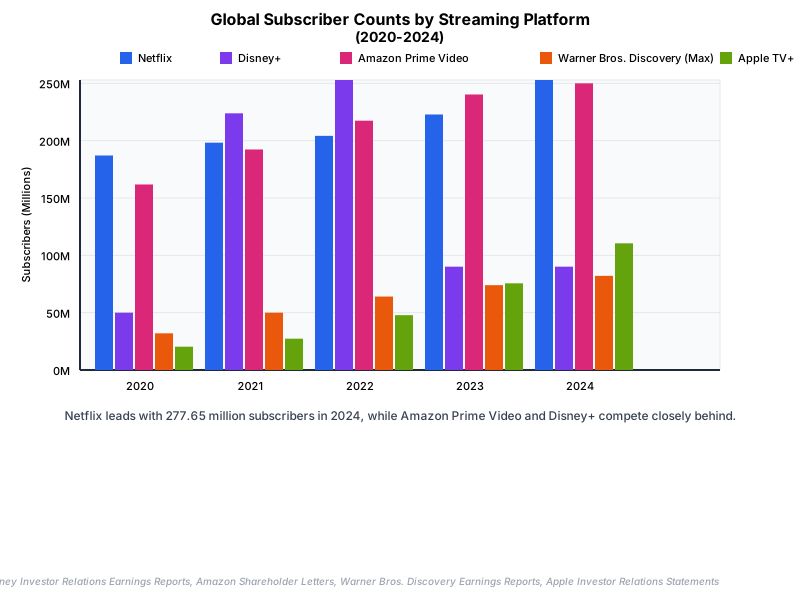
Disney's global rollout has been aggressive and successful, reaching substantial subscriber numbers by 2025. The bundle offerings with Hulu and ESPN+ provide comprehensive entertainment packages that increase household penetration. Content quality remains consistently high, with Disney maintaining strict brand standards.
Disney+ falls short of the top spot due to limited content breadth for adult audiences and higher pricing following multiple increases. The platform's content pipeline, while strong, lacks the experimental edge that defines cultural conversation in 2026.
#1: Netflix
Netflix maintains its position as the streaming king through superior content strategy, global reach, and technological innovation. The platform operates at massive scale across numerous countries, with a substantial annual content budget funding both blockbuster series like "Stranger Things" and "Wednesday," and diverse international programming like "Squid Game," "Money Heist," and "Dark."
Netflix's recommendation algorithm is widely regarded as industry-leading, with the platform's data-driven approach to content discovery setting it apart from competitors. The platform's global content strategy creates virtuous cycles—Korean content succeeds worldwide, funding more Korean productions that attract both domestic and international audiences.
Technical infrastructure sets Netflix apart, with adaptive streaming technology that optimizes quality across network conditions. The platform's mobile-first approach in emerging markets, including offline viewing and data-efficient streaming, demonstrates strategic foresight. Netflix's password-sharing policy changes in 2023 were controversial but ultimately contributed to the platform's financial performance.
Netflix's primary weakness lies in content costs—the platform must continuously produce hits to justify subscription prices as competitors offer comparable libraries at lower costs. However, Netflix's first-mover advantage, global scale, and data-driven content strategy maintain its competitive position in 2026.
Controversial Omissions and Honorable Mentions
Several platforms deserve acknowledgment despite missing our top eight. YouTube Premium offers vast content variety but lacks the cohesive original programming strategy of traditional streamers. Discovery+ provides excellent documentary content but serves too narrow an audience for mainstream ranking. International platforms like Hotstar (India) and iQiyi (China) dominate regional markets but lack global presence.
ESPN+ focuses specifically on sports content, making direct comparison with entertainment platforms difficult. Similarly, specialized services like Crunchyroll (anime) and Shudder (horror) serve passionate niche audiences but can't compete on general entertainment value.
The ranking's placement of Netflix at #1 may reflect market dominance rather than content superiority. Apple TV+ consistently achieves higher critical acclaim per title and HBO Max maintains stronger prestige programming, suggesting that subscriber scale and algorithmic lock-in—not content quality—drive Netflix's top position. A ranking based on critical reception or user satisfaction rather than financial metrics could produce significantly different results.
The article's exclusion of regional platforms and ad-supported tiers creates a skewed comparison. In India, Disney+ Hotstar and Amazon Prime Video dominate through pricing and local content; in Asia, iQiyi rivals Netflix in scale. Additionally, most ranked platforms now offer ad-supported tiers that fundamentally alter their value proposition, yet these are treated as secondary rather than core to platform strategy. A truly comprehensive ranking would address whether global reach or regional dominance better serves subscriber interests.
Evaluating platforms by library size may obscure user experience realities. Netflix's extensive catalog could represent decision paralysis rather than superiority, while Apple TV+'s curated approach might deliver faster discovery and higher satisfaction. Without churn rate data or subscriber satisfaction metrics, the ranking conflates content quantity with platform quality—a distinction that could reverse several placements if user retention became the primary metric.
Key Takeaways
- Content spending has become a primary differentiator, with successful platforms investing billions annually in original programming
- Global reach increasingly determines platform sustainability—domestic-only services struggle against international competitors
- Technical infrastructure and user experience separate premium platforms from budget alternatives
- Franchise ownership provides sustainable competitive advantages, as seen with Disney's Marvel and Star Wars content and Netflix's global original series
- Platform consolidation continues, with smaller services either merging or focusing on specific niches rather than competing broadly
- The streaming wars have evolved from subscriber growth to profitability focus, changing content strategies and pricing models across the industry