What are the 20 most dangerous jobs in America and why does anyone do them?
Every morning, millions of Americans clock into jobs that could kill them. While most workers face relatively minor occupational hazards, certain professions expose employees to life-threatening dangers daily. Understanding which jobs pose the greatest risks—and why people choose them despite these dangers—reveals crucial insights about economic necessity, personal motivation, and the complex relationship between risk and reward in American labor.
The question of America's most dangerous jobs isn't merely academic. Behind each statistic lies a human story of workers who balance substantial physical risks against economic opportunities, often in industries that keep the nation's infrastructure, food supply, and essential services functioning. From loggers harvesting timber in remote forests to commercial fishermen battling harsh seas, these workers face occupational fatality rates that far exceed the national average.
Measuring Occupational Danger: The Data Behind the Rankings
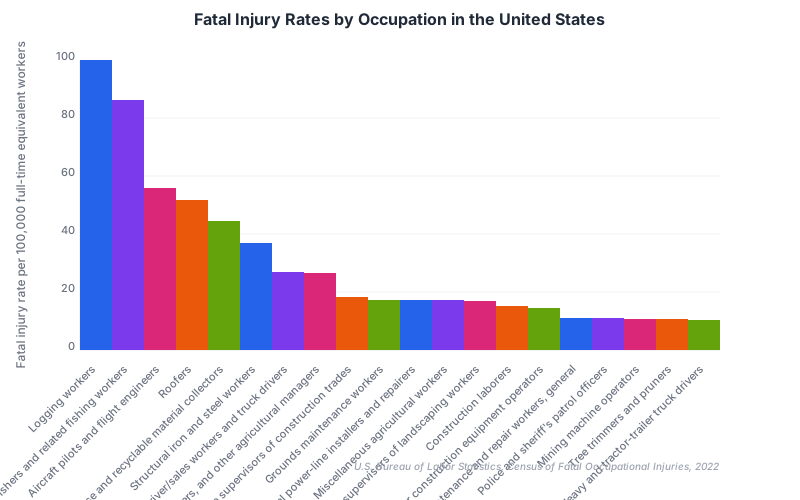
The Bureau of Labor Statistics (BLS) tracks workplace fatalities through its Census of Fatal Occupational Injuries (CFOI), providing the most comprehensive data on occupational deaths in the United States[1]. The agency measures danger using fatality rates per 100,000 full-time equivalent workers, allowing meaningful comparisons across industries with different workforce sizes.
According to the most recent BLS data, the overall workplace fatality rate in the United States stands at approximately 3.7 deaths per 100,000 workers[2]. However, certain occupations far exceed this average, with some professions experiencing fatality rates more than 30 times higher than the national norm.
The leading causes of workplace deaths include transportation incidents (roughly 40% of all workplace fatalities), violence and other injuries by persons or animals, contact with objects and equipment, and falls[3]. These categories explain why certain occupations consistently rank among the most dangerous.
America's 20 Most Dangerous Jobs
Based on BLS fatality rate data, here are America's most dangerous occupations:
1. Fishing and Hunting Workers - Commercial fishing workers face a fatality rate of approximately 145 per 100,000, primarily due to vessel disasters, falls overboard, and severe weather conditions.
2. Logging Workers - With a fatality rate of approximately 111 per 100,000 workers, logging ranks as one of America's deadliest professions. Workers face risks from falling trees, heavy machinery, and remote locations that complicate emergency response.
3. Roofers - Fatality rate of about 59 per 100,000. Roofers face constant fall hazards, extreme weather exposure, and risks from tools and materials.
4. Aircraft Pilots and Flight Engineers - General aviation and helicopter pilots face fatality rates of approximately 58 per 100,000, largely due to crashes involving smaller aircraft. This primarily reflects risks for non-airline pilots.
5. Refuse and Recyclable Material Collectors - Garbage collectors face fatality rates of approximately 44 per 100,000, primarily from transportation incidents and contact with machinery.
6. Structural Iron and Steel Workers - Fatality rates around 37 per 100,000, with falls and struck-by incidents being primary causes.
7. Delivery Truck Drivers and Driver/Sales Workers - Rates of approximately 28 per 100,000, facing significant transportation-related risks.
8. Farmers, Ranchers, and Agricultural Managers - Agricultural work carries fatality rates of about 24 per 100,000, involving machinery, livestock, and chemical exposure risks.
9. First-Line Supervisors of Construction Trades - Rates of approximately 18 per 100,000, exposed to the same hazards as their crews while managing additional responsibilities.
10. Grounds Maintenance Workers - Fatality rates around 18 per 100,000, facing risks from machinery, falls, and transportation incidents.
11-20. Other High-Risk Occupations: Construction laborers, maintenance and repair workers, heavy vehicle operators, police officers, firefighters, electrical power-line installers, mining machine operators, tree trimmers, taxi drivers, and industrial machinery mechanics—each facing fatality rates significantly above the national average.
Understanding the Risk Factors
Several common factors drive the elevated danger in these occupations. Transportation incidents represent the single largest cause of workplace fatalities, affecting truck drivers, delivery workers, and agricultural employees who operate vehicles daily[4].
Working at heights creates substantial fall risks for roofers, construction workers, and tree trimmers. OSHA identifies falls as one of the "Fatal Four" leading causes of construction deaths[5].
Contact with machinery and equipment poses significant hazards in manufacturing, agriculture, and construction. Heavy equipment operators, loggers, and agricultural workers regularly work with powerful machinery that can cause fatal injuries when safety protocols fail or mechanical failures occur.
Environmental factors also play crucial roles. Commercial fishermen battle unpredictable weather and rough seas, while loggers work in remote locations where emergency medical response may be delayed. Agricultural workers face risks from livestock, chemicals, and extreme weather.
The Economics of Dangerous Work
Understanding why people choose dangerous occupations requires examining the economic incentives and constraints driving these decisions. Many high-risk jobs offer compensation premiums reflecting their hazardous nature, though the relationship between danger and pay isn't always straightforward.
Logging workers, despite facing extreme fatality rates, earned median annual wages of approximately $42,350 in 2021[6]. While this exceeds some service sector wages, it may not fully compensate for the extreme risks involved.
Commercial fishing can offer substantial earning potential, particularly for experienced workers on successful vessels. However, income variability is high, and many workers face seasonal unemployment. The potential for significant earnings during productive seasons often motivates workers to accept substantial risks.
Construction and skilled trades often provide pathways to middle-class incomes without requiring college degrees. Electrical power-line installers, for example, earn median wages of approximately $70,000 annually, reflecting both specialized skills and inherent dangers of working with high-voltage electricity.
Geographic and Demographic Patterns
Dangerous jobs aren't evenly distributed across America. Rural areas concentrate high-risk occupations like logging, agriculture, and mining, while urban areas see more construction-related fatalities and transportation incidents.
States with significant natural resource extraction industries—Alaska, Wyoming, and North Dakota—consistently report higher workplace fatality rates. Alaska's workplace fatality rate regularly exceeds the national average by substantial margins, reflecting the state's concentration of fishing, logging, and oil extraction industries.
Demographic patterns also emerge. Men account for approximately 93% of workplace fatalities, reflecting both their higher representation in high-risk industries and potentially different risk-taking behaviors[7]. Age factors vary by occupation, with some dangerous jobs attracting younger workers seeking adventure or quick income, while others employ experienced workers whose skills command premium wages.
Personal Motivations Beyond Economics
While economic factors influence occupational choices, personal motivations often extend beyond simple financial calculations. Many workers in dangerous professions report high job satisfaction despite the risks.
The sense of purpose drives many workers. Firefighters and police officers often cite their desire to serve communities and save lives as primary motivations. Agricultural workers and commercial fishermen may feel connected to providing essential food supplies.
Adventure and autonomy attract some workers to high-risk occupations. Logging workers and commercial fishermen often value the independence and outdoor work environment their jobs provide, even when safer alternatives might offer comparable pay.
Family tradition and community ties play significant roles. Many dangerous occupations concentrate in specific regions where these industries represent generational career paths. Coal mining communities, fishing villages, and agricultural regions often see multiple generations entering the same high-risk professions.
Specialized skills create career momentum that can be difficult to change. Experienced loggers, commercial fishermen, or power-line workers possess valuable expertise that may not transfer easily to other industries, creating economic incentives to continue in familiar but dangerous work.
Safety Improvements and Ongoing Challenges
Despite inherent dangers, many high-risk industries have made significant safety improvements over recent decades. Enhanced safety equipment, improved training programs, and stricter regulatory oversight have contributed to declining fatality rates in several dangerous occupations.
The construction industry has implemented comprehensive safety programs that have reduced fatality rates even as construction activity increased. OSHA's emphasis on fall protection, electrical safety, and equipment training has contributed to measurable improvements.
However, challenges remain. Small employers in industries like logging and agriculture may lack resources for comprehensive safety programs. Remote work locations complicate emergency response and medical care. Economic pressures may incentivize cutting safety corners, particularly in industries with tight profit margins.
Technological advances offer promise for reducing risks. Automated equipment, improved communication systems, and enhanced protective equipment continue evolving. However, implementing new safety technologies often requires significant capital investments that smaller employers may struggle to afford.
While this article frames dangerous work as individual choice driven by economic incentives, this perspective may obscure systemic inequalities that funnel workers into high-risk occupations. Many of these jobs concentrate in regions with limited economic alternatives, where workers face a choice between dangerous employment and unemployment, rather than a true risk-reward calculation. The narrative of "choosing" dangerous work for higher pay could inadvertently justify inadequate safety regulations by suggesting workers voluntarily accept these risks.
The focus on fatality rates as the primary measure of job danger may significantly underestimate the true health costs of these occupations. Many dangerous jobs cause long-term health impacts—from repetitive stress injuries to occupational diseases like black lung or chemical exposure—that don't appear in annual death statistics but can devastate workers' lives and earning potential. A construction worker who suffers a career-ending back injury at 35 faces decades of reduced income and medical costs that far exceed any wage premium they may have earned.
Key Takeaways
- Commercial fishing workers face the highest occupational fatality rate at 145 deaths per 100,000 workers, followed by logging workers at 111 per 100,000
- Transportation incidents account for roughly 40% of all workplace fatalities, affecting multiple high-risk occupations from truck drivers to agricultural workers
- Economic incentives, including wage premiums and limited alternative opportunities, drive many workers to accept dangerous jobs
- Personal motivations—job satisfaction, sense of purpose, family tradition, and desire for autonomy—also influence career choices in high-risk fields
- Geographic concentration of dangerous industries in rural areas and resource-extraction regions creates regional patterns of occupational risk
- While safety improvements have reduced fatality rates in many industries, significant challenges remain in implementing comprehensive safety programs across all high-risk occupations
References
- Bureau of Labor Statistics. "Census of Fatal Occupational Injuries." U.S. Department of Labor, 2023.
- Bureau of Labor Statistics. "National Census of Fatal Occupational Injuries in 2022." U.S. Department of Labor, December 2023.
- Bureau of Labor Statistics. "Fatal occupational injuries by event or exposure." U.S. Department of Labor, 2023.
- Bureau of Labor Statistics. "Transportation incidents remained the leading cause of occupational fatalities in 2021." U.S. Department of Labor, December 2022.
- Occupational Safety and Health Administration. "Commonly Used Statistics." U.S. Department of Labor, 2023.
- Bureau of Labor Statistics. "Occupational Employment and Wage Statistics." U.S. Department of Labor, May 2022.
- Bureau of Labor Statistics. "Fatal occupational injuries by worker characteristics." U.S. Department of Labor, 2023.