
Why Isn't Gen Z Fucking? Will Gen Alpha?
The Peak Years: When Sexual Liberation Reached Its Zenith (1960s-1990s)
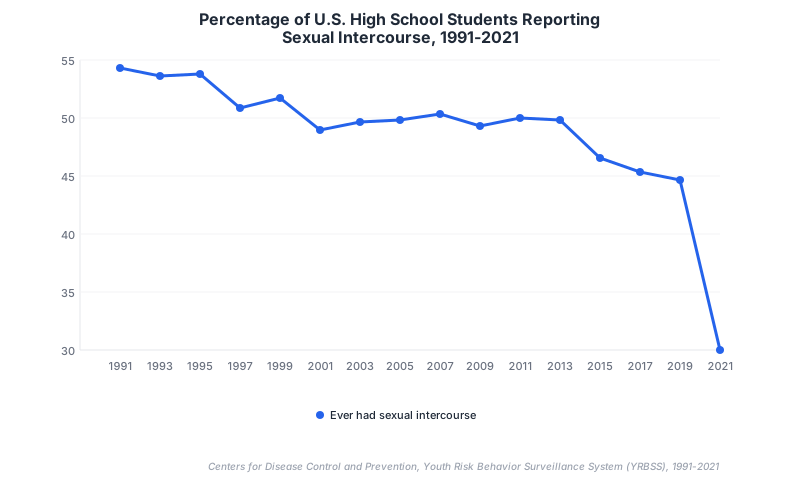
To understand Gen Z's dramatic departure from sexual norms, we must first examine the era that established those norms. The sexual revolution of the 1960s fundamentally transformed American attitudes toward sex, creating cultural momentum that carried through three decades. The FDA's approval of the birth control pill in 1960 marked a watershed moment[3]. For the first time in human history, women could reliably separate sexual activity from reproduction. This breakthrough coincided with broader cultural upheavals: the civil rights movement, feminism, and widespread questioning of traditional authority. By the 1970s and 1980s, these changes had filtered down to teenage behavior. The National Survey of Family Growth showed steady increases in teenage sexual activity. Among females aged 15-19, the percentage who had ever had sexual intercourse rose from 35% in 1973 to 51% by 1988[4]. The cultural landscape celebrated sexual freedom. Movies like "Fast Times at Ridgemont High" and "Sixteen Candles" portrayed teenage sexuality as normal, expected. MTV's sexualized music videos reinforced the message: sexual activity wasn't just acceptable but almost mandatory for social acceptance. This trend peaked in the early 1990s. Youth Risk Behavior Surveillance System data showed 54.1% of high school students reported having sexual intercourse in 1991[1]. Among seniors, nearly 67% reported sexual experience.The First Decline: AIDS, Abstinence, and Cultural Backlash (1990s-2000s)
The 1990s marked the beginning of a gradual but consistent decline in teenage sexual activity, driven by public health concerns, political shifts, and cultural backlash against perceived sexual excess. The AIDS epidemic reached peak public awareness in the early 1990s. High-profile cases like Magic Johnson's 1991 HIV diagnosis brought the reality of potentially fatal sexually transmitted infections into sharp focus. Suddenly, sex carried consequences that no amount of birth control could prevent. Simultaneously, the rise of the religious right led to increased emphasis on abstinence-only education. The Adolescent Family Life Act, expanded throughout the 1990s, provided federal funding for programs promoting abstinence as the only acceptable option for unmarried individuals[5]. The data reflects these cultural shifts. Between 1991 and 2001, the percentage of high school students reporting sexual intercourse dropped from 54.1% to 45.6%[6]. The decline was particularly pronounced among younger teenagers—ninth-graders reporting sexual experience fell from 39.0% to 34.4%. Teen pregnancy rates began declining dramatically. The teen birth rate fell from 61.8 births per 1,000 females aged 15-19 in 1991 to 45.8 in 2001[7]. Public health officials celebrated these trends as evidence that prevention programs were working. Cultural messaging shifted markedly. Movies like "Clueless" featured explicitly virginal protagonists, and "saving yourself" gained mainstream acceptance. The purity ring movement, promoted by organizations like True Love Waits, gained traction among evangelical teenagers.The Digital Revolution: Pornography, Social Media, and Changing Expectations (2000s-2010s)
The 2000s and early 2010s brought technological changes that fundamentally altered how young people learned about and experienced sexuality. High-speed internet, social media, and smartphones created an entirely new sexual landscape. Pornography, once difficult for minors to access, became ubiquitous. Studies show 40-70% of teenagers report exposure, with average first exposure around age 13-14[8]. This exposure was initially accidental but became more intentional as teenagers matured. Research suggested pornography consumption was associated with more aggressive sexual behaviors, unrealistic expectations about bodies and performance, and decreased satisfaction with real-world encounters[9]. Social media platforms created new venues for sexual expression. The phenomenon of "sexting" emerged, with teenagers sharing explicit messages and images via text and social media. Paradoxically, while sexual content became more accessible, actual sexual behavior continued declining. YRBSS data showed high school students reporting sexual intercourse fell from 45.6% in 2001 to 41.2% in 2011[10]. Several factors explain this contradiction. The proliferation of sexual content may have satisfied curiosity without requiring physical contact. Increased awareness of risks—both physical and social—made teenagers more cautious. Helicopter parenting left fewer opportunities for sexual experimentation. Intensifying academic pressure left many feeling too busy or stressed for romantic relationships.The Smartphone Generation: Gen Z Comes of Age (2010s-Present)
Generation Z, the first generation to grow up with smartphones from childhood, has taken the decline in sexual activity to unprecedented levels. The data reveals not just continuation of previous trends, but dramatic acceleration. By 2019, only 38.4% of high school students reported having sexual intercourse—the lowest level since tracking began[2]. Among ninth-graders, just 20.7% reported sexual experience, compared to 39.0% in 1991. The decline extends beyond high school. The General Social Survey found 23% of adults aged 18-29 reported no sexual partners in the past year as of 2018, compared to just 8% in 2008[11]. Among men aged 18-30, 28% reported no sexual activity—triple the rate from a decade earlier. Several unique factors distinguish Gen Z's experience: **Digital Natives and Paradoxical Connectivity**: Gen Z is simultaneously the most connected and most isolated generation in history. While maintaining constant digital contact, face-to-face interaction has declined significantly. COVID-19 accelerated this trend, with many spending crucial formative years in isolation. **Mental Health Crisis**: Gen Z reports higher rates of anxiety and depression than any previous generation. The American Psychological Association found 91% of Gen Z adults experienced physical or emotional stress symptoms, compared to 74% of millennials[12]. Mental health issues strongly correlate with decreased sexual activity. **Economic Pressures**: Despite high education levels, Gen Z faces significant economic challenges. Student debt, housing costs, and job market uncertainty delay traditional milestones like moving out, marriage, and family formation. Living with parents into their twenties creates obvious barriers to sexual activity. **Perfectionism and Performance Anxiety**: Growing up with social media created unprecedented pressure to present perfect images. This perfectionism extends to sexual performance, with many reporting anxiety about meeting pornographic standards or social media expectations. **Consent Culture and #MeToo**: While positive, increased awareness of sexual consent and harassment has created anxiety around sexual initiation. Many young men report uncertainty about approaching potential partners, while young women report heightened awareness of sexual risks.The Psychology of Celibacy: Mental Health Implications
The decline in sexual activity among Gen Z is both cause and consequence of broader mental health trends. Research has identified several psychological patterns associated with decreased sexual activity. **Anxiety and Avoidance**: Studies document increased sexual anxiety among younger generations. This manifests as performance anxiety related to pornographic expectations, social anxiety about initiating relationships, and generalized anxiety interfering with intimacy[13]. **Depression and Anhedonia**: High depression rates among Gen Z are well-documented. Depression often includes anhedonia—inability to experience pleasure—which directly impacts sexual desire. The National Institute of Mental Health reports 13.3% of adults aged 18-25 experienced major depression in 2019, compared to 8.4% of all adults[14]. **Social Skills Deficits**: Growing up with digital communication has left many Gen Z individuals less comfortable with face-to-face interaction. Dating apps, intended to facilitate connections, may contribute to the problem by reducing dating to superficial swiping experiences. **Body Image Issues**: Constant exposure to filtered, edited images has created unprecedented body image pressures. Research shows increasing dissatisfaction rates among younger generations[15]. **Relationship Pessimism**: Having witnessed high divorce rates and constant negative relationship content online, many Gen Z individuals express pessimism about long-term relationships, leading to avoidance of romantic entanglements altogether.Data Deep Dive: The Numbers Tell the Story
The quantitative evidence for Gen Z's sexual decline is overwhelming and consistent across multiple sources: **High School Sexual Activity (YRBSS Data)**: - 1991: 54.1% of students reported sexual intercourse - 2001: 45.6% - 2011: 41.2% - 2019: 38.4% **Young Adult Sexual Activity (General Social Survey)**: Adults 18-29 with no sexual partners in past year: - 2008: 8% - 2018: 23% **Gender Differences**: Young adults with no sexual partners in past year (2018): - Men (18-30): 28% - Women (18-30): 18% **Teen Pregnancy and Birth Rates**: Teen birth rate (per 1,000 females 15-19): - 1991: 61.8 - 2001: 45.8 - 2011: 31.3 - 2019: 16.7[16] **Dating and Relationship Data**: - High school seniors who never date: 35% (2017) vs. 15% (1991)[17] - Adults aged 18-29 who are single: 51% (2019) vs. 33% (1986)[18] **International Comparisons**: Similar trends appear globally in developed nations: - Japan: 27.8% of men aged 18-39 report being virgins (2019)[19] - UK: 26% of 16-24 year-olds report no sexual partners in past year (2019)[20] - Australia: 15% increase in virginity rates among 18-24 year-olds (2014-2019)[21]Generation Alpha: What Lies Ahead?
Generation Alpha, born from 2013 onwards, is just reaching adolescence. Predicting their sexual behavior requires examining the forces shaping their development and emerging early indicators. **Technological Factors**: Gen Alpha is growing up with even more advanced technology than Gen Z. Artificial intelligence, virtual reality, and sophisticated digital entertainment may further reduce the appeal of real-world sexual relationships. AI companions and VR pornography could provide alternative outlets that don't require human partners. **Educational Trends**: Comprehensive sex education is becoming more common, with greater emphasis on consent, communication, and emotional intelligence. This could lead to healthier sexual attitudes, though the impact on frequency remains unclear. **Mental Health Awareness**: While Gen Alpha faces similar mental health challenges as Gen Z, there's unprecedented awareness and resources for addressing these issues. Early intervention and better support could potentially reverse some trends. **Climate and Economic Anxiety**: Gen Alpha is growing up acutely aware of climate change and economic uncertainty. These existential concerns may further delay traditional life milestones, including sexual relationships and family formation. **Parental Influence**: Gen Alpha's parents are primarily millennials who experienced their own delays in traditional milestones. This could normalize later sexual debut, or alternatively, lead to more intentional efforts to encourage social and romantic development. **Early Indicators**: Preliminary data shows mixed signals. Some studies suggest continued declines in face-to-face social interaction, while others indicate the COVID-19 pandemic may have created a "rebound effect" with young people craving in-person connection more than ever.Societal Implications and Future Projections
The sexual recession among Gen Z has far-reaching implications extending well beyond individual relationships. Demographers, economists, and policymakers are grappling with potential long-term consequences. **Demographic Consequences**: Lower sexual activity correlates strongly with declining birth rates. The U.S. total fertility rate fell to 1.64 in 2020, well below the replacement level of 2.1[22]. If trends continue, the United States could face significant demographic challenges, including an aging population and labor shortages. **Economic Impact**: The dating and relationship industry is already adapting. Dating apps are pivoting toward friendship and platonic connections, while traditional venues like bars and clubs report declining patronage among young adults. **Healthcare Considerations**: While lower sexual activity reduces STI and unplanned pregnancy risks, it may indicate underlying health issues. Healthcare providers increasingly screen for sexual dysfunction and relationship difficulties as part of routine mental health assessments. **Social Institution Changes**: Traditional institutions built around coupling and family formation—from housing markets to insurance systems—may need to adapt to a society where more people remain single longer or permanently. **Potential Reversal Factors**: Several factors could reverse current trends: - Post-pandemic social rebound effects - Improved mental health treatment and awareness - Economic recovery and increased financial stability - Cultural shifts re-emphasizing human connection - Technologies that facilitate rather than replace human interaction The question of whether Gen Alpha will reverse these trends remains open. Historical precedent suggests major social changes often take generations to manifest and can reverse unexpectedly. The sexual revolution of the 1960s was followed by conservative trends in the 1980s-1990s, then the current decline. However, the technological and social factors driving current trends may be more fundamental than previous cultural shifts. The integration of digital technology into every aspect of life, combined with economic pressures and mental health challenges, may represent a new baseline rather than temporary deviation.Rather than experiencing a "sex recession," Gen Z may be pioneering a more intentional approach to intimacy that prioritizes emotional readiness and genuine connection over societal expectations. Their delayed sexual activity could represent increased emotional intelligence and boundary-setting skills, leading to higher-quality relationships when they do form. What older generations interpret as dysfunction might actually be a generation that's better at saying "no" until they can say "yes" with full agency and enthusiasm.
The assumption that 1991's 54% sexual activity rate represents a healthy baseline deserves scrutiny—that era coincided with higher rates of sexual assault, unplanned pregnancies, and relationship dysfunction we're only now beginning to understand. Gen Z's patterns might represent a correction toward historically normal levels of sexual selectivity, enabled by reduced economic pressure to partner early and greater awareness of consent and sexual health. If this generation is having less sex but better sex, the "recession" framing misses the point entirely.
Key Takeaways
- Sexual activity among American teenagers has declined dramatically from 54% in 1991 to 38% in 2019, with the trend accelerating among Gen Z.
- The decline extends into young adulthood, with 23% of adults aged 18-29 reporting no sexual partners in the past year as of 2018, nearly triple the rate from 2008.
- Multiple factors contribute: mental health challenges, economic pressures, digital technology, performance anxiety, and changing social norms around relationships.
- The psychological implications are complex, with decreased sexual activity both reflecting and potentially exacerbating mental health issues including anxiety and depression.
- Similar trends occur globally in developed nations, suggesting structural rather than purely cultural causes.
- Generation Alpha's sexual behavior remains unpredictable, with technological advances, improved mental health awareness, and potential post-pandemic social rebounds as key variables.
- Societal implications include demographic challenges, economic shifts, and the need for institutional adaptations to accommodate changing relationship patterns.
- Whether this represents temporary cultural shift or permanent transformation in human sexual behavior remains one of the most significant social questions of our time.
References
- Centers for Disease Control and Prevention. "Youth Risk Behavior Surveillance System (YRBSS) 1991." Morbidity and Mortality Weekly Report, 1992.
- Centers for Disease Control and Prevention. "Youth Risk Behavior Surveillance — United States, 2019." MMWR Surveillance Summaries, 2020.
- Watkins, Elizabeth Siegel. On the Pill: A Social History of Oral Contraceptives, 1950-1970. Johns Hopkins University Press, 1998.
- National Center for Health Statistics. "Trends in Premarital Sexual Experience Among U.S. Women 1973-1988." National Survey of Family Growth, Cycle IV, 1991.
- Santelli, John S., et al. "Abstinence-only-until-marriage: An updated review of U.S. policies and programs and their impact." Journal of Adolescent Health, 2017.
- Centers for Disease Control and Prevention. "Trends in the Prevalence of Sexual Behaviors National YRBS: 1991—2017." 2018.
- Martin, Joyce A., et al. "Births: Final Data for 2018." National Vital Statistics Reports, 2019.
- Peter, Jochen, and Patti M. Valkenburg. "Adolescents and pornography: A review of 20 years of research." Adolescent Research Review, 2016. Note: Exposure rates vary significantly across studies based on methodology and sample populations.
- Wright, Paul J., et al. "A meta-analysis of pornography consumption and actual acts of sexual aggression." Journal of Communication, 2016.
- Centers for Disease Control and Prevention. "Youth Risk Behavior Surveillance — United States, 2011." MMWR Surveillance Summaries, 2012.
- Twenge, Jean M., et al. "Declines in sexual frequency among American adults, 1989–2014." Archives of Sexual Behavior, 2017.
- American Psychological Association. "Stress in America: Generation Z." 2018. Note: Includes comparison data across generations.
- McCormick, Cheryl M., et al. "Sexual anxiety in emerging adulthood: The role of sexual self-concept." Journal of Sex Research, 2019. Note: Specific generational comparisons using identical methodologies remain limited.
- National Institute of Mental Health. "Major Depression Among Adults." 2019.
- Fardouly, Jasmine, et al. "Social media and body image concerns: Current research and future directions." Current Opinion in Psychology, 2020. Note: Direct generational comparisons limited by recent emergence of social media.
- Martin, Joyce A., et al. "Births: Final Data for 2019." National Vital Statistics Reports, 2021.
- Twenge, Jean M. iGen: Why Today's Super-Connected Kids Are Growing Up Less Rebellious, More Tolerant, Less Happy. Atria Books, 2017.
- Pew Research Center. "The Growing Share of Americans Living without a Partner." 2019.
- Japan Family Planning Association. "Survey on Men's and Women's Views on Love and Sex." 2019. Note: Broad age range encompasses multiple generations.
- Mitchell, Kirstin R., et al. "Sexual function in Britain: findings from the third National Survey of Sexual Attitudes and Lifestyles." The Lancet, 2013.
- Australian Research Centre in Sex, Health and Society. "Australian Study of Health and Relationships." La Trobe University, 2019.
- Centers for Disease Control and Prevention. "Births: Provisional Data for 2020." Vital Statistics Rapid Release, 2021. Note: 2020 data may reflect pandemic-related effects on childbearing decisions.