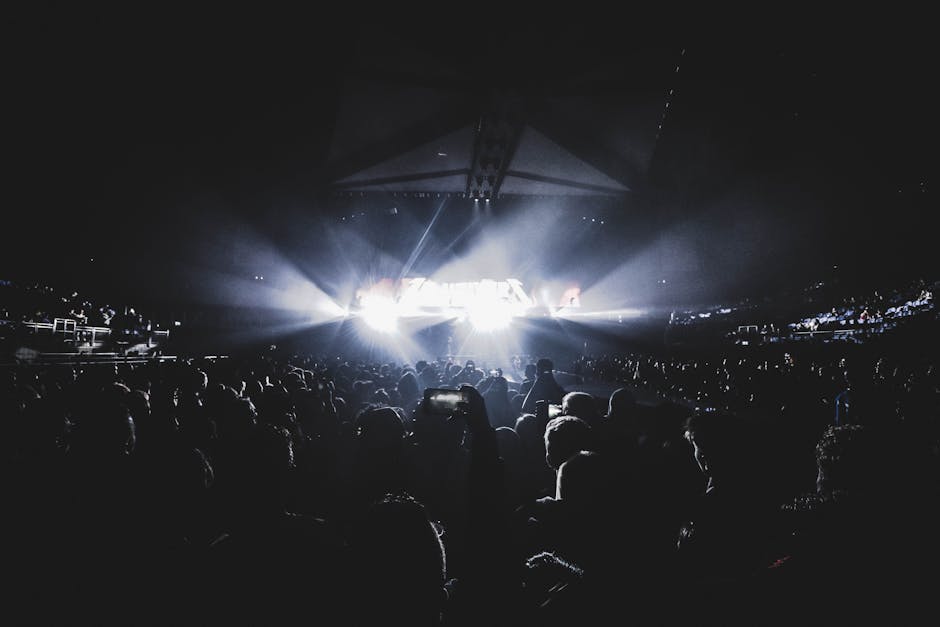
Why do metal bands from the 80s still sell out arenas while newer bands struggle to fill clubs?
When major metal bands from the 1980s announce tour dates, tickets sell out within hours—a phenomenon that has become routine for legends like Iron Maiden, Metallica, and Judas Priest. Meanwhile, contemporary metal acts like Power Trip, Gatecreeper, and even Grammy-nominated bands like Code Orange often struggle to fill 500-capacity venues. This stark contrast raises a fundamental question: why do bands from heavy metal's golden age continue to command massive audiences while newer acts, despite critical acclaim and modern production values, face an uphill battle for commercial success?
The answer lies in a complex web of cultural, economic, and technological factors that fundamentally altered how music is consumed, discovered, and valued. From the collapse of traditional music industry structures to the fragmentation of metal into dozens of micro-subgenres, the landscape that allowed Black Sabbath, Iron Maiden, and Metallica to achieve arena-filling status has largely disappeared.
The Golden Age Foundation: When Metal Conquered the Mainstream
The 1980s represented heavy metal's commercial peak, when bands achieved unprecedented mainstream penetration through a combination of factors that no longer exist. MTV, launched in 1981, provided a visual platform that transformed metal acts like Def Leppard and Quiet Riot into household names. The network's heavy rotation of metal videos during its early years created a shared cultural experience that millions of viewers consumed simultaneously.
Record sales data from the Recording Industry Association of America shows that metal albums achieved massive commercial success during this period. Albums like Def Leppard's "Hysteria" (1987) and Metallica's self-titled "Black Album" (1991) achieved multi-platinum status—sales figures that were achievable because the music industry operated as a concentrated system where major labels could guarantee widespread distribution and radio play.
The radio landscape of the 1980s also differed dramatically from today's fragmented market. Album-oriented rock (AOR) stations commanded massive audiences and could break metal acts nationally. When these stations added Iron Maiden's "Run to the Hills" or Judas Priest's "Breaking the Law" to regular rotation, millions of listeners heard these songs repeatedly, creating the familiarity that drives concert attendance decades later.
The touring infrastructure of the 1980s also supported metal's arena ambitions. Promoters built networks of large venues specifically designed for rock concerts, while the lack of entertainment alternatives meant that live music represented one of the few ways for young people to experience communal excitement. A Metallica show in 1986 wasn't competing with Netflix, video games, or social media for audience attention.
The Fragmentation of Metal: From Monolith to Micro-Scenes
Perhaps the most significant change affecting modern metal's commercial prospects is the genre's extreme fragmentation since the 1990s. Where 1980s metal operated within relatively broad categories—thrash, hair metal, traditional heavy metal—today's scene encompasses dozens of highly specialized subgenres, each with dedicated but limited audiences.
Consider the evolution of extreme metal alone. Death metal, which emerged in the mid-1980s with bands like Death and Possessed, has since splintered into technical death metal (Gorguts, Ulcerate), melodic death metal (At the Gates, In Flames), brutal death metal (Suffocation, Cannibal Corpse), progressive death metal (Opeth, Cynic), and blackened death metal (Behemoth, Belphegor), among others. Each subgenre attracts passionate followers, but these audiences rarely cross-pollinate in the way that 1980s metal fans might attend both a Metallica and a Poison concert.
Black metal's fragmentation proves even more extreme. The genre has evolved into atmospheric black metal (Wolves in the Throne Room), depressive suicidal black metal (Xasthur), post-black metal (Deafheaven), blackgaze (Alcest), and countless other variants. A fan of Norwegian second-wave black metal like Emperor might have zero interest in the shoegaze-influenced sounds of Deafheaven, despite both being technically "black metal" bands.
This fragmentation reflects broader cultural trends toward niche consumption, but it has devastating effects on individual bands' commercial prospects. Where Metallica could appeal to thrash fans, traditional metal fans, and even hard rock audiences in 1986, a modern technical death metal band like Gorguts primarily appeals to technical death metal enthusiasts—a much smaller market segment.
The Collapse of Music Industry Infrastructure
The traditional music industry infrastructure that supported 1980s metal's rise has largely collapsed, leaving modern bands without the promotional and distribution machinery that once guaranteed widespread exposure. The decline began with radio consolidation in the 1990s following the Telecommunications Act of 1996, which allowed companies like Clear Channel (now iHeartMedia) to own hundreds of stations.
This consolidation eliminated the local radio personalities and program directors who once championed new metal acts. Instead of dozens of independent voices deciding what music to play, a handful of corporate executives now program hundreds of stations simultaneously. The result is a risk-averse environment where established acts receive preference over new bands, regardless of musical quality.
MTV's transformation from a music-focused network to reality television programming eliminated another crucial platform for metal exposure. The network that once featured "Headbangers Ball" every Saturday night now rarely shows music videos, depriving new metal acts of the visual platform that helped establish their predecessors.
Record labels have similarly retrenched. Major labels now focus resources on a smaller number of "priority" acts, often those with proven commercial track records. A&R departments that once signed dozens of metal acts annually now limit themselves to a handful of sure bets, with major labels focusing primarily on pop and hip-hop acts rather than developing metal talent.
Digital Disruption and the Attention Economy
The digital revolution has fundamentally altered how people discover and consume music, generally to the detriment of new metal acts. Streaming platforms like Spotify and Apple Music use algorithmic recommendation systems that tend to favor established artists with large catalogs and high play counts. These algorithms create a feedback loop where popular artists become more popular while new acts struggle for visibility.
The economics of streaming have also devastated new artists' revenue potential. While Metallica earns substantial streaming royalties from their extensive catalog, new metal acts receive minimal compensation per stream. Industry analysts suggest that artists need millions of streams to generate meaningful income, making it nearly impossible for new metal acts to sustain careers through recorded music alone.
Social media has created additional challenges. While platforms like Instagram and TikTok theoretically offer direct artist-to-fan communication, they also fragment attention in ways that work against metal's traditional strengths. Metal's complexity and intensity don't translate well to TikTok's short-form format, while Instagram's visual focus disadvantages a primarily audio-based medium.
The sheer volume of available music has also created a discovery problem. Streaming platforms add tens of thousands of new tracks daily, making it virtually impossible for any individual release to achieve widespread attention. In the 1980s, a metal fan might hear about new releases through a handful of magazines, radio stations, and record stores. Today, that same fan faces an overwhelming array of options that often leads to decision paralysis or retreat to familiar favorites.
Nostalgia Economics and the Experience Premium
The continued success of 1980s metal bands also reflects broader economic and psychological trends around nostalgia consumption. Nostalgia serves important psychological functions, particularly during times of uncertainty or stress. For many fans, attending a Metallica or Iron Maiden concert represents a return to a perceived golden age of both personal and cultural significance.
This nostalgia premium allows established metal acts to charge premium prices that new bands cannot command. Major metal tours typically feature ticket prices ranging from moderate to premium levels, while emerging metal acts charge much lower prices for club shows. The price differential reflects not just venue size but the emotional value that fans place on experiencing music connected to their formative years.
The experience economy has also shifted in ways that favor established acts. As disposable income has become more constrained for many consumers, entertainment spending has become more selective. Fans are more likely to spend significant money on a guaranteed experience (seeing Judas Priest) than smaller amounts on an unknown quantity (a new metal band), even if the latter might offer superior musicianship or innovation.
Generational Listening Patterns and Cultural Capital
The audience for heavy metal has also aged in ways that create structural disadvantages for new acts. Music industry research suggests that musical preferences typically crystallize during adolescence and remain relatively stable throughout life. The generation that discovered metal during its 1980s peak—now in their 50s and 60s—possesses both the disposable income and emotional attachment to support arena tours, but limited interest in exploring new metal acts.
Younger generations, while potentially open to new metal, face different cultural pressures. Hip-hop has become the dominant musical genre among younger demographics, commanding the cultural attention that metal once held. Recent industry reports indicate that hip-hop represents the largest share of music consumption, while rock (including metal) accounts for a smaller percentage.
In the 1980s, metal knowledge represented a form of cultural capital among certain peer groups. Knowing obscure Iron Maiden B-sides or being able to identify different thrash metal subgenres conferred social status. Today, that same cultural capital function is more likely served by hip-hop knowledge, sneaker collecting, or video game expertise.
The Production Paradox: Technical Excellence vs. Emotional Connection
Modern metal production techniques, while technically superior to 1980s standards, may actually work against new bands' commercial prospects. The availability of professional-quality recording equipment and software has democratized music production, but it has also created a homogenization problem. When every band can achieve pristine production values, technical excellence becomes a baseline expectation rather than a differentiating factor.
Paradoxically, the raw, imperfect production of many 1980s metal albums may contribute to their enduring appeal. Metallica's "Master of Puppets" (1986) features production characteristics that would be considered flawed by modern standards, but these qualities create a sense of authenticity and human presence that many contemporary metal albums lack. The slight timing variations and tonal inconsistencies that characterize analog recording create a sense of liveness that digital perfection cannot replicate.
The proliferation of metal subgenres has also created a technical arms race that may alienate casual listeners. Modern technical death metal bands like Archspire or Rings of Saturn display virtuosic musicianship that far exceeds most 1980s metal acts, but this complexity can create barriers to entry for new listeners. The accessibility that allowed bands like Metallica to attract both metalheads and mainstream rock fans has been largely abandoned in favor of increasingly specialized technical displays.
Venue Economics and the Middle-Class Squeeze
The economics of live music venues have shifted dramatically since the 1980s, creating additional challenges for emerging metal acts. Real estate costs in major cities have made it increasingly difficult to operate mid-sized venues (1,000-5,000 capacity) that traditionally served as stepping stones between clubs and arenas. Many of these venues have been converted to condominiums or commercial space, creating a gap in the touring ecosystem.
Live Nation's consolidation of the concert industry has also affected venue availability and pricing. The company's vertical integration—owning venues, promoting shows, and selling tickets through Ticketmaster—creates efficiencies for major acts but can price out smaller bands. Venue rental costs, sound system requirements, and insurance expenses have all increased faster than inflation, making it more difficult for new metal acts to break even on touring.
Competition from other entertainment options has also intensified. In the 1980s, a metal concert might compete with movies, television, or sports for audience attention. Today, the same show competes with video games, streaming services, social media, and countless other digital entertainment options.
The apparent dominance of 80s metal bands may reflect survivorship bias rather than generational superiority—for every Metallica still filling arenas, dozens of their contemporaries like Ratt and Faster Pussycat now struggle to fill clubs themselves. Meanwhile, successful modern acts like Ghost, Gojira, and Mastodon have built sustainable careers by leveraging digital platforms and cultivating dedicated niche audiences, suggesting that today's fragmented landscape might actually offer more opportunities for artistic diversity than the gatekept major-label system of the 1980s.
Rather than viewing metal's evolution into countless subgenres as harmful fragmentation, this diversification could signal a mature, creatively healthy scene where artists can find their specific audiences without conforming to mass-market expectations. The 80s appearance of "unity" may have been artificially imposed by limited radio and MTV programming, while today's supposed chaos actually represents genuine artistic freedom—where a death metal band doesn't need to sound radio-friendly to build a devoted global fanbase through streaming and social media.
Key Takeaways
- 1980s metal bands benefited from a concentrated media landscape (MTV, radio consolidation, physical retail) that no longer exists to break new acts
- Metal's extreme fragmentation into dozens of micro-subgenres has divided the audience that once supported arena-level acts
- Digital streaming algorithms favor established acts with large catalogs, creating barriers for new metal bands seeking discovery
- Nostalgia economics allow classic metal bands to command premium prices while new acts struggle with minimal streaming revenues
- Generational shifts in musical preferences toward hip-hop have reduced metal's cultural relevance among younger demographics
- The collapse of mid-sized venues and increased touring costs have eliminated traditional pathways from clubs to arenas
- Modern production techniques, while technically superior, may lack the authentic character that made 1980s metal emotionally compelling