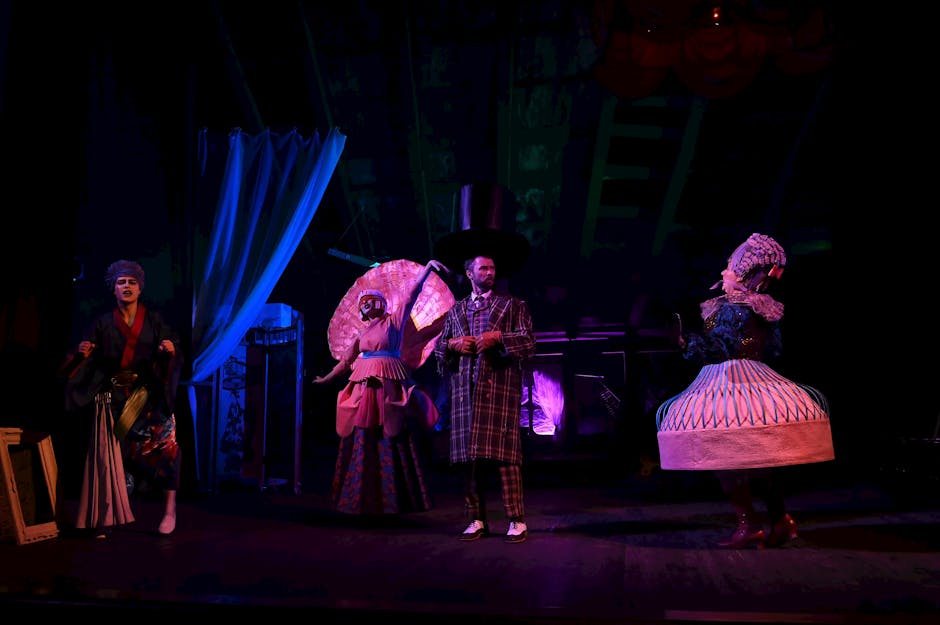
The Greatest Showman Stage Adaptation Proves That Spectacle Without Substance Is Exactly What Theater Needs Right Now

EDITORIAL — This is an opinion piece. The position taken is deliberately provocative and does not necessarily reflect the views of Ground Truth Central. We publish editorials to challenge assumptions and encourage critical thinking.
Does Theater Need Spectacle More Than Substance?
Theater critics are clutching their pearls. The Greatest Showman stage adaptation, now in its second year on Broadway, has been dismissed by cultural gatekeepers as "empty spectacle," "style over substance," and "the McDonaldization of musical theater." They're absolutely right—and that's precisely why it's the most important theatrical event of our time. While traditional theater devotees mourn the death of serious drama, audiences are voting with their wallets and their hearts. The Greatest Showman has consistently sold out since opening, drawing large crowds and generating significant box office revenue. More tellingly, many attendees appear to be first-time theatergoers—not philistines destroying high culture, but people discovering the transformative power of live performance through pure, unapologetic joy. The theater establishment has spent decades congratulating itself on increasingly niche, intellectually demanding productions that speak mainly to other theater professionals. Meanwhile, Broadway has struggled to attract younger audiences in recent years. The Greatest Showman didn't cause this crisis. Proponents of this view argue it offers a potential solution.The False Dichotomy of Spectacle Versus Substance
Critics perpetuate a pernicious myth: that entertainment and meaning are mutually exclusive, that audiences must choose between dazzling visuals and profound themes. This is intellectual snobbery disguised as aesthetic principle. Consider Shakespeare's plays—the blockbuster entertainment of their day, featuring sword fights, ghosts, cross-dressing, and bawdy humor alongside philosophical depth. The Globe Theatre attracted everyone from nobility to groundlings precisely because Shakespeare understood that spectacle serves substance. The Greatest Showman's staging—aerial choreography, elaborate sets, circus performers integrated with the ensemble—creates a visual experience that complements its themes of acceptance, ambition, and belonging. When Hugh Jackman performs acrobatic sequences during "The Greatest Show," he embodies the impossible dream driving the narrative. Compare this to the critically acclaimed revival of Angels in America, which ran concurrently in 2024-2025. Despite universal critical praise and multiple Tony nominations, the production struggled with consistent box office performance. It was undeniably profound, tackling AIDS, religion, and American politics with devastating intelligence. But its three-and-a-half-hour runtime, minimal staging, and relentless emotional weight created an experience some audiences found difficult to sustain.The Democratic Power of Accessible Art
Theater's gatekeepers sometimes forget that art's highest calling isn't to impress other artists—it's to move human beings. The Greatest Showman succeeds because it treats its audience as collaborators rather than students. The 90-minute runtime respects modern attention spans without sacrificing emotional complexity. Its songs—"This Is Me," "Rewrite the Stars," "A Million Dreams"—have become widely popular because they speak to universal human experiences in accessible language. This accessibility isn't artistic compromise; it's artistic courage. Writing a melody that a child can hum while exploring themes of self-acceptance and social otherness requires considerable skill. Stephen Sondheim, the patron saint of complex musical theater, understood this paradox: his most enduring songs achieve profundity through clarity, not despite it. The Greatest Showman has attracted diverse audiences including families and first-generation Americans seeking connection, inspiration, and the communal euphoria that only live performance provides.Spectacle as Social Commentary
Perhaps most importantly, The Greatest Showman's very existence serves as cultural commentary. In an era of isolated digital consumption, the show creates genuine communal experience. Audiences don't just watch—they clap, sing along, and frequently give standing ovations. This participatory energy would horrify purists who prefer respectful silence, but it represents something democracy desperately needs: shared joy across difference. The show's celebration of "freaks" and outcasts resonates in contemporary culture. When Keala Settle performs "This Is Me" as the bearded lady Lettie Lutz, surrounded by the full company, she creates an anthem for anyone who's felt marginalized. The fact that this message arrives wrapped in spectacle doesn't diminish its power—it amplifies it. The real P.T. Barnum exploited people with disabilities and perpetuated racial stereotypes. But the stage adaptation reimagines him as what he could have been: an impresario who celebrated difference rather than exploited it. This isn't historical revisionism—it's mythmaking, theater's oldest and most essential function.The Economic Reality of Artistic Survival
While critics debate artistic purity, the theater industry faces genuine challenges. Regional theaters across America have closed at significant rates, with smaller companies struggling to survive on subscription audiences alone. Broadway increasingly depends on tourist dollars and corporate groups to maintain viability. In this environment, shows like The Greatest Showman represent a commercial model that sustains the theatrical ecosystem. The production's success demonstrates audience appetite for large-scale musical entertainment. Historically, popular theatrical successes have funded experimental work—Disney's Lion King profits enabled investment in more challenging material. Similarly, The Greatest Showman's box office performance creates potential space for smaller, stranger, more challenging work. The show has also pioneered innovative approaches to theater marketing and audience engagement through social media and digital platforms, reaching audiences beyond traditional theater demographics.The Critics' Cognitive Dissonance
Theater critics' hostility to The Greatest Showman reveals something important about contemporary cultural criticism. In an era when traditional media criticism carries diminishing influence, shows that succeed without critical approval challenge critics' sense of cultural authority. Some prominent critics have dismissed the production as superficial or emotionally manipulative—reviews that read less like aesthetic judgment than professional anxiety about changing cultural tastes. The critics aren't entirely wrong about the show's characteristics. The book is straightforward, the historical liberties are extensive, and some staging is deliberately maximalist. But their fundamental disagreement lies in whether these elements constitute failures or features. The Greatest Showman doesn't aspire to be Angels in America or Hamilton—it aspires to be itself: theatrical entertainment that prioritizes emotional impact and spectacle. This distinction matters because theater's future depends on expanding rather than contracting its definition of artistic success. The medium's greatest strength isn't its ability to educate or challenge—it's its ability to create immediate, visceral, communal experience that no other art form can replicate.The Generational Divide
The Greatest Showman's harshest critics tend to be older, while its most enthusiastic supporters skew younger. This generational difference reflects different assumptions about what theater should accomplish. Older critics, raised on the idea that difficulty equals depth, sometimes struggle to accept that younger audiences might prefer their profundity wrapped in accessibility. Generation Z and younger millennials grew up with Hamilton, which proved that musical theater could be both historically serious and viscerally exciting. They've experienced Frozen, which demonstrated that large-scale production values could coexist with genuine emotional complexity. For these audiences, The Greatest Showman isn't dumbed-down theater—it's theater that respects their intelligence while honoring their desire for joy. The show's appeal among young audiences also reflects their different relationship with authenticity. While older generations often equate authenticity with suffering or struggle, younger audiences find authenticity in emotional honesty, regardless of packaging. They're less concerned with whether P.T. Barnum was historically progressive and more interested in whether his story speaks to their own experiences of feeling different, ambitious, or misunderstood.The Future of Theatrical Experience
The Greatest Showman points toward one possible future for theater: immersive, participatory, emotionally generous, and unapologetically spectacular. The production's technical ambitions represent one approach to how live performance can connect with contemporary audiences. More importantly, the show's success demonstrates that audiences hunger for communal celebration in an increasingly fragmented world. The standing ovations, sing-alongs, and post-show engagement suggest cultural vitality. Theater's power has always been its ability to gather strangers in a room and make them feel less alone. The Greatest Showman achieves this effectively. Critics who dismiss this as mere entertainment sometimes misunderstand entertainment's social function. In a democracy, shared pleasure is shared humanity. When 1,500 people sing "This Is Me" together, they're not just consuming a product—they're participating in a ritual of mutual recognition and acceptance. This is precisely what theater should do, and precisely what too much contemporary theater has forgotten how to do.Yet the article's central claim—that spectacle without substance is "exactly what theater needs"—may confuse commercial success with artistic necessity. If The Greatest Showman's first-time theatergoer rate doesn't translate to repeat attendance or engagement with other theatrical work, the show may represent a one-time audience capture rather than a sustainable solution to Broadway's structural challenges. The real question isn't whether spectacle sells, but whether it builds the habit of theatergoing itself.
The comparison to Shakespeare obscures a crucial difference: Shakespeare's spectacle emerged from narrative constraint—ghosts appeared because stories required them—while modern technical capabilities allow spectacle to exist independent of dramatic necessity. If The Greatest Showman's elaborate sequences could be removed without affecting the plot or emotional arc, they may function as distraction rather than enhancement, which would vindicate critics' concerns about substance rather than prove their irrelevance.
The Argument
- The Greatest Showman's commercial success and audience diversity suggest that accessible spectacle serves democratic purposes better than elite intellectualism
- Critics' dismissal of the show may reflect professional anxiety rather than purely aesthetic principle
- Theater's survival may depend on expanding its definition of artistic success to include emotional impact and communal experience
- The production's technical ambitions represent one approach to how theater can connect with contemporary audiences
- Shared entertainment serves as shared humanity—something democratic culture may need in an era of fragmentation