BTS's Global Dominance Is Actually Destroying Korean Culture — Not Celebrating It

EDITORIAL — This is an opinion piece. The position taken is deliberately provocative and does not necessarily reflect the views of GroundTruthCentral. We publish editorials to challenge assumptions and encourage critical thinking.
Picture this: BTS announces their comeback album titled "Arirang" — named after Korea's most sacred folk song. The world celebrates another triumph of Korean cultural export. But what if this moment actually represents the final act of cultural vandalism disguised as cultural celebration? The seven-member group that the world hails as ambassadors of Korean culture may, in reality, be its most effective destroyers — packaging and selling a sanitized, commercialized version of Korea that bears as much resemblance to authentic Korean culture as McDonald's does to fine French cuisine.
The uncomfortable truth that K-pop apologists refuse to acknowledge is this: BTS's global success represents not the triumph of Korean culture, but its systematic commodification and ultimate destruction. Every screaming fan in São Paulo, every Billboard chart position, every UN speech represents another step away from the Korea that produced centuries of profound artistic expression and cultural authenticity.
The Commodification Trap: When Culture Becomes Product
The mainstream narrative celebrates BTS as cultural ambassadors who have introduced millions to Korean language, food, and traditions. This narrative isn't just wrong — it's dangerously backwards. What BTS has actually accomplished is the creation of a Korean cultural simulacrum: a hollow replica that satisfies global consumers while systematically erasing the complex realities of Korean identity.
Consider our hypothetical "Arirang" album. The title would reference a folk song that UNESCO recognized as Intangible Cultural Heritage of Humanity[1] — a piece of music so fundamental to Korean identity that it's been called the "unofficial national anthem." Yet such an approach would likely deliver their typical blend of EDM drops, trap beats, and English-language hooks, wrapped in superficial Korean imagery. This wouldn't be cultural preservation; it would be cultural strip-mining.
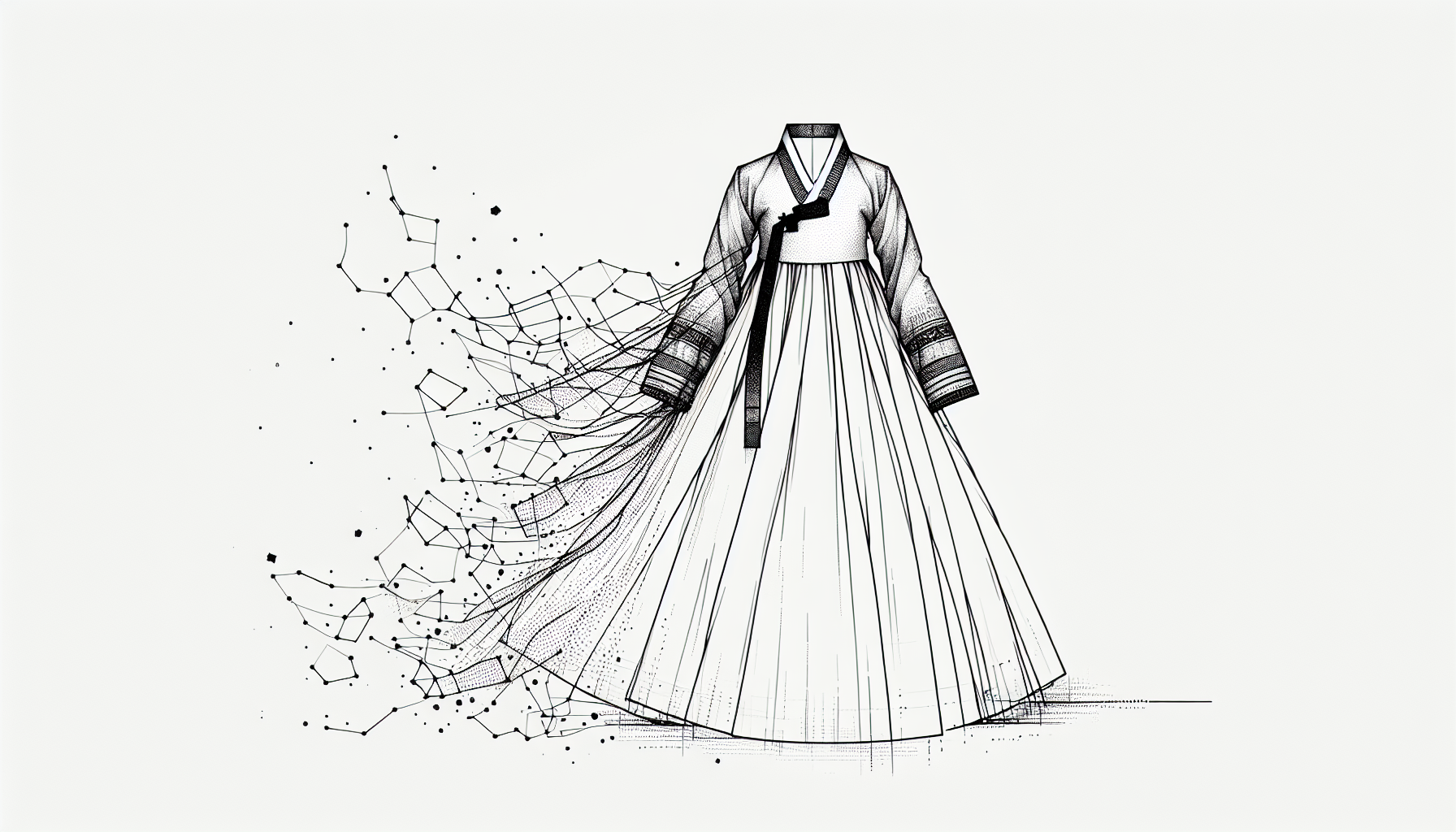
The pattern is unmistakable across their discography. Traditional Korean instruments appear as exotic flourishes in otherwise Western pop compositions. Korean historical references serve as aesthetic window dressing for songs structured around American hip-hop and European electronic music. Hanbok-inspired costumes become Instagram-ready fashion statements divorced from their ceremonial significance. This is how cultures die in the modern era — not through suppression, but through commodification so complete that the original meaning disappears entirely.
The Language Erosion Crisis
Perhaps nowhere is BTS's cultural destructiveness more evident than in their relationship with the Korean language itself. Despite being Korean artists, their most globally successful tracks feature increasingly heavy English usage. "Dynamite" was performed entirely in English[2], while "Butter" and "Permission to Dance" followed suit. The message to their massive global fanbase couldn't be clearer: Korean is acceptable for local consumption, but English is required for serious international success.
This linguistic colonization extends beyond BTS to the broader K-pop industry they've helped create. Young Korean artists now routinely pepper their music with English phrases, not because it serves artistic purpose, but because global markets demand it. The Korean language — with its sophisticated honorific system, rich literary tradition, and unique phonetic beauty — is being reduced to exotic seasoning in an otherwise Western cultural dish.
The irony is staggering. BTS fans worldwide attempt to learn Korean through their music, but what they're actually learning is a degraded pidgin version optimized for global consumption rather than authentic communication. They're studying a language that's already been fundamentally altered by the very cultural export they celebrate.
Manufacturing Authenticity: The K-pop Industrial Complex
The most insidious aspect of BTS's cultural impact lies in how their manufactured success model has become the template for Korean cultural export. The K-pop industry, built on rigorous training systems, calculated image management, and algorithmic optimization for global social media platforms, represents the complete industrialization of cultural expression.
Traditional Korean artistic development emphasized years of study, deep cultural immersion, and authentic personal expression. Master musicians spent decades perfecting their craft within established cultural frameworks. Compare this to the K-pop trainee system, where young people are selected primarily for visual appeal and marketability, then subjected to intensive training designed to produce globally palatable content rather than culturally authentic expression.
BTS themselves emerged from this system, and their global success has validated its approach so completely that it's now being replicated across all forms of Korean cultural export. Korean cinema increasingly targets international film festivals over domestic audiences. Korean fashion brands prioritize global runway shows over local cultural relevance. Even Korean cuisine is being adapted and simplified for international palates, losing regional specificity and traditional preparation methods.
The Soft Power Illusion
Defenders of BTS often invoke "soft power" arguments, claiming that the group's success enhances Korea's global influence and cultural standing. This analysis fundamentally misunderstands both soft power and cultural influence. True soft power emerges from authentic cultural expression that naturally attracts others to your values and way of life. What BTS represents is something far more troubling: the complete adaptation of local culture to global consumer preferences.
Joseph Nye, who coined the term "soft power," emphasized that it stems from the attractiveness of a country's culture, political ideals, and policies[3]. But BTS's global appeal isn't based on distinctly Korean values or perspectives — it's based on their ability to package Korean aesthetics within thoroughly Western musical and cultural frameworks. This isn't soft power projection; it's soft power surrender.
The real test of cultural influence isn't whether global audiences consume your cultural products, but whether those products genuinely represent your cultural values and perspectives. By this measure, BTS's success represents Korean culture's failure to maintain its distinctive voice in the global conversation.
The Homogenization Effect
BTS's global template has created a devastating homogenization effect across Korean cultural production. Young Korean musicians no longer ask "How can I express authentic Korean experiences?" but rather "How can I replicate BTS's global success formula?" The result is a generation of artists producing increasingly similar content optimized for the same global algorithms and market preferences.
This homogenization extends beyond music. Korean television dramas now follow K-pop's playbook, emphasizing visual spectacle and simplified emotional narratives over the complex social commentary that once defined Korean cinema and television. Korean literature in translation increasingly focuses on works that conform to global genre expectations rather than distinctly Korean narrative traditions.
The diversity that once characterized Korean cultural expression — from the philosophical depth of traditional poetry to the social realism of 1980s cinema — is being systematically eliminated in favor of globally marketable uniformity. BTS didn't create this trend, but their unprecedented success has accelerated it beyond the point of recovery.
The Generational Divide
Perhaps most tragically, BTS's global success has created a generational schism within Korean culture itself. Older Koreans, who lived through periods of genuine cultural suppression and fought to preserve Korean traditions, watch in bewilderment as younger generations celebrate the voluntary abandonment of cultural distinctiveness in pursuit of global acceptance.
Traditional Korean artists — masters of gayageum, practitioners of pansori, keepers of folk traditions — find themselves increasingly marginalized in their own country as resources and attention flow toward globally marketable cultural products. Government cultural support increasingly favors projects with "global potential" over those focused on preserving and developing authentic Korean traditions.
This represents a profound betrayal of previous generations who sacrificed to maintain Korean cultural identity through periods of colonial occupation and authoritarian rule. They preserved Korean culture so it could flourish, not so it could be sold to the highest bidder in the global cultural marketplace.
The Alternative Path Not Taken
The tragedy of BTS's approach becomes clear when we consider alternative models of cultural export that maintain authenticity while achieving international recognition. Japanese artists like Ryuichi Sakamoto successfully achieved global acclaim while maintaining distinctly Japanese aesthetic and philosophical approaches. Brazilian musicians from Gilberto Gil to Caetano Veloso gained international recognition precisely because they offered something genuinely different from Western popular music.
Korea could have chosen this path. The country possesses rich musical traditions, sophisticated philosophical frameworks, and unique aesthetic approaches that could have formed the foundation for genuinely distinctive global cultural contributions. Instead, the BTS model has convinced an entire generation that global success requires cultural compromise rather than cultural confidence.
Imagine if Korean artists had approached global markets with the same confidence that Korean technology companies brought to global competition — not by copying Western models, but by developing distinctly Korean alternatives that proved superior. We might have seen the emergence of genuinely innovative musical forms, philosophical perspectives, and aesthetic approaches that enriched global culture rather than simply feeding its appetite for novelty.
The Point of No Return
As we contemplate the hypothetical "Arirang" scenario, we may be witnessing the final transformation of Korean culture from authentic tradition into global commodity. The choice of such a title would be particularly telling — by appropriating Korea's most sacred folk song for what would inevitably be another globally optimized pop product, they would complete the circle of cultural destruction that began with their first international success.
The damage may already be irreversible. An entire generation of Korean artists has internalized the lesson that cultural authenticity is a barrier to global success rather than its foundation. The infrastructure of authentic cultural transmission — from traditional music schools to regional performance traditions — continues to wither while resources flow toward global cultural production.
Most troubling of all, the global success of the BTS model has convinced other cultures to follow the same path. We're witnessing the emergence of a global monoculture where local traditions are systematically converted into variants of the same globally optimized entertainment product. BTS didn't invent this process, but their success has provided the template for its acceleration worldwide.
Rather than destroying Korean culture, BTS may actually be serving as a cultural gateway that introduces global audiences to deeper Korean traditions. Anecdotal evidence suggests increased Korean language enrollment worldwide, tourism to historical Korean sites, and growing interest in traditional Korean arts following BTS's success, indicating their influence could be preserving and revitalizing Korean culture rather than erasing it.
The assumption that "authentic" Korean culture exists in a pure, unchanging form ignores the reality that Korean culture has always been dynamic and hybrid, shaped by centuries of Chinese, Japanese, and Western influences. What we're witnessing with BTS may not be cultural destruction but rather the latest chapter in Korea's long history of cultural adaptation and innovation—one that positions Korea as a cultural influencer rather than merely a cultural recipient for the first time in generations.
The Argument
- BTS's global success represents cultural commodification rather than cultural celebration, creating a sanitized version of Korean identity for global consumption
- The group's increasing use of English and Western musical structures demonstrates linguistic and cultural colonization disguised as international success
- The K-pop industrial model has replaced authentic cultural development with manufactured global marketability, destroying traditional artistic practices
- Rather than projecting Korean soft power, BTS represents the adaptation of Korean culture to Western consumer preferences
- The BTS template has created homogenization across Korean cultural production, eliminating the diversity that once characterized Korean artistic expression
- This cultural transformation has created a generational divide and betrayed previous generations who preserved Korean culture through periods of genuine suppression
- Alternative models of authentic cultural export exist but have been abandoned in favor of the globally optimized approach BTS represents
References
- UNESCO. "Arirang, lyrical folk song in the Republic of Korea." Intangible Cultural Heritage Lists, 2012.
- Herman, Tamar. "BTS Scores First No. 1 Hit on Billboard Hot 100 With 'Dynamite'." Billboard, September 1, 2020.
- Nye, Joseph S. Soft Power: The Means to Success in World Politics. PublicAffairs, 2004.