A Day in the Life of a Lithium Mine Worker in Chile's Atacama Desert

COMPOSITE CHARACTER — The person described in this article is fictional, created as a composite based on published reporting, interviews, and research about real people in this role. Details are illustrative, not documentary.
The Morning Ritual
The fluorescent light flickers to life with a harsh buzz. Carlos moves quietly, gathering his work clothes from the small metal locker beside his narrow bed. The routine is automatic now: thermal underwear first, then the company-issued coveralls with "SQM" emblazoned across the back[1]. The fabric is stiff with dried salt and sun exposure, despite the industrial washing machines that run constantly at the camp. Miguel stirs as Carlos laces up his steel-toed boots. "Another day in paradise," Miguel mumbles, his voice thick with sleep and irony. It's their standard morning exchange—a small ritual that acknowledges both the absurdity and the necessity of their situation. "At least the Tesla drivers will be happy," Carlos replies, pulling on his hard hat. It's another piece of their routine, this reference to the electric vehicles their lithium will eventually power. Neither man has ever seen a Tesla in person, but they've become a symbol of the strange disconnect between their harsh daily reality and the clean, high-tech world their work enables. The mess hall buzzes with quiet conversation as dozens of workers fuel up for the day ahead. The coffee is strong and bitter, brewed to cut through the desert's dehydrating effects. Carlos loads his plate with scrambled eggs, bread, and sliced tomatoes—simple food that provides the calories needed for physical labor in extreme conditions.Into the Salt Flats
By 6 AM, Carlos is climbing into the passenger seat of a pickup truck driven by his supervisor, Elena Vargas. Elena has been working these flats for fifteen years, starting as a laborer and working her way up through sheer determination and encyclopedic knowledge of the extraction process. She's one of only three female supervisors at the entire operation. "The evaporation rates were good overnight," she says, scanning her tablet as they drive toward the salt flats. "We should be able to harvest from ponds 7 through 12 today." The truck bounces over the rough access road, past warning signs in Spanish and English about the dangers of the brine pools. The Salar de Atacama stretches out before them like an alien landscape[2]. The salt flats extend to the horizon in every direction, broken only by the geometric patterns of the evaporation ponds—vast squares and rectangles of brilliant blue, green, and white that create a checkerboard across the desert floor. The colors shift with mineral concentration: deep blue for fresh brine, emerald green as lithium concentrates, and finally white where salt has crystallized completely. Carlos has seen this view thousands of times, but it still catches his breath on clear mornings like this. The Andes Mountains rise in the distance, their peaks catching the first light of dawn, while flamingos—impossibly pink against the alien landscape—wade through the brine pools, filtering microorganisms through their specialized beaks[3].The Work Begins
The day's work starts with testing. Carlos and Elena move methodically from pond to pond, using handheld instruments to measure lithium concentration, pH levels, and evaporation rates. Each reading goes into Elena's tablet, feeding into a complex algorithm that determines when each pond is ready for the next stage of processing. "Pond 9 is at 0.8 percent," Carlos calls out, reading from his meter. Elena nods and makes a note. They're looking for concentrations above 0.6 percent—the threshold where extraction becomes economically viable. Below that, the brine needs more time under the desert sun to concentrate. The sun climbs higher, and the temperature begins its relentless ascent. By 8 AM, it's already warm enough that Carlos unzips his coveralls and ties the arms around his waist. By 10 AM, the metal tools will be too hot to touch with bare hands. By noon, the air will shimmer with heat waves, and the salt flats will become a furnace that can reach surface temperatures of over 120 degrees Fahrenheit[4]. The work is methodical but demanding. Carlos operates heavy machinery that moves brine between ponds, adjusting flow rates and monitoring the massive pumps that keep the operation running. Each pond represents months of careful timing—the brine must spend exactly the right amount of time in each stage of concentration, a process that can take up to two years from start to finish.Midday Heat and Reflection
Lunch is eaten in the shade of a portable shelter, the metal roof radiating heat like an oven. Carlos and his crew share sandwiches and cold drinks while discussing the morning's work and the afternoon's plans. The conversation inevitably turns to family—Miguel's daughter is starting university in Santiago, funded by his lithium wages. Elena's son just got accepted to study engineering, with dreams of working on renewable energy projects. "It's funny," says Roberto, another crew member, unwrapping his sandwich. "We're digging up the desert to help save the planet." It's a comment that captures the complex irony of their work. The lithium they extract will power electric vehicles and store renewable energy, potentially helping to combat climate change. But the extraction process itself is environmentally intensive, requiring vast amounts of water in one of the world's driest places[5]. Carlos thinks about his own family during these quiet moments. His wife Maria lives with their two children in Calama, the nearest city, about an hour's drive from the salt flats. He sees them on weekends, when his rotation allows. The money is good—better than anything else available in this remote region—but the separation is hard. His daughter Sophia is seven now, and sometimes he feels like he's missing too much of her childhood, one week-long rotation at a time.Afternoon Operations
The afternoon shift brings different challenges. As the temperature soars, the crew must work more carefully to avoid heat exhaustion. Carlos moves between air-conditioned equipment cabins and the blazing outdoor work areas, each transition a shock to his system. The brine pumps require constant monitoring—the extreme heat can cause equipment failures, and a breakdown means hours of work in the brutal sun to repair. Elena radios from the central control station: "Carlos, we need to adjust the flow rate in pond 12. The concentration is climbing faster than expected." He acknowledges and makes his way to the control valve, a task that requires him to walk across exposed salt flats where the ground temperature can literally cook an egg. The salt crunches under his boots, and the air shimmers with heat distortion. In the distance, dust devils dance across the flats—miniature tornadoes that can spring up without warning in the superheated air. Carlos has learned to watch for them; getting caught in one means a face full of salt and grit that can temporarily blind him. As he adjusts the valve, Carlos can see the flamingos in the distance, still feeding in the brine pools. It's one of the strange contradictions of this place—the same harsh environment that challenges human endurance provides a perfect habitat for these exotic birds.The Science of Patience
The lithium extraction process is fundamentally about patience and precision. Unlike hard rock mining, which involves blasting and crushing ore, lithium extraction in the Atacama relies on the desert's natural advantages: intense solar radiation, low humidity, and minimal rainfall[6]. The process begins with pumping lithium-rich brine from underground aquifers into shallow evaporation ponds, where the desert sun slowly concentrates the minerals. Carlos has learned to read the subtle signs that indicate when brine is ready to move to the next stage. The color shifts from deep blue to turquoise to green as the water evaporates and the lithium concentration increases. Crystals begin to form at the edges of the ponds, and the consistency of the brine changes from water-thin to slightly viscous. "It's like farming," Elena often says, "except we're growing lithium instead of crops." The comparison is apt—both require careful timing, attention to environmental conditions, and the patience to wait for natural processes to run their course.Evening Wind-Down
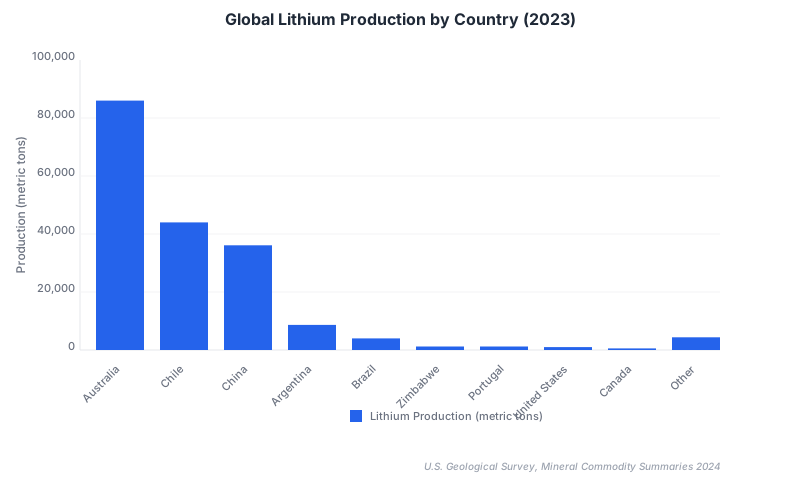
As the sun begins its descent toward the mountains, the temperature starts to drop, bringing relief to both workers and equipment. The evening shift focuses on maintenance and preparation for the next day's operations. Carlos checks fluid levels in the pumps, cleans salt buildup from equipment, and records the day's production data. The sunset over the Atacama is spectacular—the dry air and high altitude create conditions for brilliant displays of color that paint the salt flats in shades of orange, pink, and purple. For a few minutes each evening, the harsh industrial landscape transforms into something beautiful, reminding Carlos why he sometimes feels protective of this strange place despite its challenges. Elena gathers the crew for the daily debrief. They review production numbers, discuss equipment issues, and plan for tomorrow's work. The lithium market has been volatile lately—prices fluctuating with news about electric vehicle sales, battery technology breakthroughs, and competing extraction projects in Argentina and Australia[7]. But the demand keeps growing, driven by the global transition to renewable energy and electric transportation.Return to Base
The ride back to the dormitory camp is quieter than the morning journey. The crew is tired from a day in the heat, and conversation tends toward the practical—plans for the evening, weekend activities, news from home. Carlos checks his phone as they approach the camp, hoping for messages from Maria and the children. There's a video message from Sophia, showing him a drawing she made of flamingos. "For Papa," she says in the video, holding up the colorful picture. "Because you work where the pink birds live." Carlos smiles, saving the video to watch again later. These small connections help bridge the distance between his two worlds—the harsh reality of the salt flats and the warm domesticity of home.Evening Rituals
Dinner in the mess hall is more relaxed than the hurried breakfast. The day's heat is breaking, and the crew has time to decompress. Carlos sits with his regular group—Miguel, Roberto, and a few others who've become his desert family. They discuss everything from soccer scores to politics to their plans for their next rotation home. The conversation inevitably returns to the strange nature of their work. They're extracting a mineral that most people have never heard of, in a place that feels like another planet, to power a technology revolution happening in cities thousands of miles away. "My brother-in-law bought a hybrid car," Miguel says, picking at his dinner. "He's always talking about how he's saving the environment. I told him, 'You're welcome.'" The table laughs, but there's pride mixed with the irony. They know their work matters, even if the connection between the salt flats and the world's energy transition isn't always visible.Night Reflection
After dinner, Carlos often takes a short walk around the camp perimeter. The desert night is profound in its silence and darkness—no city lights, no traffic, just the vast canopy of stars that's visible only in places far from human habitation. The Milky Way stretches across the sky with a clarity that still amazes him, even after eight years of desert nights. The temperature drops quickly once the sun sets, and Carlos pulls on a jacket against the chill. The contrast between day and night temperatures can be forty degrees or more—another reminder of the extreme environment they work in. But there's also beauty in these extremes, a purity to the landscape that exists nowhere else on Earth. He thinks about the email he received earlier from the company about new expansion plans. The global demand for lithium is projected to grow significantly over the next decade as electric vehicle adoption accelerates[8]. More ponds, more workers, more infrastructure in the desert. It means job security, but it also means more time away from home, more rotations in the salt flats.Bedtime Thoughts
Back in his dormitory room, Carlos calls Maria before bed. She updates him on the children's school activities, neighborhood news, and her own work at the local clinic where she's a nurse. The conversation is warm but brief—they've learned to make these daily check-ins count, compressing the important details of their separate lives into a few precious minutes. "Sophia wants to visit you at work," Maria says. "She keeps asking about the flamingos." Carlos smiles but feels a familiar pang. The mining operation doesn't allow family visits for safety and security reasons. His children have never seen where their father works, never experienced the strange beauty and harsh reality of the salt flats. As he prepares for bed, Carlos thinks about the lithium that will leave the processing plant tomorrow, beginning its journey to battery factories in Asia, then to car manufacturers around the world, and finally to consumers who will never know it came from this remote corner of Chile. Each battery will contain a small piece of the Atacama Desert, a fragment of the place where he spends half his life. The room is quiet now except for Miguel's soft snoring. Outside, the desert wind whispers across the salt flats, carrying the faint mineral scent that permeates everything here. Carlos sets his alarm for 4:30 AM and closes his eyes, knowing that tomorrow will bring another day of heat, salt, and the patient work of extracting the mineral that powers the future. His last thought before sleep is of Sophia's drawing of flamingos, and he wonders if she'll understand someday that her father's work in this impossible place is part of something larger—a global transformation toward cleaner energy that begins here, in the driest desert on Earth, with the simple act of letting the sun evaporate water from ancient underground seas.While Carlos describes his work as contributing to a cleaner future, some environmental scientists question whether lithium extraction's massive water consumption—estimated at 400,000 to 2 million gallons per ton of lithium according to various industry studies—might be creating an ecological crisis that undermines the very environmental goals it claims to serve. Research by environmental organizations and academic institutions has documented concerns about declining water levels in the region, raising questions about whether the "green" revolution may be displacing environmental costs rather than eliminating them.
The relative job satisfaction Carlos expresses might reflect the normalization of extreme working conditions in resource extraction industries rather than genuinely optimal employment. Labor advocates argue that the two-week rotation schedule, while well-compensated, represents a form of structural family separation that shouldn't be necessary even in remote operations—and that better transportation infrastructure or alternative extraction methods could allow workers to return home nightly.
Key Takeaways
- Lithium extraction in the Atacama Desert involves a months-long process of solar evaporation in carefully managed brine pools
- Workers face extreme conditions, with temperatures ranging from freezing at night to over 120°F during the day
- The work provides relatively well-paying jobs in a remote region with few economic opportunities, but requires significant family separation
- There's a profound disconnect between the harsh realities of extraction and the clean-tech applications the lithium enables
- The Atacama's unique environment supports both industrial lithium production and delicate ecosystems like flamingo habitats
- Growing global demand for electric vehicles and renewable energy storage drives continued expansion of these operations
References
- Sociedad Química y Minera de Chile (SQM). "Annual Report 2022." SQM Corporate Publications, 2023.
- Garreaud, René. "The Climate of the Altiplano: Observed Current Conditions and Mechanisms of Past Changes." Palaeogeography, Palaeoclimatology, Palaeoecology, 2000.
- Hurlbert, Stuart H. "High Andean Lakes of Chile and Bolivia: Limnological Reconnaissance and Relationships of Biota to Chemical Composition, Salinity, and Ionic Ratios." Verhandlungen der Internationalen Vereinigung für Theoretische und Angewandte Limnologie, 1981.
- Houston, John. "Variability of Precipitation in the Atacama Desert: Its Causes and Hydrological Impact." International Journal of Climatology, 2006.
- Flexer, Victoria. "Lithium Recovery from Brines: A Vital Raw Material for a Sustainable Future." Modern Aspects of Electrochemistry, 2018.
- Warren, John K. Evaporites: Sediments, Resources and Hydrocarbons. Springer, 2006.
- International Energy Agency. "Global EV Outlook 2023." IEA Publications, 2023.
- BloombergNEF. "Lithium-Ion Battery Pack Prices Rise for First Time to an Average of $151/kWh." Bloomberg New Energy Finance, 2022.