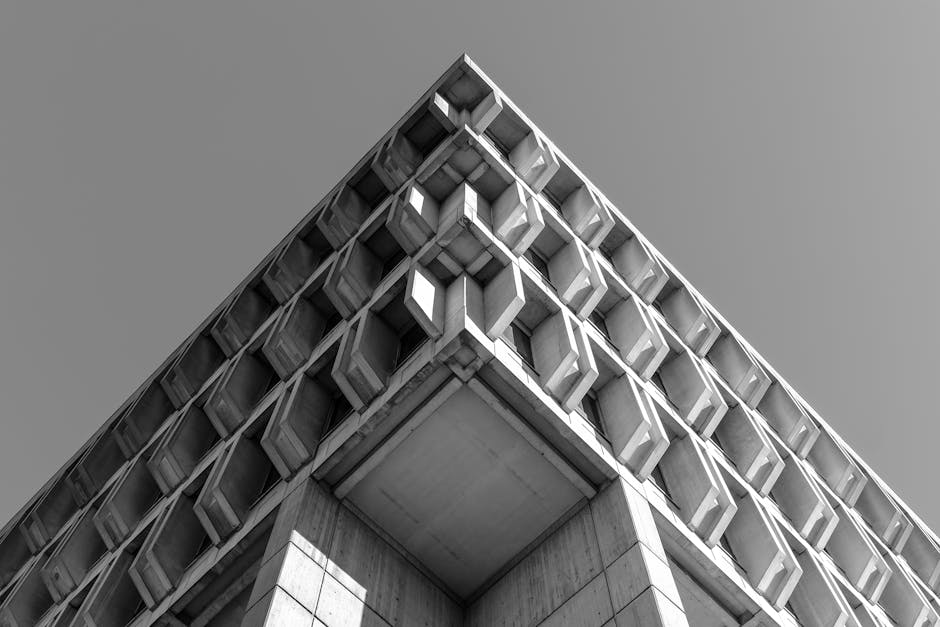
75-Year Trends in Concrete Architecture: From Brutalism to Modern Minimalism

In 1947, architect Le Corbusier completed the Unité d'Habitation in Marseille, France—a massive concrete housing block that would fundamentally reshape how the world viewed this humble construction material. What had once been relegated to foundations and infrastructure was suddenly thrust into the spotlight as the defining aesthetic of an entire architectural movement. Today, seventy-five years later, concrete has undergone a remarkable transformation from the raw, fortress-like surfaces of Brutalism to the refined, minimalist planes of contemporary design. This evolution reflects not just changing tastes, but shifting social values, technological advances, and humanity's complex relationship with urban living.
The journey of concrete architecture over the past three-quarters of a century tells the story of modernism's rise, fall, and reinvention. From the utopian housing projects of post-war Britain to the sleek cultural institutions of today's architectural stars, concrete has served as both symbol and substance of our built environment's most ambitious experiments.
The Birth of Béton Brut (1945-1955)
The immediate post-war period marked concrete's emergence as architecture's new protagonist. Le Corbusier's Unité d'Habitation, completed in 1952, introduced the world to "béton brut"—raw concrete left unfinished to showcase the material's natural texture and the imprints of its wooden molds[1]. This 337-unit housing block rose 18 stories above Marseille, housing 1,600 residents in what Le Corbusier envisioned as a "vertical village."
The timing was crucial. Europe lay in ruins, with an estimated 20 million people displaced and massive housing shortages across the continent[2]. Concrete offered speed, economy, and the ability to create large-span structures without steel—a material still in short supply. In Britain alone, the government committed to building 300,000 new homes annually, with concrete becoming the material of choice for rapid construction[3].
The aesthetic philosophy behind early concrete architecture was deeply ideological. Architects like Ernő Goldfinger and Denys Lasdun saw raw concrete as honest, democratic, and anti-ornamental—a rejection of the decorative excesses that had characterized pre-war architecture. Goldfinger's Balfron Tower, begun in 1963 but conceptually rooted in this earlier period, exemplified this thinking with its uncompromising concrete surfaces and repetitive window patterns[4].
Technological advances in concrete production during this period enabled these ambitious projects. The development of reinforced concrete techniques and improved mixing methods allowed for longer spans and more complex geometries. The Ingalls Hockey Rink at Yale University, designed by Eero Saarinen and completed in 1958, demonstrated concrete's sculptural possibilities with its dramatic whale-like form spanning 200 feet without interior supports[5].
The Brutalist Boom (1955-1975)
The term "Brutalism" was coined by British architectural critic Reyner Banham in 1955, derived from Le Corbusier's béton brut but encompassing a broader aesthetic philosophy[6]. This period saw concrete architecture reach its most monumental and controversial expression, with massive institutional and residential projects reshaping cityscapes across the globe.
Britain became Brutalism's epicenter, driven by ambitious social housing programs and a generation of architects trained in modernist principles. The London County Council alone commissioned over 100,000 concrete housing units between 1955 and 1975[7]. Iconic estates like the Barbican Centre, designed by Chamberlin, Powell & Bon and begun in 1965, created vast concrete landscapes housing thousands of residents in towers reaching up to 42 stories.
The scale was unprecedented. Ernő Goldfinger's Trellick Tower, completed in 1972, housed 217 families in a 31-story concrete monolith that became both celebrated and reviled. Its distinctive profile—with a separate service tower connected by bridges—embodied Brutalism's bold geometric forms and uncompromising use of raw concrete[8].
Educational institutions embraced Brutalism with particular enthusiasm. The University of East Anglia, designed by Denys Lasdun and completed in phases between 1963 and 1968, created a concrete campus that seemed to emerge from the landscape itself. Lasdun's "streets in the sky" concept connected buildings through elevated concrete walkways, creating what he called an "urban landscape"[9].
Brutalism's international spread was remarkable. In the United States, Paul Rudolph's Yale Art and Architecture Building (1963) and Marcel Breuer's Whitney Museum (1966) brought the aesthetic to American shores. Boston's City Hall, designed by Kallmann McKinnell & Knowles and completed in 1968, became one of America's most prominent Brutalist landmarks with its massive concrete overhang and fortress-like appearance[10].
The movement reached its peak with megastructures like Moshe Safdie's Habitat 67 in Montreal, built for Expo 67. This experimental housing complex stacked 354 prefabricated concrete modules to create a mountain-like structure housing 158 families. Each unit had its own garden terrace, created by the roof of the unit below—a concrete interpretation of traditional village living[11].
Technical innovations during this period pushed concrete's limits. The development of post-tensioned concrete allowed for even longer spans and more daring cantilevers. The Hayward Gallery in London, part of the South Bank Centre completed in 1968, demonstrated these advances with its complex geometric forms and dramatic overhangs, all achieved through sophisticated concrete engineering[12].
The Backlash and Decline (1975-1990)
By the mid-1970s, public opinion toward concrete architecture began to shift dramatically. The oil crisis of 1973 and subsequent economic recession exposed the maintenance costs and energy inefficiency of many Brutalist buildings. More critically, social problems in concrete housing estates—from crime to social isolation—became associated with the architecture itself.
The demolition of Pruitt-Igoe in St. Louis in 1972 became a symbolic moment, though the complex was built with brick rather than concrete. More relevant was the growing criticism of British concrete estates. By 1975, vacancy rates in some London concrete housing blocks reached 30%, and maintenance costs were spiraling as the aggressive concrete surfaces weathered poorly in Britain's damp climate[13].
Architectural critics led the intellectual assault. Tom Wolfe's "From Bauhaus to Our House" (1981) savagely attacked modernist architecture, while Prince Charles's famous 1984 speech describing a proposed National Gallery extension as a "monstrous carbuncle" crystallized public sentiment against modernist concrete buildings[14].
The rise of postmodernism offered an alternative. Architects like Robert Venturi and Michael Graves rejected concrete's monolithic aesthetic in favor of more varied materials and historical references. James Stirling's Neue Staatsgalerie in Stuttgart (1984) used concrete but combined it with colorful cladding and classical elements, signaling a move away from pure Brutalism[15].
New construction techniques also reduced concrete's dominance. Advances in steel frame construction and the development of lightweight cladding systems made it possible to achieve large spans and dramatic forms without relying on massive concrete structures. The Lloyd's Building in London, designed by Richard Rogers and completed in 1986, demonstrated how high-tech architecture could create monumental buildings using steel and glass rather than concrete[16].
Environmental concerns began to emerge as well. Studies in the 1980s revealed concrete's significant carbon footprint—cement production alone accounted for approximately 5% of global CO2 emissions[17]. This environmental cost, combined with growing awareness of sustainability issues, further damaged concrete's reputation among progressive architects and planners.
The Minimalist Revival (1990-2005)
Concrete's rehabilitation began in the 1990s through the work of a new generation of architects who embraced minimalism and material honesty. Tadao Ando emerged as the leading figure in this movement, creating buildings that celebrated concrete's essential qualities while achieving unprecedented levels of refinement.
Ando's Church of the Light in Osaka (1989) demonstrated how concrete could create profound spatial experiences through careful attention to proportion, light, and surface texture. The building's cruciform opening cast dramatic shadows across smooth concrete walls, proving that the material could be both monumental and spiritual[18].
The key difference from earlier Brutalism was technical precision. Where 1960s concrete often celebrated rough, board-marked surfaces, 1990s minimalists pursued perfectly smooth finishes. Peter Zumthor's Therme Vals in Switzerland (1996) used 60,000 stones quarried from the site to clad concrete structures, creating a building that seemed to emerge from the landscape while maintaining concrete's essential monolithic character[19].
Swiss architects Herzog & de Meuron pioneered new approaches to concrete's surface treatment. Their Dominus Winery in California (1998) filled gabion walls with local stones, creating a concrete structure that appeared to be built from the landscape itself. This approach influenced a generation of architects to think more creatively about concrete's visual possibilities[20].
Technological advances enabled these refined approaches. Self-consolidating concrete, developed in Japan in the 1980s and widely adopted in the 1990s, allowed for smoother finishes and more complex forms. Computer-controlled mixing and placement systems ensured consistent quality, while new admixtures improved concrete's workability and finish quality[21].
The period also saw concrete's rehabilitation in residential architecture. John Pawson's Neuendorf House in Mallorca (1989) used concrete walls to create serene, minimalist spaces that celebrated the material's thermal mass and sculptural possibilities. This project influenced countless architects to reconsider concrete for high-end residential projects[22].
Cultural institutions led concrete's comeback. Renzo Piano's Nasher Sculpture Center in Dallas (2003) used concrete's thermal mass to create stable interior conditions for art display, while its refined finish and careful proportions demonstrated the material's contemporary relevance[23].
Digital Age Concrete (2005-2015)
The introduction of digital design tools revolutionized concrete architecture in the 2000s. Computer modeling allowed architects to create complex curved forms that would have been impossible to construct using traditional methods. This "digital turn" gave concrete new expressive possibilities while maintaining its essential monolithic character.
Zaha Hadid emerged as the master of digitally-designed concrete architecture. Her Heydar Aliyev Center in Baku (2012) used advanced concrete technology to create a building with no corners or straight lines—a continuous surface that flows from ground to roof. The project required 14,000 cubic meters of concrete and pioneered new techniques for casting complex curved surfaces[24].
The development of ultra-high-performance concrete (UHPC) enabled these ambitious projects. With compressive strengths exceeding 150 MPa—compared to 30-40 MPa for conventional concrete—UHPC allowed for thinner sections and more daring structural forms. The MuCEM in Marseille, designed by Rudy Ricciotti and completed in 2013, used UHPC to create a delicate concrete latticework that appeared almost fabric-like[25].
3D printing technology began to influence concrete construction during this period. In 2014, WinSun in China printed a series of concrete houses using a massive 3D printer, demonstrating the potential for automated concrete construction. While still experimental, this technology suggested new possibilities for complex concrete forms[26].
Sustainability concerns drove innovations in concrete composition. The development of high-recycled content concrete and alternative cement formulations began to address environmental concerns. The Gando School Library in Burkina Faso, designed by Francis Kéré and completed in 2008, used local clay bricks within concrete frames to reduce environmental impact while maintaining structural integrity[27].
The period also saw renewed appreciation for Brutalist heritage. The designation of the Barbican Centre as a listed building in 2001 marked a turning point in public perception of concrete architecture. Suddenly, buildings that had been reviled in the 1980s were being celebrated as architectural heritage worthy of preservation[28].
Contemporary Concrete Culture (2015-Present)
The current era of concrete architecture is defined by three key trends: environmental responsibility, digital fabrication, and cultural celebration of concrete's aesthetic qualities. Instagram and Pinterest have played unexpected roles in concrete's revival, with hashtags like #brutalism and #concretearchitecture generating millions of posts celebrating the material's photogenic qualities[29].
Environmental innovation has become paramount. The development of carbon-negative concrete, which actually absorbs CO2 over its lifetime, represents a potential breakthrough. CarbonCure Technologies has treated over 500 million concrete blocks with captured CO2, reducing the carbon footprint of concrete construction by up to 20%[30].
Robotic fabrication is transforming how concrete buildings are designed and constructed. ETH Zurich's DFAB House, completed in 2019, used robotic systems to create complex concrete elements that would be impossible to cast using traditional methods. The project demonstrated how digital fabrication could enable mass customization in concrete construction[31].
Contemporary architects are pushing concrete's expressive limits while addressing sustainability concerns. David Chipperfield's James Simon Galerie in Berlin (2019) uses precast concrete elements to create a refined classical colonnade, demonstrating how concrete can engage with historical architecture while maintaining contemporary relevance. The building's concrete elements were cast using renewable energy and incorporate recycled aggregates[32].
The rise of "Instagram architecture" has influenced concrete design. Buildings like the Zeitz Museum of Contemporary African Art in Cape Town, carved from a concrete grain silo and completed in 2017, have become social media sensations. The building's dramatic carved interior spaces, created by removing concrete from the existing structure, demonstrate concrete's potential for adaptive reuse[33].
Residential concrete architecture has gained new sophistication. Tadao Ando's 152 Elizabeth Street in New York, completed in 2016, brings Japanese concrete minimalism to Manhattan with apartments selling for over $30 million. The building's board-formed concrete surfaces and precise detailing represent the pinnacle of contemporary concrete craftsmanship[34].
The COVID-19 pandemic has influenced concrete architecture in unexpected ways. The material's thermal mass and ability to regulate humidity naturally have made it attractive for buildings focused on health and wellness. The Bloomberg headquarters in London, completed in 2017, uses concrete's thermal properties as part of an advanced environmental control system that reduces energy consumption by 73%[35].
The Future of Concrete Architecture
Looking ahead, concrete architecture faces both opportunities and challenges. Climate change demands that the construction industry dramatically reduce its carbon emissions, with concrete production representing one of the largest sources of industrial CO2. However, innovations in concrete chemistry and construction methods suggest the material can adapt to these environmental demands.
Self-healing concrete, incorporating bacteria that produce limestone when exposed to water, could dramatically extend building lifespans and reduce maintenance requirements. Researchers at Delft University have developed concrete that can seal cracks automatically, potentially revolutionizing how we think about concrete durability[36].
Artificial intelligence is beginning to influence concrete design and construction. Machine learning algorithms can now optimize concrete mix designs for specific performance requirements, while robotic systems can place concrete with unprecedented precision. These technologies suggest a future where concrete construction becomes both more efficient and more expressive.
The growing appreciation for Brutalist architecture among younger generations suggests that concrete's cultural rehabilitation is complete. Architecture schools report renewed interest in concrete design, while heritage organizations work to preserve threatened Brutalist buildings. This cultural shift, combined with technological innovations, positions concrete for continued relevance in 21st-century architecture.
Rather than representing aesthetic evolution, concrete's journey from Brutalism to minimalism may reflect shifting economic realities and class dynamics. The "refined" concrete of contemporary minimalist buildings requires expensive finishing techniques and skilled labor that were deliberately rejected by Brutalist architects seeking democratic, unpretentious materials. What we interpret as stylistic progress might actually represent a retreat from concrete's radical egalitarian potential toward luxury consumption.
The perceived "failure" of Brutalist concrete housing may have less to do with the material itself than with deliberate political disinvestment in social infrastructure. Many concrete estates that became symbols of urban decay were systematically underfunded for maintenance while similar buildings in wealthier contexts aged gracefully. The narrative of concrete's rehabilitation conveniently obscures how economic abandonment, not architectural determinism, shaped these buildings' social outcomes.
Key Takeaways
- Concrete architecture evolved from post-war necessity to aesthetic choice, reflecting changing social values and technological capabilities over 75 years
- The Brutalist period (1955-1975) represented concrete's peak influence but also sowed the seeds of its later rejection due to social and maintenance issues
- The minimalist revival of the 1990s rehabilitated concrete through refined techniques and careful attention to surface quality and proportion
- Digital design tools since 2005 have enabled complex concrete forms previously impossible to construct, while environmental concerns drive innovation in sustainable concrete technologies
- Contemporary concrete architecture balances aesthetic expression with environmental responsibility, supported by new fabrication methods and cultural appreciation for concrete's material qualities
- Future developments in self-healing concrete, AI-optimized design, and carbon-negative formulations suggest the material's continued evolution and relevance
References
- Sbriglio, Jacques. Le Corbusier: The Unité d'Habitation in Marseille. Birkhäuser, 2004.
- Judt, Tony. Postwar: A History of Europe Since 1945. Penguin Press, 2005.
- Bullock, Nicholas. Building the Post-War World: Modern Architecture and Reconstruction in Britain. Routledge, 2002.
- Grindrod, John. Concretopia: A Journey Around the Rebuilding of Postwar Britain. Old Street Publishing, 2013.
- Merkel, Jayne. Eero Saarinen. Phaidon Press, 2005.
- Banham, Reyner. "The New Brutalism." Architectural Review, December 1955.
- Harwood, Elain. Space, Hope and Brutalism: English Architecture 1945-1975. Yale University Press, 2015.
- Goldfinger, Ernő. Ernő Goldfinger: Works 1. Architectural Association, 1983.
- Curtis, William. Denys Lasdun: Architecture, City, Landscape. Phaidon Press, 1994.
- Campbell, Robert. "Boston City Hall: Homely But Magnificent." Boston Globe, April 15, 2018.
- Rybczynski, Witold. "The Future of Habitat 67." Architect Magazine, May 2017.
- Whiteley, Nigel. Reyner Banham: Historian of the Immediate Future. MIT Press, 2002.
- Power, Anne. Estates on the Edge: The Social Consequences of Mass Housing in Northern Europe. St. Martin's Press, 1997.
- Wolfe, Tom. From Bauhaus to Our House. Farrar, Straus and Giroux, 1981.
- Wilton-Ely, John. "James Stirling: Notes from the Archive." Architectural Review, September 2011.
- Powell, Kenneth. Richard Rogers: Complete Works Volume One. Phaidon Press, 1999.
- Worrell, Ernst. "Carbon Dioxide Emissions from the Global Cement Industry." Annual Review of Energy and the Environment, 2001.
- Furuyama, Masao. Tadao Ando. Birkhäuser, 1996.
- Zumthor, Peter. Thermal Bath at Vals. Verlag Scheidegger & Spiess, 2007.
- Wang, Wilfried. Herzog & de Meuron. Birkhäuser, 1998.
- Okamura, Hajime. "Self-Compacting Concrete." Journal of Advanced Concrete Technology, 2003.
- Pawson, John. Minimum. Phaidon Press, 1996.
- Piano, Renzo. Renzo Piano Building Workshop: Complete Works Volume Four. Phaidon Press, 2004.
- Schumacher, Patrik. Digital Hadid: Landscapes in Motion. Birkhäuser, 2004.
- Richard, Pierre. "Ultra-High Performance Concrete with Ultrafine Particles Other than Silica Fume." Ultra-High Performance Concrete. RILEM Publications, 2013.
- Buswell, Richard A. "3D Printing Using Concrete Extrusion: A Roadmap for Research." Cement and Concrete Research, 2018.
- Lepik, Andres. Small Scale, Big Change: New Architectures of Social Engagement. Museum of Modern Art, 2010.
- Harwood, Elain. "Listing Post-War Buildings." Context, Institute of Historic Building Conservation, 2001.
- Williams, Zoe. "How Brutalism Became the New Black." The Guardian, February 13, 2020.
- Monkman, Sean. "CarbonCure Technologies' CO2 Utilization in Ready Mixed Concrete for Buildings." Journal of CO2 Utilization, 2018.
- Hack, Norman. "Mesh Mould: Robotically Fabricated Spatial Meshes as Reinforced Concrete Formwork." Architectural Design, 2017.
- Chipperfield, David. David Chipperfield Architects: Form Matters. Verlag der Buchhandlung Walther König, 2019.
- Heatherwick, Thomas. Zeitz Museum of Contemporary African Art. Thames & Hudson, 2017.
- Ando, Tadao. Tadao Ando: Recent Project. A.D.A. Edita, 2017.
- Foster, Norman. Bloomberg London. Thames & Hudson, 2018.
- Jonkers, Henk M. "Application of Bacteria as Self-Healing Agent for the Development of Sustainable Concrete." Ecological Engineering, 2010.