
25-Year Trends in Korean Cultural Exports and Global Soft Power

How Did South Korea Transform from War-Torn Nation to Global Cultural Superpower in Just 25 Years?
The Foundation Years (1998-2003): Government Vision Meets Cultural Ambition
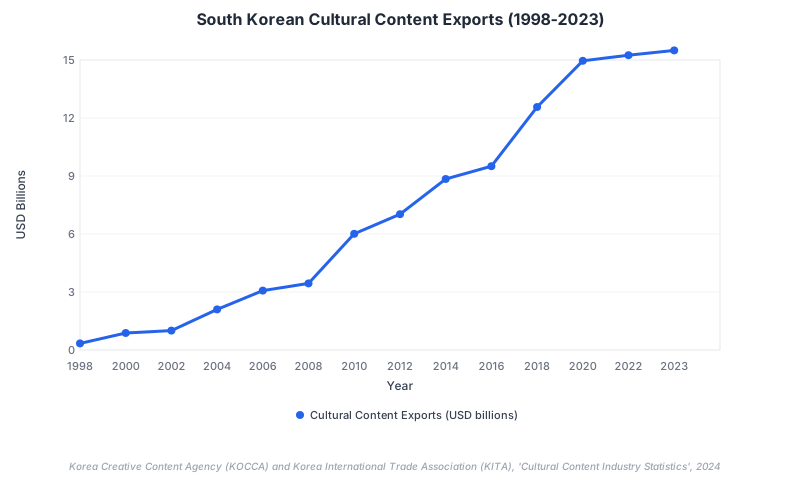
Korea's cultural export phenomenon began not in entertainment studios, but in government offices. Following the 1997 Asian Financial Crisis, President Kim Dae-jung identified cultural industries as a key economic recovery strategy[2]. The government established the Korea Creative Content Agency (KOCCA) in 1999 and allocated $148 million toward cultural content development over five years. This period saw the emergence of Korea's cultural export infrastructure. SM Entertainment, founded by Lee Soo-man in 1995, began systematically developing idol groups using a trainee system that became the industry standard[3]. The company's approach combined rigorous training in singing, dancing, and languages with careful image management and strategic marketing. Television dramas led Korea's initial cultural breakthrough. "What Is Love" (1998) became the first Korean drama to gain significant popularity in China, demonstrating the commercial viability of Korean content in international markets[4]. This success proved that Korean stories could resonate with Asian audiences who found Korean content more culturally accessible than Western productions. "Winter Sonata" (2002) sparked unprecedented enthusiasm in Japan, where Korean cultural imports had been restricted until 1998 due to historical tensions[5]. The drama's success generated significant economic activity and attracted hundreds of thousands of Japanese tourists to filming locations, establishing the template for content-driven cultural tourism. By 2003, Korean cultural exports reached approximately $500 million annually. The focus remained on establishing production capabilities, developing talent pipelines, and proving market demand within Asia. Government support provided both financial backing and diplomatic assistance to overcome historical barriers to cultural exchange.The Regional Expansion Era (2004-2009): Building the Hallyu Foundation
The mid-2000s marked Korean culture's expansion beyond its initial Chinese and Japanese markets. Cultural exports grew to $1.87 billion by 2009—a nearly four-fold increase from 2003[6]. K-pop began taking its modern form during this era. TVXQ became the first Korean group to achieve massive success across multiple Asian markets simultaneously. Their Japanese releases achieved significant commercial success, demonstrating that Korean acts could compete directly with established Japanese artists[7]. The "idol system" reached new levels of sophistication. Entertainment companies began recruiting trainees internationally and investing heavily in multilingual capabilities. Super Junior, debuting in 2005, pioneered the concept of sub-units targeting different markets, with Super Junior-M specifically created for Chinese audiences. Korean dramas expanded their thematic range and production values significantly. "Dae Jang Geum" (2003-2004) achieved unprecedented international success, airing in 91 countries and generating substantial export revenue[8]. The series' focus on Korean traditional culture, cuisine, and medicine created new categories of cultural export. Korean cinema emerged as an international force. Directors like Park Chan-wook and Bong Joon-ho gained international recognition, with "Oldboy" (2003) winning the Palme d'Or at Cannes. While Korean films initially found success primarily in art house circuits, they established Korea's reputation for innovative, high-quality filmmaking. The infrastructure for cultural export became increasingly sophisticated. Social media platforms like YouTube began providing direct channels for Korean content to reach international audiences without traditional gatekeepers—a development that would prove crucial in the next phase.The Digital Revolution (2010-2015): Social Media Meets Strategic Content
The 2010s represented a watershed moment for Korean cultural exports, as digital platforms transformed distribution and audience engagement. Korean cultural exports grew to $5.2 billion by 2015[9]. Psy's "Gangnam Style" became the catalyst for K-pop's global breakthrough in 2012. The song's YouTube video became the first to reach one billion views, fundamentally changing how the music industry understood viral content and international market penetration[10]. While Psy didn't sustain long-term global success, "Gangnam Style" proved Korean content could achieve massive international appeal. Third-generation K-pop groups marked a strategic shift toward global markets from debut. Groups like BIGBANG, Girls' Generation, and later BTS and BLACKPINK were designed with international appeal in mind, incorporating English lyrics and Western musical elements while maintaining distinctly Korean characteristics. Social media became central to Korean entertainment strategy. Entertainment companies invested heavily in YouTube content, Twitter engagement, and fan community management. The concept of "fan service" evolved into sophisticated digital relationship management, with idols maintaining regular communication with international fans through multiple platforms. Korean dramas experienced their own digital revolution. "My Love from the Star" (2013-2014) became a phenomenon across Asia, generating billions in related economic activity[11]. The series demonstrated how Korean content could drive consumer behavior across multiple industries, from cosmetics to fashion to tourism. Streaming platforms began recognizing Korean content's value. Netflix started investing in Korean productions, while Asian streaming services like Viki specialized in Korean content with multilingual subtitles. This infrastructure development proved crucial for the next phase of global expansion.The Global Breakthrough (2016-2019): Mainstream Recognition and Market Maturation
The late 2010s witnessed Korean cultural products achieving mainstream recognition in Western markets—traditionally the most difficult to penetrate. Korean cultural exports reached $9.5 billion by 2019, with significant growth in non-Asian markets for the first time[13]. BTS emerged as the primary driver of K-pop's Western breakthrough. Their 2017 Billboard Music Award win and subsequent Billboard 200 chart success marked the first time a Korean act achieved sustained mainstream American success. Their 2018 album "Love Yourself: Tear" debuted at number one on the Billboard 200, while their United Nations General Assembly speech positioned them as global cultural ambassadors[14]. The group's success demonstrated key factors in Korean culture's global appeal. Their music incorporated universal themes of self-acceptance and social commentary while maintaining Korean linguistic and cultural elements. Their sophisticated social media strategy created parasocial relationships with fans worldwide. Most importantly, their success proved non-English content could achieve mainstream Western success without complete cultural assimilation. Korean dramas found new global audiences through Netflix's expanding international presence. "Descendants of the Sun" (2016) became a global phenomenon, generating substantial economic impact and attracting millions of tourists to filming locations[15]. Korean cinema achieved new international recognition. "Burning" (2018) became the first Korean film nominated for the Academy Award for Best Foreign Language Film, while "Parasite" began its festival circuit journey toward historic Oscar wins. The beauty and fashion industries became significant cultural export categories. Korean cosmetics exports grew substantially, driven largely by global popularity of Korean entertainment[16]. The "K-beauty" phenomenon demonstrated how cultural content could drive consumer behavior across multiple industries. Major entertainment companies went public, attracting significant international investment. HYBE (formerly Big Hit Entertainment) raised $800 million in its 2020 IPO, achieving a valuation over $4 billion[17]. This financial success attracted global attention to Korean entertainment as a legitimate investment sector.The Pandemic Acceleration and Global Dominance (2020-2024): Cultural Superpower Status
The COVID-19 pandemic paradoxically accelerated Korean cultural exports' global reach. With audiences worldwide confined to homes and seeking new content, Korean productions found unprecedented global audiences. Cultural exports reached $7.8 billion by 2022[18]. "Parasite" achieved historic success at the 2020 Academy Awards, becoming the first non-English film to win Best Picture. The film generated $262 million worldwide and fundamentally changed Hollywood's perception of non-English content's commercial viability[19]. Director Bong Joon-ho's observation that audiences need only overcome "the one-inch tall barrier of subtitles" proved prophetic. "Squid Game" (2021) became Netflix's most-watched series globally, viewed by 142 million households in its first month[20]. The series cost only $21.4 million to produce while generating substantial value for Netflix, demonstrating Korean content's exceptional return on investment. The show sparked a 40% increase in Korean language learning app downloads and global conversations about economic inequality. K-pop achieved new heights of commercial success. BTS became the first group since The Beatles to earn three number-one albums on the Billboard 200 in less than a year. Their 2021 single "Butter" spent ten weeks at number one on the Billboard Hot 100[21]. BLACKPINK became the first Korean girl group to perform at major Western music festivals, including Coachella 2022. Streaming platforms significantly increased Korean content investments. Netflix committed $500 million to Korean content production over 2021-2022, while Disney+ and Apple TV+ launched their own Korean content initiatives[23]. This investment created a virtuous cycle, with increased production budgets enabling higher production values and more ambitious projects. The economic impact extended beyond direct exports. Korean cultural tourism generated substantial revenue pre-pandemic[25], with post-pandemic recovery exceeding pre-pandemic levels by 2023. Korean language learning experienced unprecedented growth, with Duolingo reporting a 40% increase in Korean language learners in 2021.The Infrastructure Behind Success: Technology, Investment, and Systematic Development
Korean cultural exports' success resulted from sophisticated infrastructure development spanning technology, finance, and human capital. This systematic approach distinguished Korea from other countries attempting cultural export strategies. The trainee system became increasingly sophisticated and international. Major entertainment companies now recruit globally, with trainees from Japan, China, Thailand, Australia, and the United States. SM Entertainment's training center houses over 300 trainees at any given time, with comprehensive programs covering performance, languages, media training, and cultural adaptation[26]. Technology integration became central to Korean entertainment strategy. Companies invested heavily in production technology, with Korean music videos achieving cinematic production values that often exceed Western counterparts' budgets. Virtual and augmented reality technologies enabled new fan engagement methods, while sophisticated data analytics informed content development and marketing strategies. Financial markets recognized Korean entertainment's value. The combined market capitalization of major Korean entertainment companies reached $10-12 billion by 2023[27]. International investment flowed into the sector, with Chinese, Japanese, and American companies acquiring stakes or forming joint ventures. Distribution networks became increasingly sophisticated. Korean companies established international subsidiaries, formed partnerships with local distributors, and developed direct-to-consumer platforms. Weverse, HYBE's fan platform, achieved 8.3 million monthly active users globally by 2023[28].Cultural and Economic Impact: Reshaping Global Entertainment Consumption
Korean cultural exports have fundamentally altered global cultural consumption patterns and challenged Western cultural hegemony in ways that seemed impossible 25 years ago. Language learning represents one of the most measurable impacts. Korean language enrollment in U.S. universities increased significantly between 2015 and 2020[29]. The King Sejong Institute expanded from 90 institutes in 2010 to 234 institutes in 76 countries by 2023. Consumer behavior changes have been profound. Korean beauty products achieved 15% market share in several Western countries, while Korean food products became mainstream supermarket offerings. Korean fashion brands achieved international recognition, with several Korean designers showing at Paris and Milan Fashion Weeks. Tourism patterns shifted significantly. Pre-pandemic, cultural tourism accounted for 55% of foreign visitors to Korea[30]. Cultural sites featured in popular dramas and music videos became major tourist destinations, with some locations seeing visitor increases over 300%. The "Korean premium" became a recognized market phenomenon. Products associated with Korean culture command price premiums in international markets, from cosmetics to electronics to food products. This premium reflects Korean culture's association with innovation, quality, and trendiness. Korean content's willingness to address serious social issues while maintaining entertainment value created new expectations for global content. "Squid Game's" critique of economic inequality sparked worldwide conversations, while K-pop's emphasis on mental health awareness influenced youth culture globally.Challenges and Criticisms: The Darker Side of Cultural Dominance
Korean cultural exports' success has not been without controversy. The industry faces significant criticisms regarding labor practices, cultural homogenization, and psychological impacts on performers and consumers. The entertainment industry's treatment of performers has drawn international criticism. The trainee system's demands—including restrictive contracts, intense schedules, and limited personal freedom—have been compared to exploitative labor practices[31]. Several high-profile suicides among K-pop performers highlighted the industry's mental health challenges and pressure-intensive culture. Cultural authenticity debates have emerged as Korean content adapts to global markets. Critics argue that increasing Western influence dilutes Korean cultural distinctiveness, while others contend that cultural evolution is natural and necessary for global relevance. The balance between maintaining cultural identity and achieving international appeal remains contentious. Market saturation concerns are growing. With numerous countries attempting to replicate Korea's cultural export success, competition for global attention intensifies. The sustainability of current growth rates faces questions as markets mature and novelty effects diminish. Gender and diversity issues persist within Korean entertainment. Despite some progress, the industry continues facing criticism for narrow beauty standards, limited LGBTQ+ representation, and gender inequality in leadership positions. Economic dependency risks have emerged as cultural exports become central to Korea's economy. Over-reliance on cultural industries creates vulnerability to changing consumer preferences, technological disruptions, or geopolitical tensions that could impact cultural exchange.Future Trajectories: Where Korean Cultural Power Heads Next
As Korean cultural exports enter their third decade, several trends suggest future development directions. The industry appears positioned for continued growth but faces new challenges requiring strategic adaptation. Technology integration will likely accelerate. Virtual reality concerts, AI-generated content, and blockchain-based fan engagement represent emerging frontiers. Korean companies are investing heavily in metaverse technologies, with several major entertainment companies developing virtual worlds for fan interaction. Market diversification continues expanding beyond traditional entertainment. Korean gaming companies achieved substantial exports in 2022, while Korean webtoons gained international recognition through platforms like Webtoon and Tapas[32]. Educational content, lifestyle products, and business consulting services represent emerging export categories. Sustainability initiatives are becoming increasingly important. Entertainment companies face pressure to address environmental impacts, labor practices, and social responsibility. Several major companies have announced carbon neutrality goals and improved performer welfare programs. Regional production strategies are emerging. Rather than exporting content produced in Korea, companies are establishing production facilities in key markets, creating localized content with Korean production expertise. This approach addresses cultural sensitivity concerns while maintaining quality standards. Government policy is evolving toward sustainable development rather than rapid growth. The focus has shifted to supporting industry infrastructure, international cooperation, and addressing social challenges within the entertainment sector. Geopolitical considerations are becoming more prominent. Cultural exports' role in international relations requires careful navigation of political sensitivities, particularly regarding China, Japan, and the United States. Cultural diplomacy has become an explicit component of Korea's foreign policy strategy.Korea's cultural export success may reflect strategic timing and digital marketing prowess rather than inherent cultural superiority. The same explosive growth might have been achieved by any nation that invested heavily in social media-savvy content creation and streaming platform partnerships during the digital transition period. Korea's "cultural superpower" status could be more about technological adoption and market timing than genuine cultural transformation.
The sustainability of Korea's cultural dominance remains questionable given historical precedent—Japanese cultural exports peaked in the 1980s-90s before plateauing, and Latin music experienced similar boom-bust cycles. Current Korean cultural consumption may be concentrated among specific demographics (urban, young, digitally-native) rather than representing broad mainstream adoption, suggesting we may be witnessing a novelty effect that could fade as global audiences seek the next cultural trend.
Key Takeaways
- Korean cultural exports grew from $500 million in 2003 to $7.8 billion in 2022, representing one of history's most successful soft power campaigns
- The transformation occurred across five distinct phases: foundation building (1998-2003), regional expansion (2004-2009), digital revolution (2010-2015), global breakthrough (2016-2019), and pandemic acceleration (2020-2024)
- Government policy provided crucial early support, but private investment and market forces now drive industry expansion
- Technology platforms—particularly social media and streaming services—were essential enablers of global reach and audience engagement
- Korean cultural exports have fundamentally altered global entertainment consumption patterns, challenging Western cultural hegemony and creating new market categories
- Success has generated significant economic impacts beyond entertainment, driving tourism, consumer products, language learning, and cultural exchange
- The industry faces ongoing challenges including labor practices, cultural authenticity questions, market saturation, and sustainability concerns
- Future growth will likely focus on technology integration, market diversification, sustainable practices, and regional production strategies
- Korean cultural exports have evolved from regional entertainment products to a comprehensive cultural ecosystem with global influence
- The phenomenon demonstrates how strategic cultural investment, combined with quality content and technological adaptation, can create sustained competitive advantages in global markets
References
- Korea Creative Content Agency. "2022 Content Industry Statistics." Ministry of Culture, Sports and Tourism, 2023.
- Kim, Dae-jung. "New Millennium Democratic Party Platform." Korean Government Archive, 1998.
- Lee, Soo-man. "Cultural Technology and the Making of K-pop." Harvard Business Review, 2012.
- Korean Broadcasting System. "Early Korean Drama Export Success." KBS International, 2000.
- Korea Tourism Organization. "Winter Sonata Tourism Impact." KTO Research, 2004.
- Korea International Trade Association. "Cultural Content Export Statistics 2003-2009." KITA Trade Database, 2010.
- Korea Creative Content Agency. "K-pop Export Performance 2000s." KOCCA Research, 2010.
- Korean Broadcasting System. "Dae Jang Geum International Distribution Report." KBS Media, 2005.
- Korea Creative Content Agency. "Hallyu White Paper 2015." KOCCA Publications, 2016.
- YouTube. "Gangnam Style Milestone Report." Google LLC, 2012.
- Korea Creative Content Agency. "Korean Drama Economic Impact Studies." KOCCA Research, 2014.
- Ministry of Science and ICT. "Creative Economy Initiative Budget Allocation." Korean Government, 2013.
- Bank of Korea. "Cultural Content Trade Balance 2019." BOK Economic Statistics, 2020.
- Billboard. "BTS Chart Performance Data 2017-2019." Billboard Media, 2019.
- Korea Tourism Organization. "Korean Drama Tourism Impact Studies." KTO Research, 2017.
- Korea Cosmetic Association. "K-Beauty Export Growth Analysis." KCA Trade Data, 2020.
- Korea Exchange. "HYBE IPO Data and Market Performance." KRX Market Data, 2020.
- Korea Creative Content Agency. "2022 Hallyu Survey Report." KOCCA Research Division, 2023.
- Box Office Mojo. "Parasite Worldwide Box Office Performance." IMDbPro, 2020.
- Netflix. "Squid Game Global Viewing Statistics." Netflix Media Center, 2021.
- Billboard. "BTS Hot 100 Chart Performance 2020-2021." Billboard Charts, 2021.
- Ministry of Culture, Sports and Tourism. "New Hallyu Initiative Budget and Programs." Korean Government, 2021.
- Variety. "Streaming Platforms Korean Content Investment Analysis." Variety Media, 2022.
- Korea Agro-Fisheries & Food Trade Corporation. "Korean Food Export Statistics 2021." aT Center, 2022.
- Korea Tourism Organization. "Cultural Tourism Revenue Analysis 2015-2019." KTO Statistics, 2020.
- SM Entertainment. "Global Trainee Program Annual Report." SM Entertainment, 2023.
- Korea Exchange. "Entertainment Industry Market Analysis." KRX Sector Analysis, 2023.
- HYBE Corporation. "Weverse Platform User Statistics Q4 2023." HYBE Quarterly Report, 2024.
- Modern Language Association. "Korean Language Enrollment in U.S. Higher Education." MLA Language Survey, 2021.
- Korea Tourism Organization. "Foreign Visitor Survey: Cultural Tourism Motivations." KTO Research Center, 2019.
- Fair Trade Commission. "Entertainment Industry Contract Practices Investigation." Korean FTC, 2021.
- Korea Creative Content Agency. "Game and Webtoon Export Statistics 2022." KOCCA Industry Report, 2023.