Why do wrongful convictions keep happening when DNA evidence has been available for decades?

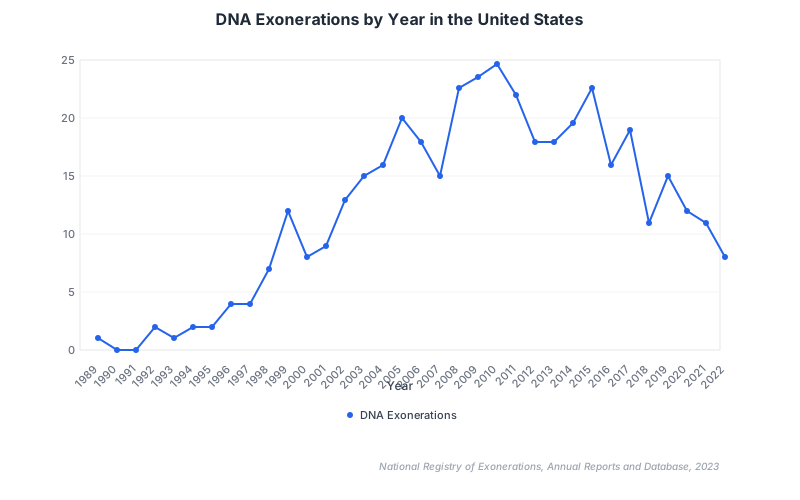
Despite DNA testing revolutionizing criminal justice—exonerating over 375 people in the United States since 1989—wrongful convictions continue plaguing the legal system at alarming rates. Estimates suggest 2% to 5% of all prisoners are innocent, extrapolated from DNA exoneration cases in serious crimes. This persistent crisis raises a fundamental question: if DNA evidence has been available for decades and proven so effective at revealing truth, why do innocent people still get convicted of crimes they didn't commit?
The answer lies not in DNA technology's limitations, but in the complex web of systemic issues, human factors, and institutional resistance characterizing modern criminal justice. Understanding why wrongful convictions persist requires examining how cases are investigated, prosecuted, and adjudicated—and recognizing that DNA evidence, while powerful, is neither universally available nor immune to misuse.
The Limited Scope of DNA Evidence
DNA evidence simply isn't available or relevant in most criminal cases. Biological evidence suitable for DNA testing exists in only a small percentage of all criminal cases, with availability varying significantly by crime type and jurisdiction[1]. This means the vast majority of criminal prosecutions must rely on other forms of evidence inherently more prone to error or manipulation.
Even when biological evidence exists, it may be degraded, contaminated, or insufficient for testing. Crime scenes are chaotic environments where evidence can be compromised by weather, time, or improper collection. In sexual assault cases, DNA evidence may be available, but in property crimes like burglary or fraud, biological evidence is rarely present. Many crime categories—including white-collar offenses, non-violent drug crimes, and property crimes—continue relying heavily on traditional evidence types that have historically contributed to wrongful convictions.
Furthermore, DNA evidence doesn't automatically prevent wrongful convictions. DNA can be misinterpreted, contaminated during collection or analysis, or its significance overstated or understated in court. Laboratory errors, while rare, do occur and can lead to false matches or exclusions[2].
Persistent Problems with Traditional Evidence
The primary drivers of wrongful convictions identified by the Innocence Project remain largely unchanged despite DNA availability: eyewitness misidentification, false confessions, official misconduct, perjury, and inadequate legal defense. These factors continue operating in cases where DNA evidence is unavailable or irrelevant.
Eyewitness misidentification contributes to approximately 70% of wrongful convictions overturned by DNA evidence[3]. Despite decades of psychological research demonstrating human memory and identification unreliability, many jurisdictions have been slow implementing recommended reforms like double-blind lineups, proper lineup construction, and confidence statements.
False confessions appear in a significant percentage of DNA exonerations, continuing to occur due to coercive interrogation techniques, psychological pressure, and particular vulnerability of juveniles and individuals with mental disabilities. The Reid Technique and similar interrogation methods, emphasizing psychological pressure and deception, remain widely used despite researcher and legal expert criticism.
Official misconduct—including evidence suppression, witness intimidation, and prosecutorial overreach—persists partly because accountability mechanisms remain weak. Prosecutors enjoy broad immunity from civil lawsuits, and professional sanctions for misconduct are rare and often insufficient to deter future violations.
Systemic Institutional Resistance
Perhaps the most significant barrier to preventing wrongful convictions is institutional resistance to change within the criminal justice system. Many stakeholders—law enforcement agencies, prosecutor's offices, and courts—have been slow adopting reforms that could reduce innocent conviction risks.
This resistance manifests in several ways. First, there's often reluctance to acknowledge wrongful convictions as a systemic problem rather than isolated incidents. When DNA exonerations occur, they're sometimes dismissed as rare exceptions rather than indicators of broader issues needing addressing. This mindset prevents comprehensive reform implementation.
Second, financial and resource constraints limit DNA testing availability. While DNA analysis costs have decreased significantly, it still requires substantial resources many jurisdictions lack. Crime laboratory backlogs can delay testing for months or years, and many jurisdictions lack funding to test evidence in older cases where DNA might prove innocence.
Third, procedural and legal barriers restrict DNA testing access. Many states have restrictive post-conviction DNA testing statutes limiting when and how convicted individuals can request testing. These laws often require defendants to meet stringent criteria, such as proving DNA testing would definitively establish innocence—a nearly impossible standard before testing is conducted.
The Role of Cognitive Biases and Tunnel Vision
Psychological factors play crucial roles in perpetuating wrongful convictions, even in an era of advanced forensic science. Confirmation bias—the tendency to seek information confirming existing beliefs while ignoring contradictory evidence—affects everyone in the criminal justice process, from police investigators to prosecutors to judges and juries.
Once investigators focus on a particular suspect, tunnel vision can set in, causing them to interpret all subsequent evidence supporting their case theory. This can lead to DNA evidence misinterpretation or dismissal of exculpatory DNA results. For example, if DNA evidence excludes the primary suspect, investigators might theorize the crime involved multiple perpetrators or that biological evidence is unrelated to the crime, rather than reconsidering their case theory.
Prosecutors face similar cognitive pressures, particularly given the adversarial legal system and professional incentives rewarding conviction rates. "Noble cause corruption"—where officials believe they're serving justice by bending rules or overlooking problems—can lead prosecutors to minimize DNA evidence significance that might undermine their case.
Inadequate Legal Representation and Resource Disparities
Legal representation quality remains a critical factor in wrongful convictions. Many defendants, particularly those unable to afford private attorneys, receive inadequate legal representation failing to properly investigate cases, challenge evidence, or request appropriate DNA testing.
Public defender systems nationwide are chronically underfunded and overwhelmed with caseloads making thorough investigation and preparation nearly impossible[4]. Defense attorneys may lack resources to hire expert witnesses who can properly interpret DNA evidence or challenge prosecution forensic claims. They may also be unfamiliar with latest forensic science developments or lack time to adequately prepare for complex scientific testimony.
This resource disparity is particularly pronounced in capital cases, where stakes are highest. While death penalty cases typically receive more defense resources, DNA evidence complexity and other forensic science issues require specialized expertise many defense teams lack.
Evolving Science and Interpretation Challenges
Forensic DNA analysis continues evolving, creating new challenges for accurate interpretation and evidence presentation. Low-template DNA analysis, mixture interpretation, and statistical calculations of match probabilities have become increasingly sophisticated, but also more complex and prone to expert disagreement.
New techniques like familial DNA searching and phenotyping have expanded DNA evidence investigative potential, but also created new opportunities for error and misinterpretation. These advanced techniques require specialized training and expertise that may not be available in all jurisdictions or to all legal process participants.
Moreover, presenting DNA evidence to juries remains challenging. The "CSI effect"—where jurors have unrealistic forensic evidence expectations based on television portrayals—can lead to both over-reliance on DNA evidence when present and inappropriate expectations for its availability when absent. Jurors may not understand DNA evidence limitations or statistical interpretation significance, leading to wrongful convictions even when DNA evidence is properly collected and analyzed.
International Perspectives and Comparative Analysis
International experiences provide additional insight into why wrongful convictions persist despite available DNA technology. Countries with different legal systems and forensic evidence approaches offer varying models for preventing wrongful convictions.
The United Kingdom has implemented comprehensive reforms following several high-profile wrongful conviction cases, establishing independent forensic science services and robust post-conviction review processes. However, even with these reforms, wrongful convictions continue occurring, suggesting systemic changes alone are insufficient without ongoing attention to implementation and cultural change within criminal justice institutions.
Continental European countries with inquisitorial rather than adversarial legal systems have different wrongful conviction patterns, but face similar challenges with eyewitness identification, false confessions, and forensic evidence interpretation. These comparative experiences suggest wrongful convictions transcend particular legal system structures and reflect deeper challenges in human decision-making and institutional design.
Some criminal justice experts argue that focusing on wrongful convictions, while important, may create unrealistic expectations for a system that must balance protecting innocents with ensuring dangerous criminals don't escape justice due to overly cautious procedures. They contend that the 2-5% wrongful conviction estimate—extrapolated primarily from DNA exonerations in serious crimes—may not reflect the broader criminal justice system and could lead to costly reforms diverting resources from other public safety measures with greater overall benefit.
An alternative interpretation suggests that what reformers label as "institutional resistance" to DNA testing and other changes may actually reflect rational resource allocation decisions by cash-strapped jurisdictions forced to prioritize immediate public safety needs. From this perspective, some apparent "confirmation bias" in investigations might represent efficient decision-making based on investigative experience, and the adversarial system's competitive nature—while imperfect—serves its intended purpose of rigorously testing evidence before conviction.
Key Takeaways
- DNA evidence is only available in a small percentage of criminal cases, leaving most prosecutions dependent on traditional evidence types prone to error
- The primary causes of wrongful convictions—eyewitness misidentification, false confessions, official misconduct, and inadequate defense—continue operating regardless of DNA availability
- Institutional resistance to reform, resource constraints, and legal barriers limit DNA testing implementation and other preventive measures
- Cognitive biases and tunnel vision affect all criminal justice participants, leading to misinterpretation or dismissal of exculpatory evidence
- Inadequate legal representation, particularly for indigent defendants, prevents proper utilization of available DNA evidence and expert testimony
- The evolving complexity of DNA science creates new challenges for accurate interpretation and jury presentation
- Preventing wrongful convictions requires comprehensive systemic reform beyond simply making DNA testing available
References
- National Institute of Justice. "DNA Evidence: Basics of Identifying, Gathering and Transporting." U.S. Department of Justice, 2012.
- Thompson, William C. "Painting the Target Around the Matching Profile: The Texas Sharpshooter Fallacy in Forensic DNA Interpretation." Law, Probability and Risk, vol. 8, no. 3, 2009, pp. 257-276.
- Innocence Project. "Eyewitness Misidentification." The Innocence Project, accessed 2024.
- American Bar Association Standing Committee on Legal Aid and Indigent Defendants. "Ten Principles of a Public Defense Delivery System." American Bar Association, 2002.