How to Build a Profitable Career as a Religious Art Specialist: From Museum Curator to Private Dealer
The intersection of faith and artistic expression has created some of history's most profound masterpieces, from Michelangelo's Sistine Chapel ceiling to Salvador Dalí's mystical late-period works exploring Catholic themes. As museums worldwide house billions of dollars in religious art and private collectors increasingly seek spiritual pieces, a specialized career path has emerged for those who understand both the aesthetic and theological dimensions of sacred art. Religious art specialists can command premium positions in major auction houses, prestigious museums, and private galleries, with senior roles at major institutions offering substantial compensation.
This comprehensive guide examines the concrete steps, educational requirements, and strategic career moves needed to build a profitable career specializing in religious art, whether as a museum curator, auction house expert, or independent dealer. The field demands both rigorous academic training and practical market knowledge, as specialists must authenticate works, understand iconographic traditions, and navigate the complex intersection of art history, theology, and commerce.
Educational Foundation and Specialized Training
Building expertise in religious art requires a layered educational approach combining art history, religious studies, and practical connoisseurship skills. The foundation typically begins with a bachelor's degree in Art History, Religious Studies, or a related field, with specific coursework in medieval art, Renaissance studies, or denominational art traditions.
Most museum curators hold master's degrees, with many religious art specialists pursuing dual degrees. The most prestigious programs include the Institute of Fine Arts at New York University, which offers specialized seminars in Byzantine art and medieval manuscripts, and Yale University's History of Art department, known for its strength in Renaissance religious painting. The Courtauld Institute in London provides exceptional training in European religious art traditions, while the Pontifical Institute of Mediaeval Studies in Toronto offers unique expertise in Catholic artistic traditions.
Essential specialized certifications include the American Association of Museums' Museum Studies Certificate and the International Association of Dealers in Ancient, Oriental and Primitive Art (IADAOPA) authentication training. The Appraisers Association of America offers the Certified Appraiser credential, specifically valuable for religious art specialists working in the commercial market.
Language skills prove crucial, as primary sources and scholarly literature often appear in Latin, Greek, Italian, French, or German. The ability to read medieval Latin, in particular, distinguishes serious religious art scholars when examining manuscript illuminations, church records, and historical documentation of provenance.
Museum Curator Career Path
Museum curators specializing in religious art typically follow a structured progression from assistant positions to department leadership roles. Entry-level positions at major institutions vary widely in compensation, with progression dependent on institutional budgets, experience, and specialization.
The career trajectory typically follows this pattern: Research Assistant → Assistant Curator → Associate Curator → Curator → Chief Curator or Department Head. Progression timelines vary significantly, with exceptional candidates advancing more quickly while others may spend decades reaching senior positions.
Successful museum curators must master multiple competencies beyond art historical knowledge. Exhibition planning requires project management skills, often utilizing specialized software for timeline coordination. Collections management systems like TMS (The Museum System) or PastPerfect demand technical proficiency for cataloging and tracking religious artifacts. Grant writing capabilities prove essential, as many exhibitions depend on funding from organizations like the National Endowment for the Arts, the Kress Foundation, or denominational institutions.
Dr. Barbara Drake Boehm, Senior Curator of Medieval Art at the Metropolitan Museum of Art, exemplifies this career path, having built her reputation through specialized exhibitions and scholarly publications. Her progression illustrates how expertise in specific periods and regions creates advancement opportunities.
Auction House and Commercial Gallery Specialization
The commercial art market offers potentially higher financial rewards but demands different skills than museum work. Major auction houses like Sotheby's, Christie's, and Bonhams employ religious art specialists in various departments, with Old Master Paintings specialists often handling significant religious works.
Sotheby's Institute of Art offers a Master's in Art Business with concentrations in Old Master Paintings, while Christie's Education provides specialized courses in art market dynamics. These programs provide direct pipelines into auction house careers, though they require substantial financial investment.
The auction market for religious art shows consistent strength, with major auction houses regularly featuring significant religious works. Christie's achieved record prices for religious art, including the controversial sale of Leonardo da Vinci's "Salvator Mundi" in 2017, though authentication debates continue surrounding that particular work.
Commercial gallery specialists focus on building relationships with collectors, institutions, and dealers. Successful practitioners like Robert Simon, who co-discovered and authenticated "Salvator Mundi," demonstrate how deep expertise combined with market acumen creates exceptional opportunities. Gallery specialists typically work on commission structures that can vary widely based on sales performance.
Essential skills for commercial success include condition reporting using standardized terminology from the American Institute for Conservation, photography and digital documentation using professional equipment for detailed condition records, and networking within collector communities. Membership in relevant professional organizations provides crucial professional connections.
Independent Dealing and Consulting
Independent dealers and consultants represent the highest-risk, highest-reward path in religious art careers. Successful independent specialists like Dr. Stephen Ongpin, who specializes in Old Master drawings including religious subjects, or Katrin Bellinger, known for medieval and Renaissance works, demonstrate how expertise and reputation enable independent practices.
Starting an independent practice requires substantial capital reserves for initial inventory and operating expenses. Professional insurance proves essential for both inventory protection and liability coverage. Specialized art insurance providers offer coverage tailored to dealers and collectors, though costs vary significantly based on collection value and risk assessment.
Revenue streams for independent specialists include direct sales, authentication services, consultation fees, and catalogue raisonné projects. Successful independents can achieve substantial annual revenues, though net profits vary significantly based on expenses and market conditions.
Digital marketing proves increasingly important for independent dealers. Professional websites with high-quality photography and detailed provenance information serve as virtual galleries. Social media presence helps build collector relationships, while participation in virtual art fairs expands market reach.
Authentication and Attribution Expertise
Authentication represents one of the most specialized and well-compensated aspects of religious art careers. The ability to definitively attribute works to specific artists, workshops, or periods commands premium fees and establishes professional reputation. Scholars like Dr. Keith Christiansen at the Metropolitan Museum of Art exemplify how scholarly rigor builds market credibility.
Technical analysis skills prove essential for authentication work. Training in scientific examination methods through institutions like the Straus Center for Conservation and Technical Studies at Harvard Art Museums provides expertise in X-radiography, infrared reflectography, and pigment analysis. The International Centre for the Study of the Preservation and Restoration of Cultural Property (ICCROM) offers advanced courses in technical art history.
Connoisseurship development requires extensive museum study and hands-on examination of authenticated works. The Frick Collection's study room program allows researchers to examine works closely, while the Samuel H. Kress Foundation provides fellowships for emerging scholars to study Italian Renaissance art in European museums. These experiences, combined with mentorship from established experts, build the visual memory essential for attribution work.
Legal considerations around authentication create both opportunities and risks. Authentication opinions carry potential liability, requiring careful documentation and conservative language. Professional organizations provide resources on best practices for authentication work and guidelines for ethical dealing practices.
Technology and Digital Transformation
The religious art field increasingly embraces digital technologies for research, marketing, and collection management. Proficiency in digital tools creates competitive advantages and opens new revenue streams for specialists.
Digital cataloguing systems enable comprehensive collection management with searchable databases, condition reporting, and provenance tracking. High-resolution digital photography using professional equipment enables detailed documentation and virtual exhibitions. RTI (Reflectance Transformation Imaging) technology reveals surface details invisible to conventional photography, proving valuable for authentication and condition assessment.
Virtual reality applications create new exhibition possibilities, particularly for religious art in situ contexts. Companies developing VR experiences for museums and educational institutions create opportunities for specialists to consult on historically accurate virtual environments.
Blockchain technology for provenance tracking, while still emerging, shows promise for addressing authentication and ownership questions. Various platforms pilot blockchain applications for art documentation, potentially revolutionizing how religious art provenance is recorded and verified.
Building Professional Networks and Reputation
Success in religious art specialization depends heavily on professional relationships and scholarly reputation. Strategic networking requires participation in multiple professional communities and consistent contribution to scholarly discourse.
Key professional organizations include the College Art Association (CAA), which hosts the field's premier annual conference with sessions on religious art topics, and the International Center of Medieval Art (ICMA), offering specialized symposia and publications. The Renaissance Society of America provides networking opportunities for specialists in later religious art, while the Association of Art Museum Curators offers career development resources.
Scholarly publishing builds professional credibility and market reputation. Peer-reviewed journals like The Art Bulletin, Gesta (for medieval art), and Renaissance Quarterly provide platforms for research publication. Museum catalogues and exhibition publications offer opportunities to work directly with collections while building scholarly credentials.
Conference presentations at venues like the Annual Byzantine Studies Conference or the International Congress on Medieval Studies at Western Michigan University establish expertise within specialist communities. These presentations often lead to consulting opportunities, acquisition referrals, and collaborative research projects.
Market Trends and Future Opportunities
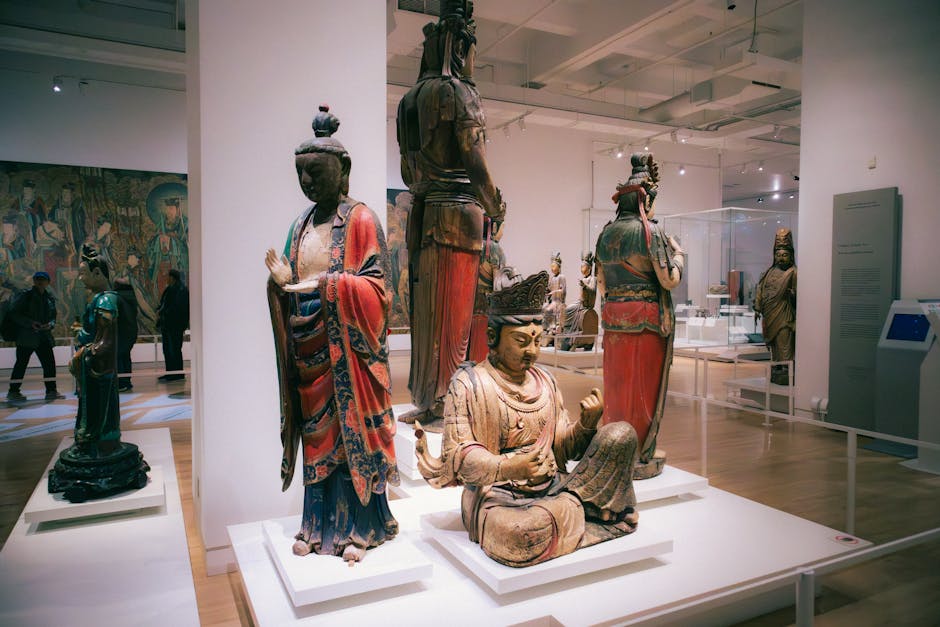
The religious art market shows several emerging trends creating new opportunities for specialists. Growing collector interest in non-Western religious traditions, including Buddhist, Hindu, and Islamic art, creates demand for specialists with expertise beyond the traditional Christian European focus.
The market for medieval manuscripts and illuminations remains particularly strong, with major sales at auction houses consistently achieving high prices. Digital art and NFTs (Non-Fungible Tokens) create new categories requiring specialist knowledge, as the market for blockchain-verified religious imagery grows.
Restitution and provenance research create expanding opportunities for specialists with expertise in World War II-era art displacement. Various databases and initiatives require specialists who can trace ownership histories of religious art displaced during the war. This work, often funded by government grants and museum initiatives, provides opportunities for specialists with appropriate research skills.
While the article emphasizes lucrative opportunities in religious art, it may overlook a fundamental tension: many religious communities increasingly question whether their sacred objects should be commodified at all. The growing repatriation movement and calls for decolonizing museums suggest that future specialists may need to navigate a field where commercial success conflicts with cultural respect and community ownership rights.
The article's optimistic career projections may reflect survivorship bias, highlighting only those who achieved success while ignoring the majority who struggle in an oversaturated field. With major museums hiring infrequently and many positions being grant-funded and temporary, aspiring religious art specialists might find themselves working multiple part-time positions without the stability or income the article suggests.
Key Takeaways
- Religious art specialists can pursue careers as museum curators, auction house experts, or independent dealers, each requiring different skill sets and offering varying compensation levels
- Educational foundation typically requires master's degree in Art History or Religious Studies, plus specialized certifications from professional organizations
- Museum curator progression follows structured path from assistant positions to department leadership over many years
- Commercial gallery and auction house specialists may earn higher income but require different market-focused skills
- Independent dealers represent highest risk/reward option, requiring substantial startup capital but offering potential for significant revenue
- Authentication expertise commands premium fees and requires technical analysis training
- Digital technology proficiency creates competitive advantages in cataloguing, documentation, and marketing
- Professional networking through relevant organizations proves essential for career advancement
- Emerging opportunities include non-Western religious art specialization, digital art applications, and provenance research
- Strong auction market performance demonstrates continued commercial viability for quality religious art