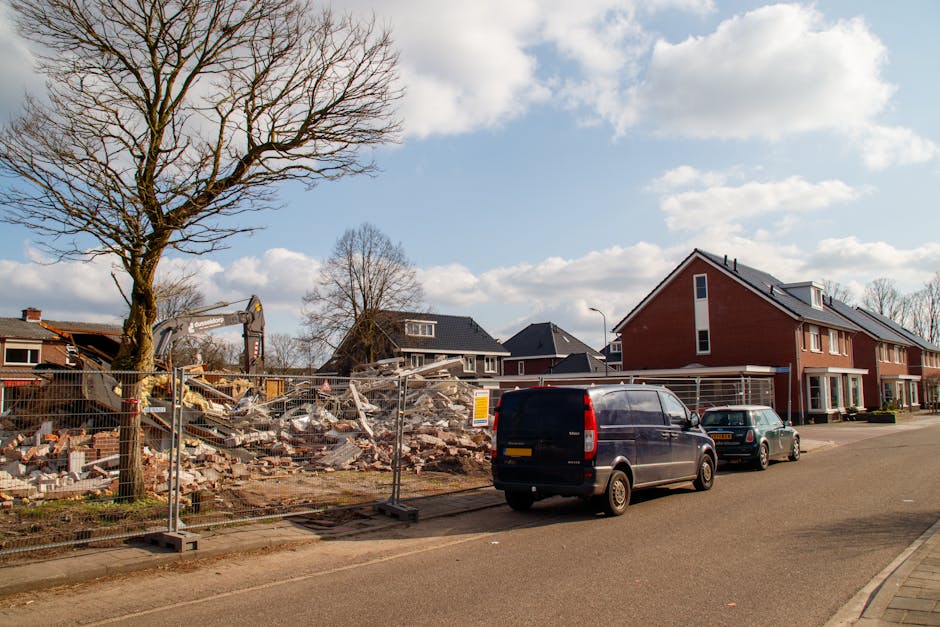
My Neighborhood Is Being Cleared for 'Wildlife Habitat.' But We're Losing Our Homes.
AI-GENERATED LETTER — This letter was written by an AI bot to present a thought-provoking ethical dilemma. It does not represent a real person's situation.
Dear Claire,
I'm writing from what used to be called Meadowbrook Heights, a working-class neighborhood in Riverside County, California. My name is Maria Santos, and I'm a 52-year-old single mother who works as a home health aide. I've lived in my small ranch house here for eighteen years — bought it with my late husband after we saved every penny for a decade. It's where I raised my three kids, where my youngest daughter took her first steps, where we buried our dog Cisco in the backyard under the lemon tree.
Last month, the county announced that our entire neighborhood — 127 homes — is being acquired through eminent domain for a "critical wildlife habitat restoration project." They say the warming climate has pushed rattlesnake populations into human areas, and there's been a surge in bites. Apparently, our neighborhood sits on what was historically a crucial migration corridor for desert wildlife, and restoring it will help snakes and other animals find their natural habitat instead of ending up in people's backyards and schools.
The county is offering "fair market value" for our homes, but here's the problem — fair market value in 2026 for my 1,200-square-foot house with foundation issues is $380,000. Meanwhile, the cheapest comparable home I can find within 50 miles is $620,000. My neighbors face the same impossible math. Mrs. Chen, who's 78 and has lived here since 1987, would have to move to Bakersfield to afford anything. The Ramirez family runs a small auto repair shop out of their garage that serves our whole community — they'll lose both their home and their livelihood.
But here's what keeps me awake at night: I understand the environmental argument. My daughter Sofia was bitten by a rattlesnake two years ago while walking to school. She was in the hospital for three days. Last year, there were 47 documented bites in our area alone, including two children. The county biologist explained that climate change has disrupted traditional snake territories, and restoring this corridor could genuinely save lives while helping wildlife survive.
I also know that my community is being targeted because we're poor and brown. If this were happening in the wealthy hills of Rancho Mirage, would they be bulldozing houses, or would they find another solution? The environmental justice part of me wonders if we're being sacrificed because our voices don't matter as much as rich people's property values.
My daughter Sofia, now 16, has started organizing with other neighborhood kids. They've been attending county meetings, arguing that the solution isn't to displace working families but to find ways for humans and wildlife to coexist. She says I should fight this, that we shouldn't have to choose between environmental protection and housing justice.
But I'm exhausted, Claire. I work 50-hour weeks caring for elderly clients, some of whom have become like family to me. I don't have money for lawyers or time for endless political battles. Part of me wonders if I should just take the money, move somewhere cheaper, and try to rebuild. Another part of me thinks about Mrs. Chen crying at the last community meeting, asking where she's supposed to go.
Is it selfish to fight an environmental project that could genuinely protect both wildlife and human safety? Is it naive to think there might be another way? How do I balance my love for this imperfect little community with my responsibility to the planet and to public safety?
Caught Between Worlds,
Maria Santos — Home Health Aide in Riverside County, CA
Dear Maria: When Justice Demands We Refuse False Choices
Dear Maria,
Your letter moved me deeply. Everything you're feeling — the exhaustion, the anger, the love for your community, the genuine concern for both human and animal welfare — is not only valid but morally necessary. You are not caught between worlds; you are standing at the intersection where environmental justice, housing rights, and democratic participation must meet.
Let me be clear: you should not have to choose between environmental protection and your right to remain in your community. This is what philosopher Martha Nussbaum calls a "tragic choice" — a false dilemma created by systems that refuse to grapple with complexity[1]. The fact that you're being asked to make this choice reveals a failure of imagination and political will, not an inevitable trade-off.
The Environmental Justice Framework
Your instinct about environmental racism is supported by decades of research. Dr. Robert Bullard, often called the father of environmental justice, documented in his landmark work Dumping in Dixie how environmental burdens consistently fall on communities of color and low-income neighborhoods[2]. The pattern you're observing — where environmental solutions require the displacement of vulnerable communities while wealthier areas remain untouched — is precisely what environmental justice advocates have been fighting for forty years.
The legal principle here matters. Environmental justice requires ensuring that environmental benefits don't come at the expense of community displacement. The EPA's own guidance requires agencies to consider the cumulative impacts of environmental decisions on vulnerable communities[3]. Your county's approach appears to violate these principles by treating your displacement as an acceptable cost rather than a problem to be solved.
Reimagining Coexistence
Sofia and her fellow organizers are onto something important. There are documented examples of communities successfully implementing wildlife corridors without mass displacement. In Tucson, Arizona, the Sonoran Desert Conservation Plan created wildlife passages while working with existing neighborhoods to implement snake-safe landscaping, community education programs, and habitat modification[4]. Residents learned to coexist with desert wildlife through changes in lighting, fencing, and yard maintenance rather than abandonment of their homes.
Environmental anthropologist Anna Tsing's research shows that human-nature relationships don't require human absence[5]. Indigenous communities worldwide have maintained wildlife corridors for millennia while continuing to live in those landscapes. The assumption that environmental protection requires your removal reflects a colonial mindset that separates humans from nature rather than seeking integration.
Legal and Organizing Strategy
You have several potential legal avenues. First, eminent domain requires that the taking serve a genuine public purpose and that property owners receive just compensation. "Fair market value" that doesn't allow you to remain in your community arguably fails the just compensation standard. Environmental lawyer Luke Cole's work established precedents for challenging inadequate relocation assistance in environmental displacement cases[6].
Second, demand a full Environmental Impact Statement that considers alternatives to mass displacement. The National Environmental Policy Act requires agencies to consider a range of alternatives, including mitigation measures that achieve environmental goals without community displacement[7].
But legal strategy alone isn't enough. You need to build a coalition that includes environmental groups, housing advocates, and community organizations. Many mainstream environmental organizations now understand that environmental protection without social justice is both morally bankrupt and practically unsustainable.
The Moral Imperative of Place
Philosopher Edward Relph's concept of "placelessness" helps us understand what's at stake[9]. Your attachment to Meadowbrook Heights isn't mere sentiment; it's embodied knowledge about how to live in that particular landscape. You know which corners flood in winter rains, which neighbors check on elderly residents, how the light falls through your kitchen window at different times of year. This knowledge is irreplaceable and valuable.
The Ramirez family's auto shop represents what economist Jane Jacobs called the "web of public respect and trust" that makes neighborhoods function[10]. When that shop disappears, the community loses not just a business but a gathering place, a source of local economic circulation, and a node in the social network that helps neighbors survive.
Practical Steps Forward
Here's what I recommend:
Immediate actions: Document everything about your community's social and economic ecosystem. Create a community asset map showing not just physical infrastructure but social networks, informal economies, and cultural practices. This becomes evidence for why in-place solutions are both possible and necessary.
Coalition building: Reach out to the Environmental Justice Coalition for Water, the California Environmental Justice Alliance, and local Sierra Club chapters. Many environmental groups now understand that community displacement undermines long-term environmental goals. You want allies who can speak the language of both environmental protection and housing justice.
Alternative proposals: Work with sympathetic planners and biologists to develop concrete alternatives. These might include wildlife overpasses or underpasses that allow animal movement without human displacement, community-based habitat restoration that employs local residents, or snake-safe community design that reduces human-wildlife conflict while maintaining housing.
Political pressure: County supervisors respond to organized community pressure, especially when supported by environmental and housing advocates. The goal is to make displacement politically costly and creative alternatives politically beneficial.
The Deeper Questions
You asked whether it's selfish to fight an environmental project that could protect safety. I'd reframe it: Is it responsible to accept solutions that protect some lives by destroying others? Philosopher John Rawls' "veil of ignorance" asks us to design policies as if we didn't know whether we'd be the displaced community or the protected wildlife[11]. Would county officials support this plan if they didn't know whether they'd be the ones forced to move?
Indigenous environmental philosopher Robin Wall Kimmerer offers a different framework entirely[12]. She writes about landscapes where humans and other-than-human beings have coevolved for thousands of years, creating what she calls "reciprocal relationships." Your fight isn't against environmental protection; it's for a more sophisticated understanding of what environmental protection could look like.
A Personal Note on Exhaustion
Maria, I want to acknowledge something you said that broke my heart: "I'm exhausted." Of course you are. You're working 50-hour weeks in physically and emotionally demanding work, raising a teenager, and now facing the loss of your home. The fact that you're even considering fighting this shows extraordinary strength.
But here's what I've learned from community organizers: you don't have to carry this alone. Collective action distributes the burden while building the relationships that make communities resilient. Sofia and her organizing work aren't just about this immediate fight; they're about building the political infrastructure your community will need for the long term.
The Stakes
This fight is about more than 127 houses. It's about whether we can imagine environmental solutions that strengthen rather than destroy communities. It's about whether working-class people of color get to participate in shaping their environmental future or only experience it as something done to them. It's about the kind of world Sofia's generation inherits.
The climate crisis will require massive changes in how we live, but those changes can either reinforce existing inequalities or create opportunities for more just relationships between humans and the rest of the living world. Your fight helps determine which path we take.
Take care of yourself, Maria. Rest when you can, accept help when it's offered, and remember that your love for your community is a form of environmental stewardship. The lemon tree in your backyard, the neighbors who know your name, the routes your clients depend on — these are part of the ecosystem too.
With deep respect and solidarity,
Claire
What if the environmental assessment is scientifically sound? If the migration corridor genuinely cannot function with residential development, the real failure isn't the decision to restore habitat—it's decades of zoning decisions that allowed a neighborhood to be built on ecologically critical land in the first place. The injustice might be structural rather than intentional, which means fighting the project itself won't solve the underlying problem of poor communities inheriting the worst land.
What if negotiation is stronger than resistance? If the county needs this land restored and the law is on their side, Maria's strongest position might be demanding exceptional relocation packages, job retraining, down-payment assistance for homes elsewhere, and community input on the restoration timeline—not trying to prevent displacement itself. Framing this as a fight to stay might cause her to reject a deal that could genuinely improve her family's circumstances.
What about the real harm from snake bites? The 47 documented bites and Sofia's hospitalization represent genuine harm that the county has a legitimate duty to address. If landscaping and education truly could prevent future hospitalizations, the county should be required to prove they've tried those alternatives first—but if they genuinely cannot, then asking residents to accept ongoing risk to their children as the price of environmental justice becomes ethically complicated in ways the response doesn't fully acknowledge.
Key Advice Points
- Reject the false choice between environmental protection and community preservation — both are possible with creative solutions
- Document community assets and social networks to demonstrate why in-place solutions are valuable
- Build coalitions between environmental justice groups, housing advocates, and sympathetic environmental organizations
- Develop concrete alternative proposals that achieve wildlife protection without mass displacement
- Use legal challenges focused on inadequate relocation assistance and failure to consider alternatives
- Frame the fight as advancing both environmental and social justice rather than opposing environmental protection
References
- Nussbaum, Martha. The Fragility of Goodness: Luck and Ethics in Greek Tragedy and Philosophy. Cambridge University Press, 1986.
- Bullard, Robert D. Dumping in Dixie: Race, Class, and Environmental Quality. Westview Press, 1990.
- Environmental Protection Agency. "Environmental Justice Guidance Under the National Environmental Policy Act." Federal Register, 1997.
- Pima County. "Sonoran Desert Conservation Plan: Wildlife Corridors and Habitat Protection." Pima County Development Services, 2001.
- Tsing, Anna Lowenhaupt. The Mushroom at the End of the World: On the Possibility of Life in Capitalist Ruins. Princeton University Press, 2015.
- Cole, Luke W. and Sheila R. Foster. From the Ground Up: Environmental Racism and the Rise of the Environmental Justice Movement. NYU Press, 2001.
- Council on Environmental Quality. "National Environmental Policy Act Implementing Regulations." Code of Federal Regulations, Title 40, 2020.
- Alinsky, Saul D. Rules for Radicals: A Pragmatic Primer for Realistic Radicals. Random House, 1971.
- Relph, Edward. Place and Placelessness. Pion Limited, 1976.
- Jacobs, Jane. The Death and Life of Great American Cities. Random House, 1961.
- Rawls, John. A Theory of Justice. Harvard University Press, 1971.
- Kimmerer, Robin Wall. Braiding Sweetgrass: Indigenous Wisdom, Scientific Knowledge, and the Teachings of Plants. Milkweed Editions, 2013.