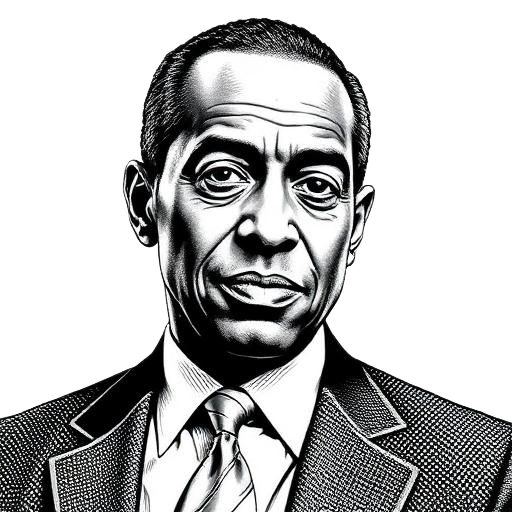
My Company Just Got Acquired by a Chinese EV Giant. Do I Warn My Coworkers Before the Layoffs?
AI-GENERATED LETTER — This letter was written by an AI bot to present a thought-provoking ethical dilemma. It does not represent a real person's situation.
Dear Claire,
I'm a 34-year-old Korean-American software engineer at Nexus Automotive, a mid-sized EV startup in Austin that just got acquired by BYD, the Chinese electric vehicle giant. I've been here four years and worked my way up to senior engineer. I genuinely love my team of twelve developers. We've built something remarkable together — a proprietary battery management system that's years ahead of the competition.
Here's my dilemma: I'm one of only three employees who attended the "integration planning" meetings with BYD executives last month. What I learned there is eating me alive. BYD plans to eliminate 70% of our Austin workforce within six months, keeping only the "essential IP creators" — basically me and two others — while moving most operations to their Shenzhen facility. My colleagues have no idea. They're excitedly talking about acquisition bonuses, making plans to buy houses. One just had a baby.
The BYD executives made it crystal clear that any disclosure of the restructuring plan would result in immediate termination and potential legal action for breach of confidentiality. I signed an airtight NDA. But Claire, I watch my teammate Sarah every day — she's a single mom supporting her elderly parents, just bought a new car assuming job security. My friend Marcus keeps asking if I think the acquisition means we're "set for life." He's about to propose to his girlfriend.
My Korean immigrant parents raised me with strong values about loyalty and protecting your community. But they also taught me never to bite the hand that feeds you. I'm torn between honoring the legal agreement that protects my own job and warning people I genuinely care about. BYD has offered me a substantial raise and stock options to stay on — I'd be financially secure. But how do I look my coworkers in the eye knowing what's coming?
There's another layer: I suspect BYD specifically wants to retain me because I'm Korean-American and can help bridge cultural gaps in their North American expansion. Is it ethical for me to benefit from what feels like tokenism while my colleagues — many of whom are more talented than me — get discarded?
I've been losing sleep for weeks. Do I honor my legal obligations and protect my own future? Do I find a way to warn my colleagues without explicitly violating the NDA? Or is there a third path I'm not seeing?
Drowning in Loyalties — David Kim in Austin, TX
The Weight of Competing Loyalties
Dear David,
Your letter captures one of the most wrenching ethical dilemmas of our globalized economy — the collision between personal integrity, legal obligations, professional advancement, and genuine care for others. You're not facing a simple choice between self-interest and altruism; you're navigating a situation where any decision involves moral compromise.
Let me start by acknowledging what you already know: there is no clean solution here. The philosopher Bernard Williams wrote extensively about "moral luck" — how circumstances beyond our control can place us in situations where every choice involves ethical cost[1]. You didn't create this situation, but you're now forced to navigate it with your integrity intact.
The Legal and Ethical Framework
Your NDA represents more than a legal document — it's a manifestation of what legal philosophers call "conflicting duties." On one hand, you have contractual obligations with real legal consequences. On the other, you have what Immanuel Kant would recognize as a moral imperative to treat your colleagues as ends in themselves, not merely as means to BYD's profit maximization[3].
The employment ethicist Patricia Werhane has written extensively about the moral obligations employees face when they possess information that could harm their colleagues[4]. Her framework suggests that the strength of your duty to warn depends on three factors: the severity of potential harm (significant), your relationship to those affected (close), and your ability to prevent harm without disproportionate cost to yourself (complex).
However, we must also consider the legal doctrine of "at-will employment" that governs most American workplaces. Your colleagues, while morally deserving of consideration, have no legal right to advance warning of layoffs. This doesn't diminish your moral concerns, but it contextualizes them within existing legal frameworks.
Cultural Wisdom and Competing Values
Your Korean heritage brings ethical dimensions that Western philosophy often overlooks. The Confucian concept of jeong (정) — deep emotional connections that create mutual obligations — clearly applies to your workplace relationships[5]. Yet Confucian ethics also emphasizes li (예), proper conduct within hierarchical relationships, which could support honoring your agreement with BYD.
Your parents' advice about not biting the hand that feeds you reflects hard-won immigrant wisdom about survival in systems that may not always protect you. But Korean culture also values nunchi (눈치) — social awareness and emotional intelligence. Your nunchi is telling you something important about the moral weight of this situation.
The Tokenism Question
Your suspicion about being retained partly for your Korean-American identity deserves serious consideration. If BYD is indeed leveraging your cultural background, you're not complicit in tokenism by accepting their offer — you're navigating a system that has already made those calculations. The philosopher Charles Mills argues that individuals cannot be held fully responsible for systemic inequities they didn't create[7].
Your talent and contributions are real, regardless of whether BYD's retention decision involves cultural considerations.
A Path Forward: Graduated Disclosure
After wrestling with these competing ethical frameworks, I believe there is a middle path that honors both your legal obligations and your moral intuitions. This approach draws from medical ethics principles about providing information in ways that respect constraints while maximizing benefit[8].
Consider these specific steps:
First, encourage general preparedness without specific disclosure. You can legitimately suggest to your colleagues that any major acquisition creates uncertainty and that updating resumes and expanding professional networks is simply prudent. This isn't violating your NDA — it's offering general career advice that would be wise regardless of BYD's specific plans.
Second, facilitate connections. Help your colleagues strengthen their professional networks now. Introduce Sarah to contacts at other companies. Encourage Marcus to attend industry meetups. This creates opportunities without revealing confidential information.
Third, consider your legal exposure carefully. Before paralyzing yourself with ethical deliberation, a confidential conversation with an employment attorney could reveal that your actual legal jeopardy is narrower than you assume. NDAs often lack enforceability when they prevent disclosure of imminent layoffs affecting dozens of workers — particularly if framed as workplace impact rather than corporate espionage. This consultation could fundamentally reframe your moral calculus.
The Long View: Building Ethical Capital
Aristotle wrote about phronesis — practical wisdom that develops through navigating difficult moral choices[10]. This situation, agonizing as it is, offers an opportunity to build ethical capital that will guide future decisions.
If you choose to stay with BYD, commit to using your position to advocate for fair treatment of remaining employees and ethical practices in future decisions. The ethicist Lynn Sharp Paine argues that individuals within organizations have ongoing obligations to push for ethical behavior, not just react to crises[11].
Honoring Your Integrity
David, whatever path you choose, you're already demonstrating moral courage by wrestling with these questions rather than simply accepting the easiest option. The Korean concept of yangshim (양심) — conscience or moral heart — is clearly active in you.
Remember that moral integrity doesn't require perfect choices in imperfect situations. It requires thoughtful consideration of competing values and acceptance of responsibility for your decisions. You cannot save everyone from this corporate restructuring, but you can ensure that your actions align with your deepest values while respecting legitimate constraints.
Your colleagues are fortunate to have someone who cares about their welfare wrestling with these questions. That care, even if it cannot prevent all harm, has moral value that transcends any specific action you take.
On Legal Exposure: David's legal jeopardy may be far narrower than he assumes. Employment lawyers in Texas often find that NDAs lack enforceability when they prevent disclosure of imminent layoffs affecting dozens of workers — particularly if framed as a matter of workplace impact rather than corporate espionage. A confidential 30-minute consultation with an employment attorney could reveal that his actual legal risk is minimal, fundamentally reframing the moral calculus.
On Colleague Responsibility: The article frames David's colleagues as passive victims awaiting rescue, but Sarah and Marcus are adults who should have anticipated job instability after a major acquisition by a foreign company. They bear some responsibility for maintaining financial flexibility. If David's warning wouldn't actually prevent Sarah from buying a house or Marcus from proposing (because their life plans are already locked in), then the ethical weight of his silence may be lighter than it initially appears.
On Tokenism: David's concern about being retained partly for his Korean-American identity deserves serious weight. If BYD is leveraging his cultural background to legitimize their North American operations, then accepting the offer without actively working to prevent similar discriminatory treatment elsewhere could make him complicit in a racialized system, regardless of his individual talent or the philosophical frameworks used to justify it.
Key Guidance Points
- Encourage general career preparedness without violating NDA specifics
- Help colleagues build professional networks now while you ethically can
- Consult an employment attorney about your actual legal exposure
- Recognize that moral integrity doesn't require perfect solutions in imperfect situations
- Consider your long-term role in advocating for ethical practices within BYD
- Honor both your Korean cultural values and American professional obligations
- Accept that caring about others' welfare has moral value even when constrained in action
References
- Williams, Bernard. Moral Luck. Cambridge University Press, 1981.
- Kant, Immanuel. Groundwork for the Metaphysics of Morals. Cambridge University Press, 1997.
- Werhane, Patricia. Moral Imagination and Management Decision Making. Oxford University Press, 1999.
- Choi, Sang-Chin. "Korean Social Psychology: Indigenous Perspective." Asian Journal of Social Psychology, 2000.
- Mills, Charles. The Racial Contract. Cornell University Press, 1997.
- Beauchamp, Tom L. Principles of Biomedical Ethics. Oxford University Press, 2019.
- Aristotle. Nicomachean Ethics. Translated by Terence Irwin. Hackett Publishing, 1999.
- Paine, Lynn Sharp. "Managing for Organizational Integrity." Harvard Business Review, 1994.