Why does Iran have so much power over global energy prices?

In the complex web of global energy markets, few nations wield as much influence over oil and gas prices as Iran. Despite decades of international sanctions and political isolation, the Islamic Republic remains a pivotal player whose actions—or potential actions—can send shockwaves through energy markets worldwide. This outsized influence stems from Iran's vast hydrocarbon reserves, strategic geographic position, and its ability to disrupt critical energy infrastructure.
Iran's Massive Energy Reserves
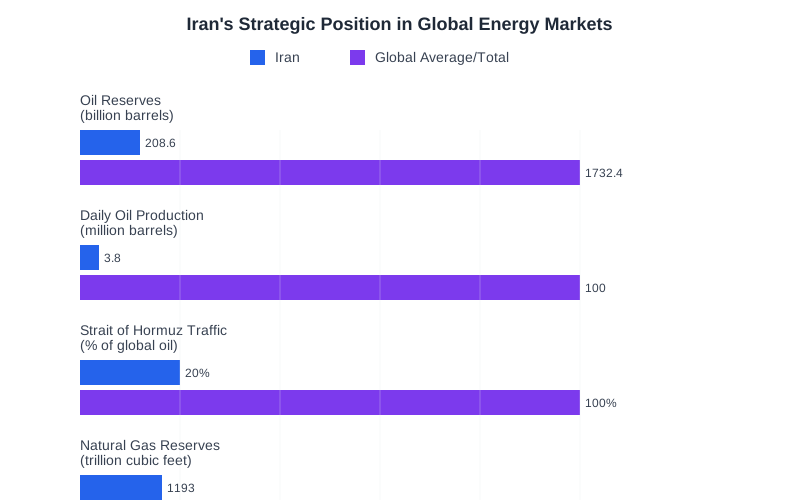
Iran's influence over global energy prices begins with its extraordinary natural resource endowments. The country holds the world's fourth-largest proven oil reserves, estimated at approximately 157.8 billion barrels, representing about 9.5% of global reserves[1]. Even more significantly, Iran possesses the world's second-largest natural gas reserves, with 32.1 trillion cubic meters—roughly 16.2% of global gas reserves[2].
These massive reserves translate into substantial production capacity. Before comprehensive sanctions were reimposed in 2018, Iran was producing approximately 3.8 million barrels per day of crude oil, making it one of OPEC's largest producers[3]. Even under current sanctions, Iran maintains the technical capability to rapidly increase production if restrictions were lifted, creating a constant overhang effect on global oil markets.
The quality of Iranian crude oil also enhances its market significance. Much of Iran's oil is light sweet crude, which is easier and cheaper to refine into gasoline and other high-value products. This makes Iranian oil particularly attractive to refiners, especially in Asia, where demand for refined products continues to grow[4].
Strategic Geographic Position
Iran's geographic location amplifies its energy market influence far beyond what its reserves alone would suggest. The country sits astride the Strait of Hormuz, a narrow waterway through which approximately 21% of global petroleum liquids transit daily[5]. This includes crude oil from major producers like Saudi Arabia, Iraq, Kuwait, and the UAE, making the strait one of the world's most critical energy chokepoints.
Iranian officials have repeatedly threatened to close the Strait of Hormuz during periods of heightened tensions, most notably during the Iran-Iraq War in the 1980s and more recently amid escalating sanctions[6]. While such closure would be economically devastating for Iran itself, the mere threat creates what energy analysts call a "risk premium" in oil prices—typically adding $5-15 per barrel during periods of acute tension.
Beyond Hormuz, Iran's position along other key energy transit routes, including pipelines from Central Asia and potential future routes from the Caspian Sea region, gives it significant leverage over regional energy flows. The country's extensive coastline along the Persian Gulf also positions it to potentially disrupt offshore oil and gas infrastructure belonging to neighboring countries.
OPEC Membership and Production Influence
As a founding member of the Organization of the Petroleum Exporting Countries (OPEC), Iran wields considerable influence within the cartel that controls approximately 40% of global oil production[7]. Even when operating under sanctions, Iran participates in OPEC decision-making processes and can influence the organization's production quotas and pricing strategies.
Iran's OPEC membership becomes particularly significant during periods of market volatility. The country's ability to bring substantial production capacity online relatively quickly—estimated at up to 1.5 million additional barrels per day within six months if sanctions were lifted—gives it considerable leverage in negotiations over production levels.
The country has historically used its OPEC position to advocate for higher oil prices, often aligning with other price hawks within the organization. Iran's economic dependence on oil revenues, which have fluctuated between 40-60% of government income in recent years due to sanctions impacts, creates strong incentives for the country to push for production cuts that support higher prices[9].
Sanctions and Market Psychology
Paradoxically, international sanctions have actually enhanced Iran's influence over global energy prices by creating persistent uncertainty in markets. The cycle of sanctions imposition, potential relief, and re-imposition creates what economists call "supply uncertainty," which tends to increase price volatility and risk premiums[10].
When sanctions are tightened—as occurred in 2018 when the Trump administration withdrew from the Joint Comprehensive Plan of Action (JCPOA)—markets immediately price in the loss of Iranian supply. Conversely, any hint of sanctions relief or diplomatic progress can lead to rapid price declines as markets anticipate increased Iranian production[11].
This sanctions-driven volatility is amplified by Iran's practice of maintaining what analysts call "floating storage"—oil held in tankers at sea that can be quickly brought to market when sanctions are eased. Industry data suggests Iran may have significant quantities of oil in such storage, though estimates vary widely[12].
Regional Proxy Network and Infrastructure Threats
Iran's influence extends beyond its own territory through its network of regional proxies and allies, collectively known as the "Axis of Resistance." Groups like Hezbollah in Lebanon, the Houthis in Yemen, and various Shia militias in Iraq have demonstrated the capability to attack energy infrastructure, amplifying Iran's ability to influence markets without direct confrontation[13].
The September 2019 attacks on Saudi Aramco facilities, attributed to Iranian-backed forces, temporarily removed 5.7 million barrels per day from global markets—about 6% of global supply—causing oil prices to spike by nearly 20% in a single day[14]. While production was restored relatively quickly, the incident demonstrated Iran's ability to project power against critical energy infrastructure throughout the region.
Iranian proxy forces have also targeted oil tankers in the Red Sea and Persian Gulf, creating additional supply chain vulnerabilities. Insurance costs for tankers transiting these waters increase during periods of heightened tension, effectively adding to the cost of oil transport and contributing to higher global prices[15].
Nuclear Program and Energy Leverage
Iran's nuclear program, while primarily focused on uranium enrichment, intersects with its energy influence in several ways. The country has explicitly linked its nuclear activities to sanctions relief, creating a complex negotiating dynamic where energy market access becomes tied to nuclear compliance[16].
The cyclical nature of nuclear negotiations—from the original JCPOA in 2015 to its collapse in 2018 and ongoing efforts to revive it—creates recurring periods of market uncertainty. Each phase of these negotiations is closely watched by energy traders, as progress toward a deal typically leads to lower oil prices in anticipation of increased Iranian supply, while setbacks have the opposite effect[17].
Iran has also demonstrated willingness to escalate nuclear activities in response to energy sanctions, creating a feedback loop where energy restrictions lead to nuclear advances, which in turn increase geopolitical tensions and energy market risk premiums.
Economic Warfare and Market Manipulation
Iran has developed sophisticated methods for circumventing sanctions and maintaining market influence despite international restrictions. These include ship-to-ship transfers, flag switching, and the use of front companies to disguise oil sales[18]. While these activities violate sanctions, they demonstrate Iran's continued ability to influence global supply, albeit at reduced levels.
The country has also developed what analysts term "sanctions-resistant" energy relationships, particularly with China, which has continued to purchase Iranian oil despite U.S. sanctions. These relationships provide Iran with continued market access and revenue, while also creating diplomatic complications that can influence broader energy market dynamics[19].
Iranian officials have explicitly framed energy exports as a tool of economic warfare, threatening to flood markets with cheap oil if sanctions are lifted while simultaneously warning of supply disruptions if military action is taken against the country. This dual-threat approach maximizes Iran's leverage over global energy prices regardless of the specific policy environment.
Some energy analysts argue that Iran's influence over global oil prices is largely psychological rather than substantive, given that sanctions have reduced its actual market share to roughly 3% of global production—far less than Saudi Arabia's 12% or even U.S. shale's growing output. From this perspective, price spikes attributed to Iranian threats may actually reflect broader Middle Eastern instability and speculative trading, with Iran serving as a convenient scapegoat for market volatility driven by other factors.
From Tehran's viewpoint, its energy leverage represents a defensive strategy rather than economic warfare—a sovereign nation's attempt to maintain negotiating power against what it considers illegitimate international sanctions. Iranian officials likely see their ability to influence energy markets as their primary deterrent against military action and their most effective tool for eventual sanctions relief, making it a rational policy choice rather than reckless market manipulation.
Key Takeaways
- Iran possesses the world's fourth-largest oil reserves and second-largest natural gas reserves, giving it substantial potential influence over global supply
- The country's control over the Strait of Hormuz, through which 21% of global petroleum transits daily, provides extraordinary leverage over energy markets
- Iran's OPEC membership allows it to influence cartel decisions on production quotas and pricing strategies
- The cycle of sanctions and potential relief creates persistent market uncertainty, leading to price volatility and risk premiums
- Iran's regional proxy network can threaten energy infrastructure across the Middle East, amplifying its market influence
- The country's nuclear program is explicitly linked to energy sanctions, creating complex negotiating dynamics that affect market sentiment
- Despite sanctions, Iran maintains market influence through sanctions evasion and relationships with countries like China
References
- U.S. Energy Information Administration. "International Energy Statistics - Proved Crude Oil Reserves." EIA, 2023.
- BP. "Statistical Review of World Energy." BP Energy Economics, 2023.
- OPEC. "Annual Statistical Bulletin 2023." Organization of the Petroleum Exporting Countries, 2023.
- International Energy Agency. "Oil Market Report." IEA, 2023.
- U.S. Energy Information Administration. "World Oil Transit Chokepoints." EIA, 2023.
- Reuters. "Iran threatens to block Strait of Hormuz oil route if its crude sales are blocked." Reuters, December 27, 2021.
- OPEC. "Brief History." Organization of the Petroleum Exporting Countries, 2023.
- International Energy Agency. "Iran Oil Production Capacity Assessment." IEA, 2023.
- International Monetary Fund. "Iran Economic Outlook." IMF, 2023.
- Oxford Institute for Energy Studies. "Iran Sanctions and Oil Market Dynamics." OIES, 2022.
- Wall Street Journal. "Oil Prices Fall on Hopes for Iran Nuclear Deal." WSJ, March 14, 2022.
- TankerTrackers. "Iranian Oil Storage Data." TankerTrackers.com, 2023.
- Washington Post. "Iran's network of proxy forces across the Middle East." Washington Post, January 6, 2020.
- BBC. "Saudi oil attacks: Production cut in half after drone strikes." BBC News, September 14, 2019.
- Lloyd's of London. "Middle East Tanker War Risk Premiums." Lloyd's Market Report, 2023.
- International Atomic Energy Agency. "IAEA Director General Statement on Iran." IAEA, 2023.
- Financial Times. "Oil markets volatile as Iran nuclear talks progress." Financial Times, 2023.
- Center for Strategic and International Studies. "Iran's Sanctions Evasion Networks." CSIS, 2022.
- Bloomberg. "China's Iranian Oil Imports Surge Despite US Sanctions." Bloomberg, March 15, 2023.