
Why do streaming services keep canceling shows that people actually watch?

Netflix cancels "The OA" after two seasons. Cinemax axes "Warrior" despite critical acclaim. HBO Max pulls the plug on "Raised by Wolves." The pattern is unmistakable: streaming services routinely cancel shows with passionate fanbases and strong viewership, leaving audiences bewildered and frustrated. This phenomenon has sparked widespread outrage and raised fundamental questions about how streaming platforms measure success and make programming decisions.
The traditional television model was straightforward—ratings translated directly to advertising revenue. But streaming operates under entirely different economic principles, creating a complex web of factors that often prioritize financial sustainability over pure viewership numbers. Understanding why streaming services cancel seemingly popular shows requires examining the intricate business models, data analytics, and strategic considerations driving these controversial decisions.
The Economics of Streaming Content
Unlike traditional broadcast television, streaming services don't rely primarily on advertising revenue tied to live viewership. Instead, they operate on subscription models where the primary goal is subscriber acquisition and retention[1]. This fundamental difference creates a unique calculus for determining a show's value.
Production costs play a crucial role in cancellation decisions. Many streaming series have budgets that dwarf traditional television shows, with high-profile Netflix originals like "The Crown" and "Stranger Things" reportedly costing $10-13 million per episode[2]. As shows progress beyond their initial seasons, costs typically increase due to talent salary escalations, more elaborate production requirements, and backend profit participation agreements. A show that attracts millions of viewers could still face cancellation if its cost-per-viewer ratio becomes unsustainable.
The concept of "completion rates" has become increasingly important in streaming economics. Platforms prioritize content that subscribers watch from beginning to end, as this behavior correlates strongly with subscription retention[3]. A show might have high initial viewership but face cancellation if too many viewers abandon it mid-season, suggesting it's not effectively serving the platform's retention goals.
The Data-Driven Decision Matrix
Streaming services possess unprecedented amounts of viewer data, tracking not just what people watch but how they watch it. This granular analysis goes far beyond traditional Nielsen ratings, examining factors like binge-watching patterns, re-watch rates, time spent paused, and even when viewers stop watching specific episodes[4].
Netflix's algorithm-driven approach exemplifies this data-centric model. The platform uses sophisticated recommendation systems to predict viewer behavior and categorize content[5]. Shows are evaluated not just on total viewership but on their ability to attract new subscribers, retain existing ones, and drive engagement with other platform content. A series might have a dedicated fanbase but still face cancellation if the data suggests it's not contributing to broader platform goals.
Portfolio optimization principles influence streaming content strategy. This approach, similar to investment portfolio management, helps platforms determine the optimal mix of content types to maximize subscriber value while minimizing costs. Shows that don't align with these optimization goals—regardless of their individual popularity—may become candidates for cancellation.
The Subscriber Acquisition vs. Retention Dilemma
Streaming platforms face a constant balancing act between acquiring new subscribers and retaining existing ones. New, high-profile content often serves as a more effective subscriber acquisition tool than continuing established series[6]. This dynamic explains why platforms sometimes cancel well-regarded shows to redirect resources toward flashy new productions that generate media buzz and social media attention.
The phenomenon of "churn management" also influences cancellation decisions. Platforms analyze which content types are most effective at preventing subscription cancellations. If data suggests that subscribers are unlikely to cancel over a specific show's termination, that series becomes more vulnerable regardless of its viewership numbers. Conversely, shows that generate significant cancellation threats when rumored for termination often receive renewals as a retention strategy.
International expansion strategies further complicate these calculations. A show that performs well in domestic markets might face cancellation if it doesn't translate effectively to global audiences. As streaming services compete for international subscribers, content decisions increasingly factor in worldwide appeal rather than regional popularity.
The Creative vs. Commercial Tension
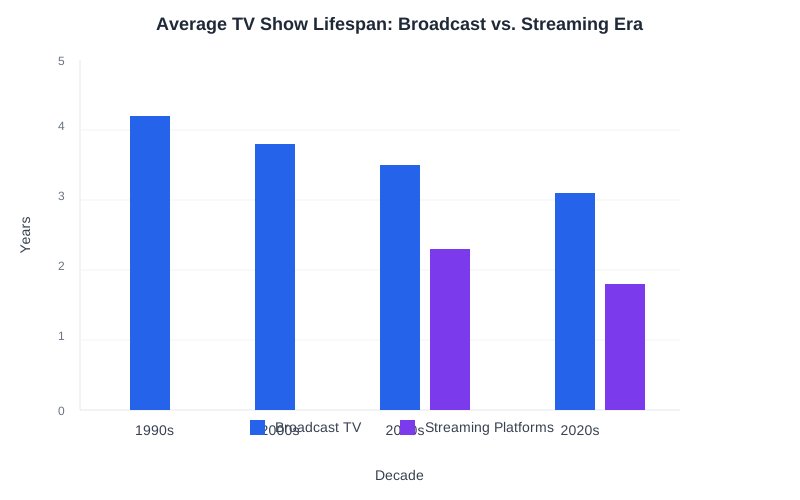
The streaming model has created new tensions between creative ambitions and commercial viability. Unlike traditional television, where shows could find second lives through syndication, streaming series have limited revenue streams beyond their initial platform run[7]. This reality makes platforms more risk-averse about continuing series that don't demonstrate clear financial returns.
The "completion bias" phenomenon affects how streaming services evaluate narrative content. Shows with planned endpoints and clear story arcs often receive preferential treatment over open-ended series, as they provide definitive completion satisfaction for viewers. This preference explains why limited series and anthology formats have proliferated on streaming platforms, while traditional multi-season narratives face increased scrutiny.
Creative talent relationships also influence cancellation decisions in ways that weren't as prominent in traditional television. Streaming services often prioritize maintaining relationships with high-profile creators and showrunners over continuing specific series. A platform might cancel a moderately successful show to free up a creator for a potentially more lucrative project, viewing the creator as a more valuable long-term asset than any individual series.
The Algorithm's Hidden Influence
Recommendation algorithms play an increasingly decisive role in determining which shows survive and which face cancellation. These systems don't just respond to viewing patterns; they actively shape them by determining which content gets promoted to users[8]. Shows that don't perform well in algorithmic recommendations can enter a death spiral, receiving less exposure and consequently lower viewership, regardless of their inherent quality or fan devotion.
The "discoverability gap" has become a critical factor in show survival. Even high-quality series can face cancellation if they fail to achieve algorithmic prominence within their first few weeks of release. This creates a self-fulfilling prophecy where shows need immediate algorithmic success to generate the viewership numbers required for renewal consideration.
Platform-specific algorithmic biases also affect cancellation decisions. Netflix's algorithm reportedly favors content that generates binge-watching behavior, while other platforms might prioritize different engagement metrics. Shows that don't align with their platform's algorithmic preferences face structural disadvantages that can override fan enthusiasm or critical acclaim.
The Global Content Strategy Impact
As streaming services expand internationally, local content preferences increasingly influence global programming decisions. A show that resonates strongly with American audiences might face cancellation if it doesn't perform well in key international markets like Europe or Asia[9]. This global perspective can make domestic fan campaigns less effective than in the traditional television era.
Currency fluctuations and international production costs add another layer of complexity to cancellation decisions. Shows filmed in expensive markets or featuring international casts can become financially unsustainable even with strong viewership, particularly as platforms seek to optimize their global content portfolios for maximum efficiency.
The rise of local content quotas in various countries also affects international programming strategies. Platforms might cancel imported shows to make room for locally produced content that satisfies regulatory requirements, regardless of the imported content's popularity with domestic audiences.
What if streaming platforms aren't as data-sophisticated as they claim? Cancellation decisions might often come down to basic budget cuts or executive preferences disguised as algorithmic insights. The industry's emphasis on "advanced analytics" could be marketing speak for relatively simple cost-per-viewer calculations, with platforms using complex-sounding explanations to deflect criticism from disappointed fans.
The assumption that vocal online fandoms represent broader audience appeal may be fundamentally flawed. A show with 50,000 passionate Twitter supporters might generate significant buzz while failing to meaningfully impact the subscriber metrics that actually drive platform revenue. Streaming services might be making economically rational decisions that only appear misguided when viewed through the distorted lens of social media engagement.
Key Takeaways
- Streaming services prioritize subscriber acquisition and retention over pure viewership numbers, making cost-per-viewer ratios crucial to renewal decisions
- Advanced data analytics examine completion rates, binge-watching patterns, and algorithmic performance rather than just total views
- Portfolio optimization principles help platforms balance content mix, sometimes sacrificing popular shows for better overall subscriber value
- International expansion strategies increasingly influence programming decisions, with global appeal often trumping domestic popularity
- Recommendation algorithms create self-reinforcing cycles that can doom shows regardless of fan enthusiasm or critical acclaim
- Rising production costs and talent salary escalations make longer-running series financially challenging, even with strong viewership
- Limited revenue streams compared to traditional television make platforms more risk-averse about continuing expensive series
References
- Rodriguez, Ashley. "How Netflix decides whether to cancel or renew its shows." Business Insider, April 2019.
- Adalian, Josef. "Netflix's Spending on TV Shows Is Out of Control." Variety, January 2019.
- Goldberg, Lesley. "Netflix's New Viewership Metrics Focus on Completion Rates." The Hollywood Reporter, September 2021.
- Thompson, Derek. "Netflix's Data-Driven Strategy Is Changing How TV Gets Made." Wired, March 2020.
- Perez, Sarah. "How Netflix uses AI, data science and machine learning." TechCrunch, March 2017.
- Feldman, Dana. "Why Streaming Services Cancel Shows That Seem Popular." Forbes, August 2020.
- Ramachandran, Shalini. "The Brutal Economics of the Streaming Wars." The Wall Street Journal, November 2019.
- Stuart, Keith. "How Netflix's algorithm decides which shows live or die." The Guardian, January 2020.
- Palmer, Annie. "How Netflix's global expansion affects which shows get renewed." CNBC, July 2021.